
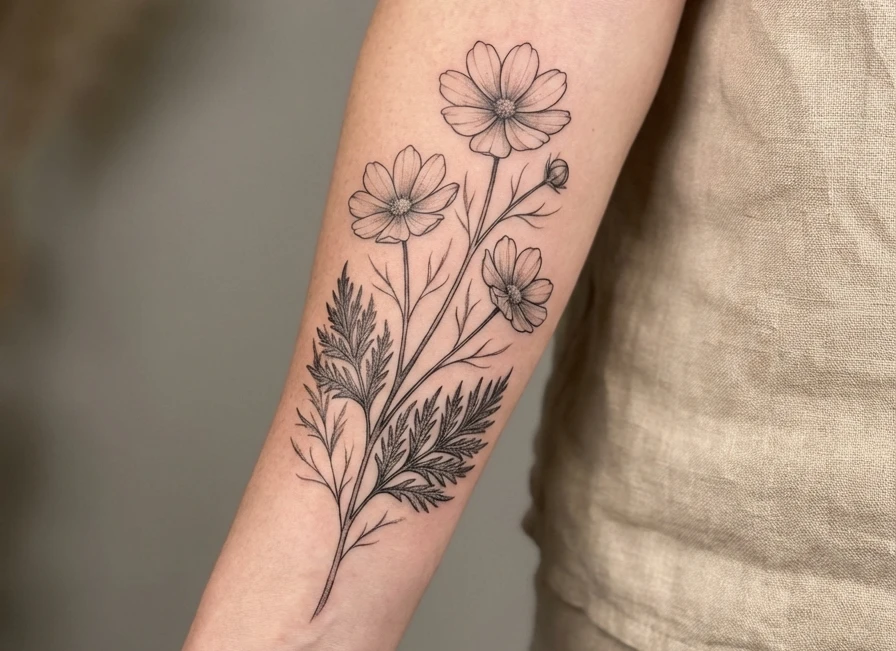
Botanical tattoos are for people who love the details. The veins in a leaf, the curve of a stem, the way petals layer over each other, all of it captured in ink.
This style pulls straight from old scientific illustration books. Think crisp linework, natural accuracy, and a timeless quality that never feels trendy.
If you want a flower tattoo that actually looks like the flower, botanical is the style for you. Here are 12 stunning ideas to get you inspired.
1. Botanical Rose Flower Tattoo
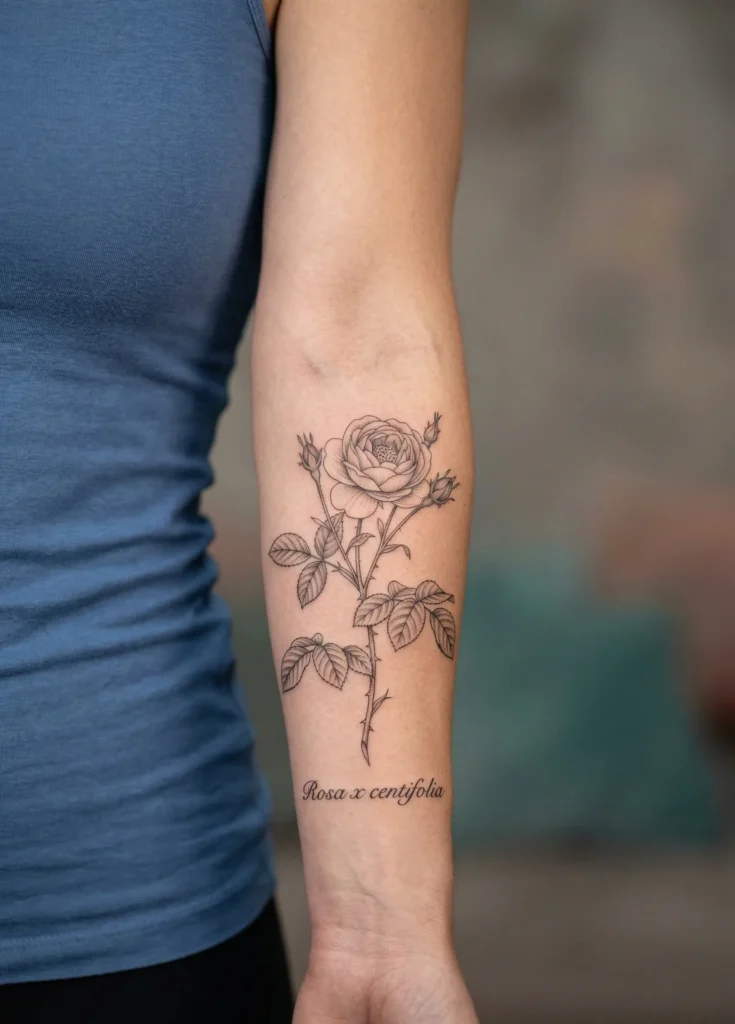
A botanical rose isn’t your typical tattoo rose. It’s drawn with the same precision as a scientific field guide, every petal mapped, every leaf serrated correctly.
That accuracy is what makes it extraordinary. It looks real in a way that decorative styles can’t quite achieve.
The addition of thorns, leaves, and even small buds on the stem takes it to the next level. It tells the full story of the plant, not just the bloom.
- Fine line black and grey work suits botanical roses beautifully
- Adding Latin name script beneath it gives it that classic naturalist feel
- A half-bloomed rose with visible stamen detail is a showstopper up close
2. Botanical Lotus Flower Tattoo
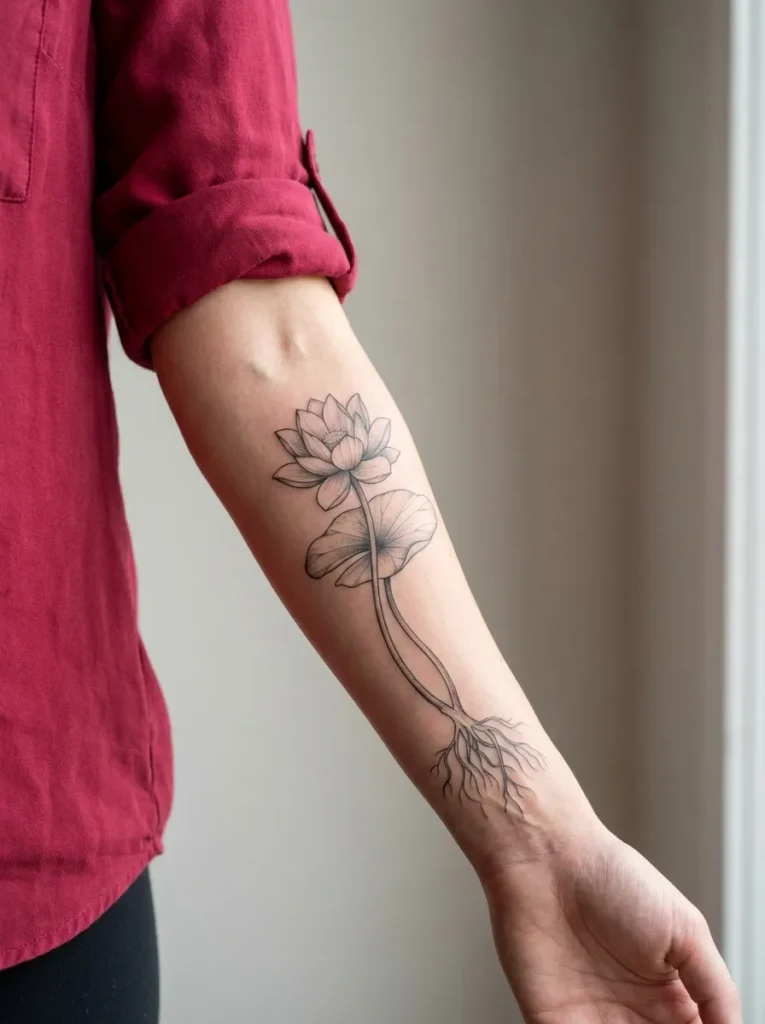
The lotus is already a meaningful flower, but in botanical style it becomes something visually stunning. Every petal is carefully outlined with natural shading and true-to-life proportions.
What changes in botanical style is the honesty of the design. You see the whole plant, including the pad, stem, and root structure if the artist chooses to include it.
That full-plant approach feels grounded and intentional. It’s a tattoo that shows respect for the flower itself.
A botanical lotus on the forearm with a long, elegant stem is quietly breathtaking.
3. Botanical Peony Flower Tattoo
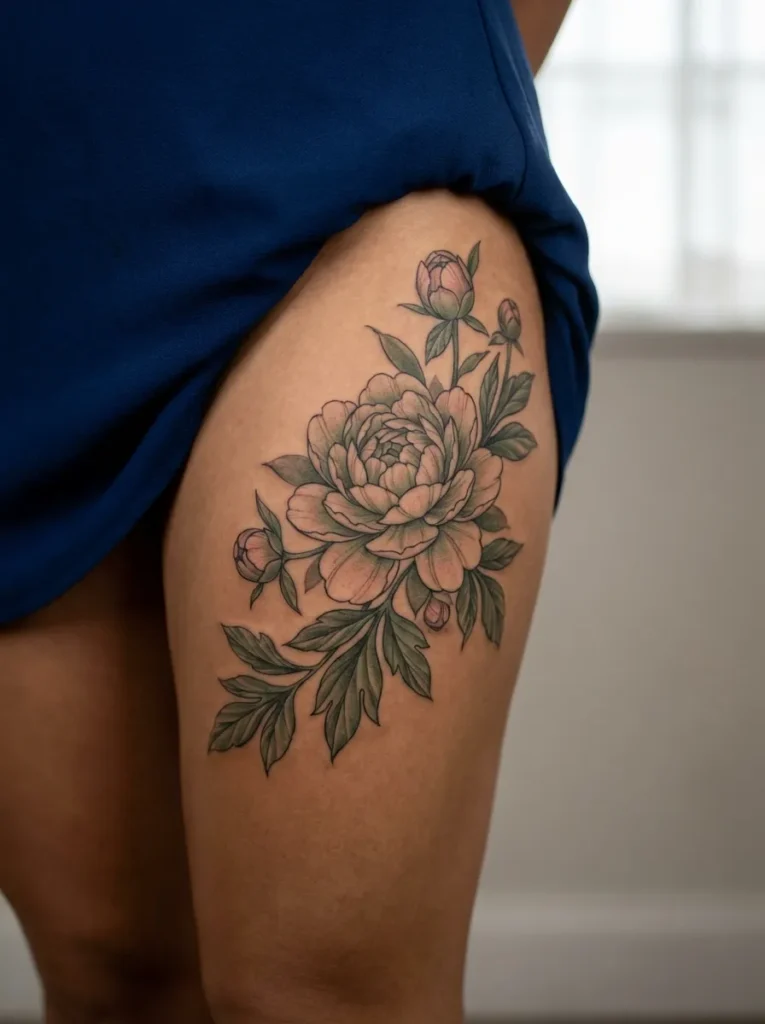
Peonies are one of the most tattooed flowers out there. But a botanical peony looks nothing like the standard version.
Instead of loose, romantic petals, you get structure. Layers that are observed and drawn with discipline. The result is lush but controlled.
The leaves in botanical style are just as important as the bloom. Deeply lobed, accurately shaped, and shaded to show depth.
- A full botanical peony with multiple buds at different stages looks incredible on the thigh or upper arm
- The combination of dense petals and detailed leaves makes this one of the most rewarding tattoos to study close up
- Black and grey keeps it classic; soft muted green and blush pink keeps it fresh
4. Botanical Sunflower Tattoo
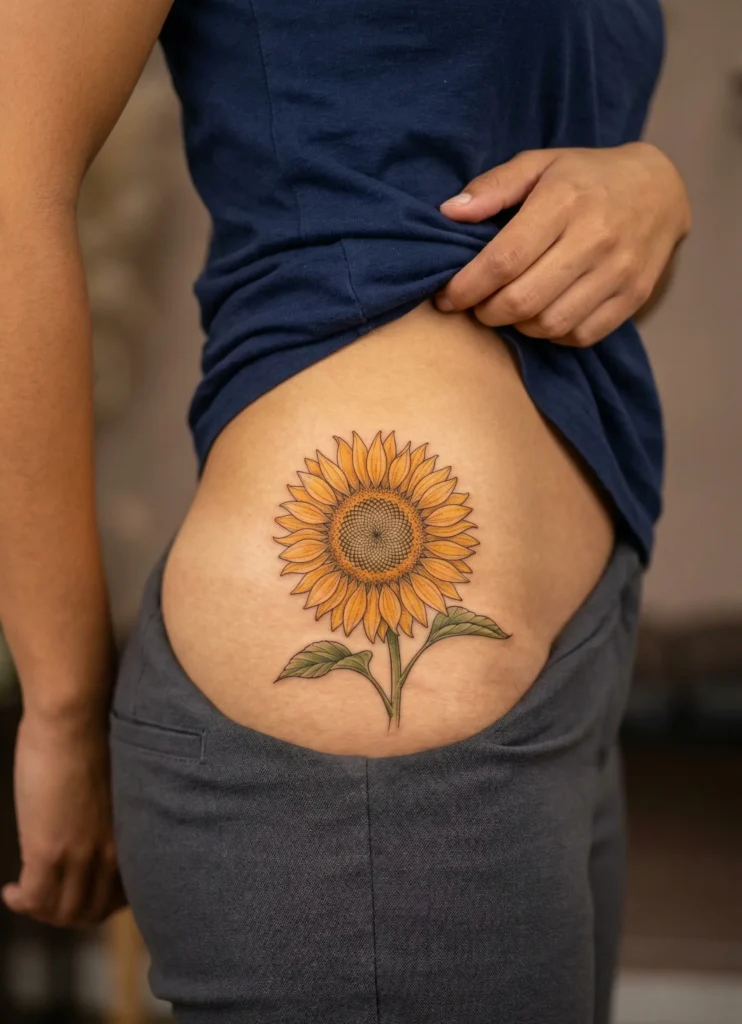
Most sunflower tattoos are bold and graphic. A botanical sunflower is something else entirely. It’s studied, precise, and surprisingly complex.
The seed pattern alone, that tight Fibonacci spiral in the center, gives the artist an incredible focal point. Done well, it’s genuinely mesmerizing.
The ray petals are drawn with natural variation, not perfect symmetry. That slight irregularity is what makes it look alive.
| Graphic Sunflower | Botanical Sunflower |
| Bold outlines, flat petals | Fine lines, natural petal variation |
| Decorative, stylized | Accurate, illustrative |
| Quick read from a distance | Rewards close inspection |
| Common in neo-traditional | Common in fine line and botanical styles |
5. Botanical Lily Flower Tattoo
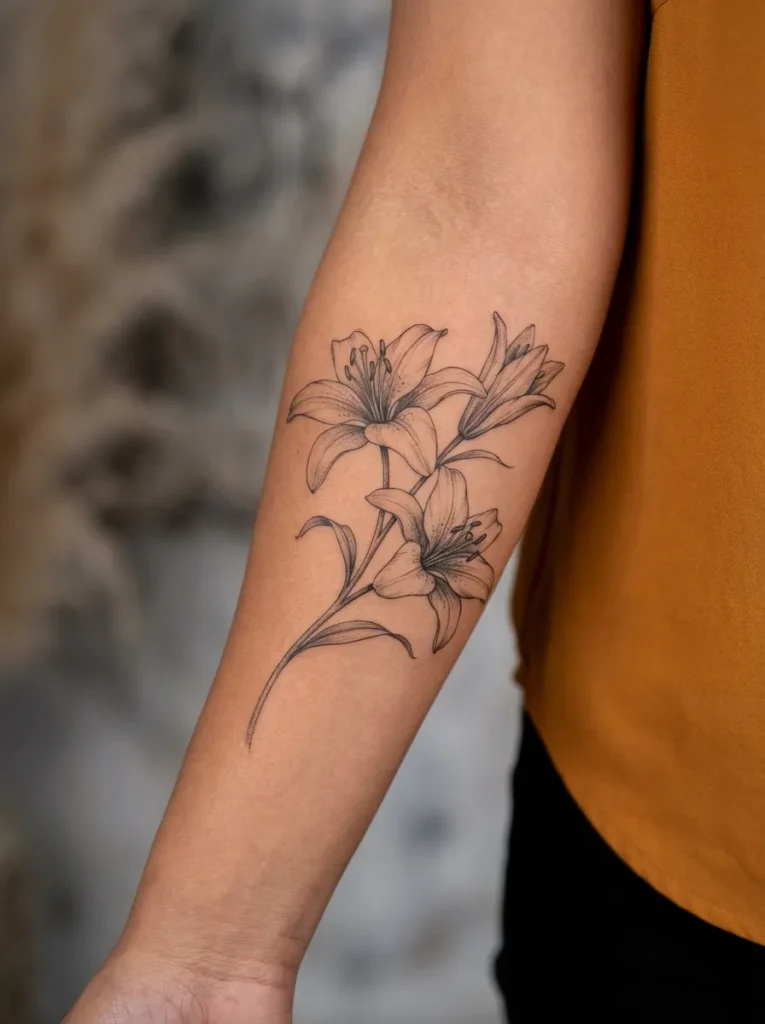
Lilies in botanical style carry an elegance that’s hard to beat. Long graceful petals, prominent stamens, and those distinctive spotted markings if you go for a tiger lily.
The structural detail of a lily translates perfectly into fine linework. Every curve and crease has a place.
It’s also a flower with a lot of natural drama. You don’t need to add much to make it striking.
A botanical lily with the stem curving naturally and two or three blooms at different stages feels like a page torn from a nature journal.
6. Botanical Tulip Tattoo
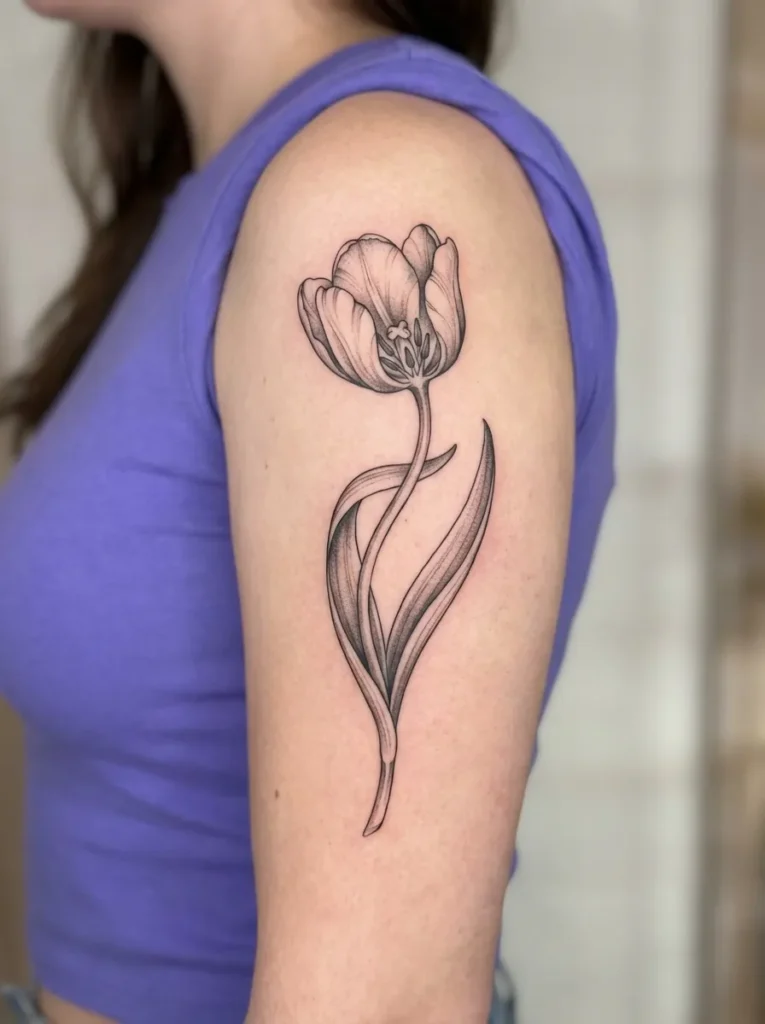
Tulips feel simple until you study them closely. In botanical style, that simplicity becomes sophisticated.
The clean cup shape of the bloom, the smooth parallel leaves, and the elegant S-curve of the stem all come together in a way that feels effortlessly refined.
Cross-sectioned tulip illustrations from old botanical books are a huge source of inspiration here. Some artists incorporate that half-cut view showing the inner structure.
- A single tulip with full stem and two leaves is minimal but perfectly composed
- A row of three tulips at slightly different heights feels natural and balanced
- Black and grey gives it a vintage scientific feel; a single pop of color makes it modern
7. Botanical Lavender Tattoo
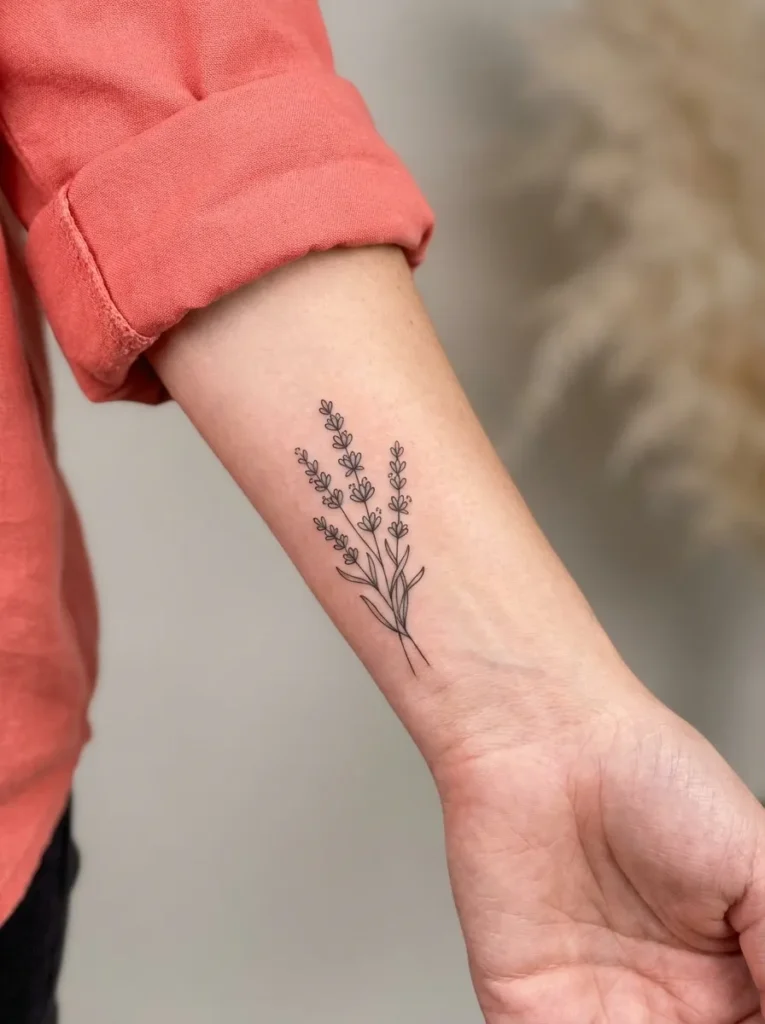
Lavender is made for botanical style. The long spike of tiny florets, the narrow leaves, and the characteristic purple are all deeply satisfying to render in detail.
There’s also something about lavender that feels calm and intentional as a tattoo. It’s not trying to be the loudest thing in the room.
A full sprig with multiple branches and accurately drawn florets looks incredible in fine line work. The repetition of the small blooms creates beautiful visual rhythm.
Lavender works on almost any placement. Wrist, forearm, collarbone, ankle, it always looks right.
8. Botanical Daisy Tattoo
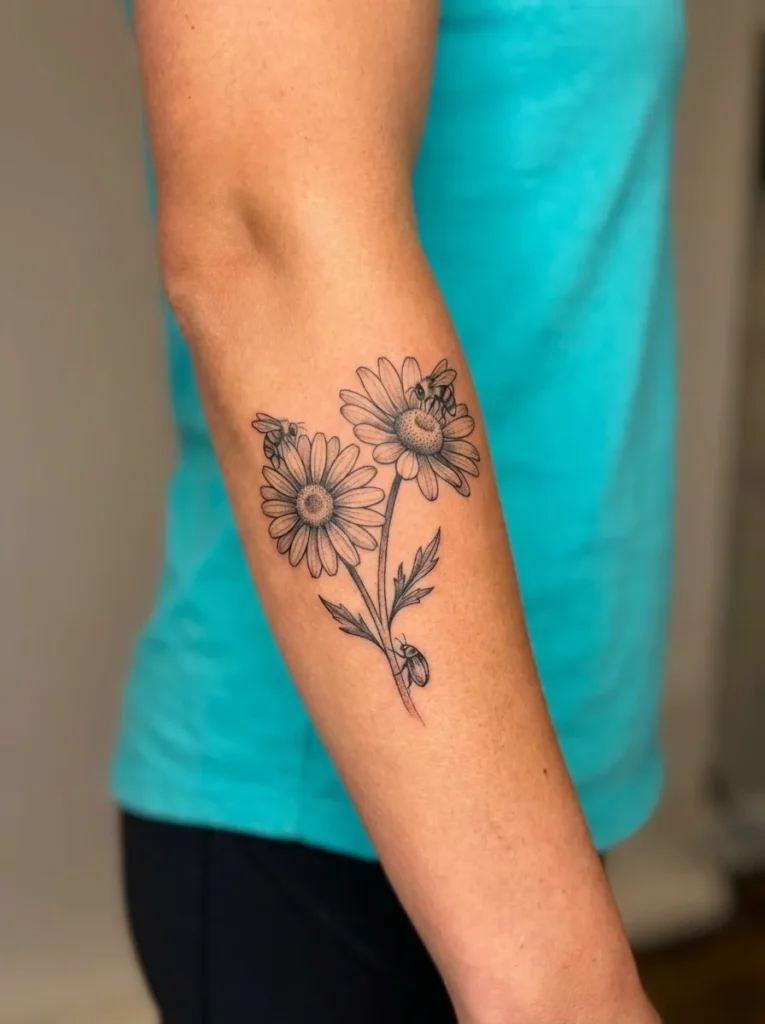
Daisies seem too simple for botanical treatment until you see one done well. The precision applied to something so familiar creates a surprising effect.
Every floret in the center disc, every ray petal with its subtle ridging, the slightly hairy stem, it all adds up to something much richer than expected.
Botanical daisies also pair incredibly well with other elements. Beetles, moths, bees, and small leaves all feel at home alongside them.
- A daisy with a small bee resting on the center feels like a moment frozen in time
- Multiple daisy heads at different angles on a single stem captures natural growth
- Dotwork shading on the center disc adds beautiful texture without losing the clean feel
9. Botanical Poppy Tattoo
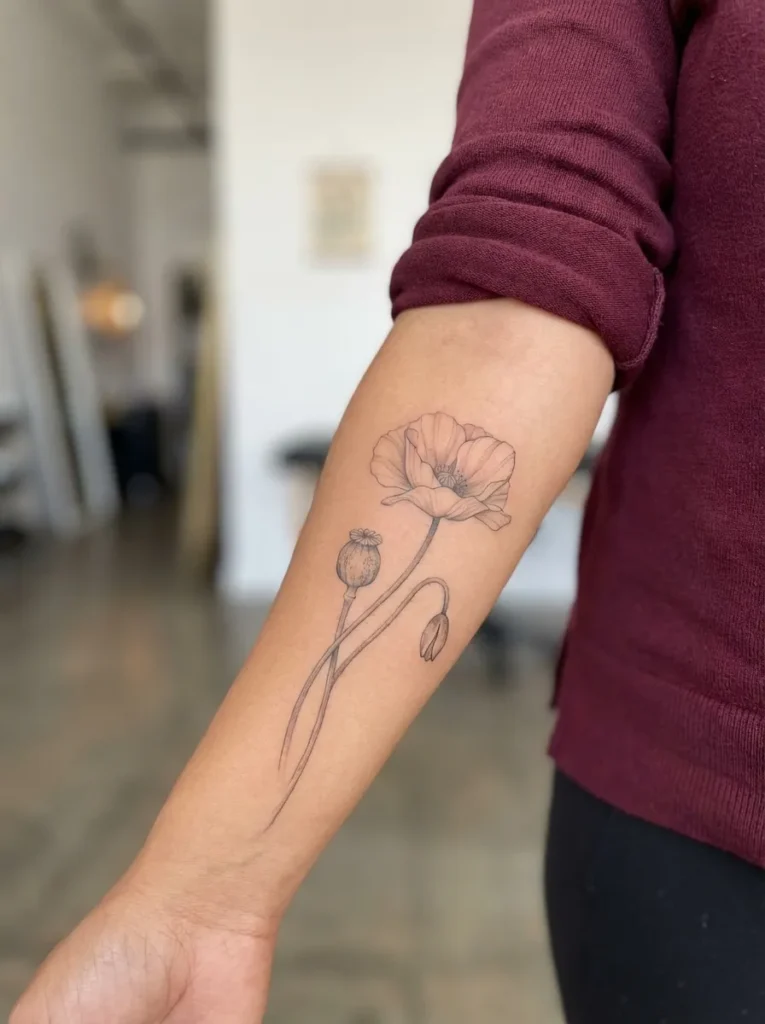
Poppies have papery, almost translucent petals that are a real challenge to capture. In botanical style, that challenge becomes the whole point.
The delicate crinkled texture of the petals, the distinctive seed pod, and the drooping bud before it opens are all incredibly rich details to work with.
The seed pod alone is one of the most beautiful natural forms in the plant world. A botanical poppy that includes it alongside the bloom tells a complete story.
A poppy with one open bloom and one closed bud on a long curved stem is a classic botanical composition that never gets old.
10. Botanical Wildflower Tattoo
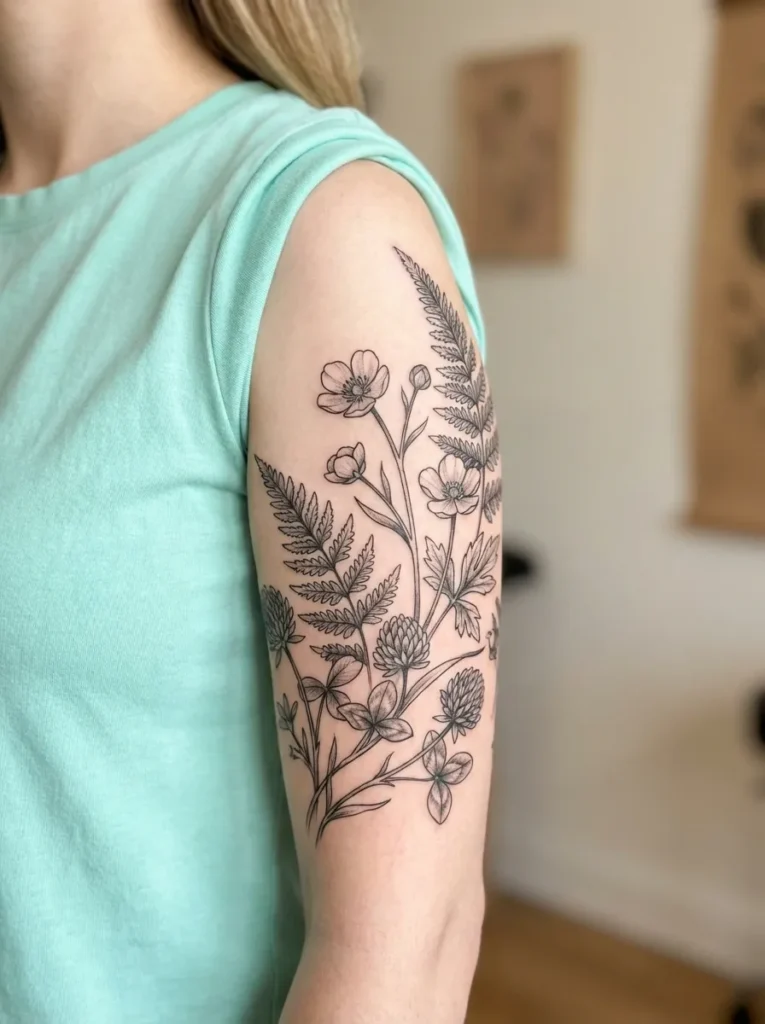
A botanical wildflower piece is where the style really stretches its legs. Multiple species, accurately rendered, arranged as they might actually grow together in nature.
The key difference from a regular wildflower tattoo is the commitment to accuracy. Each plant is drawn as if it could be identified from the tattoo alone.
That specificity gives the design a collector’s quality. It feels curated and personal, like a field guide built from your own favorite plants.
| Decorative Wildflower | Botanical Wildflower |
| Loose, impressionistic | Detailed, species-accurate |
| Emotional, free-flowing | Observational, precise |
| Any arrangement works | Naturalistic composition matters |
| Color-forward | Linework and shading carry the weight |
11. Botanical Cosmos Tattoo
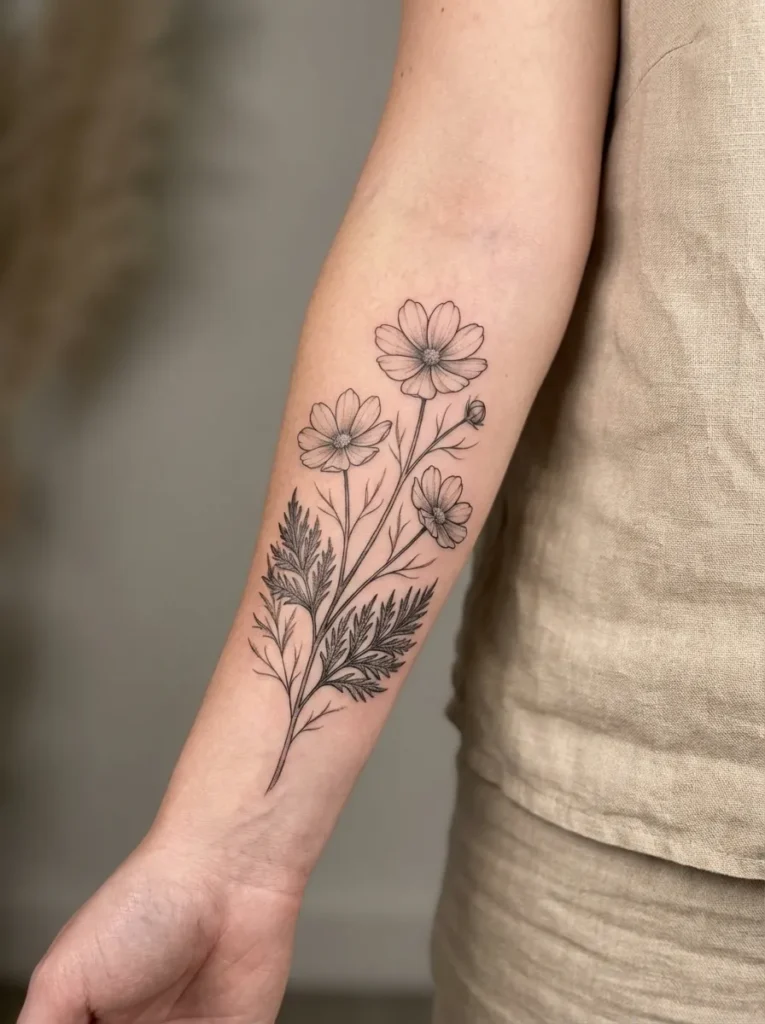
Cosmos flowers are already graceful, but in botanical style they become architectural. The fine-cut leaves, the slender branching stems, the perfectly symmetrical petals, all of it is drawn with care.
What makes cosmos so satisfying in this style is the contrast between the delicate flower head and the feathery, intricate leaves. Two totally different textures in one plant.
That contrast gives the artist a lot to play with in terms of shading and linework. The leaves can be dense with crosshatching while the petals stay light and minimal.
- A botanical cosmos with the full stem, branching leaves, and two or three blooms at different heights is a beautiful elongated design for the forearm or shin
- The feathery leaves look stunning in fine stippling or careful parallel hatching
12. Botanical Primrose Tattoo
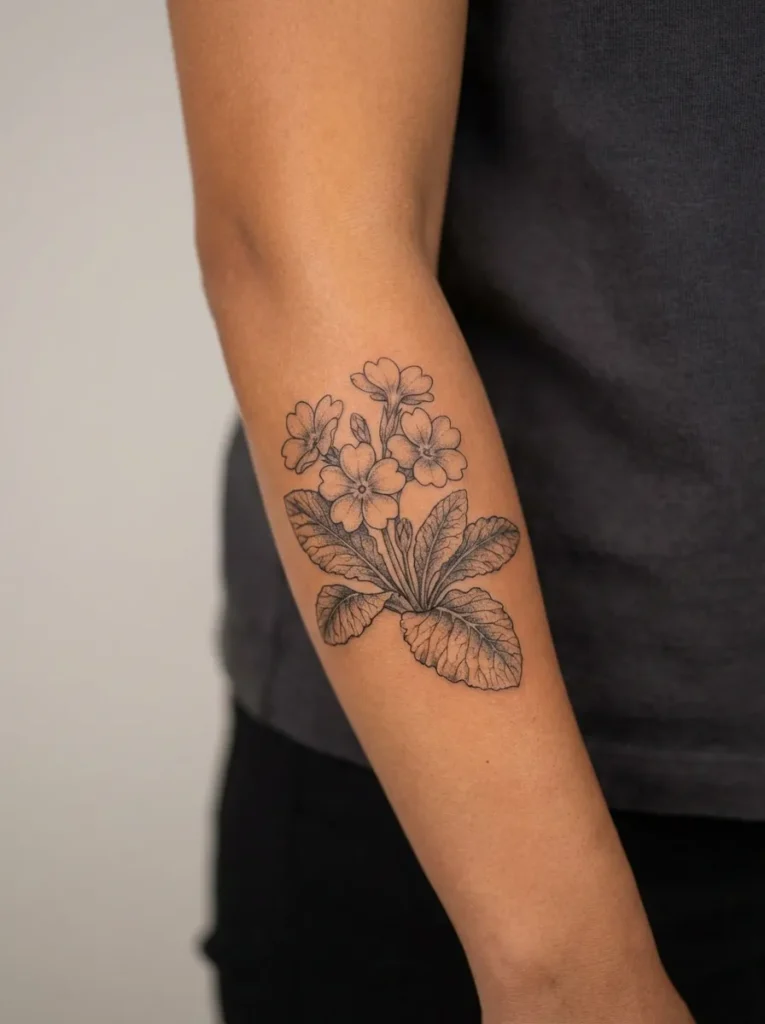
Primroses are small and often overlooked, but in botanical style they punch well above their weight. Five rounded petals, a detailed tubular center, and soft crinkled leaves with visible veining.
The veining in the leaves is where botanical primrose tattoos really shine. That level of detail makes the whole design feel alive.
There’s also something quietly poetic about primroses. They’re often one of the first flowers of the year, symbols of early light and new beginnings.
A small cluster of primrose blooms with leaves spread naturally around them makes for a compact, detailed tattoo that rewards a second look.
Botanical tattoos ask something of the artist and the wearer alike. A commitment to looking closely, to noticing the details most people walk right past. Which flower from this list made you see it differently than you had before?