
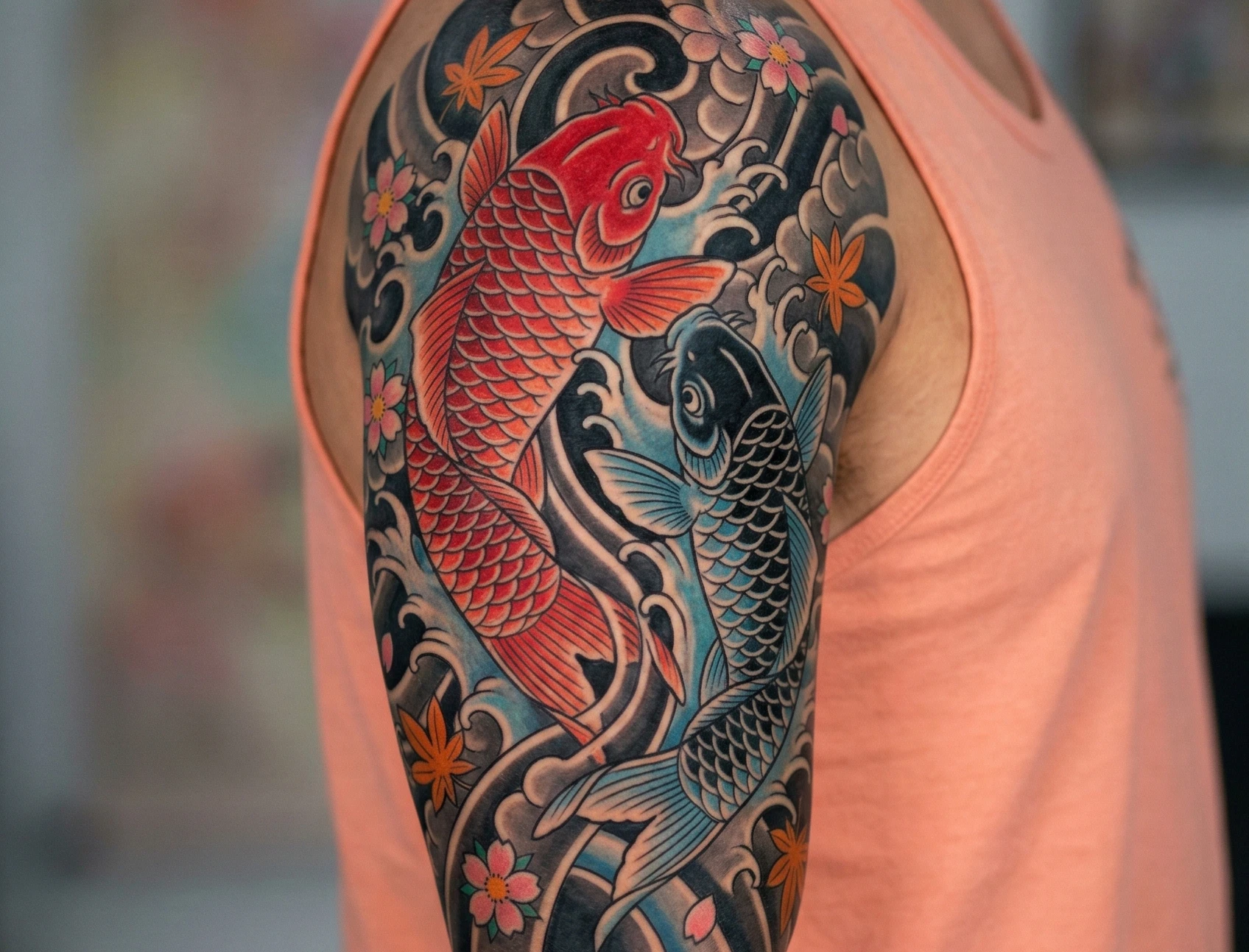
There’s a reason the koi fish has been one of the most tattooed images in Japanese culture for generations. It’s not just beautiful. It means something.
The legend says a koi that swims upstream and reaches the top of a waterfall transforms into a dragon. That’s not just a story. That’s a roadmap for anyone who’s ever had to push through something hard.
Koi tattoos speak to perseverance, transformation, and the refusal to give up. Every color carries its own meaning. Every direction the fish swims tells a different story.
Whether you’re marking a personal victory, a difficult chapter, or a commitment to keep going, there’s a koi design in here that fits what you’re trying to say. Here are 20 ideas worth sitting with.
1. Upstream Koi Fish Design
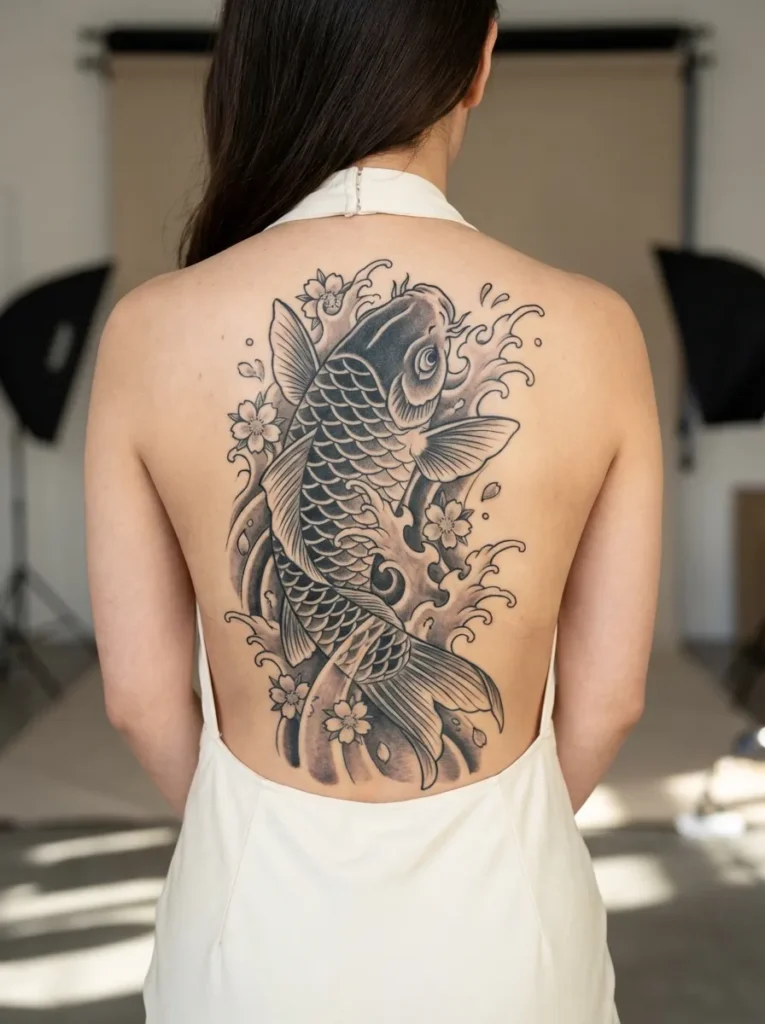
This is the most traditional and symbolically loaded koi tattoo you can get. A koi swimming upstream represents the active struggle against resistance. The daily fight toward something worth having.
It’s not a passive image. The fish is pushing. Moving against the current with intention.
People going through hard transitions tend to connect with this one deeply. A career change, a recovery, a rebuild. The upstream koi says you’re still moving forward regardless of what’s pushing back.
The composition works naturally on vertical placements like the shin, spine, or inner forearm where the fish can swim upward along the body.
2. Downstream Koi Fish Flow
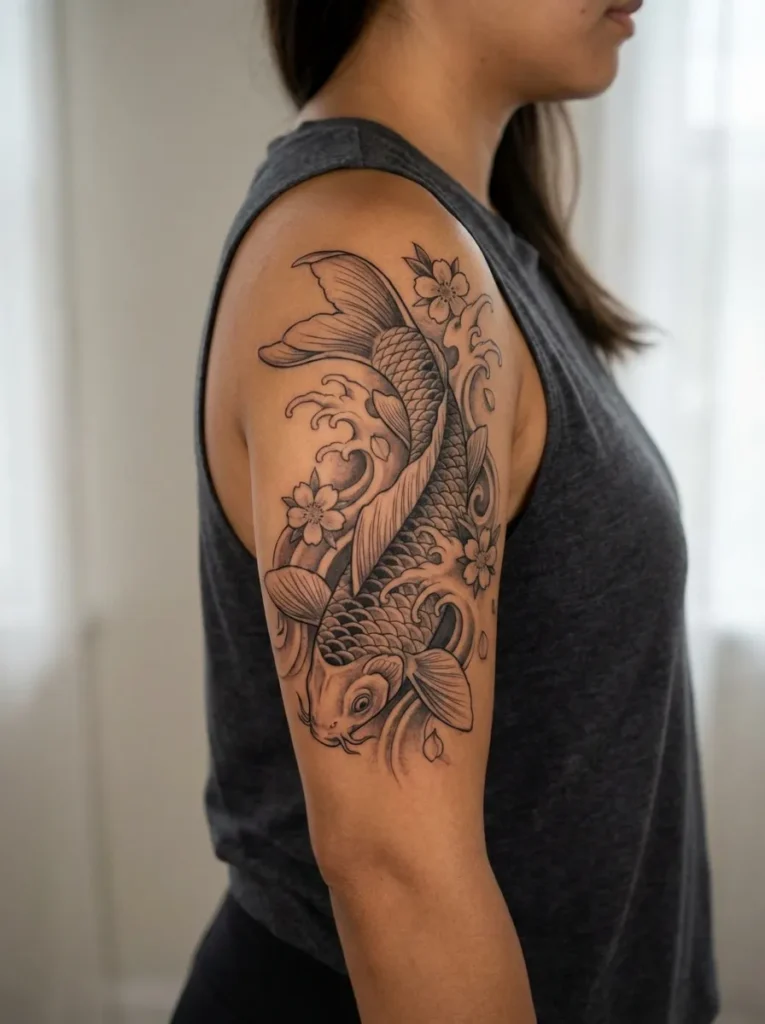
The downstream koi is often misunderstood. It’s not a symbol of giving up. It’s about ease, acceptance, and moving with the natural current of life rather than fighting everything.
It represents someone who has done the hard work and is now allowing things to unfold. There’s wisdom in knowing when to push and when to flow.
Visually, a downstream koi has a relaxed, graceful quality to it. The fins spread wide. The movement feels fluid and unhurried.
This suits someone in a more settled chapter of life. Or someone learning to let go of control.
3. Koi Fish with Water Waves (Nami)
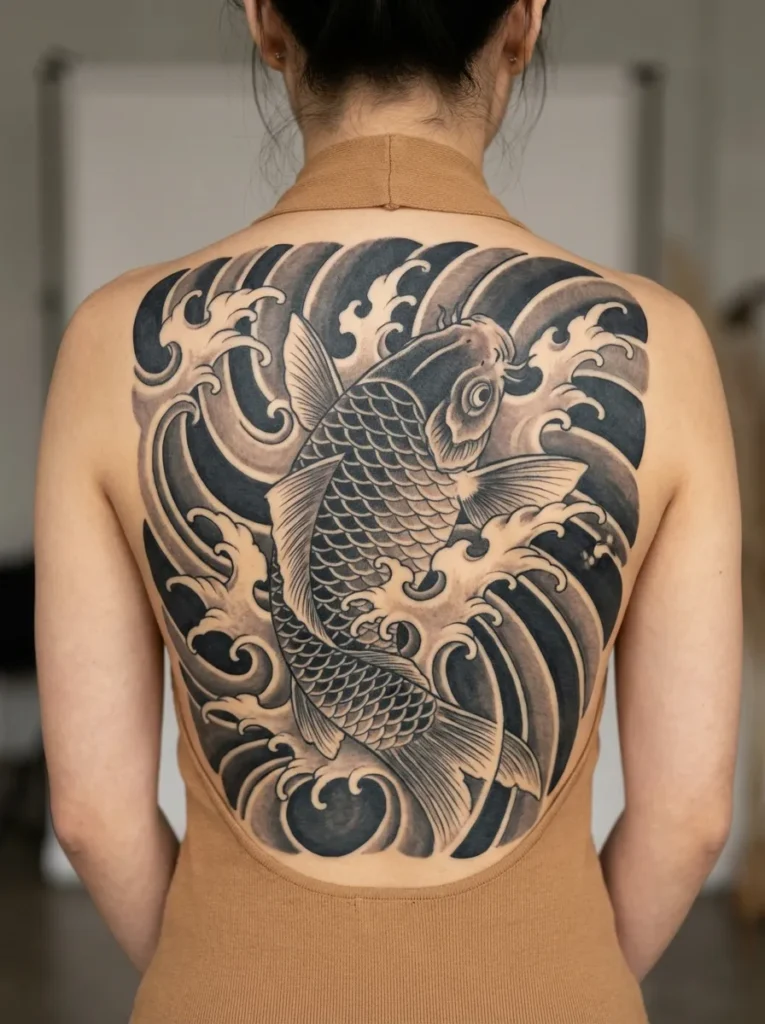
Water is inseparable from the koi. But when you bring in the full wave aesthetic inspired by Hokusai’s iconic imagery, the design becomes something else entirely.
The crashing waves aren’t just background. They’re the obstacle. The environment the koi exists within and moves through regardless.
Bold curling wave crests with a koi cutting through them is one of the most dynamic compositions in all of Japanese tattooing. The tension between the powerful water and the determined fish creates visual energy that’s almost impossible to look away from.
- White foam tips on wave crests add depth and contrast
- Place the koi breaking through a wave crest for maximum dramatic impact
- This concept rewards a larger canvas where the waves can fully develop
4. Koi Transforming into Dragon
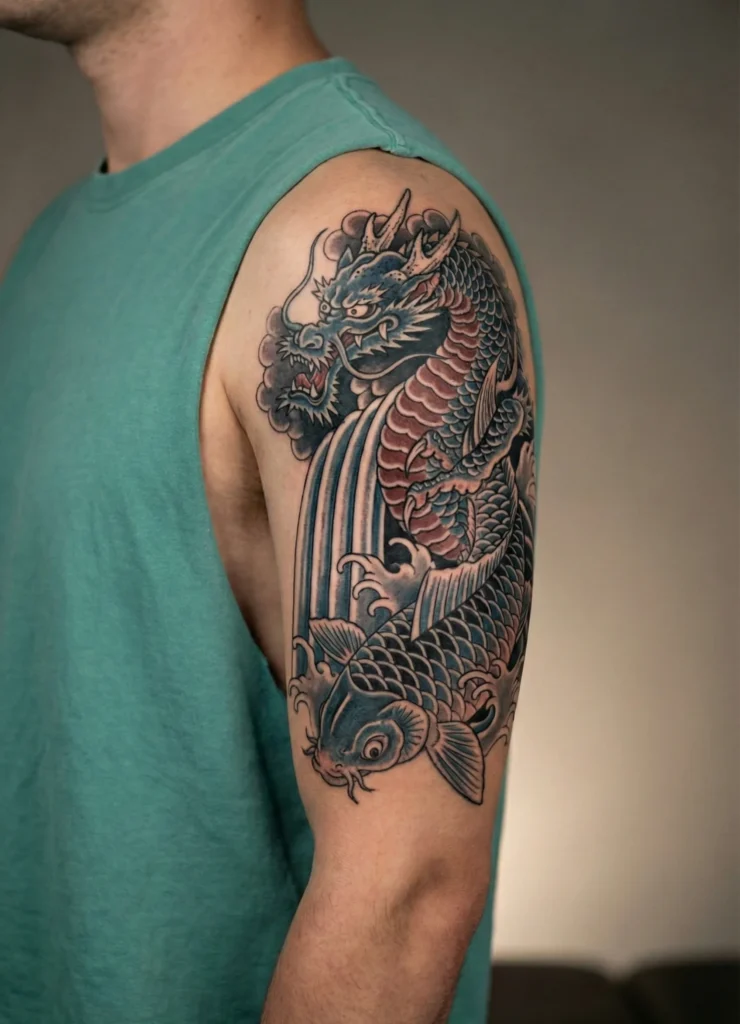
This is the full legend made visual. The koi at the base of the waterfall and the dragon emerging above. Two creatures, one transformation, one tattoo.
It’s one of the most profound concepts in Japanese tattoo art. The idea that persistence and courage can fundamentally change what you are.
The transition between fish and dragon is where the real artistry happens. Scales becoming armor. Fins becoming claws. The fish and the dragon sharing the same body in mid-transformation.
People get this tattoo at turning points. When they’ve pushed through something significant and feel genuinely different on the other side. It marks the moment of change.
| Design Approach | What It Shows | Best Placement |
| Separate fish and dragon | The journey from start to finish | Full sleeve or back |
| Mid-transformation figure | The moment of becoming | Thigh, chest, or ribs |
| Dragon above waterfall only | The completed transformation | Shoulder and upper arm |
5. Yin Yang Twin Koi Fish
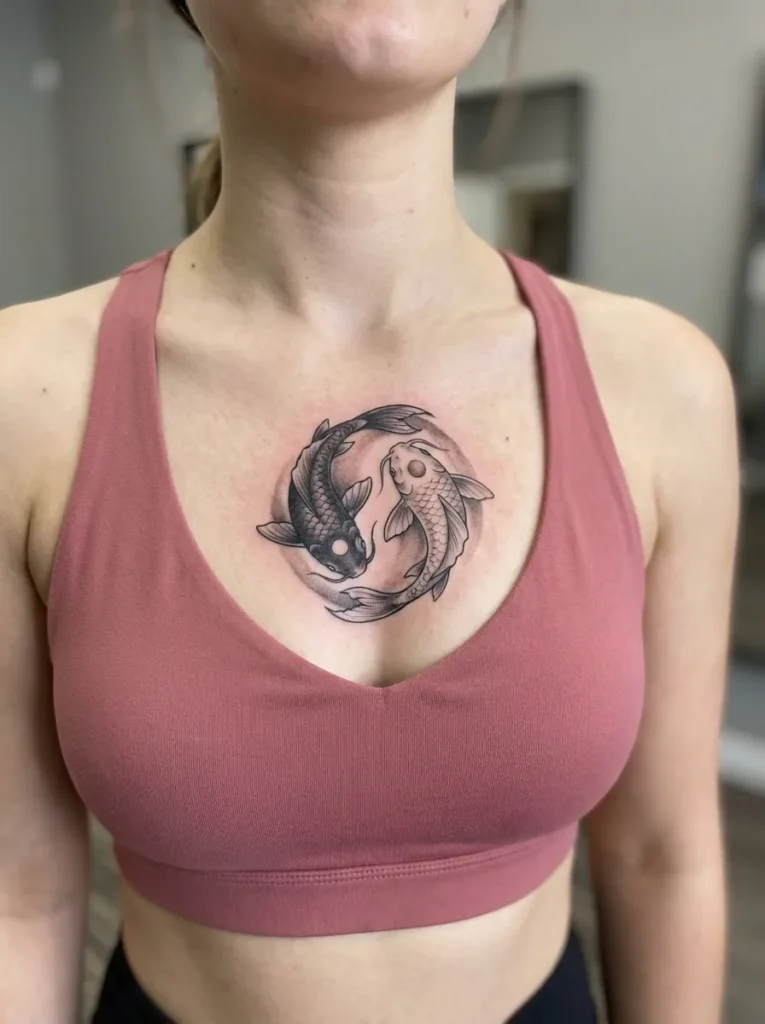
Two koi swimming in opposite directions, forming a circle. One dark, one light. This is the yin-yang concept expressed through one of Japan’s most beloved symbols.
It speaks to balance. The understanding that opposing forces don’t cancel each other out. They complete each other.
This design has a natural circular composition that works beautifully as a standalone piece. Upper arm, thigh, or chest placement gives it the space to breathe symmetrically.
It’s a tattoo for people who’ve made peace with contradiction. Who understand that strength and softness, light and dark, aren’t enemies.
6. Black and Grey Koi Tattoo
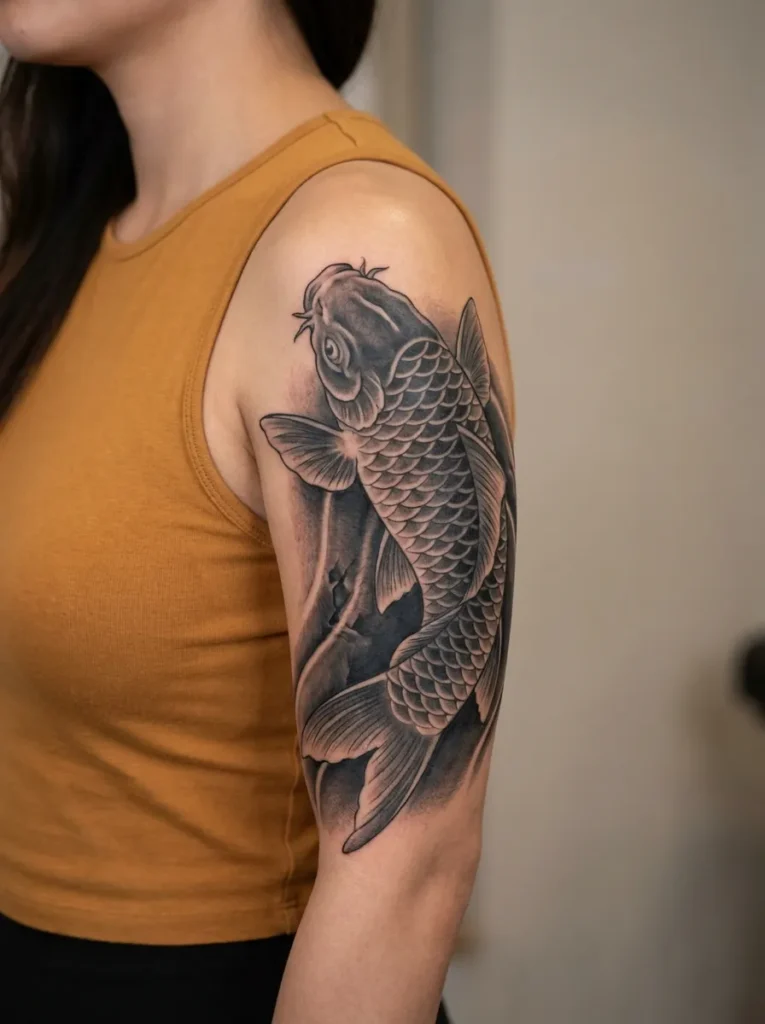
Color is stunning on koi tattoos. But black and grey has its own power that color work simply can’t replicate.
The tonal range available in black and grey shading gives koi scales an almost photographic depth. The fish looks three-dimensional. Heavy and real, like something genuinely moving through water.
Without color to carry the design, the composition and the technical skill of the artist become everything. The best black and grey koi tattoos are studies in patience and precision.
This style tends to age better on skin than vibrant color work. The contrast holds over time in a way that saturated colors sometimes don’t.
7. Red Koi for Love and Courage
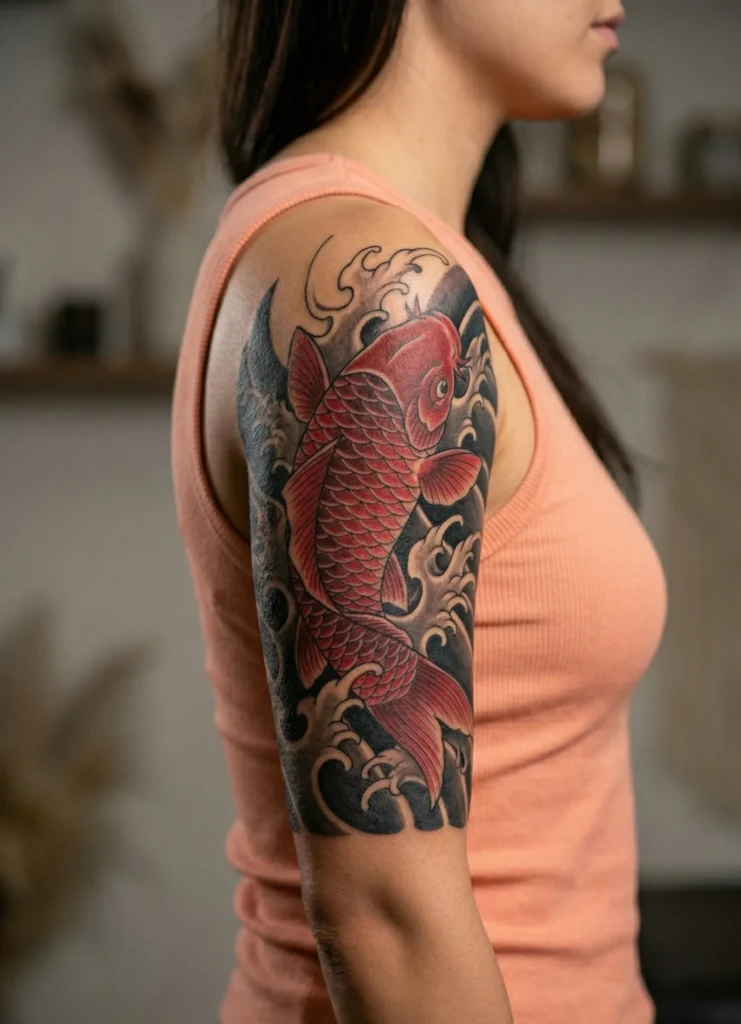
Red koi carry specific meaning in Japanese symbolism. They represent love, courage, and intense personal strength. The boldest, most passionate version of what a koi can mean.
As a tattoo, a red koi is visually commanding. The color is vivid and warm, with an almost emotional intensity to it.
It’s often chosen by people marking relationships, acts of bravery, or a commitment to living more fully and fearlessly.
The red deepens and enriches beautifully against black wave backgrounds or dark water shading. It’s one of the strongest color contrasts available in Japanese tattooing.
8. Golden Koi for Prosperity
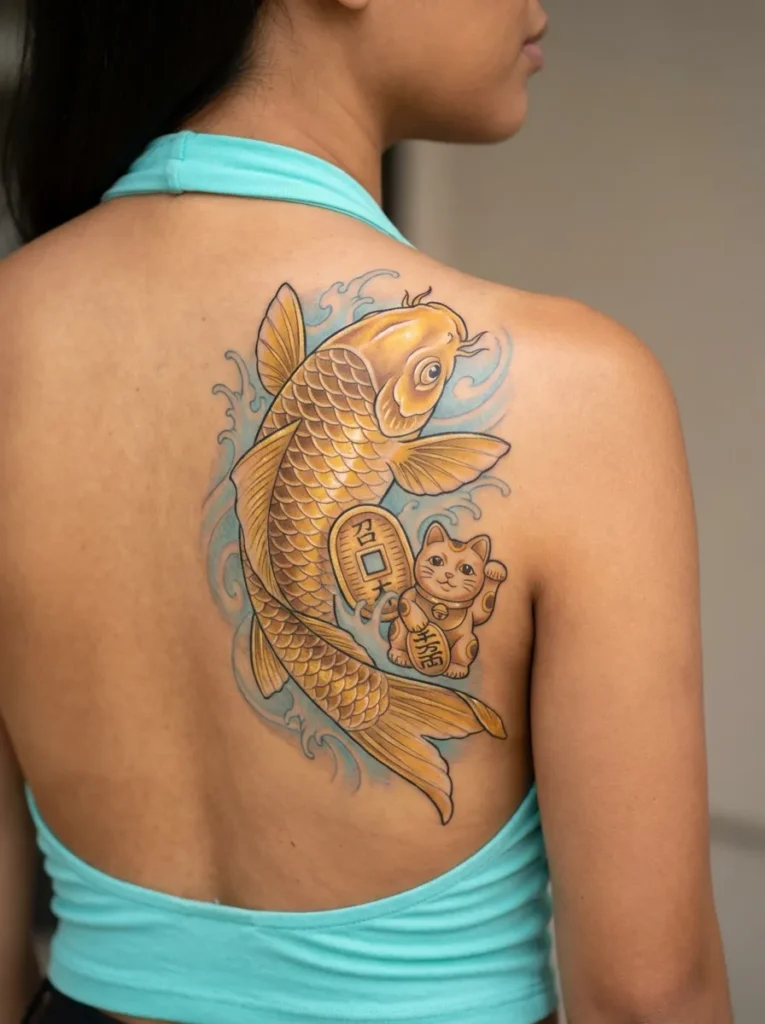
Gold and yellow koi are symbols of wealth, good fortune, and the flow of abundance into your life. They’re associated with financial success and positive material outcomes.
A golden koi tattoo has a warmth to it that feels almost luminous on skin. When the artist uses warm honey tones with careful highlighting, the fish genuinely seems to glow.
This is a common choice for people starting new ventures, businesses, or financial chapters. It’s an intention made permanent.
- Pair with a kobān coin element for a doubled prosperity symbol
- Gold koi alongside a Maneki Neko creates a full luck and abundance composition
- White or pale blue water backgrounds let the gold tones really stand out
9. Koi with Cherry Blossoms (Sakura)
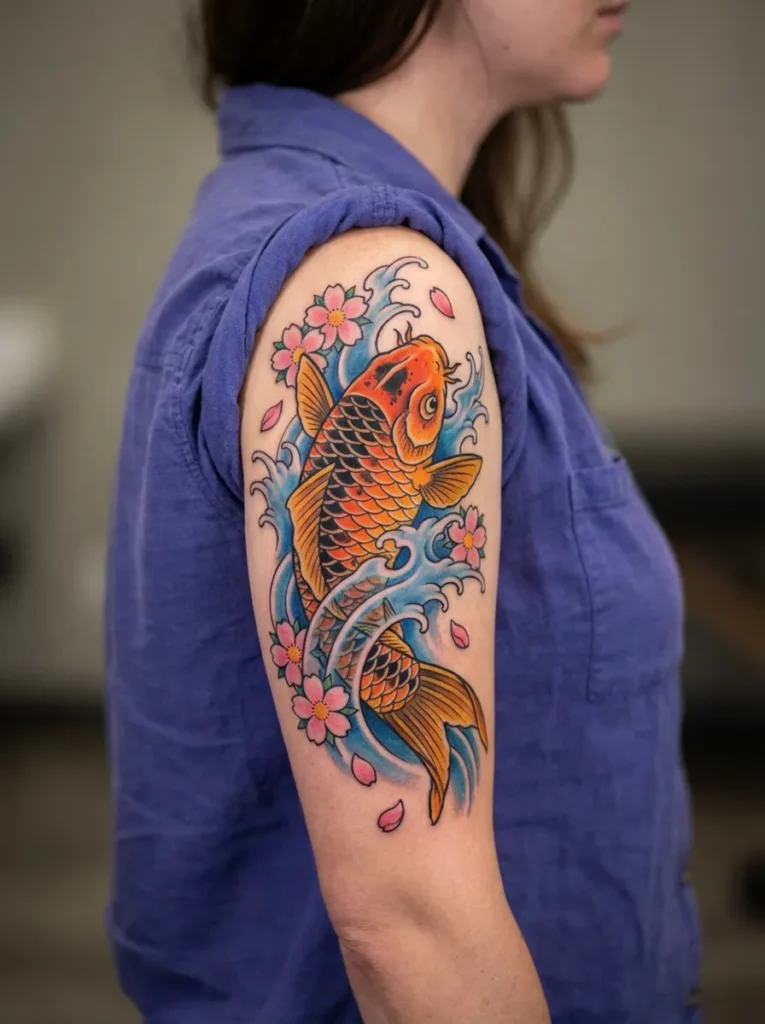
Cherry blossoms and koi are one of the most naturally harmonious pairings in Japanese tattooing. Both are tied to the concept of beauty that doesn’t last forever.
The koi pushes forward with strength and determination. The sakura petals fall around it, softly reminding you that the journey is finite. Appreciate it while you’re in it.
Falling petals drifting down into the water around a swimming koi creates a composition that’s both dynamic and tender at the same time.
The color contrast between soft pinks and the bold tones of the koi makes this a visually rich design without needing any additional elements.
10. Koi with Peony (Botan)
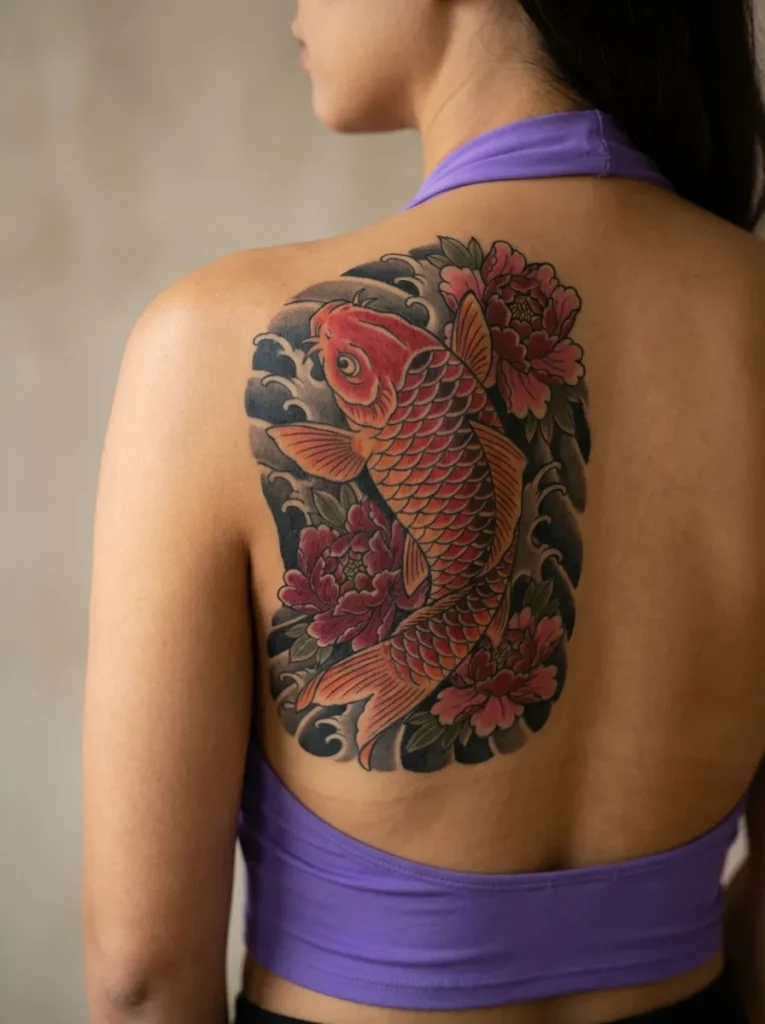
Peonies represent honor, bravery, and good fortune in Japanese culture. They’re one of the foundational flowers of irezumi tattooing. Paired with a koi, the combination covers almost every positive symbol you could want in one design.
The lush, layered petals of a peony provide a natural organic frame around the koi’s flowing body. The shapes work together without competing.
Deep crimson or pink peonies against a bold red or orange koi creates a color palette that feels traditional and rich. Add darker water shading behind both and the whole thing comes to life.
This is a proven composition that skilled Japanese tattoo artists have been refining for decades. There’s a reason it keeps coming back.
11. Koi and Lotus Flower (Hasu)
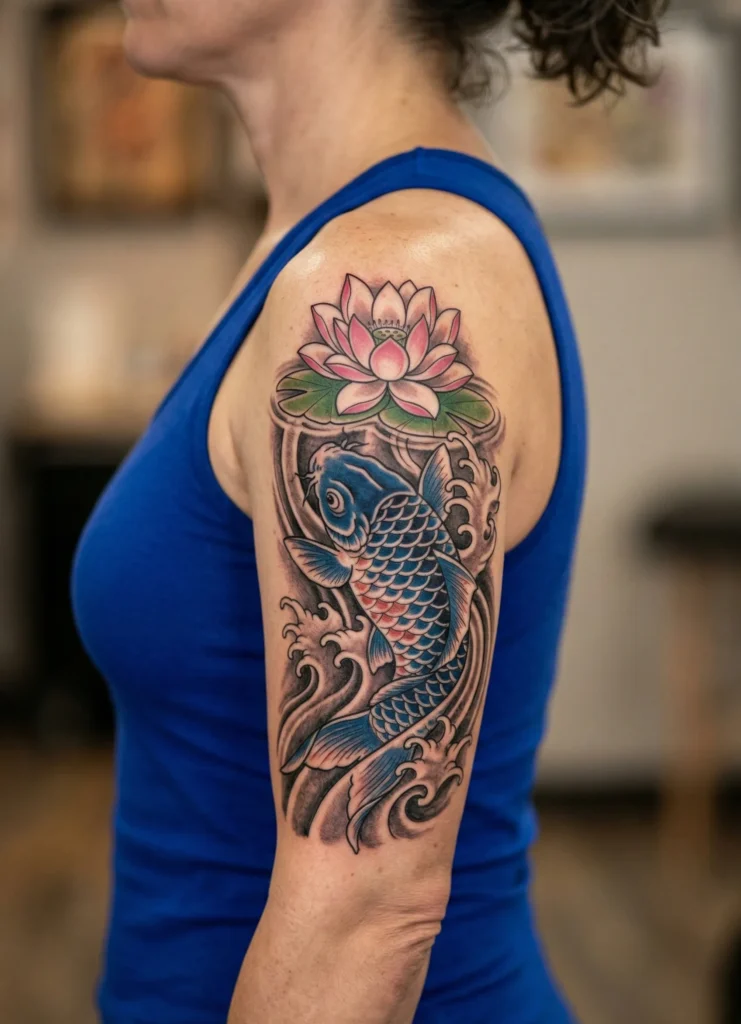
The lotus grows in murky water and rises to bloom in clean light. The koi swims through that same murky water without being defined by it. Two symbols of rising above your environment in one design.
This pairing speaks to purity through difficulty. The idea that where you came from doesn’t have to determine where you end up.
The lotus sits naturally at the water’s surface while the koi moves below or alongside it. It’s a composition with natural vertical flow that works well on arms and legs.
For people who’ve come through genuinely hard circumstances and want to mark that without making it about the darkness, this is a quietly powerful choice.
12. Koi Sleeve Composition
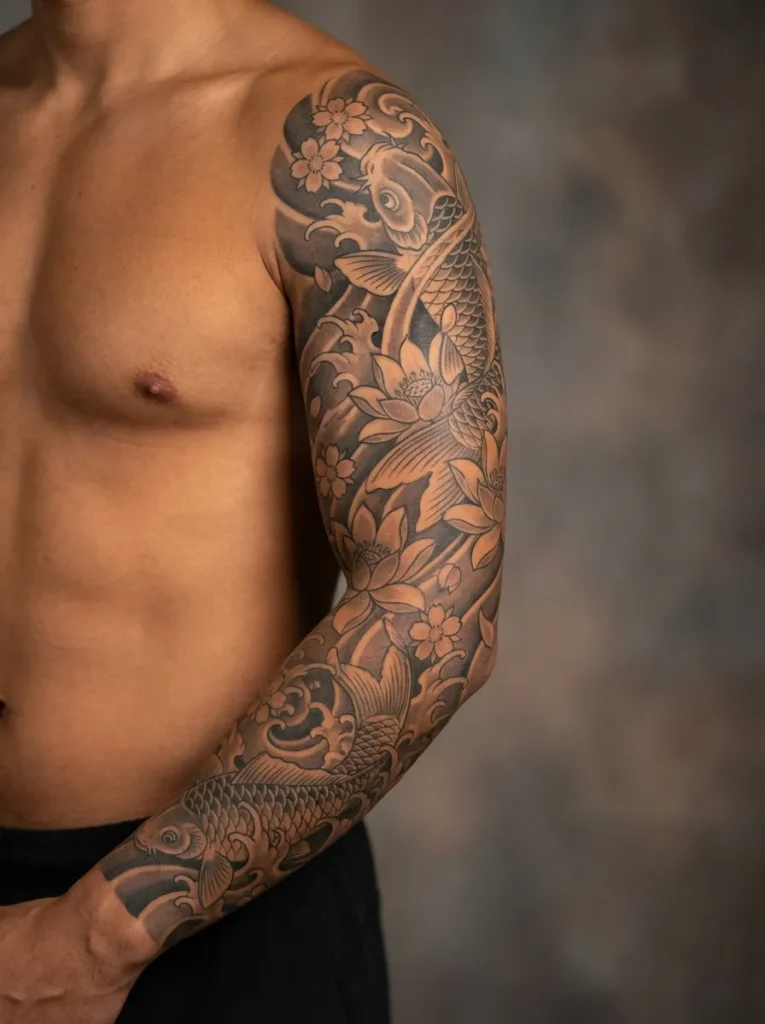
A full sleeve built around koi is one of the most cohesive and visually satisfying commitments in Japanese tattooing. The fish, the water, and the supporting elements flow together in a way that few other subjects can match.
The key is building a world rather than stacking individual tattoos. Water should feel like it connects from wrist to shoulder. Supporting elements like blossoms, waves, and lotus flowers should exist within that same environment.
- Plan the water flow direction across the entire sleeve before starting
- Decide early if the koi swims upstream or downstream and let that choice guide composition
- Keep background shading consistent so the sleeve reads as one unified piece
Plan this with your artist across multiple sessions. The best sleeves are built slowly and intentionally.
13. Koi Backpiece with Waterfall
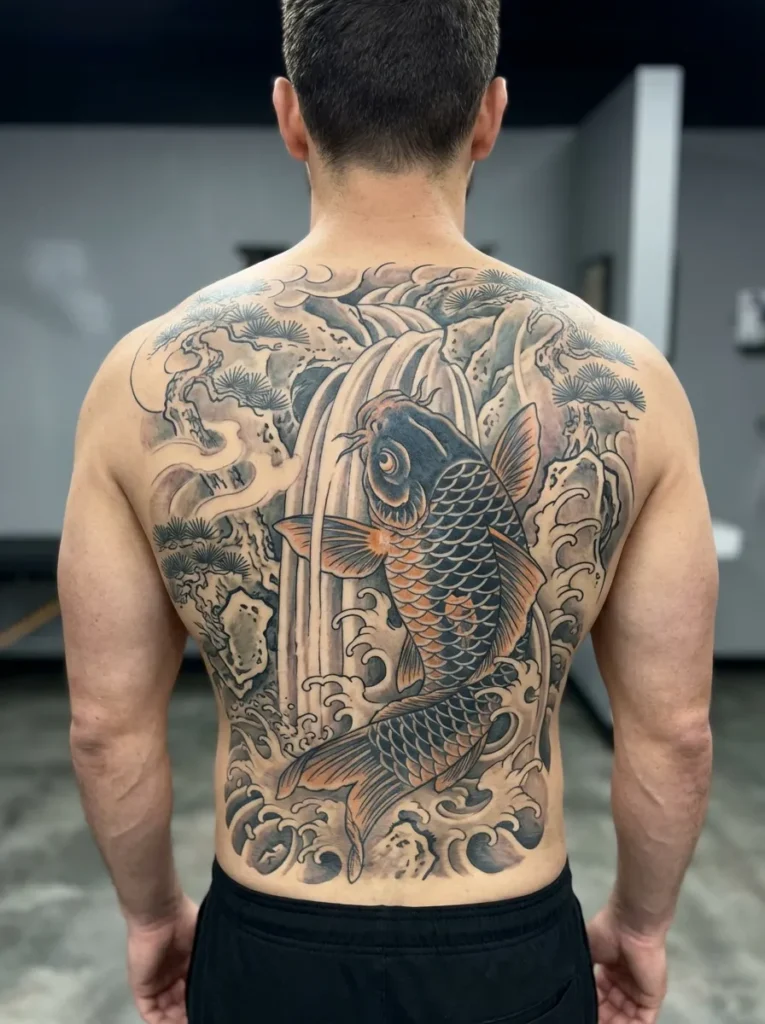
The back gives you the largest canvas your body offers. A full backpiece with a koi approaching or ascending a waterfall is one of the most epic compositions in Japanese tattooing.
The waterfall flows down the center or side while the koi pushes upward against it. The legend becomes literal. The fish is right there at the moment of transformation.
Mist, rocks, surrounding trees, and wave patterns fill the remaining space naturally. Every element earns its place in the story.
This is a years-long commitment. Multiple sessions, significant investment, and deep trust in your artist. The result is a backpiece that people will remember.
14. Koi and Samurai Theme
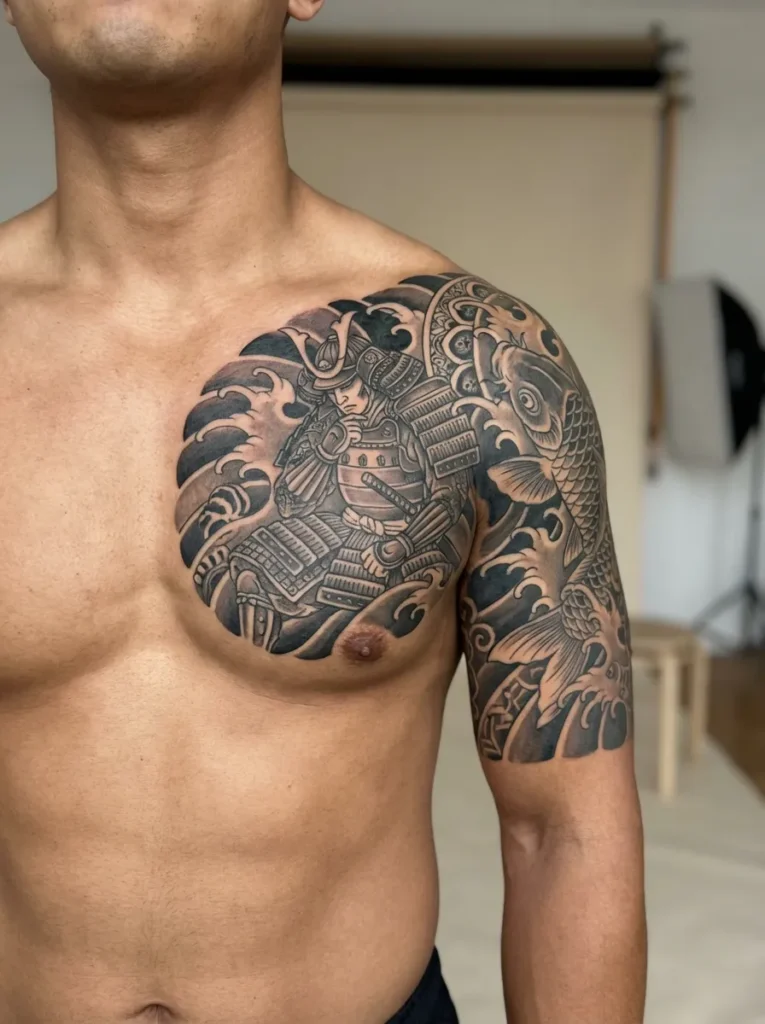
Two symbols of perseverance and strength sharing one design. The samurai who trains every day and the koi who swims every day, both moving toward mastery without guarantees.
The composition can be interpretive. A samurai standing at a koi pond in contemplation. Or the koi and samurai sharing a sleeve as complementary figures in a larger narrative.
It resonates with people who connect discipline and personal honor to their growth journey. The warrior and the fish. Different forms, same spirit.
This concept works beautifully as a sleeve or chest piece where both subjects can be given equal visual weight without one overshadowing the other.
15. Koi Hand Tattoo Design
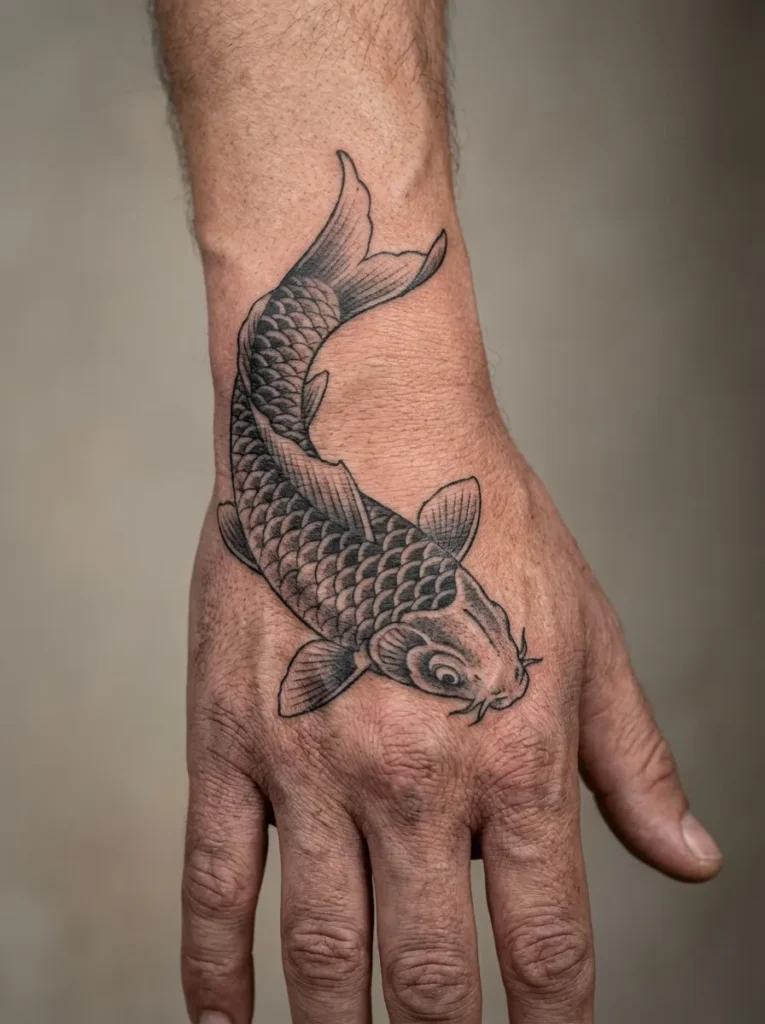
A koi on the hand is a bold placement choice. Visible, intentional, and impossible to miss.
The hand’s shape and movement work naturally with a swimming koi. The fish can curve from the wrist across the back of the hand, the tail fading at the wrist and the head reaching toward the fingers.
Be honest with yourself about placement before committing. Hand tattoos fade faster than most and require touch-ups more regularly. They also carry professional and social visibility that other placements don’t.
For the right person, a hand koi is a daily reminder of what you’re swimming toward. That visibility is part of the point.
16. Koi with Wind Bars Pattern
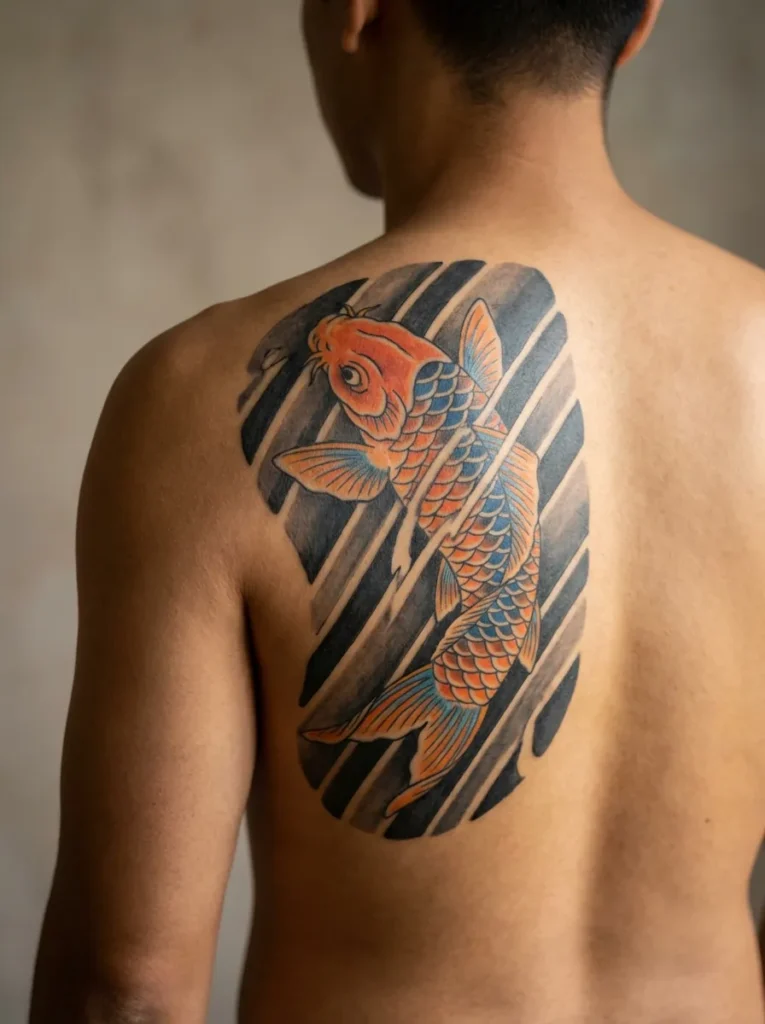
Wind bars are a classic background element in Japanese tattooing that adds movement and atmosphere without adding visual clutter.
Behind a koi in motion, diagonal wind bars create the sense that the fish is cutting through not just water but energy itself. It’s a small detail that elevates the entire composition.
The graphic quality of wind bars pairs especially well with bold, clean koi designs in traditional irezumi style. The lines feel intentional and historically grounded.
Black and grey wind bars behind a full color koi creates a contrast that makes the fish pop off the skin in a way that solid water shading sometimes doesn’t.
17. Twin Koi Half Sleeve Design
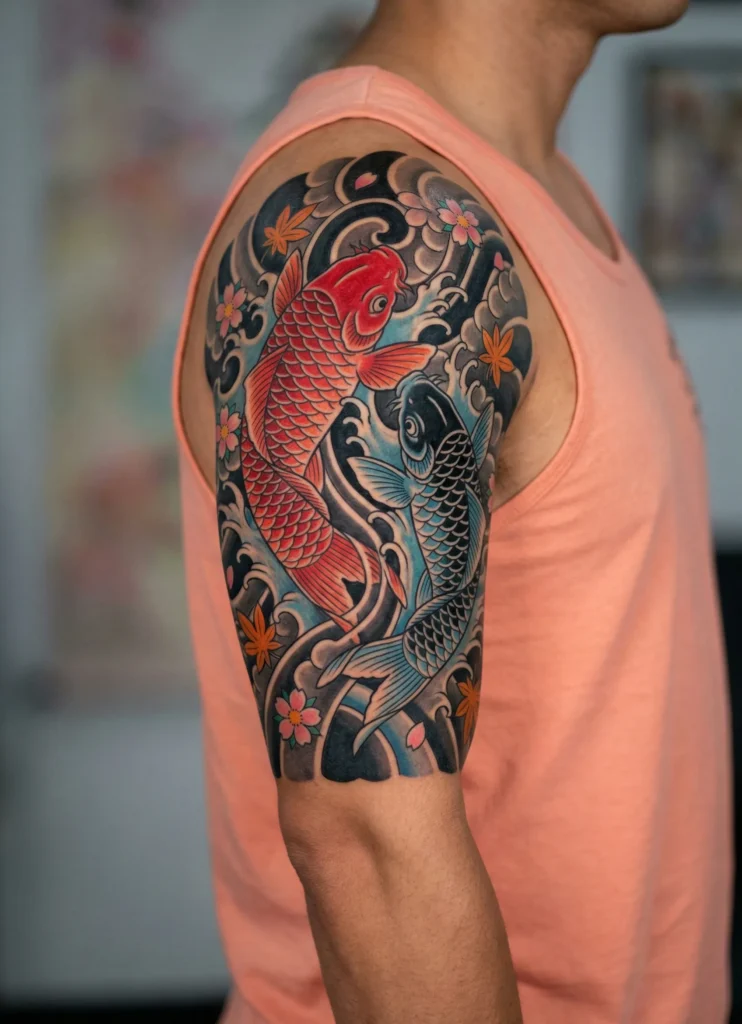
Two koi in a half sleeve creates natural symmetry and the opportunity to tell a richer story. The fish can mirror each other, chase each other, or represent two opposing energies in balance.
A popular approach is pairing a red koi with a black or blue koi in a flowing composition that wraps from the elbow to the shoulder or wrist to elbow.
The twin koi concept works especially well for people who want to represent two sides of their own nature. Strength and gentleness. Passion and patience. Two truths held at once.
The half sleeve format is also a natural middle ground for people not yet ready to commit to a full sleeve but wanting something more substantial than a single piece.
18. Koi Chest Panel Design
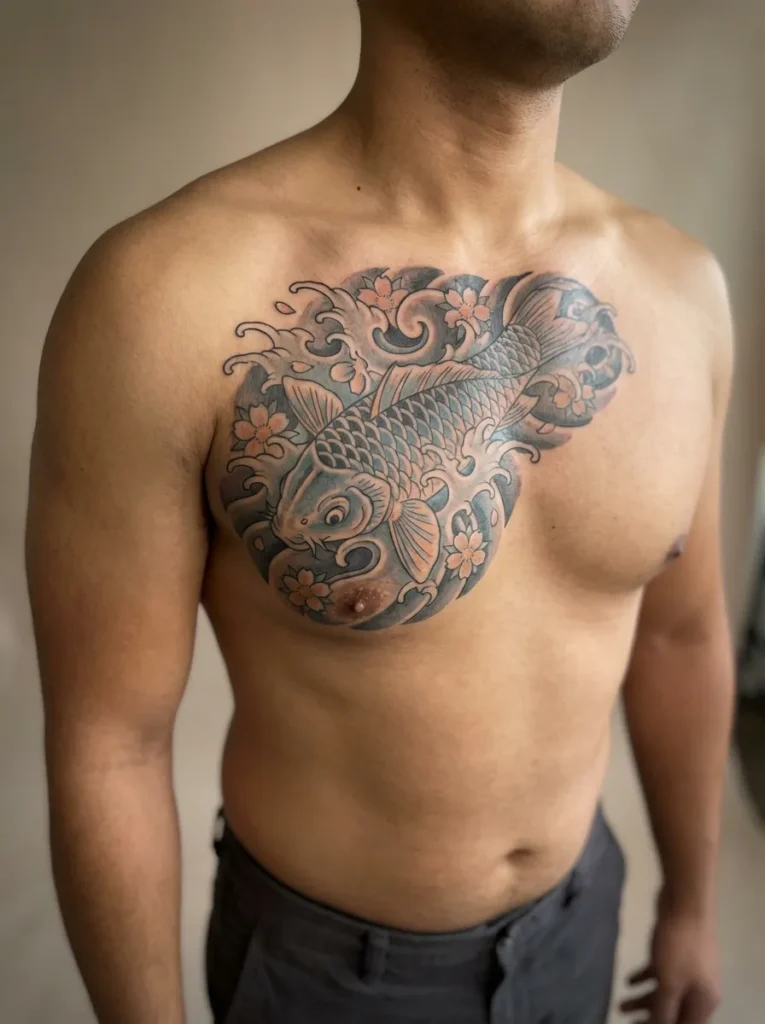
The chest is one of the most intimate placements you can choose. A koi panel across one side of the chest or spanning both pecs creates a dramatic and personal statement.
The composition can center on a single large koi in motion with waves and supporting floral elements building around it. Or twin koi facing each other across the sternum in a symmetrical panel.
Chest pieces are partially hidden and partially revealed. They’re for you first. Other people see them on your terms.
For a design this meaningful, that placement makes a lot of sense.
19. Koi with Bamboo Accents
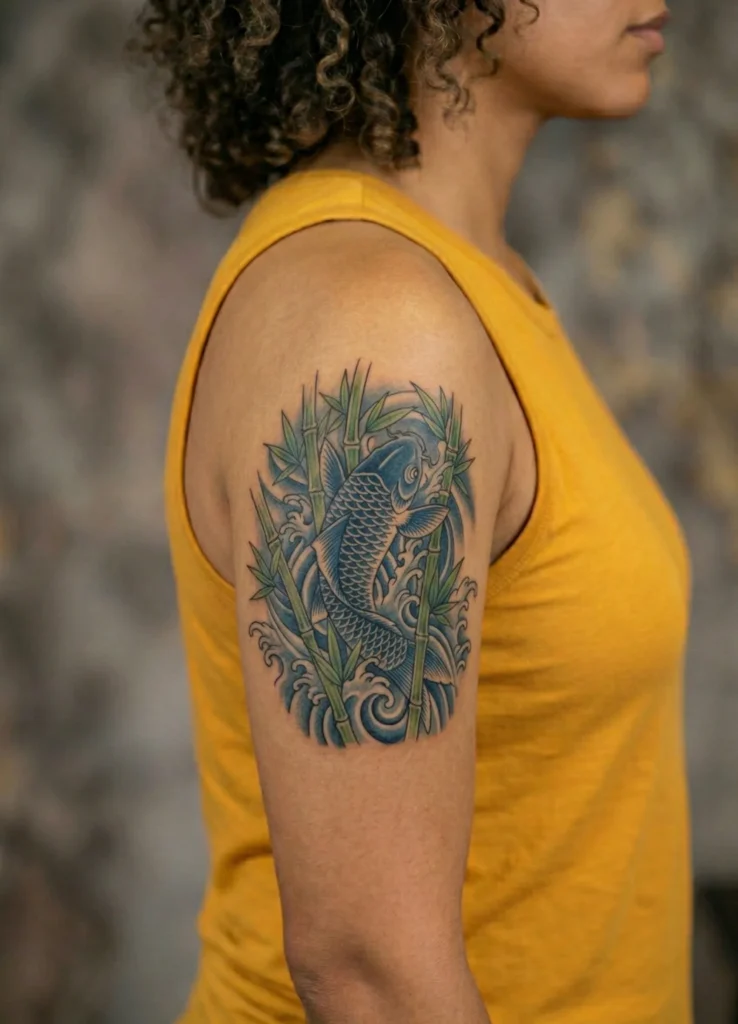
Bamboo represents resilience, flexibility, and the ability to bend without breaking. It grows fast, stands firm, and survives conditions that destroy other plants.
Adding bamboo stalks to a koi composition brings in a grounded, earthy energy that complements the fluid movement of the fish. Where the koi flows, the bamboo holds steady.
The vertical lines of bamboo work naturally alongside a vertically swimming koi, especially on forearms and shins. The two elements frame each other without competing for attention.
It’s a subtle addition that carries real weight for people who value the combination of flexibility and rootedness in how they move through life.
20. Koi and Phoenix Contrast Theme
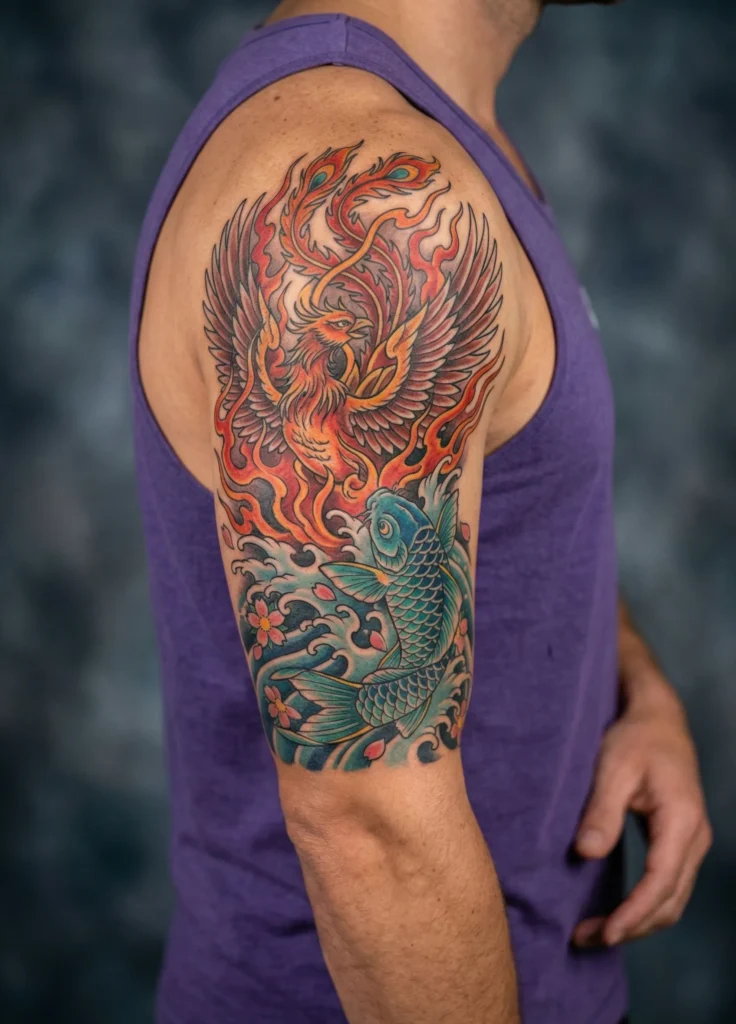
Two creatures of transformation sharing one design. The koi rises through water. The phoenix rises through fire. Both are destroyed and reborn. Both push through the worst to become something new.
This pairing creates dramatic visual contrast. The cool blues and greens of the koi against the hot reds and oranges of the phoenix. Water energy versus fire energy. Two different paths to the same destination.
It’s one of the most emotionally loaded combinations in Japanese-inspired tattoo art. People who get this one have usually been through something that fundamentally changed them. Twice.
The phoenix naturally occupies the upper body while the koi flows below, making this an ideal concept for a full back or torso piece with the two creatures meeting at the center.
Every koi tattoo is ultimately about the same thing. The decision to keep swimming regardless of what the current is doing. So what are you pushing through right now, and which of these designs feels like the most honest reflection of where you actually are in that journey?
