
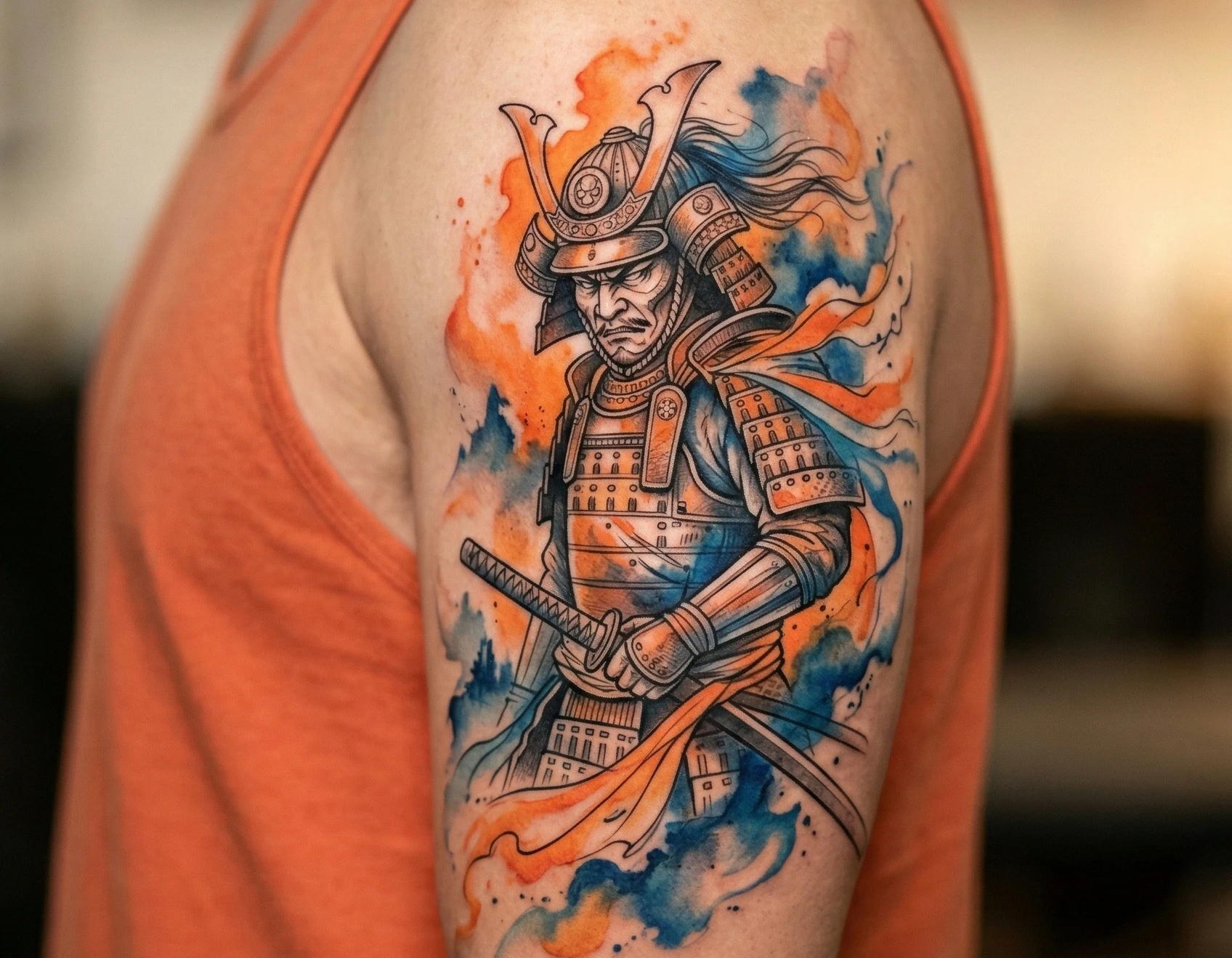
Not every tattoo needs hard lines to make a statement.
Japanese watercolor tattoos do something different.
They bleed, they bloom, and they carry that loose, painterly energy that feels like art lifted straight off rice paper and placed onto skin. It’s a style that takes serious skill to pull off, but when it works, it really works.
These designs blend centuries of Japanese iconography with a modern, expressive approach to color and texture.
If you’ve been looking for something that feels artistic rather than graphic, this list is for you. Here are 21 Japanese watercolor tattoos worth obsessing over.
1. Japanese Watercolor Dragon (Ryū)
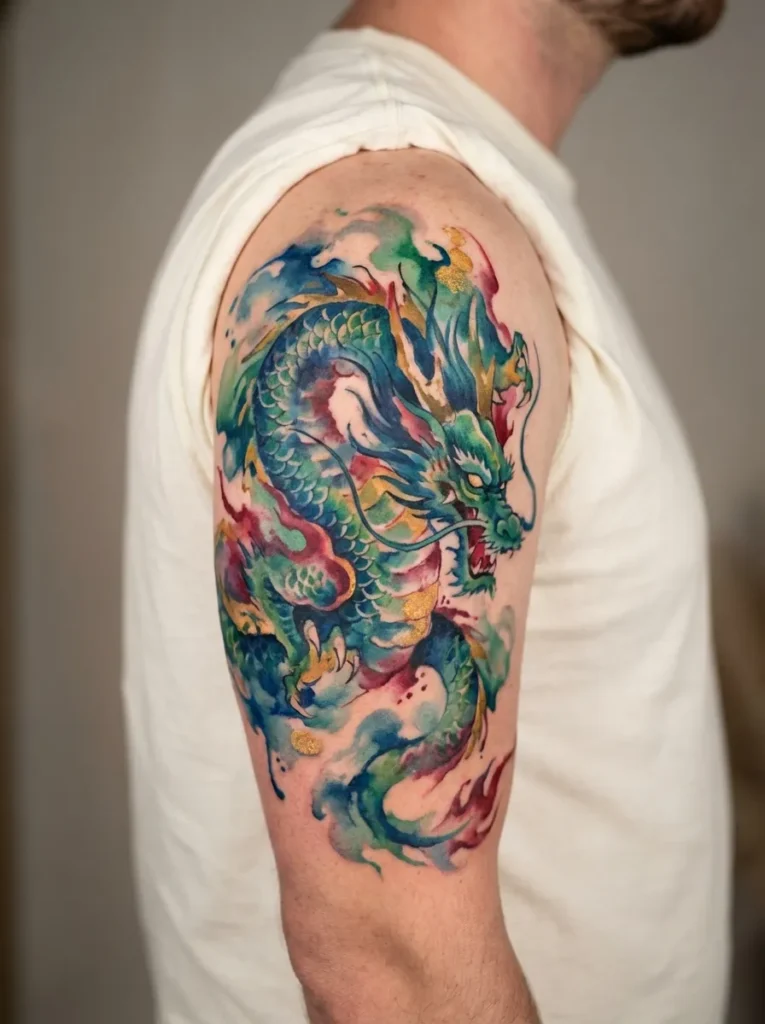
A watercolor dragon hits completely differently than a traditional one.
Instead of bold outlines holding everything in place, the color bleeds outward. Scales blur into mist.
The whole creature feels like it’s dissolving into the air around it, which somehow makes it feel even more powerful and mythical.
Deep blues and greens with splashes of gold and red work beautifully here. The dragon should feel like it’s emerging from the color rather than sitting on top of it.
2. Japanese Watercolor Koi Fish with Flowing Waves
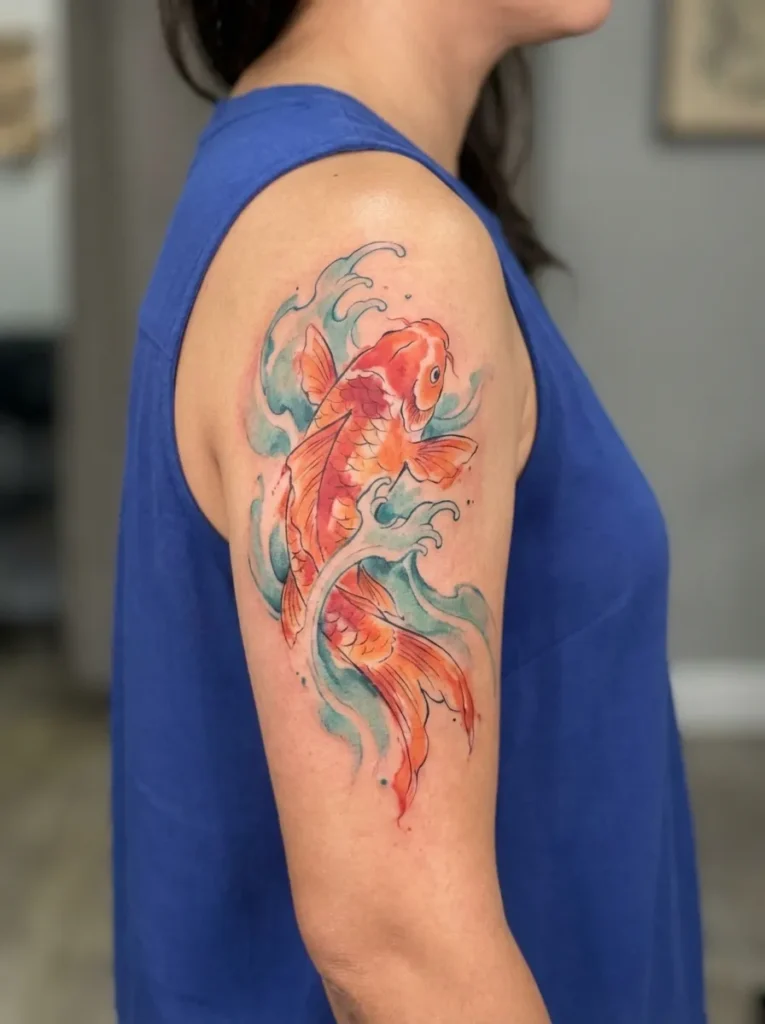
Koi and watercolor are a natural match. The way ink bleeds in this style mimics the actual movement of water.
The fish scales catch light differently depending on how the artist layers the color.
Orange and red koi with loose blue-green wave washes create a composition that genuinely looks like it’s in motion.
This is one of the most requested watercolor Japanese designs for a reason. It rewards artists who understand both the subject and the technique deeply.
3. Japanese Watercolor Phoenix (Hō-ō)
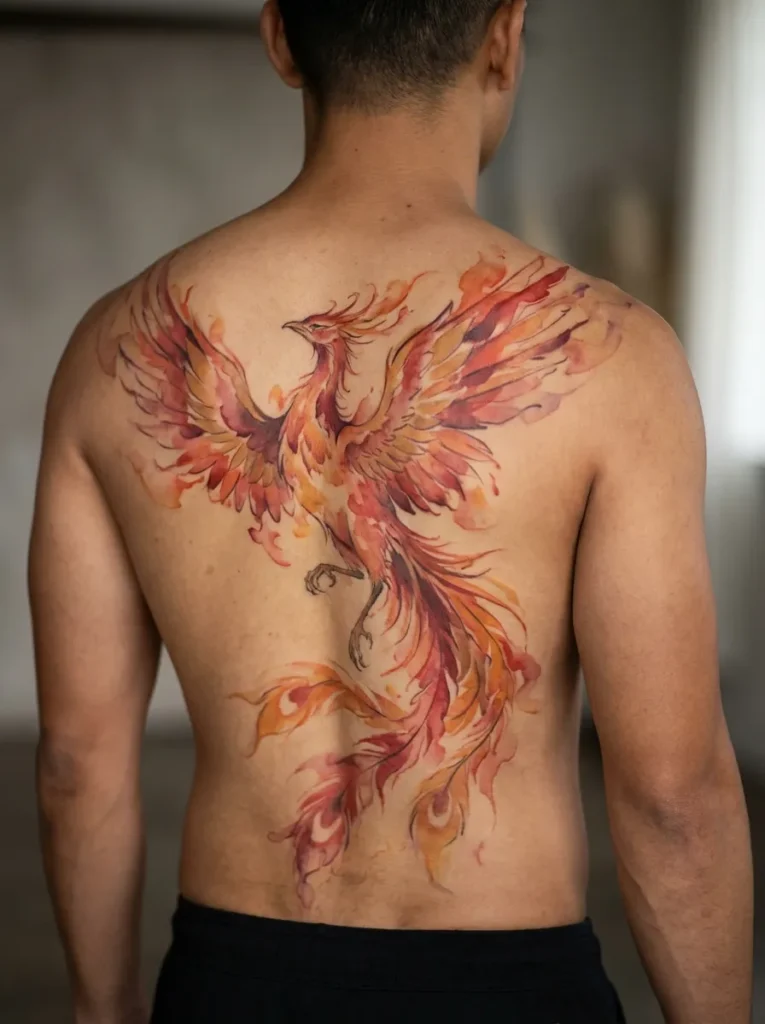
The phoenix is already about transformation and rebirth. Rendering it in watercolor adds another layer to that story.
The feathers dissolve into loose color washes at the edges. Reds, oranges, and golds bleed into each other like an actual flame. The result is a bird that looks like it’s burning and becoming at the same time.
This works especially well as a back piece where the wings can fully extend and the color can spread naturally across a wide surface.
4. Japanese Watercolor Cherry Blossoms (Sakura)
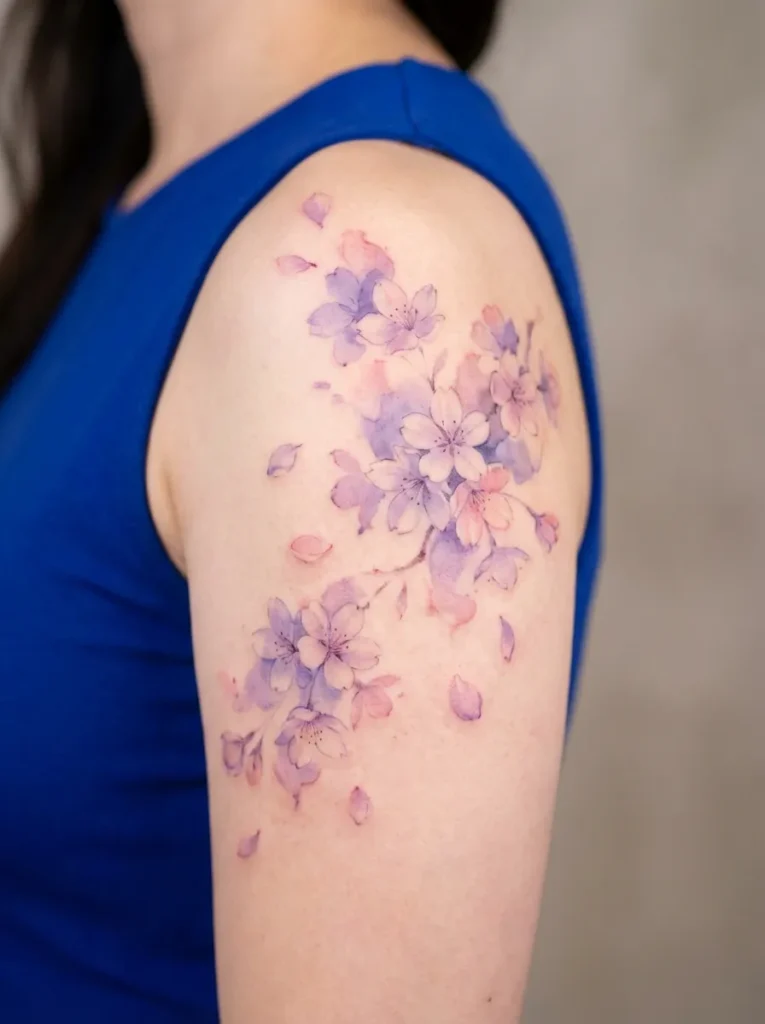
Sakura and watercolor feel like they were designed for each other.
The soft pink blooms with their loose petal edges translate perfectly into a style built on intentional bleeding and soft edges.
There’s no design on this list that feels more natural in watercolor than cherry blossoms.
- Petals can scatter across the skin with no hard boundary needed
- Works beautifully as a standalone piece or supporting element
- Soft lavender and blush pink tones age gracefully in this style
- Negative space is your friend here, don’t overfill the composition
Less is genuinely more with sakura watercolor work.
5. Japanese Watercolor Peony (Botan)
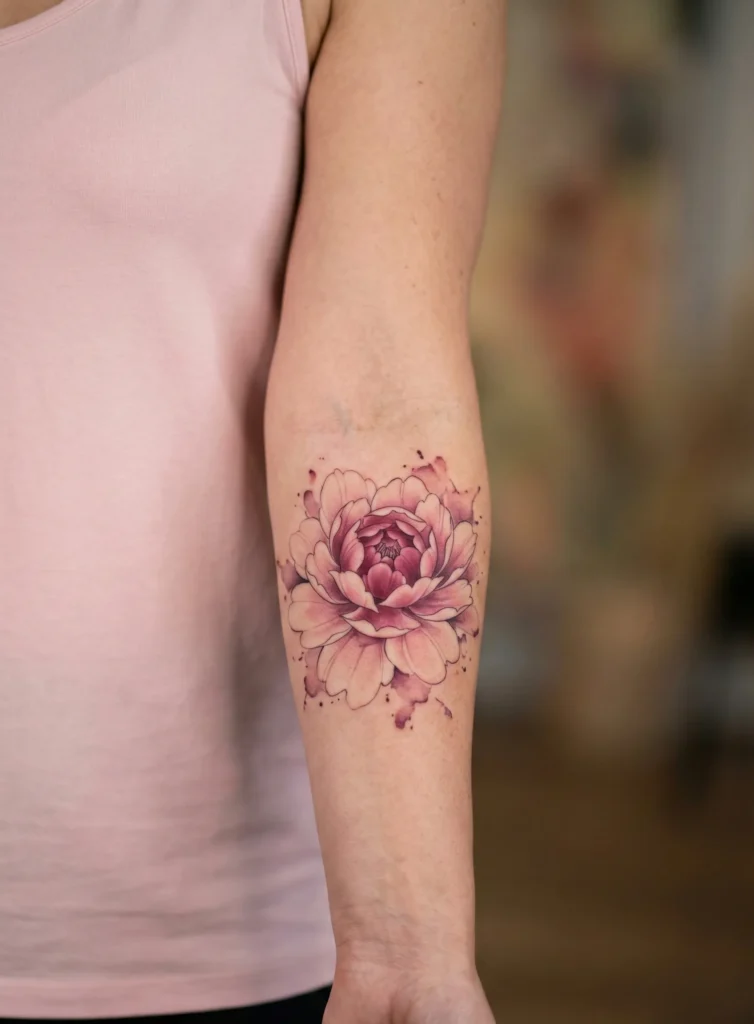
A watercolor peony is lush, layered, and almost overwhelmingly beautiful when done right.
The multiple petal layers of the peony give the artist something to work with in terms of color depth.
Outer petals in pale blush, deeper magenta toward the center, with loose ink splashes breaking the edges of the whole bloom.
It feels abundant without feeling heavy. That’s a hard balance to strike and the reason a well-executed watercolor peony always draws attention.
6. Japanese Watercolor Hannya Mask
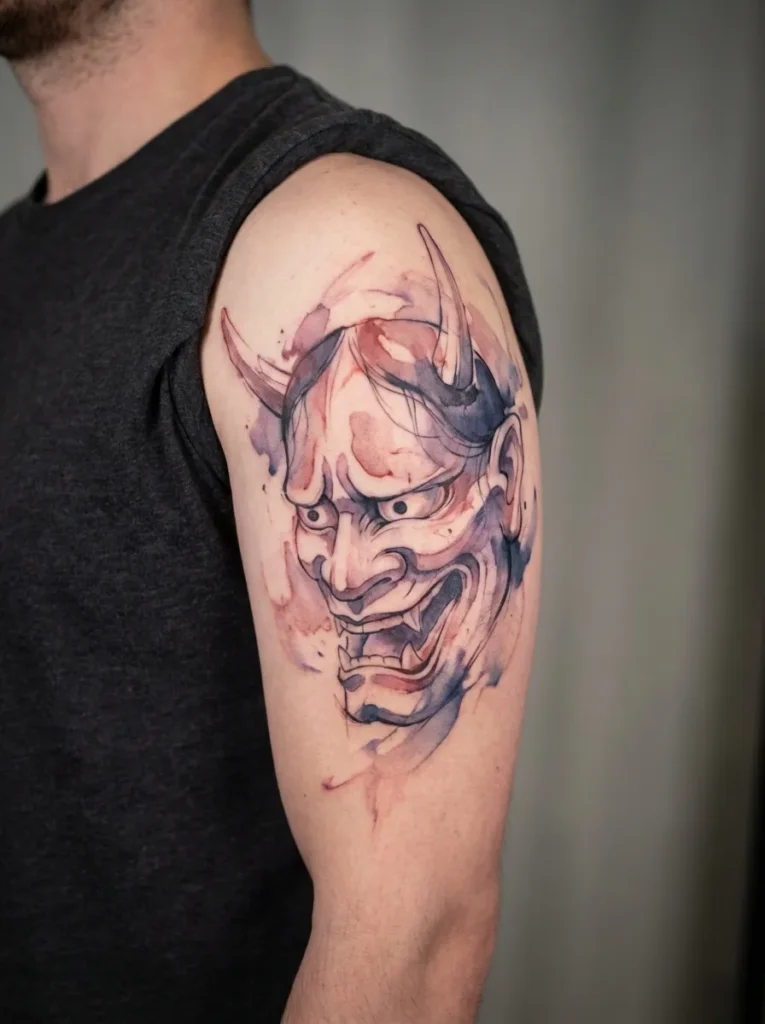
Taking one of Japanese tattooing’s most intense subjects and softening it through watercolor creates a genuinely fascinating result.
The Hannya’s expression stays fierce but the color around it tells a different story.
Soft purples, bleeding reds, and loose brushstroke textures make the mask feel more emotional than menacing. Like rage that’s already beginning to dissolve into grief.
This is one of the more conceptually interesting designs on the list. The style choice changes the meaning in a way that feels intentional and thoughtful.
7. Japanese Watercolor Oni Mask
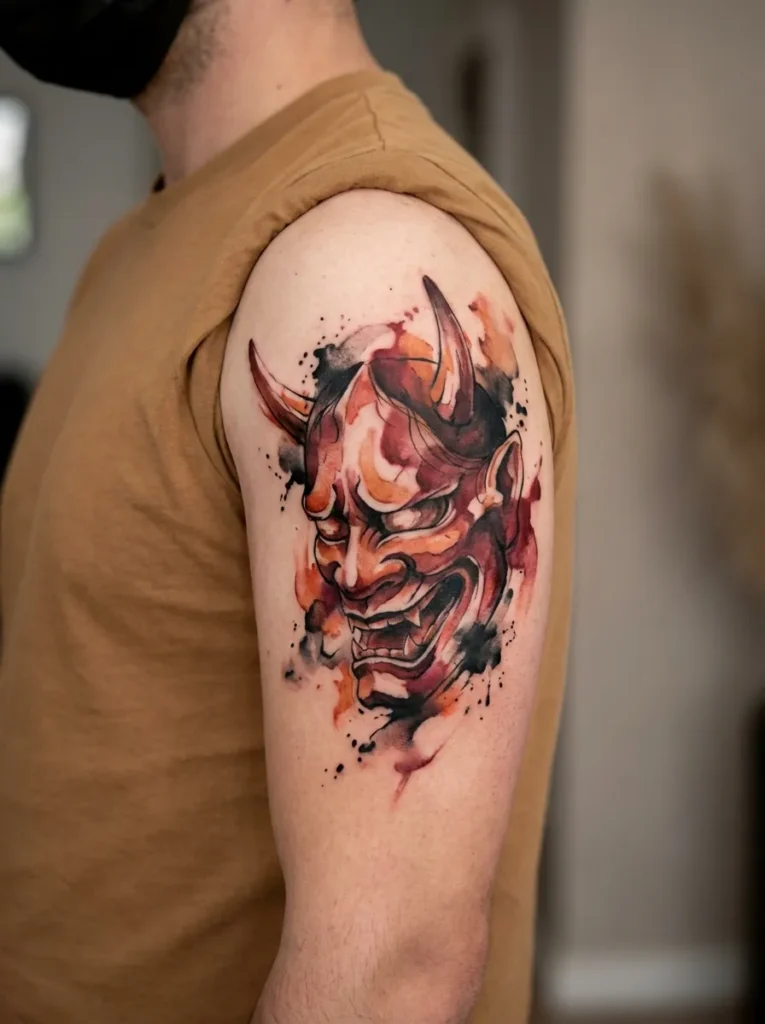
Where the Hannya in watercolor becomes emotional, the Oni in watercolor becomes dreamlike.
The horns and fierce expression remain but the color bleeds outward into abstract washes of red and orange.
It sits somewhere between nightmare and vision. Bold enough to be powerful, soft enough to feel like something remembered rather than seen.
Deep crimson bleeds into burnt orange and black ink splatters work incredibly well around the edges of this design. It rewards artists who aren’t afraid of letting go of control.
8. Japanese Watercolor Tiger (Tora)
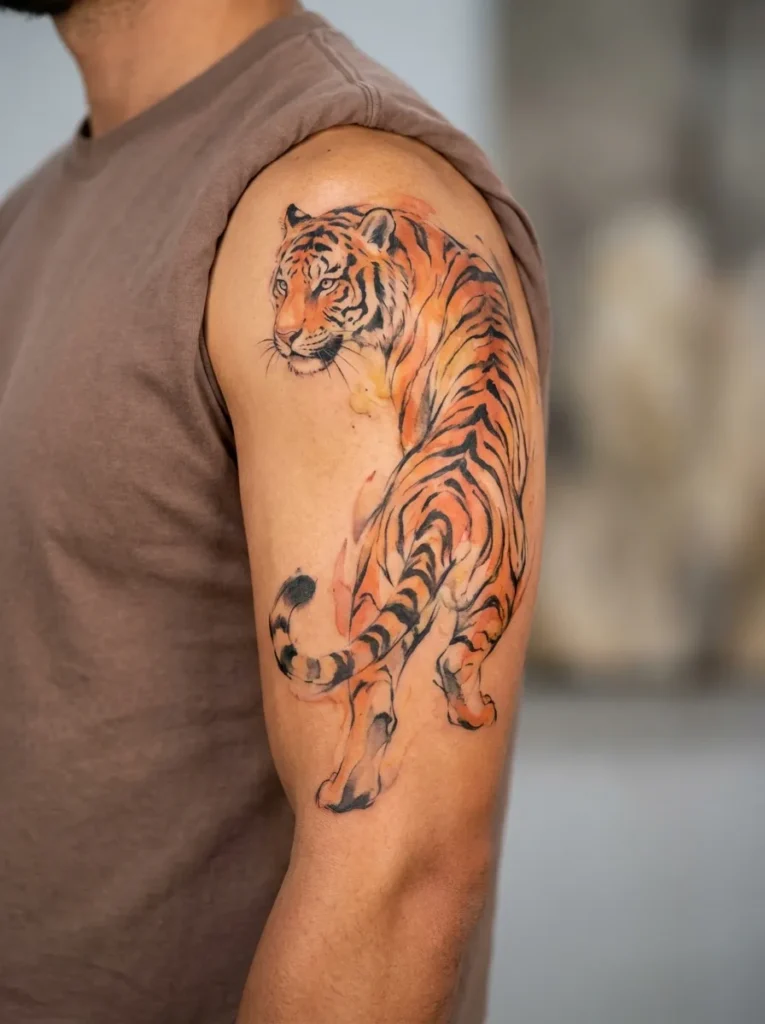
A watercolor tiger done well is one of the most striking tattoos in any style.
The fur texture that makes tigers so visually compelling translates into directional brushstrokes in watercolor.
You get movement, warmth, and that unmistakable orange and black contrast, but without hard outlines boxing everything in.
The face tends to have the most definition while the body and tail dissolve into looser color toward the edges.
That approach gives the tiger a sense of energy and unpredictability that feels exactly right.
9. Japanese Watercolor Lotus Flower (Hasu)
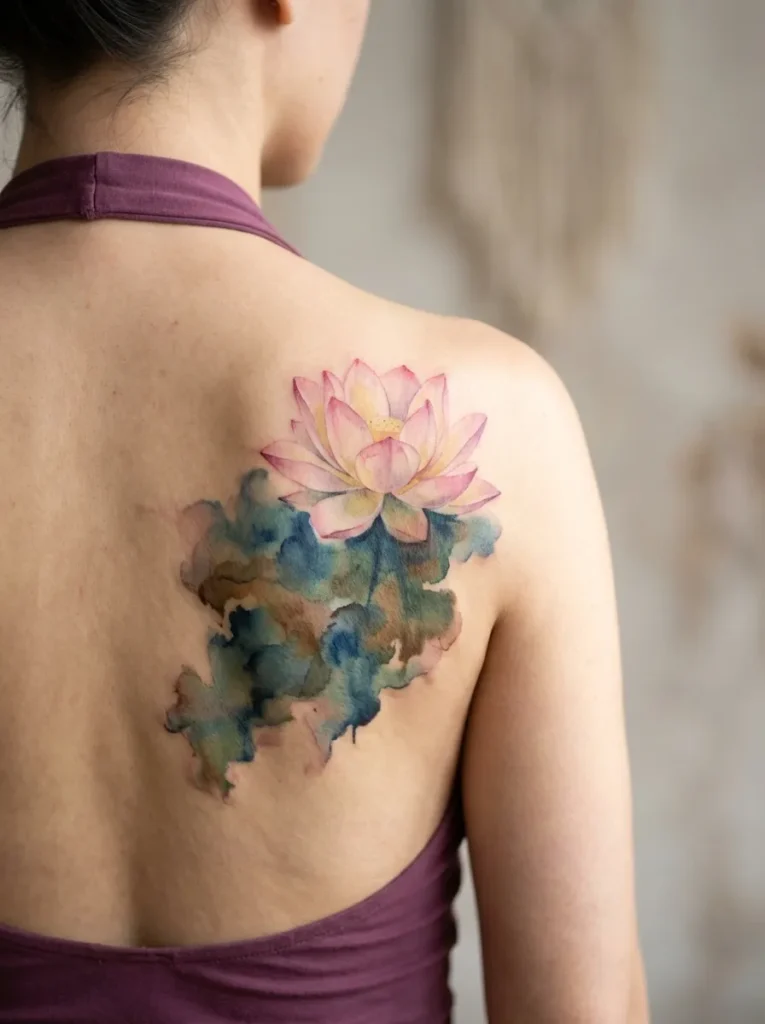
The lotus is already a symbol of rising from murky water. In watercolor, that concept becomes the actual technique.
Color pools and bleeds below the flower the way muddy water would. The petals above stay cleaner, lighter, more defined. The whole image is the symbolism made visible through how the paint behaves.
| Design Element | Traditional Style | Watercolor Style |
| Petal Edges | Hard, defined outlines | Soft, bleeding edges |
| Color Blending | Flat fills with shading | Layered washes, visible blends |
| Background | Bold waves or solid fills | Loose ink splashes, negative space |
| Overall Mood | Structured, iconic | Painterly, expressive |
| Longevity | Very high | Requires touch-ups over time |
This is a design where understanding the technique helps you appreciate the result on a whole different level.
10. Japanese Watercolor Kitsune Mask
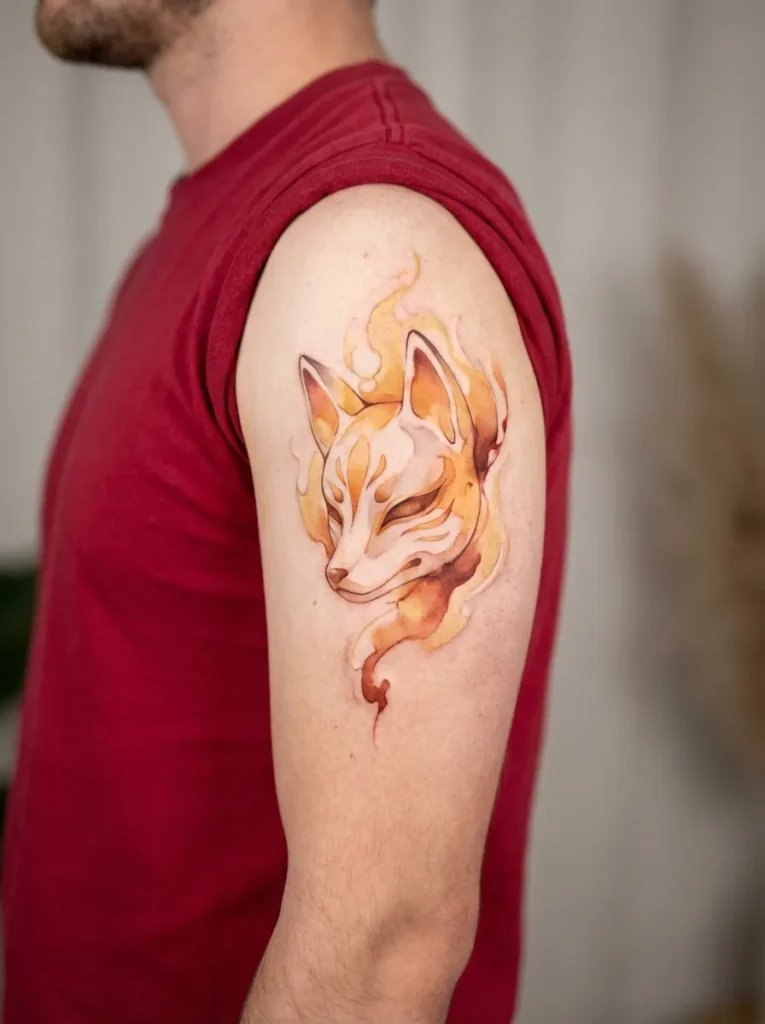
The Kitsune mask carries mystery and transformation in Japanese folklore. Watercolor makes that mystery visual.
Soft fox features rendered in warm amber and white with loose ink work bleeding outward creates something that feels genuinely otherworldly.
Like catching a glimpse of something that doesn’t want to be fully seen.
Subtle color bleeds in pale gold and deep terracotta around the mask edges give it an almost glowing quality. This one benefits enormously from an artist with a light, confident touch.
11. Japanese Watercolor Snake (Hebi)
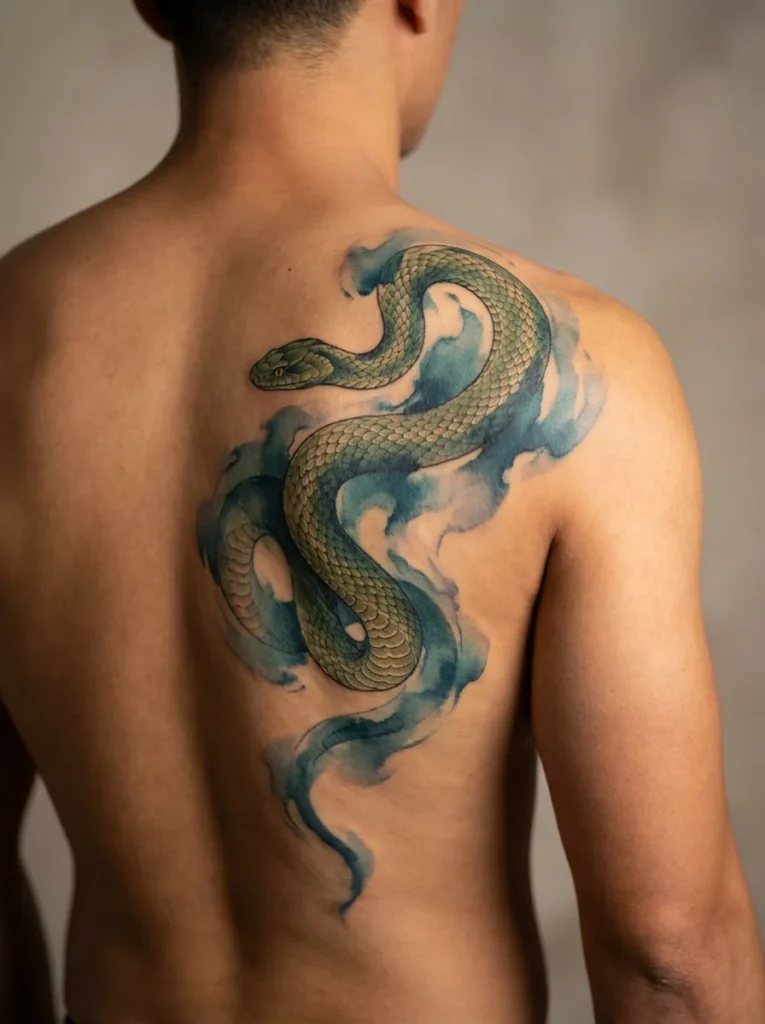
Snakes have a natural fluidity that makes them ideal for watercolor treatment.
The body can curl and twist through loose color washes, appearing to move through painted water or mist rather than sitting statically on the skin.
Scale detail in the focal areas gives the eye something precise to land on before the rest dissolves into color.
Green and gold snakes with deep teal watercolor backgrounds hit particularly well. The cool tones against warm scales create a tension that keeps the eye moving.
12. Japanese Watercolor Samurai Portrait
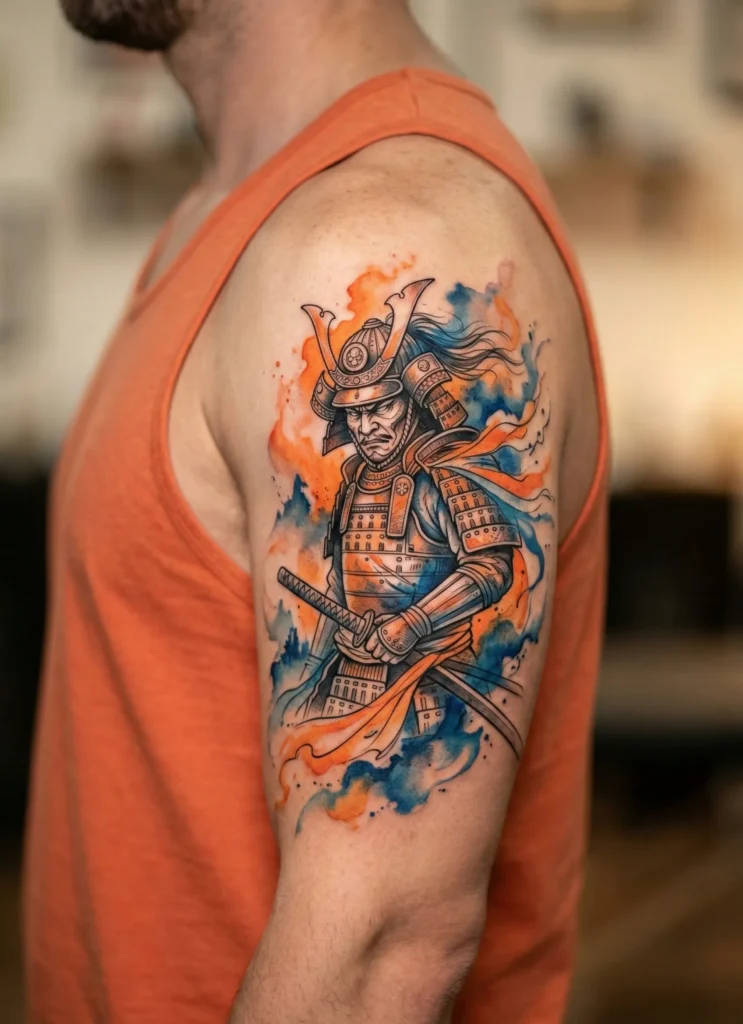
A samurai portrait in watercolor sits right at the intersection of traditional Japanese art and modern tattoo expression.
The face and armor can retain detail and definition while the surrounding elements, fabric, mist, background landscape, bleed loosely into the skin. It creates a focal point that feels both grounded and atmospheric.
This is a technically demanding design. The portrait elements require precision while the watercolor elements require looseness.
Finding an artist who can do both at a high level is the real work before the actual tattooing begins.
13. Japanese Watercolor Crane (Tsuru)
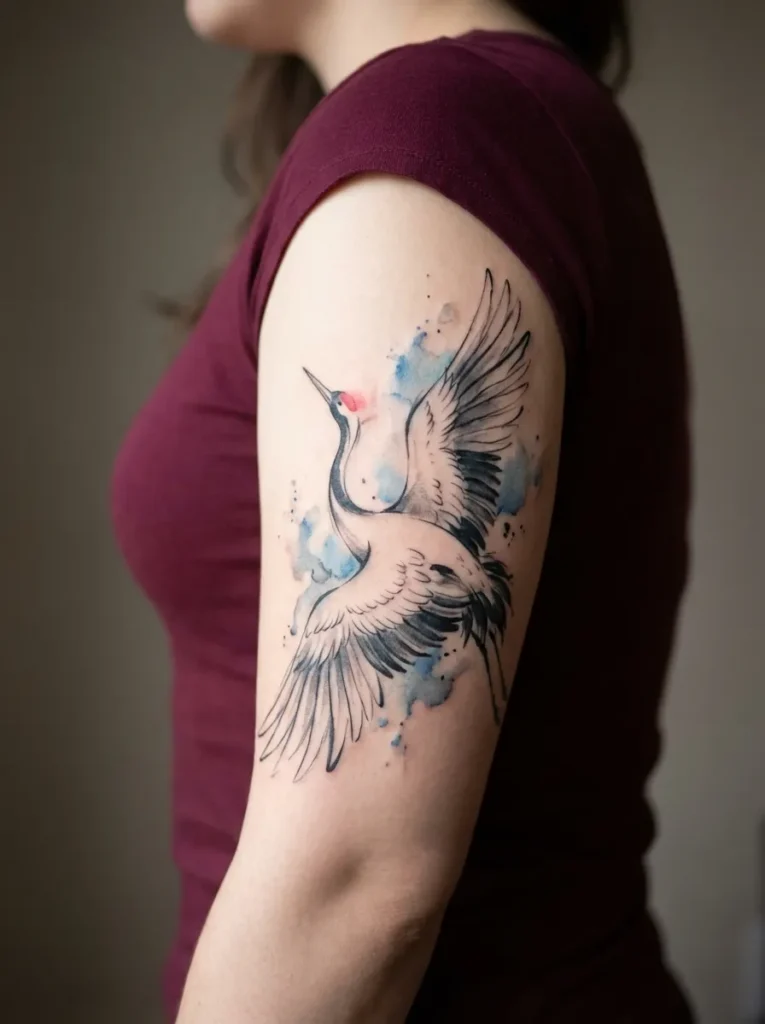
A crane in watercolor feels like a piece of traditional Japanese painting worn on the body.
The long elegant lines of the crane’s wings and neck translate beautifully into flowing brushstrokes.
White cranes are particularly striking because the artist uses the skin itself as the white of the feathers, letting color bloom only in the surrounding wash.
Soft grey and blue washes with hints of red on the crown create a design that feels both ancient and completely contemporary at the same time.
14. Japanese Watercolor Geisha Portrait
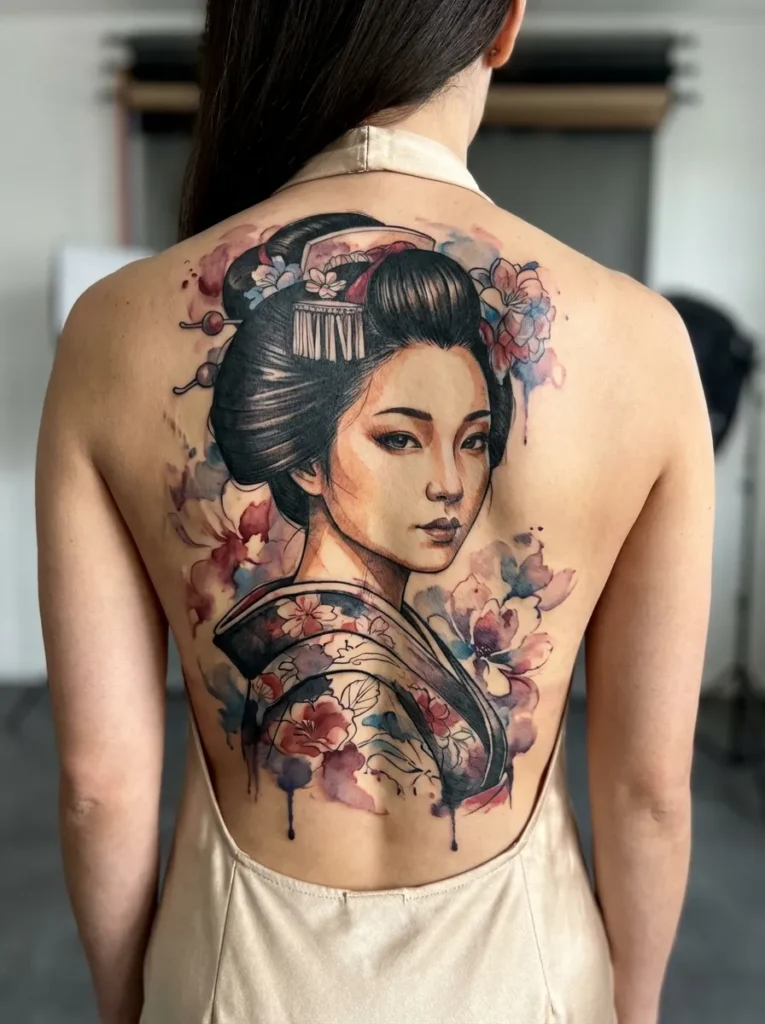
A geisha portrait demands detail in the face and an artist who understands restraint everywhere else.
The watercolor approach lets the elaborate hair ornaments and kimono patterns bleed softly outward while the face stays precise and expressive.
That combination creates a natural visual hierarchy that draws you in and holds you there.
Warm skin tones, deep black hair, and loose floral color washes in the background make this one of the most visually complex designs on the entire list. It’s not a first tattoo concept. It’s a destination piece.
15. Japanese Watercolor Temple and Mountain
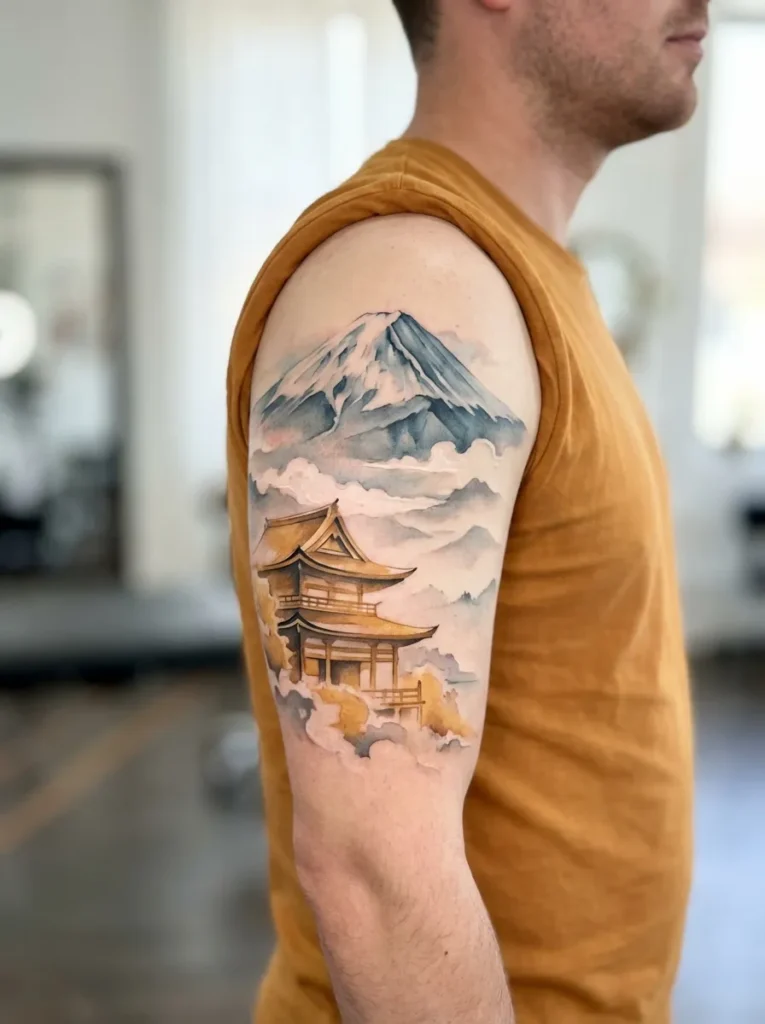
Landscape scenes in watercolor translate the feeling of Japanese woodblock prints directly onto skin.
A mountain peak rising above cloud layers with a temple structure in the foreground creates a composition with natural depth.
The watercolor technique handles atmospheric perspective beautifully, distant elements can simply fade into lighter washes rather than needing to be fully rendered.
Cool blues and greys for the mountain, warm amber and gold for the temple details, and soft cloud whites using negative space. This design rewards both the artist and the person wearing it.
16. Japanese Watercolor Maple Leaves (Momiji)
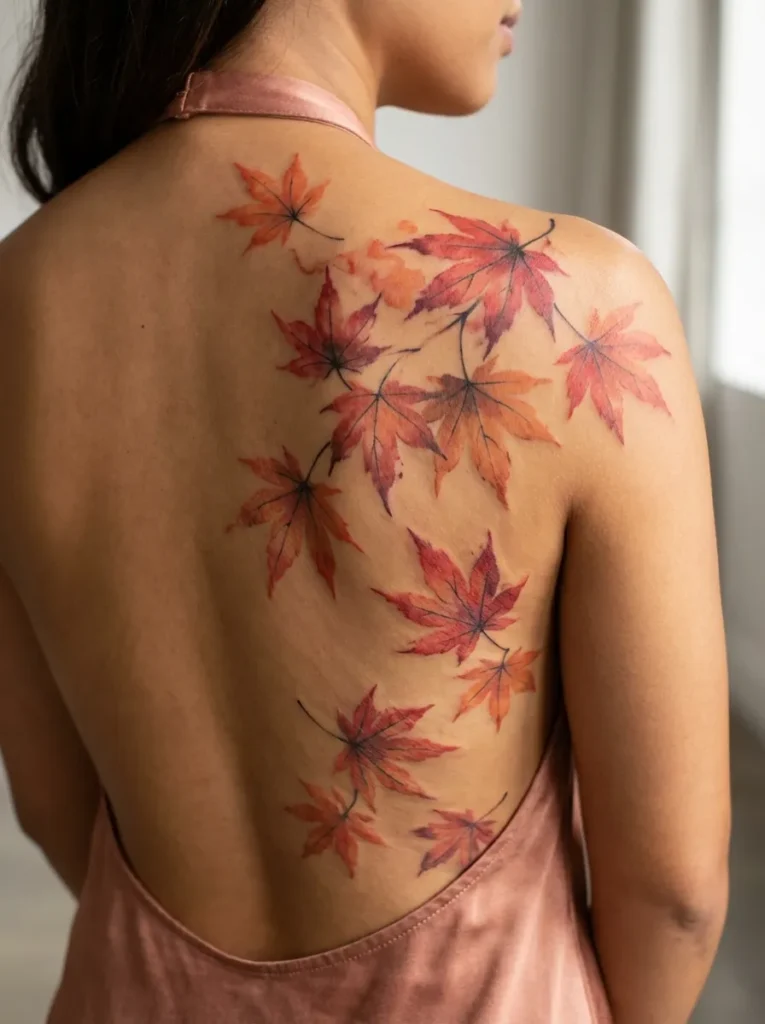
Autumn momiji in watercolor captures the feeling of a season more than almost any other design.
Red, orange, and amber leaves bleeding into each other with dark ink veins and loose background washes creates warmth and movement at the same time.
The leaves can scatter across the skin with no defined border, which is one of the things watercolor handles better than any other tattoo style.
This works beautifully as a standalone piece or as part of a larger seasonal composition alongside other Japanese elements.
17. Japanese Watercolor Fudō Myōō Deity
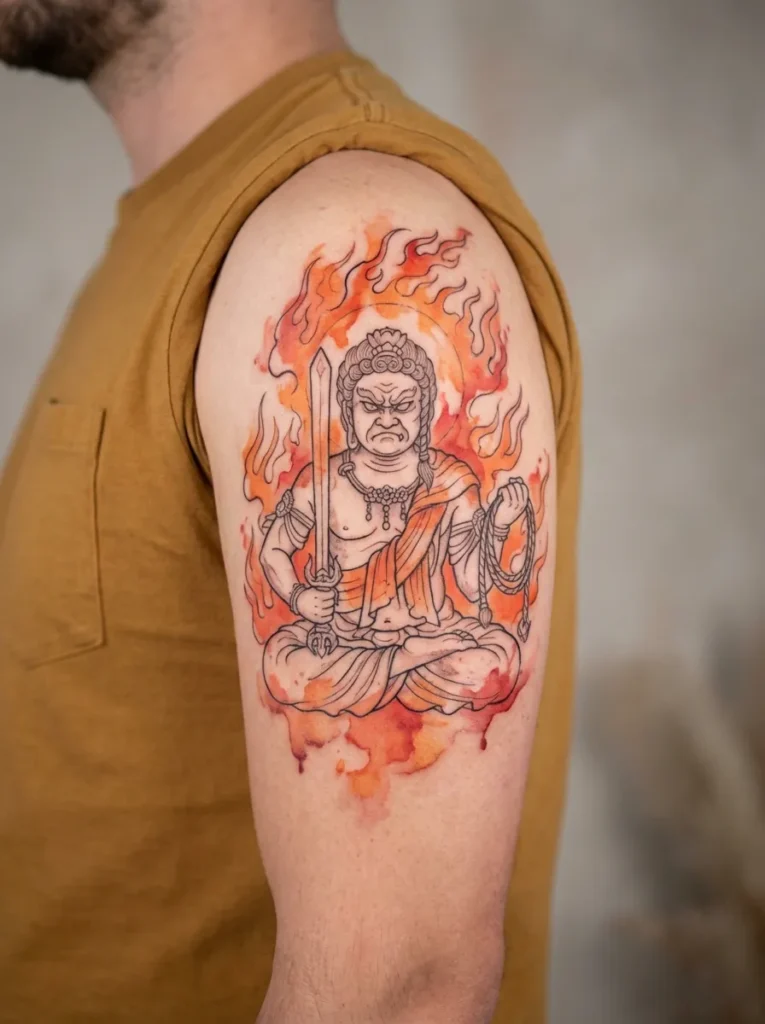
Fudō Myōō is the immovable king, a fierce Buddhist deity surrounded by flames and carrying a sword and rope.
Rendering this subject in watercolor creates an interesting tension.
The deity’s expression and iconography are intense and precise, but the flames bleeding outward in loose orange and red washes soften the composition into something that feels almost visionary.
This is a deeply meaningful design for many people. If you’re drawn to this subject, take your time understanding the iconography before committing to a specific rendering.
18. Japanese Watercolor Raijin Thunder God
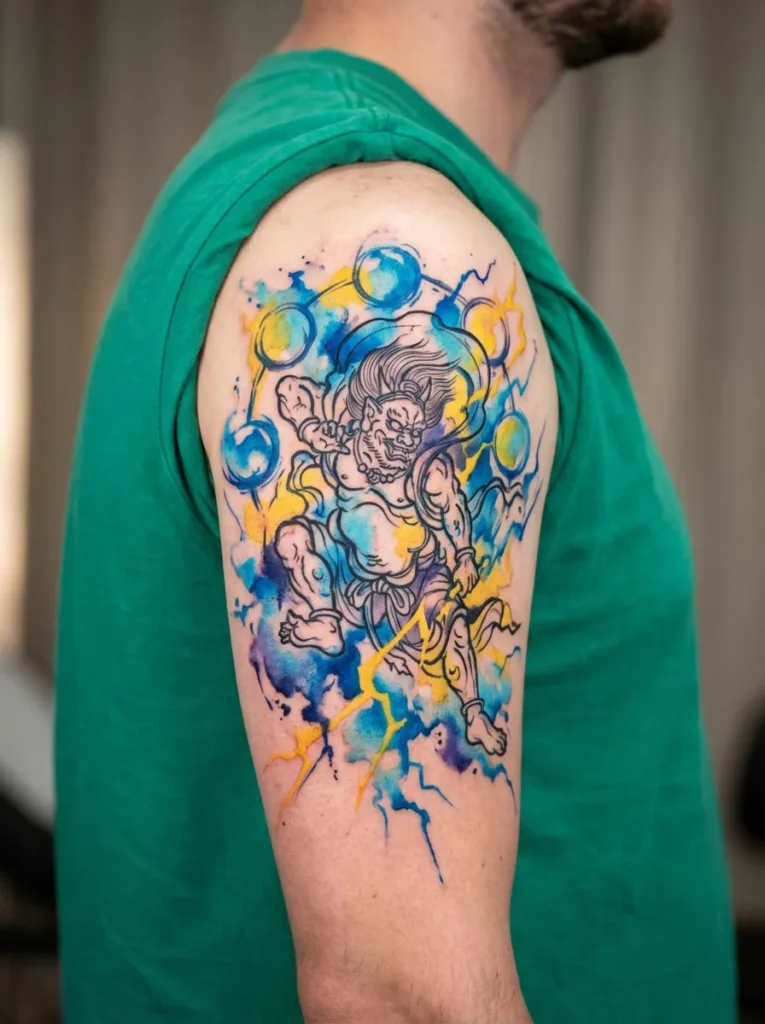
Raijin in watercolor is all about energy and movement captured in color.
The thunder god’s ring of drums can be suggested through loose circular forms while lightning and cloud elements bleed outward in electric blues and yellows.
The whole design should feel charged, like static electricity made visible on skin.
Bold dark ink for the deity’s form against explosive watercolor splashes for the surrounding storm creates a composition with real visual drama. This is a design that looks different depending on how the light hits it.
19. Japanese Watercolor Orochi Serpent
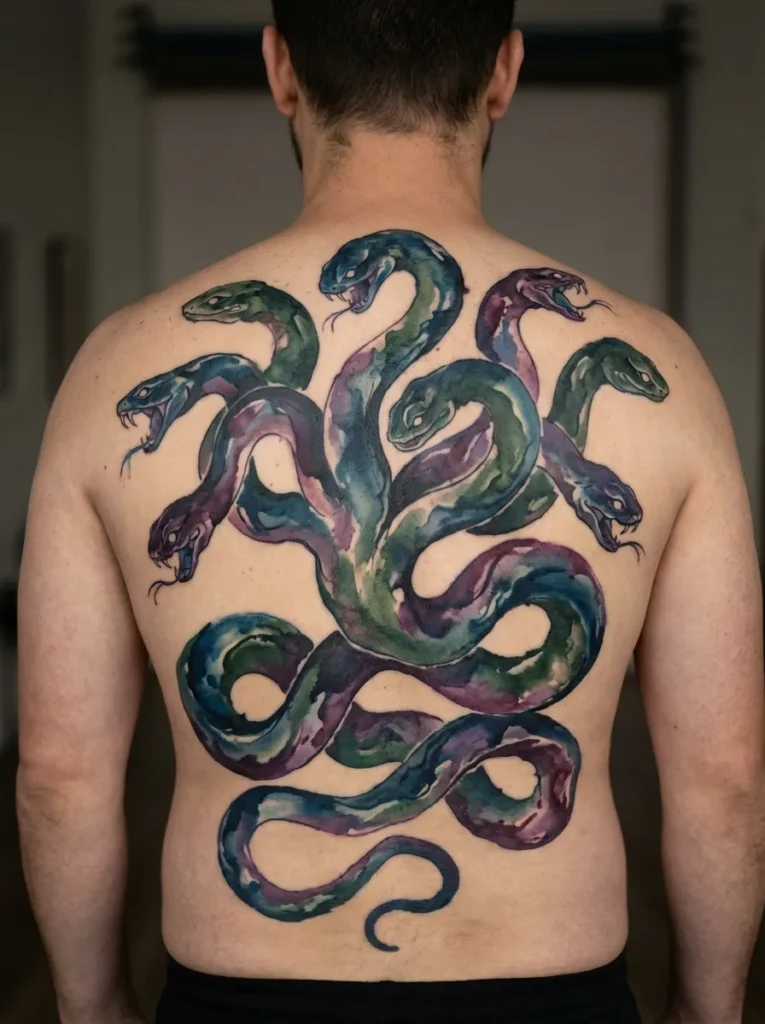
The eight-headed serpent of Japanese mythology in watercolor is a genuinely ambitious concept.
Each head can be rendered with a slightly different color wash, deep greens, blues, and purples bleeding into each other across the composition.
The multiple heads create natural visual complexity that the watercolor style handles through color differentiation rather than hard outlines.
This is a large-scale concept. The Orochi needs space to feel mythological rather than crowded. A back piece or full sleeve is the right canvas for this one.
20. Japanese Watercolor Red Spider Lily (Higanbana)
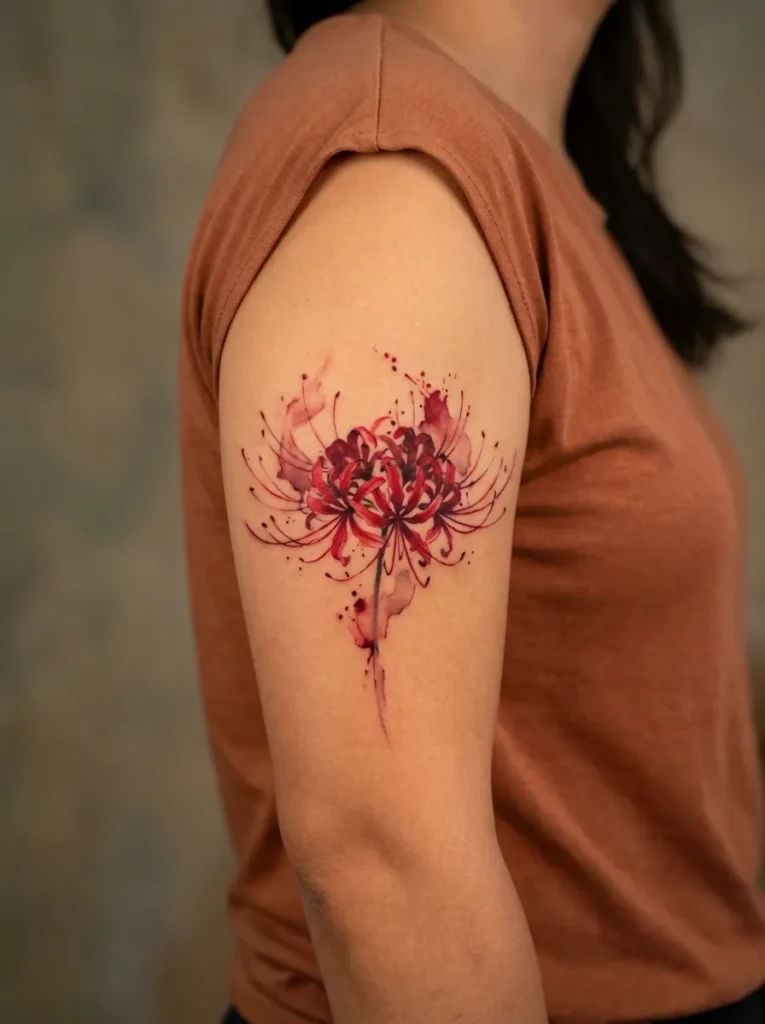
The red spider lily grows in graveyards in Japanese folklore and marks the boundary between the living world and what comes after.
In watercolor, the spindly crimson petals and dramatic form of the higanbana become almost electric against pale skin.
Deep red blooms with loose ink splashes at the edges create a design that’s equal parts beautiful and haunting.
This flower carries real symbolic weight and people who choose it usually know exactly why. It’s not a casual choice, and it looks like it.
21. Japanese Watercolor Lantern Festival Scene
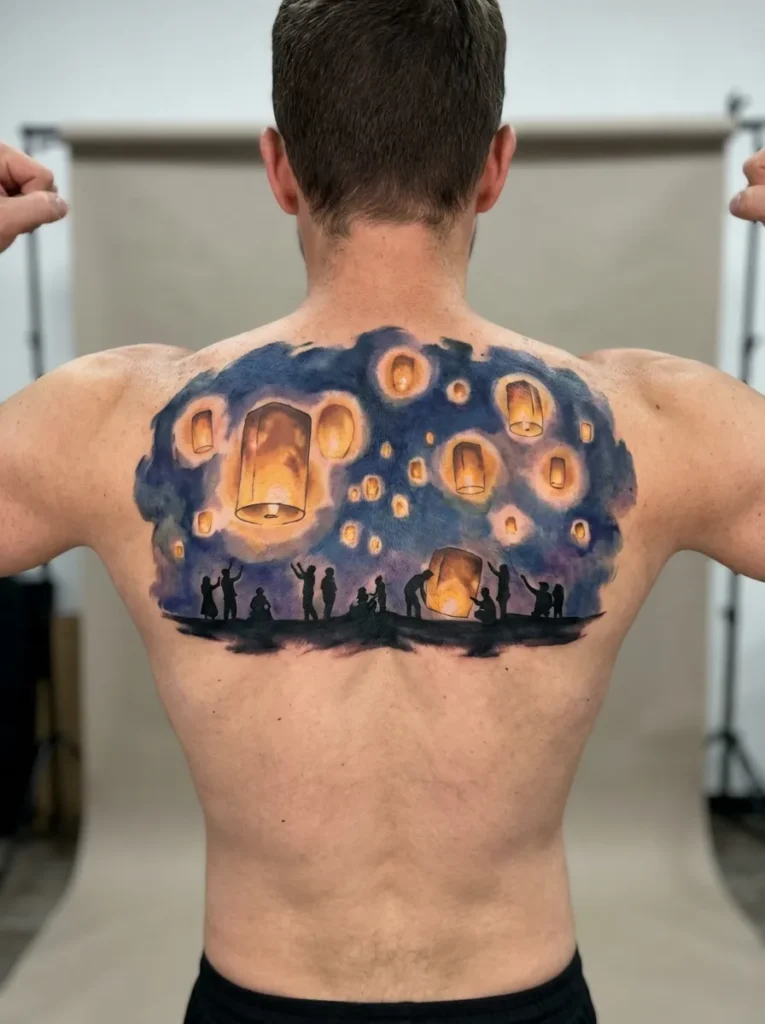
A lantern festival scene in watercolor captures something that feels genuinely alive and celebratory.
Warm glowing lanterns in amber and gold floating upward against a deep indigo night sky, rendered in loose washes with soft light halos bleeding outward from each light source.
The scene has natural warmth and movement built into the concept itself.
This works beautifully as a thigh or back piece where the scene can breathe.
Adding small human figures in silhouette at the base grounds the design and gives the scale of the lanterns real impact.
READY TO PICK ONE
Japanese watercolor tattooing is a style that rewards patience at every stage. Finding the right artist, choosing the right subject, and giving the design enough space to breathe all matter more than they do in most other styles.
The results, when everything comes together, are some of the most genuinely painterly tattoos being made anywhere in the world right now.
So which of these designs made you stop scrolling, and what does that tell you about the kind of tattoo you actually want?