
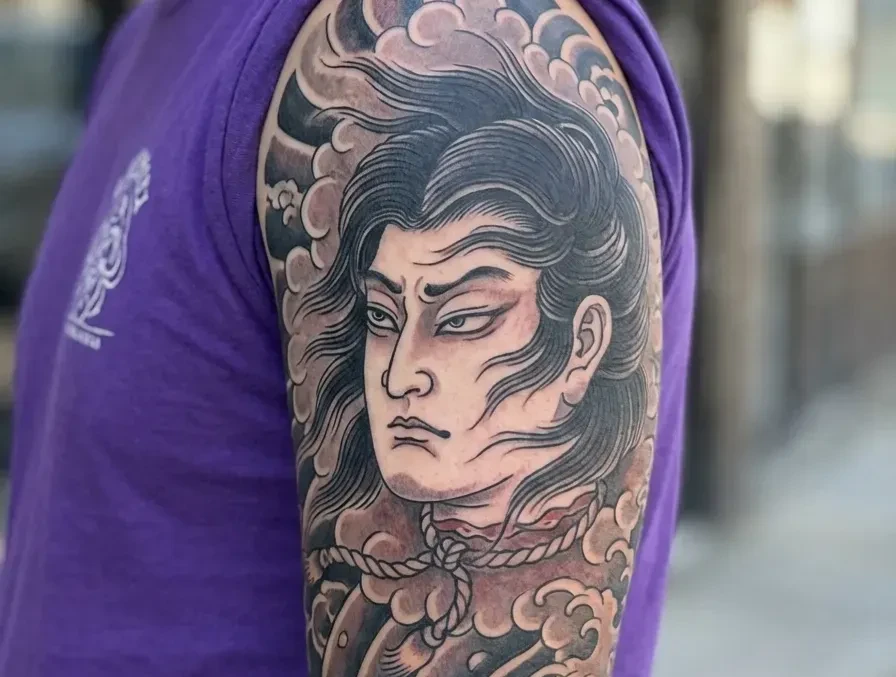
Japanese tattoos have a way of stopping people in their tracks. There’s something about the bold lines, rich colors, and deep symbolism that no other tattoo style can match.
Irezumi is one of the oldest tattoo traditions in the world. It dates back centuries and was once worn by warriors, criminals, and devotees of the gods.
Today, it’s embraced by tattoo lovers everywhere who want art that actually means something.
This isn’t just a list of pretty designs. Every idea here carries history, symbolism, and a story worth wearing for life. Whether you’re planning your first piece or adding to a collection, there’s something here for you.
1. Dragon Sleeve Tattoo
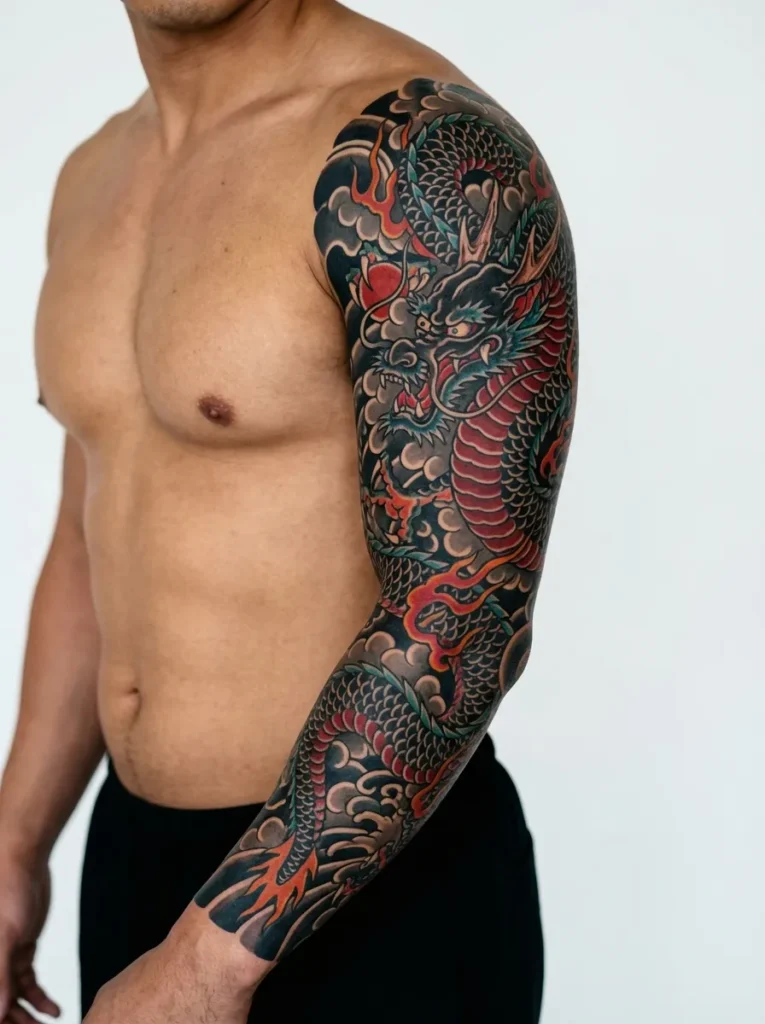
The Japanese dragon is not the fire breathing beast of Western mythology. It’s a creature of water, wisdom, and protection. Getting one as a sleeve is a serious commitment and a seriously stunning one.
Dragon sleeves work so well because the body’s natural contours follow the dragon’s coiling form. The piece moves with you. It feels alive.
Most people go for a full sleeve wrapping from wrist to shoulder. Others stop at the elbow for a half sleeve. Both look incredible in the right hands.
- Choose a skilled Irezumi artist who understands dragon anatomy in the Japanese style
- Bold black outlines with deep reds, blues, or greens make the design pop
- Add clouds, waves, or flames as background elements for a fuller composition
2. Koi Fish Back Piece
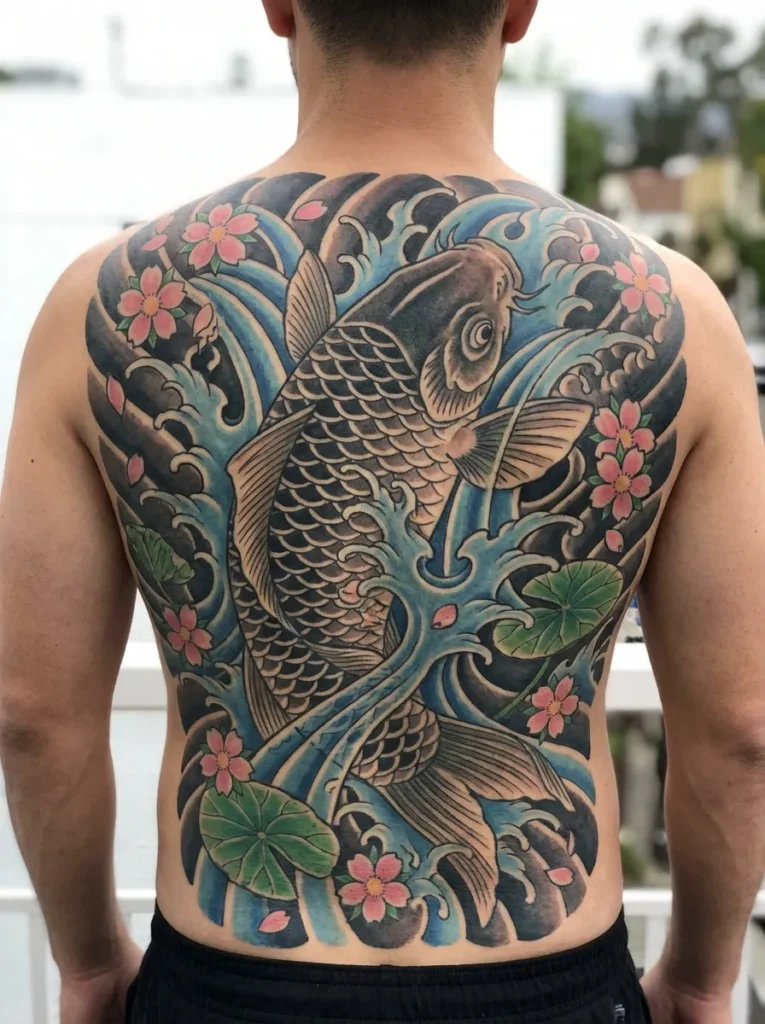
A koi swimming upstream is one of the most recognized images in Japanese tattooing. It represents perseverance, courage, and transformation. The story goes that a koi that makes it up the waterfall becomes a dragon.
The back is the perfect canvas for this design. You get scale, movement, and room to tell the full story.
Pair the koi with rushing water, lotus flowers, or cherry blossoms. The contrast of soft petals against strong fish scales is a classic for a reason.
3. Tiger and Bamboo Tattoo
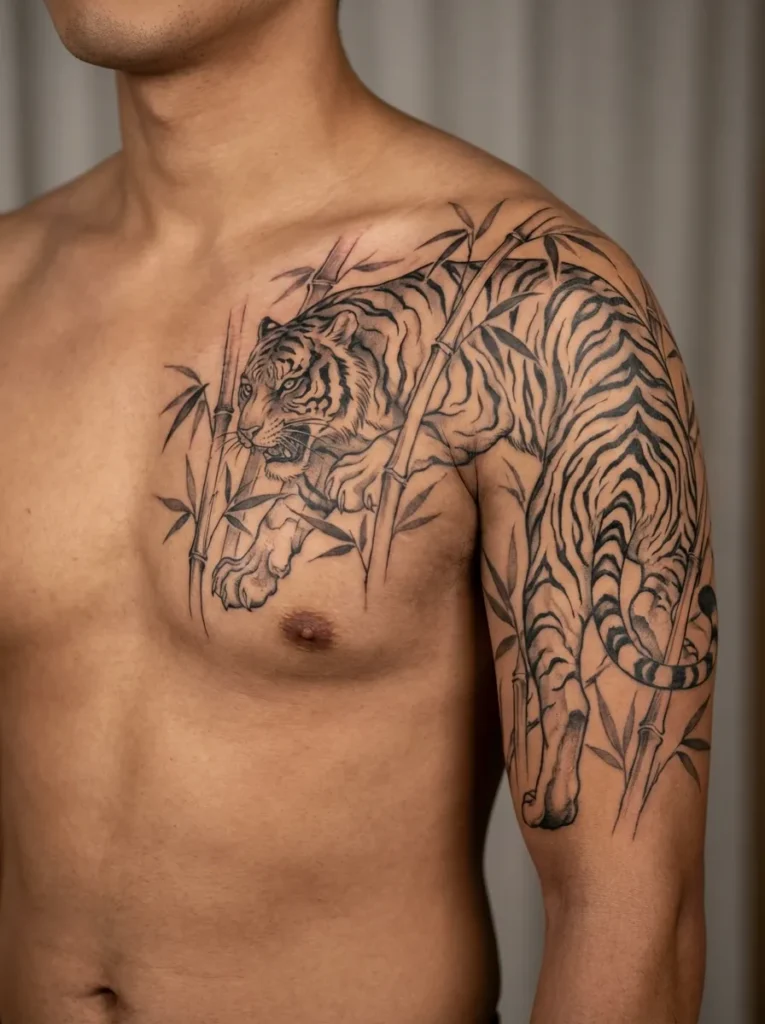
The tiger in Japanese art is a protector. It wards off evil spirits, disease, and bad luck. Paired with bamboo, it creates a composition that feels both wild and grounded.
Bamboo bends but doesn’t break. The tiger is raw power. Together, they balance each other out perfectly.
This design works beautifully as a chest piece, thigh tattoo, or full sleeve. The vertical lines of bamboo create natural structure around the tiger’s form.
- Use negative space to let the tiger’s stripes breathe
- Keep the bamboo loose and gestural rather than overly detailed
- Black and grey versions of this design look especially dramatic
4. Phoenix Rising Tattoo
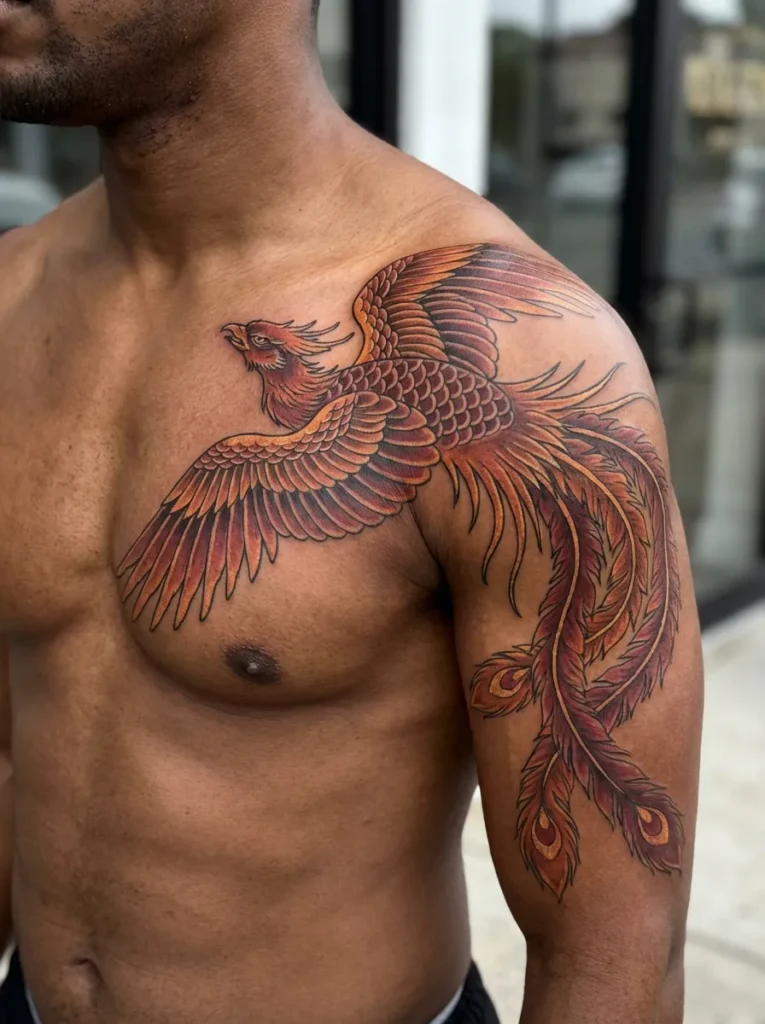
The phoenix, called Hoo-oh in Japanese, symbolizes rebirth and renewal. It’s the perfect tattoo for someone who has been through something and come out the other side.
The bird’s trailing feathers and outstretched wings make it a natural fit for back pieces and chest spreads. The composition practically draws itself.
What makes Japanese phoenix designs stand out is the color. Deep oranges, rich reds, and flashes of gold. It looks like the bird is actually on fire.
5. Hannya Mask Tattoo
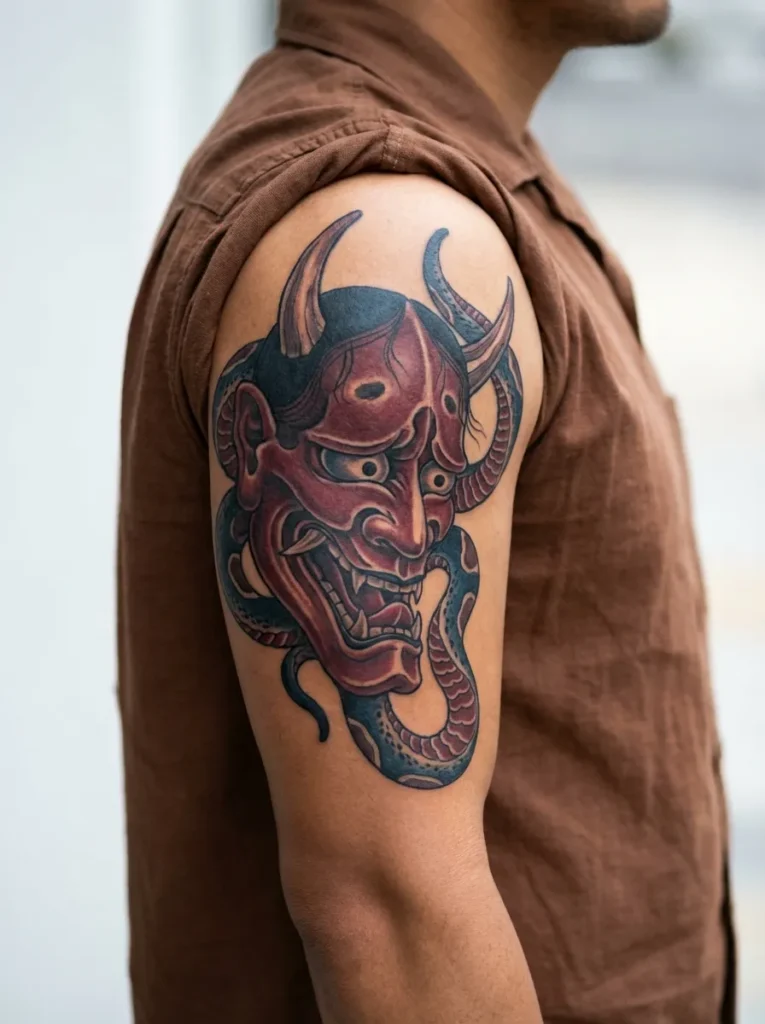
The Hannya mask is one of the most misunderstood images in Japanese tattooing. People assume it’s just a demon. It’s actually the face of a woman consumed by jealousy and heartbreak. That complexity is what makes it so powerful.
Hannya tattoos are heavily symbolic. The details in the design tell a story.
| Feature | Meaning |
| Light colored mask | Mild jealousy or longing |
| Dark red or dark colored mask | Deep rage and full possession |
| Horns | The transformation into a demon |
| Snake body | Often added to represent spiritual corruption |
Getting a Hannya without knowing the symbolism feels like a missed opportunity. Learn the story first. Then the tattoo becomes something else entirely.
6. Samurai Warrior Tattoo
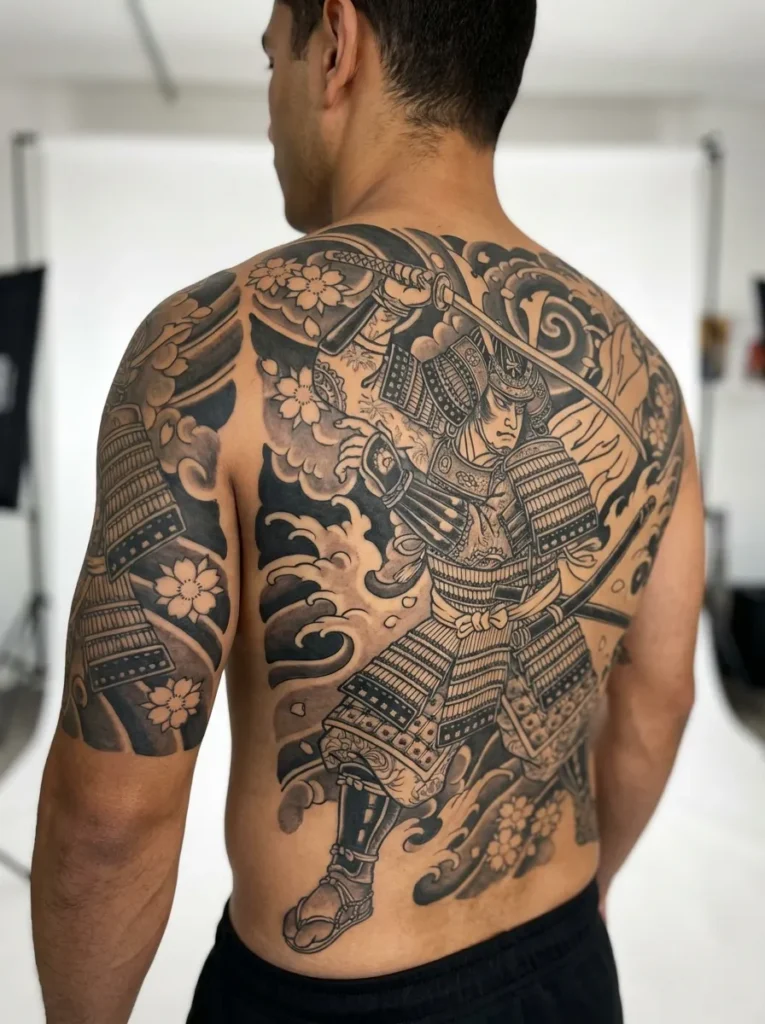
A samurai tattoo is a declaration of values. Honor, discipline, loyalty, and the willingness to face death without flinching. These are not small ideas.
The warrior is usually shown in full armor or mid battle. The detail work in traditional Irezumi samurai pieces is extraordinary. Every piece of lacquered armor, every brushstroke of fabric, is rendered with care.
This design works best as a large piece. A thigh panel, a back piece, or a chest and arm combination. The samurai deserves space.
7. Geisha Portrait Tattoo
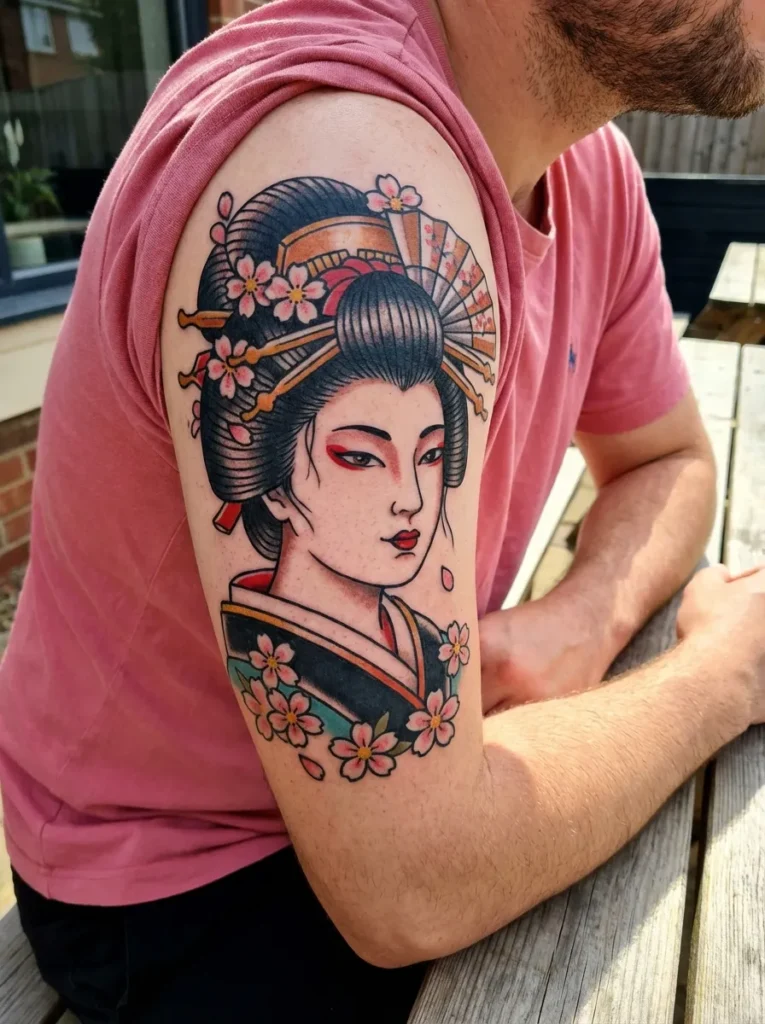
Geisha tattoos are about beauty, discipline, and the mastery of an art form. A geisha is not a simple image. She is a symbol of refinement and a life dedicated to craft.
The face is everything in a geisha portrait. A skilled artist will spend serious time on the eyes, the white makeup, the lips. Get this right and the tattoo is breathtaking.
- Look at your artist’s portrait work specifically before committing
- Traditional geisha tattoos use flat color with bold outlines rather than photorealism
- Adding fans, cherry blossoms, or a shamisen instrument adds cultural context
8. Oni Demon Tattoo
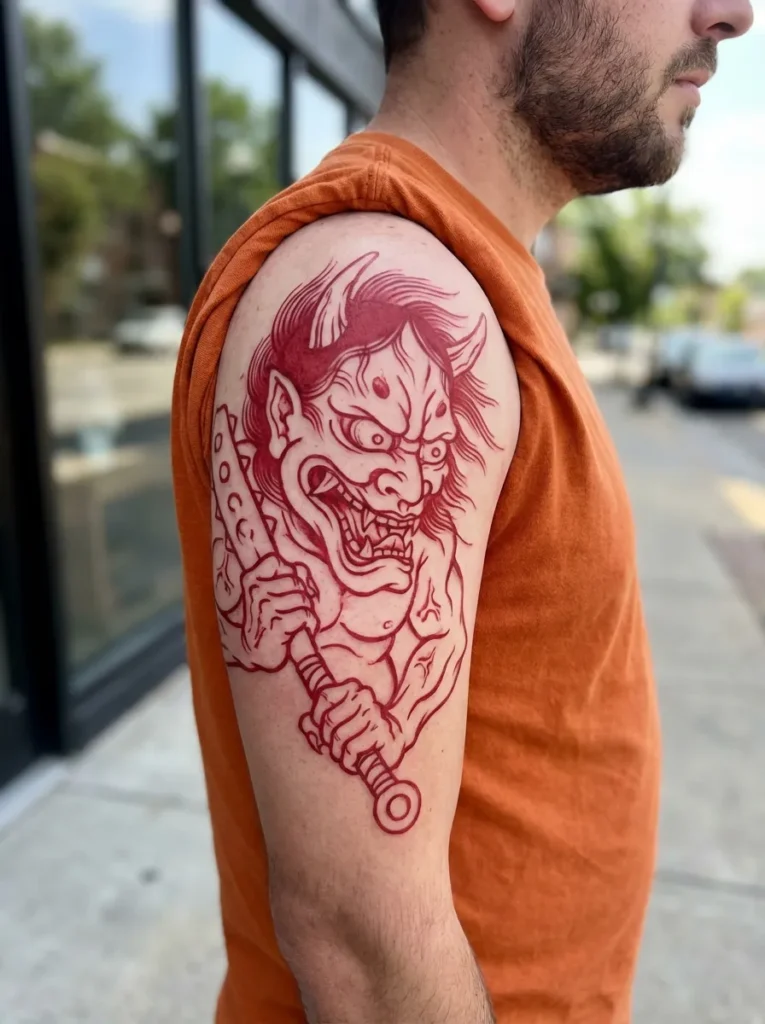
The Oni is a Japanese demon but it plays a complicated role in the culture. Yes, it punishes the wicked in the underworld. But it also protects temples and wards off evil. It is both monster and guardian.
Oni tattoos are bold, graphic, and unapologetically fierce. Red skin, wild eyes, a club in hand. There’s no subtlety here and that’s the point.
Some people pair an Oni with a Hannya mask in the same piece. The two represent different kinds of darkness and together they create a conversation on the skin.
9. Japanese Snake Tattoo
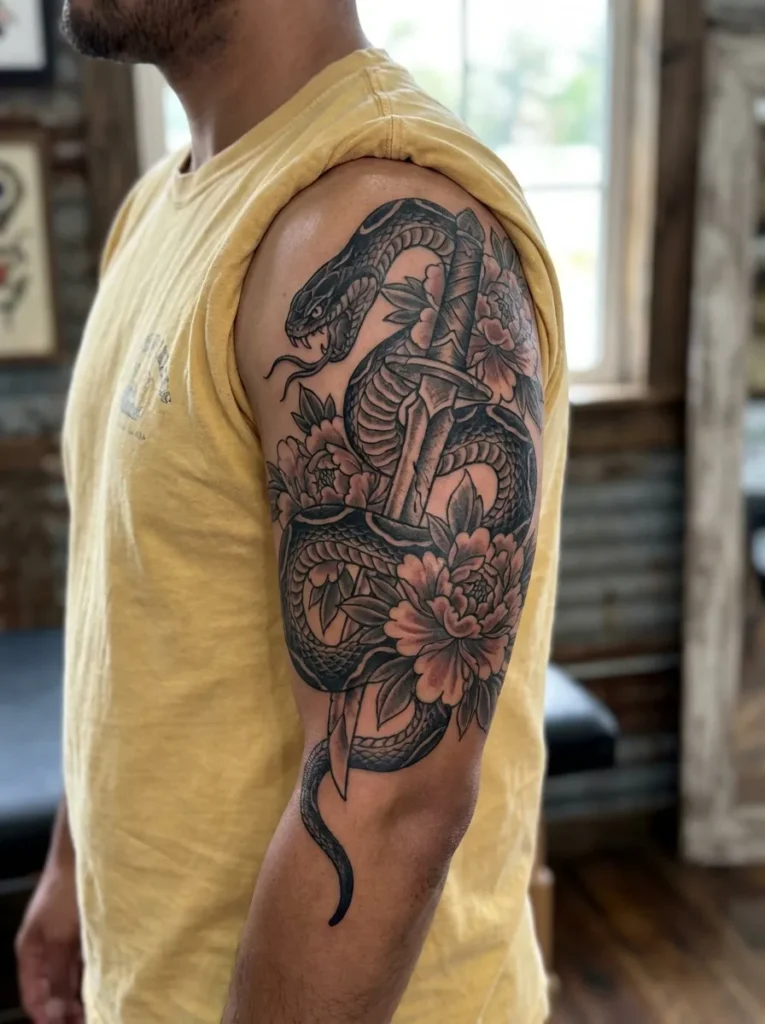
The snake in Japanese culture is not evil. It’s a symbol of protection, transformation, and even good luck. Shedding skin means renewal. Coiling around a sword or skull means wisdom paired with power.
Japanese snake designs are elegant. Long, fluid bodies that wrap naturally around arms, legs, and torsos. The scales done in traditional Irezumi style take serious skill to execute.
Pair the snake with peonies for a softer contrast, or with a dagger for something more intense. Both directions work.
10. Foo Dog Tattoo
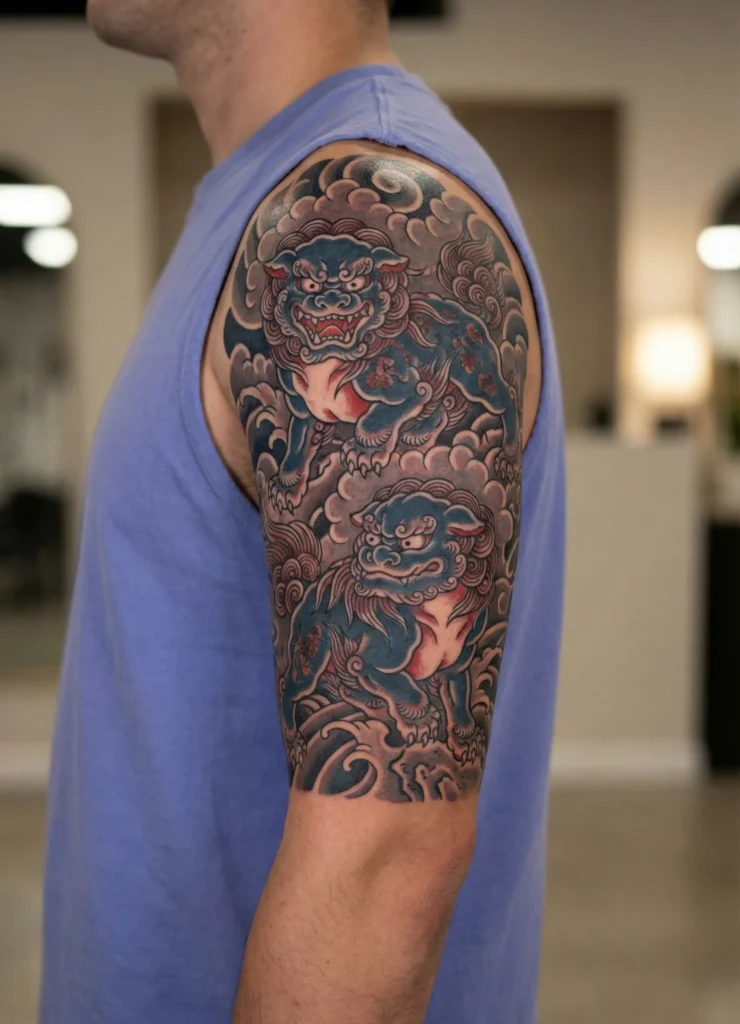
Foo Dogs, also called Komainu in Japan, are lion dog guardians. You see them sitting at the entrances of temples and shrines. They keep negative energy out and protect what’s sacred inside.
Getting a pair tattooed is traditional. One has its mouth open saying “ah,” the other has it closed saying “un.” Together they represent the full cycle of existence.
They work beautifully as matching pieces on each thigh, each shoulder, or either side of the chest.
11. Cherry Blossom Scene Tattoo
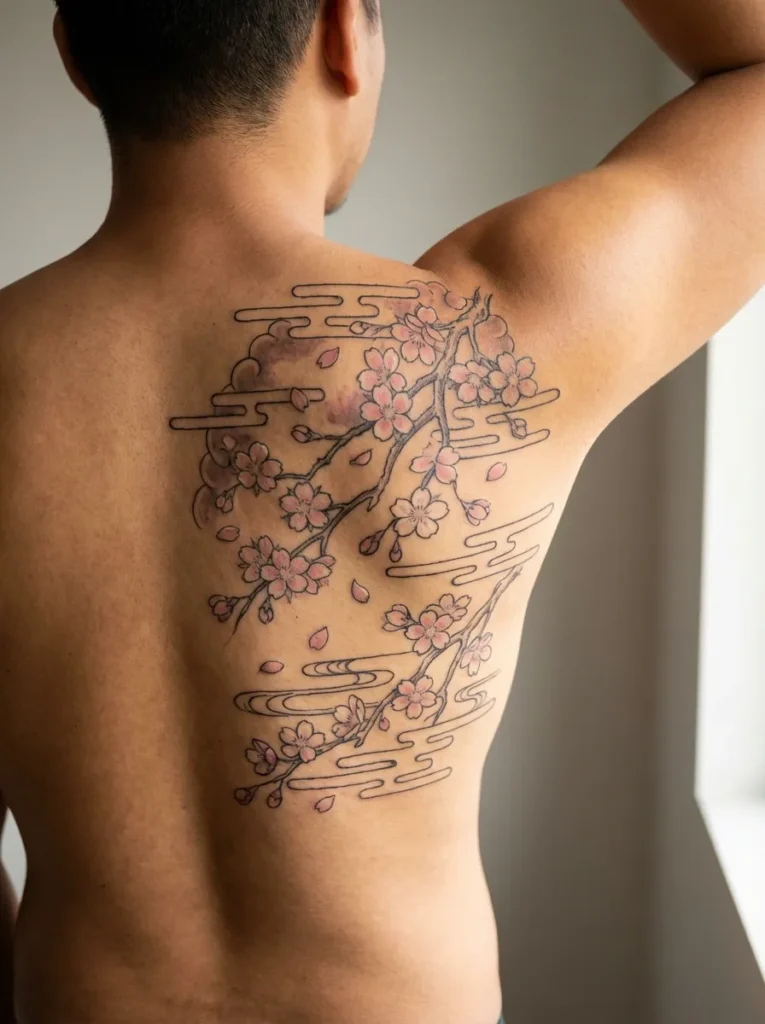
Cherry blossoms fall after just one week of bloom. That’s the whole point. They’re beautiful because they don’t last. In Japanese culture, this is called mono no aware, the bittersweet awareness of impermanence.
A cherry blossom scene tattoo is a reminder that everything beautiful is temporary. And that’s not sad. It’s motivating.
These designs work as full back pieces, shoulder caps, or flowing elements in a larger composition. The soft pinks against dark skin or black outlines are visually striking.
12. Wave and Ship Tattoo
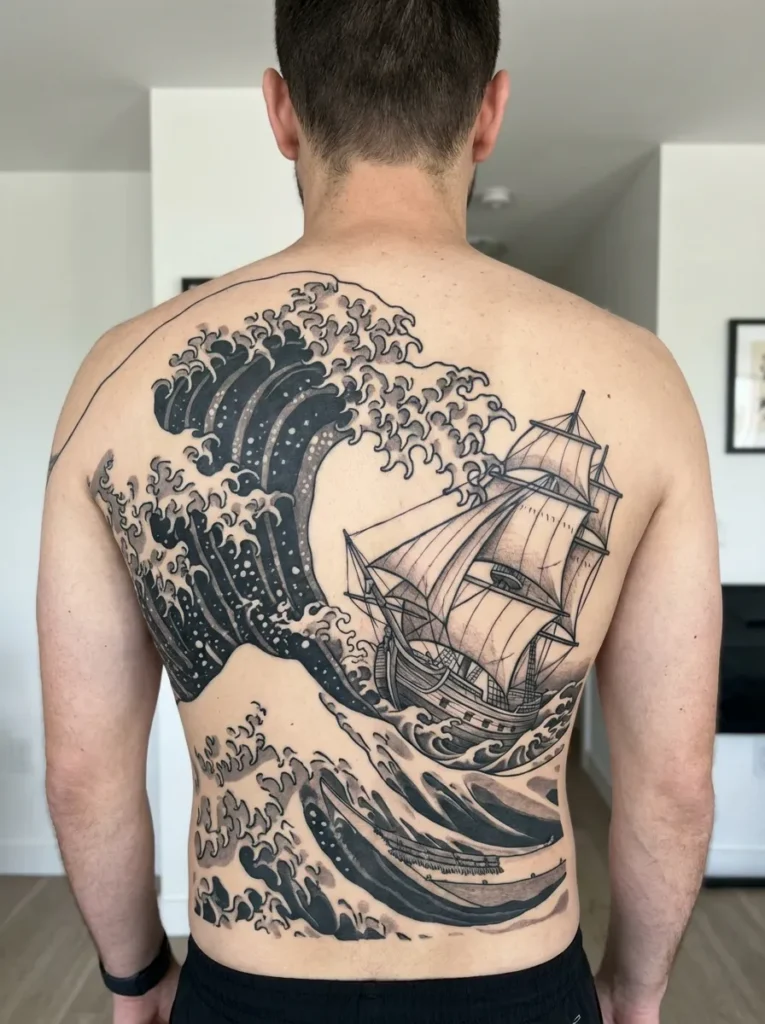
The Great Wave by Hokusai is one of the most famous images in art history. That same energy lives in traditional Irezumi wave tattoos. Power, chaos, and the smallness of humans against nature.
Adding a ship to the composition brings in themes of journey, survival, and courage. The ship battles the wave. It’s not sinking. It’s fighting.
- Keep the wave forms dynamic with strong crests and foam details
- A ship in full sail adds height and vertical movement to the piece
- This design suits thighs, ribs, and back panels especially well
13. Namakubi (Severed Head) Tattoo
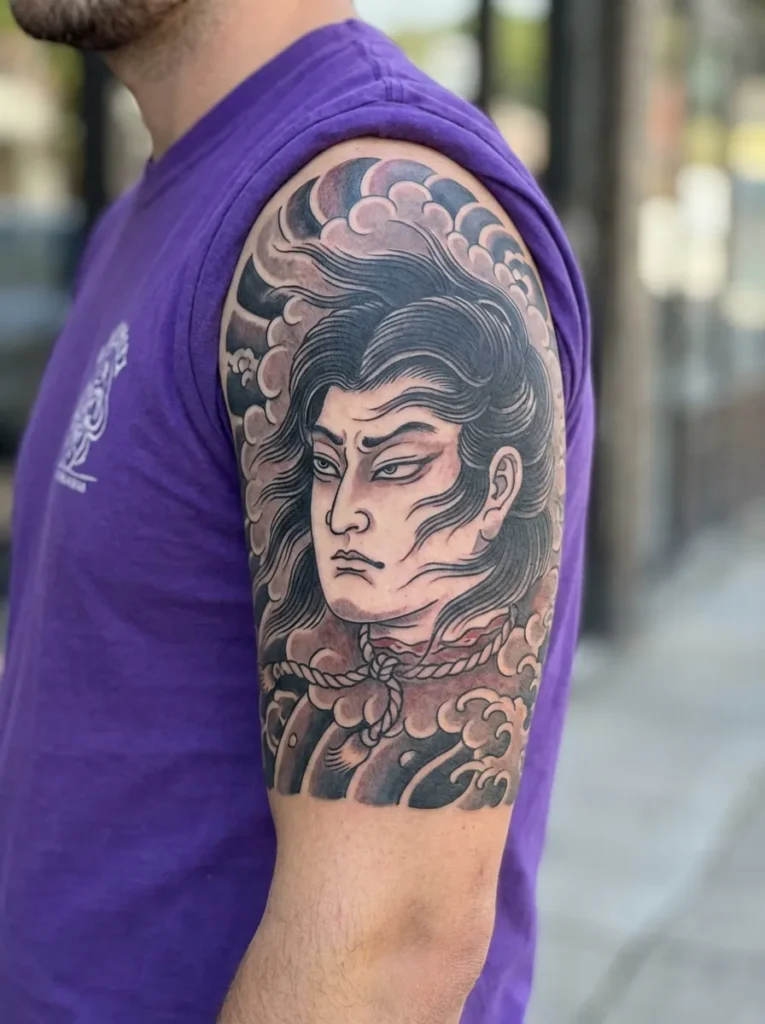
This one isn’t for everyone and that’s exactly why it exists in Irezumi tradition. The Namakubi is a severed head, often a samurai’s. It represents facing death with courage and without regret.
In the old tradition, a warrior who died with honor was still honored in death. The image isn’t about gore. It’s about accepting mortality without fear.
If you want a tattoo that makes people ask questions and starts real conversations, this one delivers.
14. Daruma Doll Tattoo
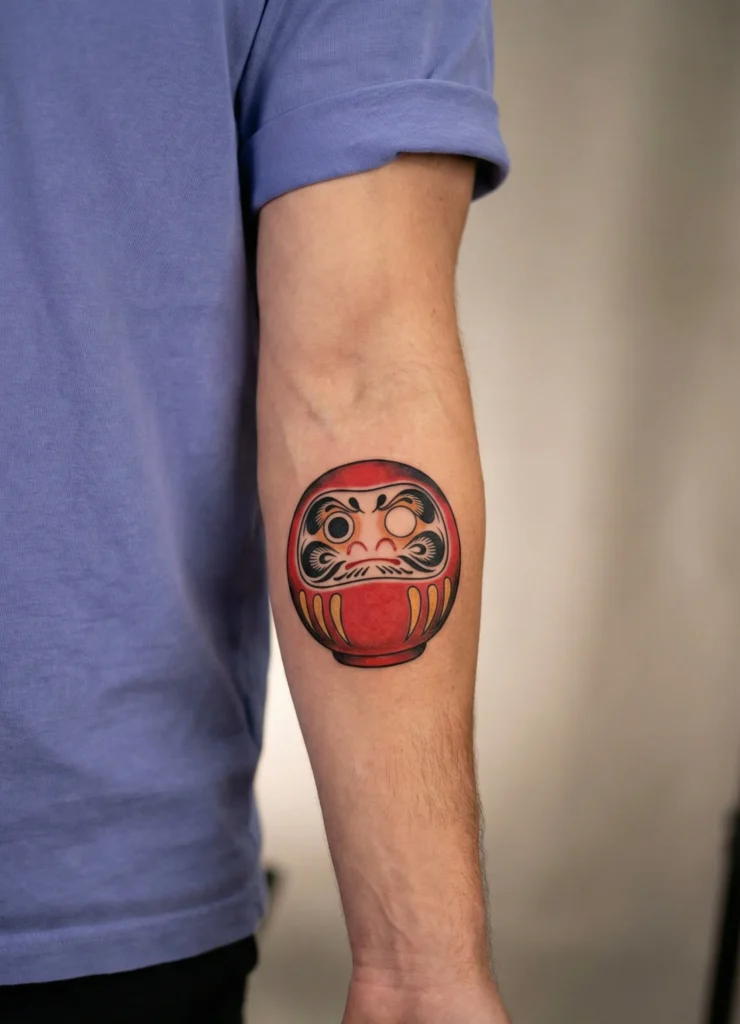
The Daruma doll is based on Bodhidharma, the founder of Zen Buddhism. The tradition is to color in one eye when you set a goal, and the second eye when you achieve it. It’s a symbol of perseverance and wishing.
Daruma tattoos are bold, graphic, and recognizable. The round red form with fierce eyes is instantly striking.
Some people get the doll with one eye already filled in as a reminder of a goal they’re still working toward. That’s a deeply personal choice that makes the tattoo uniquely meaningful.
15. Tengu Mask Tattoo
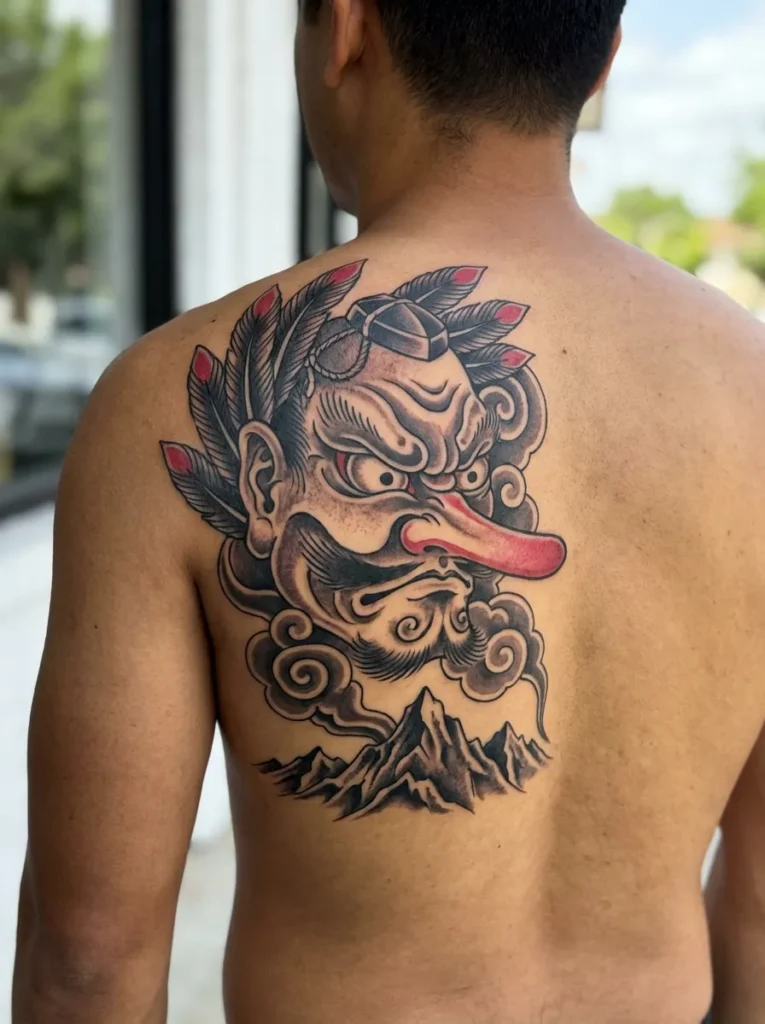
The Tengu is a supernatural creature from Japanese folklore, part bird and part human. In the warrior tradition, Tengu were said to be the masters who taught samurai the art of swordsmanship.
The long nosed Tengu mask is dramatic and full of character. It has the same intensity as the Hannya but with a more supernatural, otherworldly energy.
Pair it with feathers, clouds, or a mountain backdrop to give the design a sense of place and mythology.
16. Kitsune Fox Tattoo
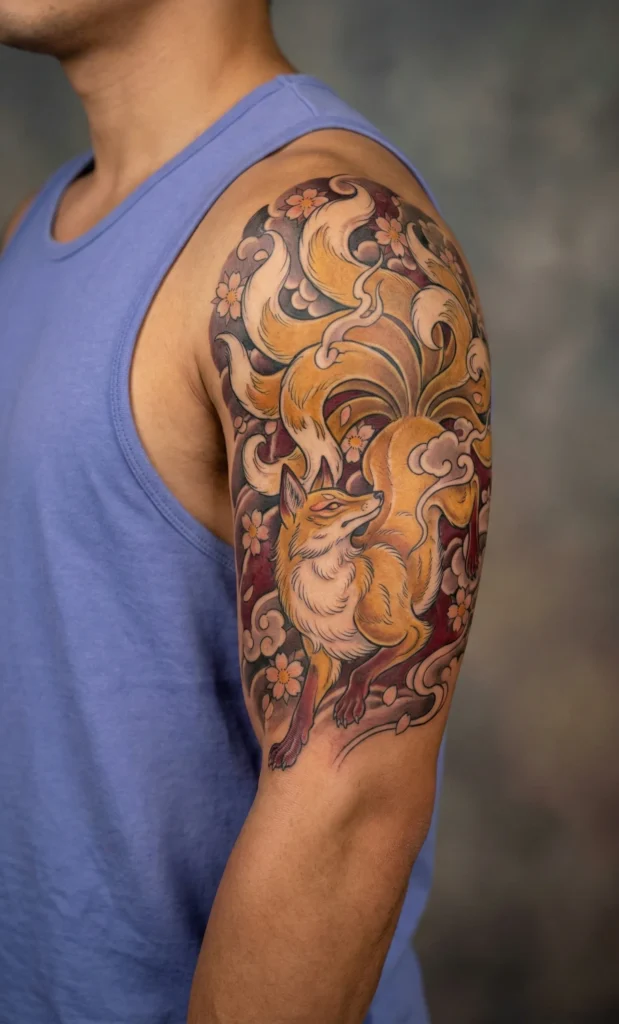
The Kitsune is a fox spirit with the power to shapeshift. The more tails it has, up to nine, the older and more powerful it is. In Japanese folklore, the Kitsune is a trickster but also a divine messenger.
This design gives tattoo artists so much to work with. A fox face emerging from a mask, a fox mid transformation into a woman, nine tails fanning out behind a seated figure. The possibilities are deep.
- A nine tailed Kitsune is a major piece and deserves a large canvas
- Fox masks are a popular standalone element within larger compositions
- Gold, orange, and white are traditional color choices for Kitsune pieces
17. Peony Flower Tattoo
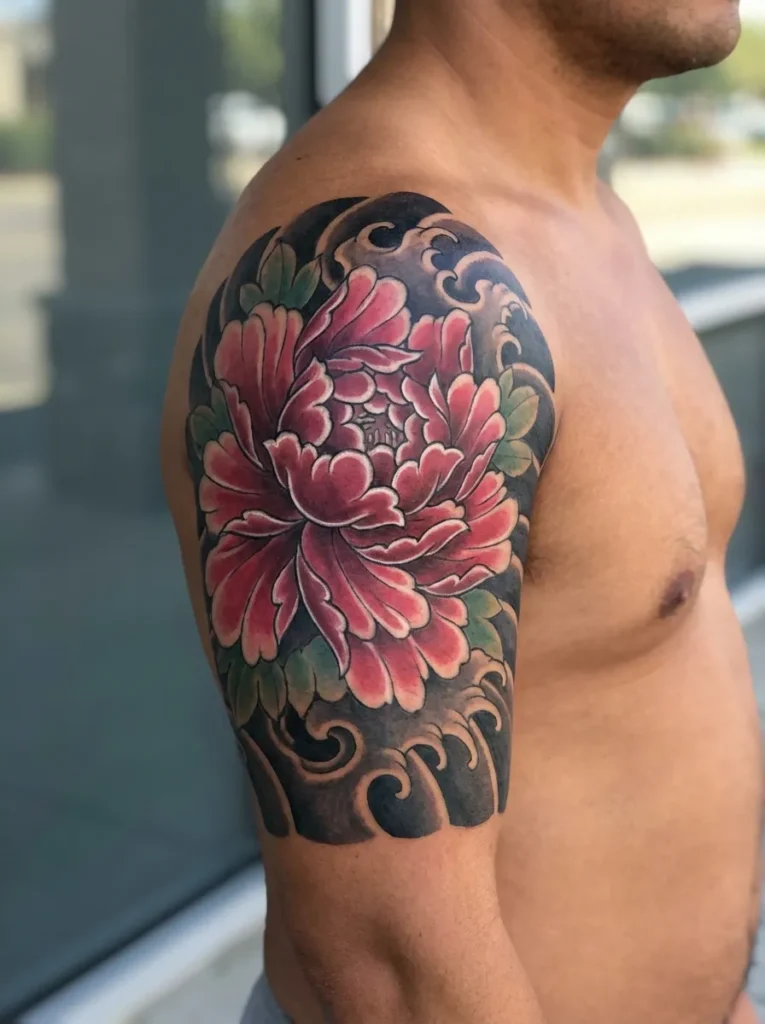
The peony is called the “king of flowers” in Japanese and Chinese culture. It represents wealth, prosperity, and good fortune. In Irezumi, it shows up constantly as both a main subject and a background filler element.
What makes peony tattoos special is the layering. Petal on petal on petal, each one rendered in rich reds, pinks, or whites. The depth of the flower suits the density of traditional Japanese tattooing perfectly.
Peonies pair well with almost anything. Tigers, koi, dragons, samurai. They soften the harder subjects and add a sense of abundance to the composition.
18. Chrysanthemum Tattoo
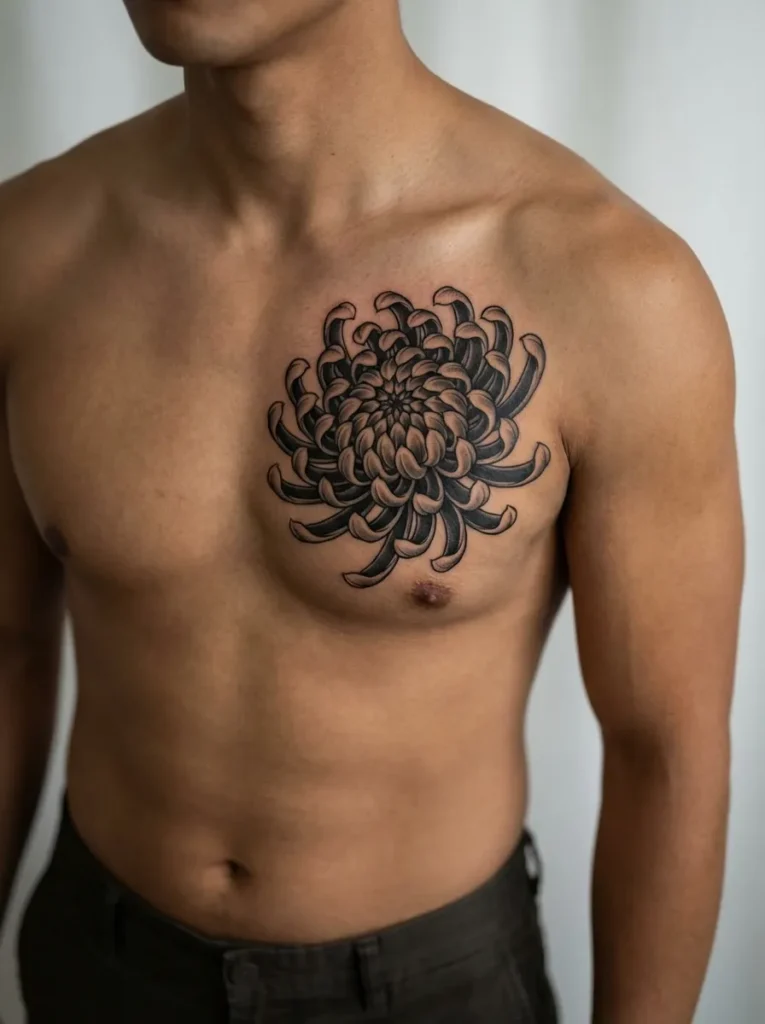
The chrysanthemum is the imperial flower of Japan. It appears on the emperor’s seal and represents longevity, rejuvenation, and nobility. Getting one tattooed carries serious cultural weight.
The flower’s tight, symmetrical petals make it one of the most technically demanding flowers to tattoo well. When done right, it’s stunning.
| Design Direction | Best For |
| Single large chrysanthemum | Chest centerpiece or shoulder cap |
| Scattered blooms | Filler in a sleeve or back piece |
| Chrysanthemum and skull | Themes of life, death, and rebirth |
| Bold black and grey | Clean, traditional look with strong contrast |
19. Fudo Myoo Tattoo
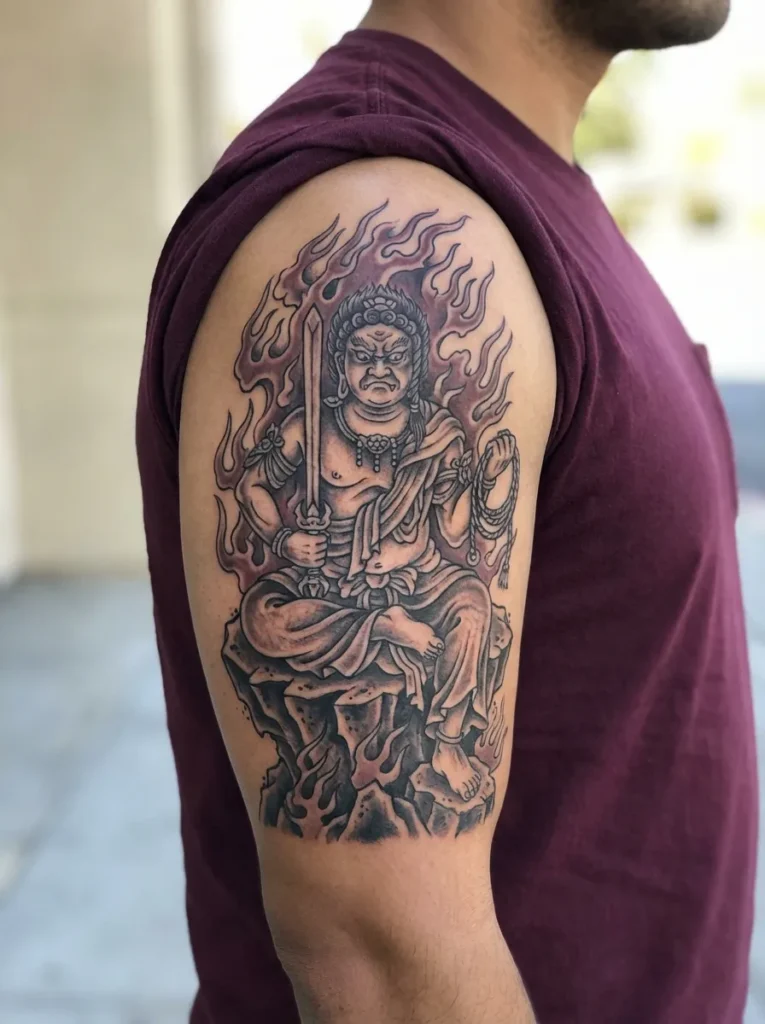
Fudo Myoo is one of the most powerful figures in Japanese Buddhist iconography. He is a deity of wisdom and fire who destroys ignorance and protects those who follow the right path. He sits on a rock, surrounded by flames, holding a sword and a rope.
The rope catches those who have lost their way. The sword cuts through delusion. This is not a gentle deity. He is fierce out of compassion.
Fudo Myoo tattoos are elaborate, sacred, and carry serious spiritual meaning. If you’re drawn to this image, spend time understanding who he is before committing to the design.
20. Raijin and Lightning Tattoo
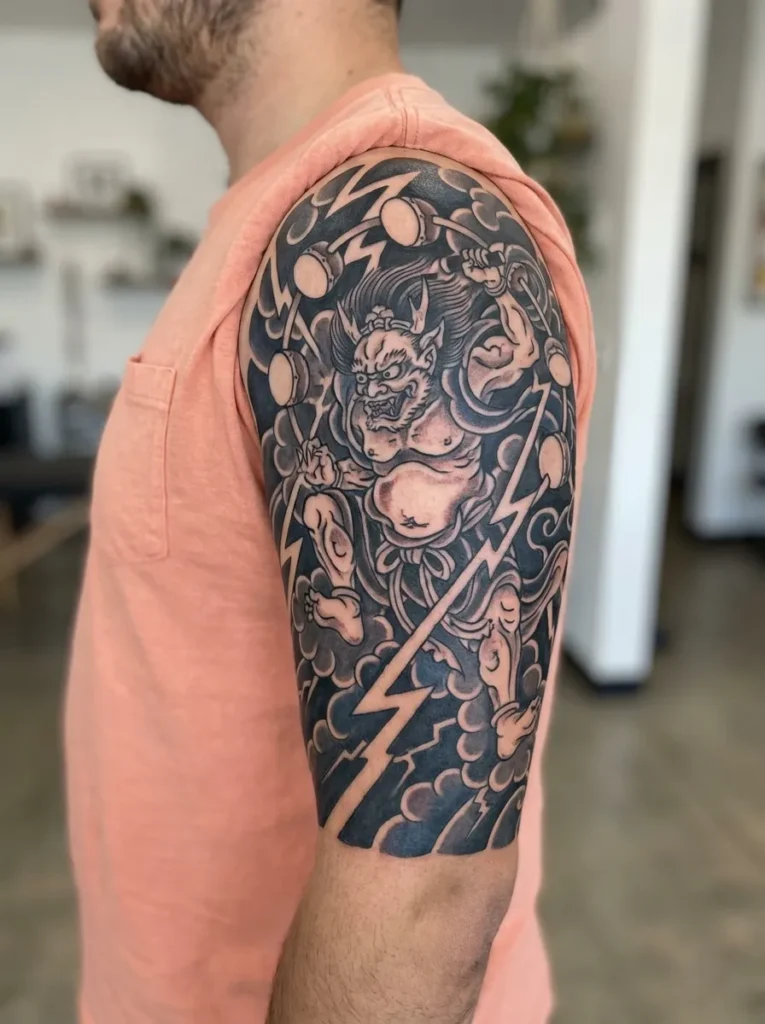
Raijin is the Japanese god of thunder and lightning. He’s usually shown as a fierce, muscular figure surrounded by a ring of drums, striking them to create thunder.
The energy in a Raijin tattoo is electric, literally. Bold linework, dynamic poses, and lightning cracking through the sky behind him. It’s one of the most visually intense designs in all of Irezumi.
Raijin is often paired with Fujin, the wind god. Together they appear on temple gates across Japan and make a natural pair as matching tattoo panels.
21. Fujin Wind God Tattoo
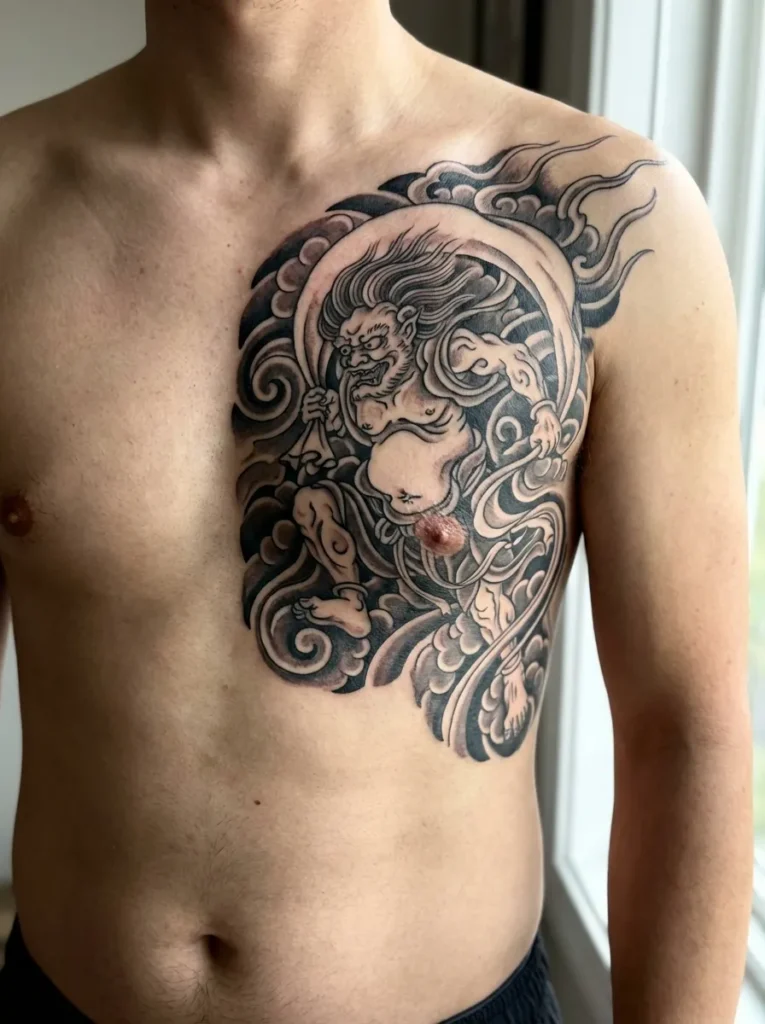
Where Raijin brings thunder, Fujin brings the wind. He carries a large bag over his shoulders that holds all the winds of the world. Wild, flowing, free.
Fujin’s design is looser and more chaotic than Raijin’s. His hair flies in every direction. His bag billows and twists. The movement in the design is part of the point.
Getting Raijin and Fujin as a matched pair is one of the most classic choices in Japanese tattooing. They balance each other perfectly and look extraordinary as a full back or chest and back composition.
22. Crane and Sun Tattoo
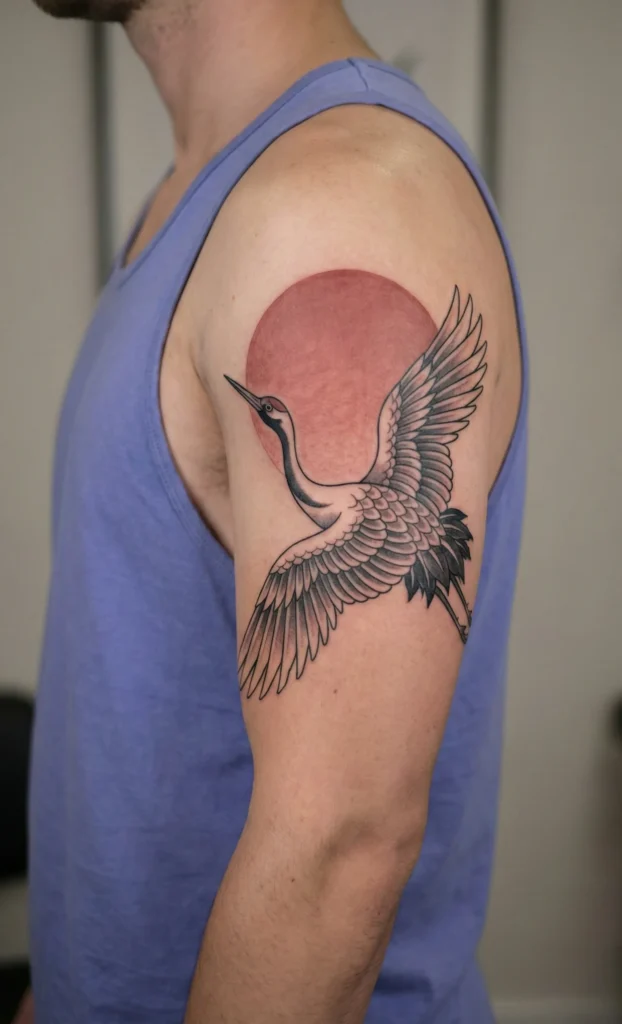
The crane is a symbol of longevity, good fortune, and fidelity. In Japan, it’s believed that folding 1000 paper cranes grants a wish. The real bird mates for life. Getting a crane tattoo is a quietly powerful choice.
Paired with a rising sun, the design becomes a statement about new beginnings and hope. The red sun disc against white feathers is a striking color contrast.
This design tends to have a cleaner, more elegant feel than the heavier Irezumi subjects. It’s detailed without being overwhelming.
23. Japanese Sleeve Bodysuit Tattoo
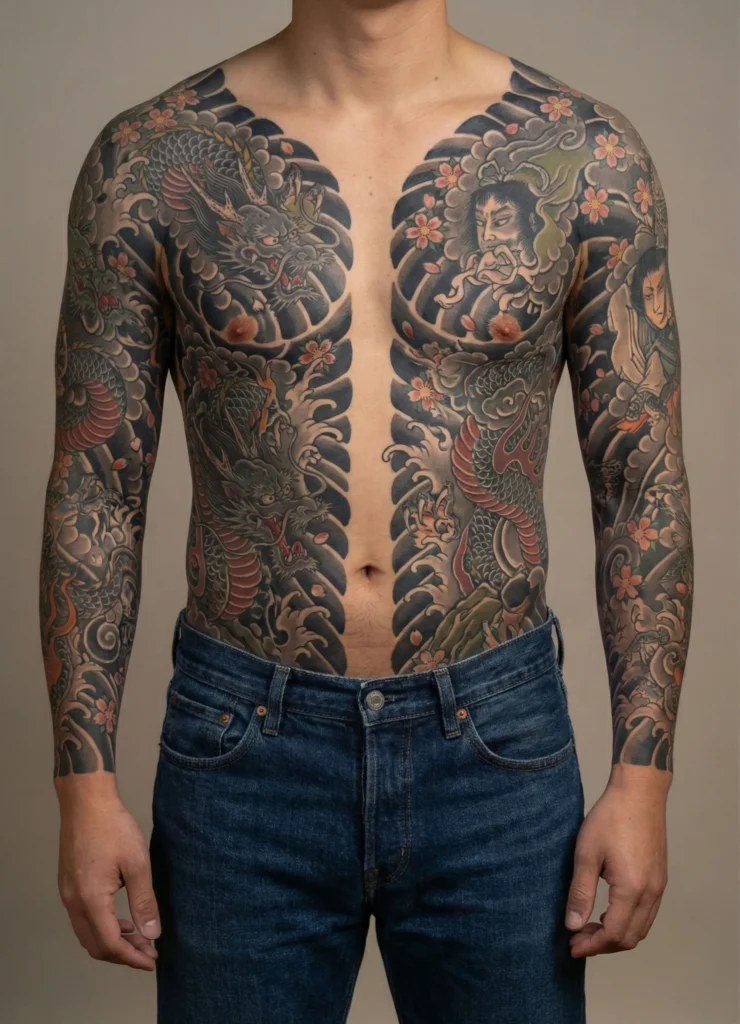
A full bodysuit is the ultimate expression of Irezumi. It covers the torso, arms, and legs in one continuous composition. Background waves, wind bars, and clouds connect every element into a unified visual story.
This is not a casual decision. A full bodysuit takes years and thousands of dollars to complete. The commitment is part of the tradition.
The most important element is choosing the right artist and building a relationship. A bodysuit is a collaboration. The artist needs to understand your vision and you need to trust their judgment completely.
- Start with a large anchor piece and build outward
- Discuss the background style early, it ties everything together
- Traditional Japanese bodysuit compositions often leave the center of the chest and spine clear
24. Waterfall Background Tattoo
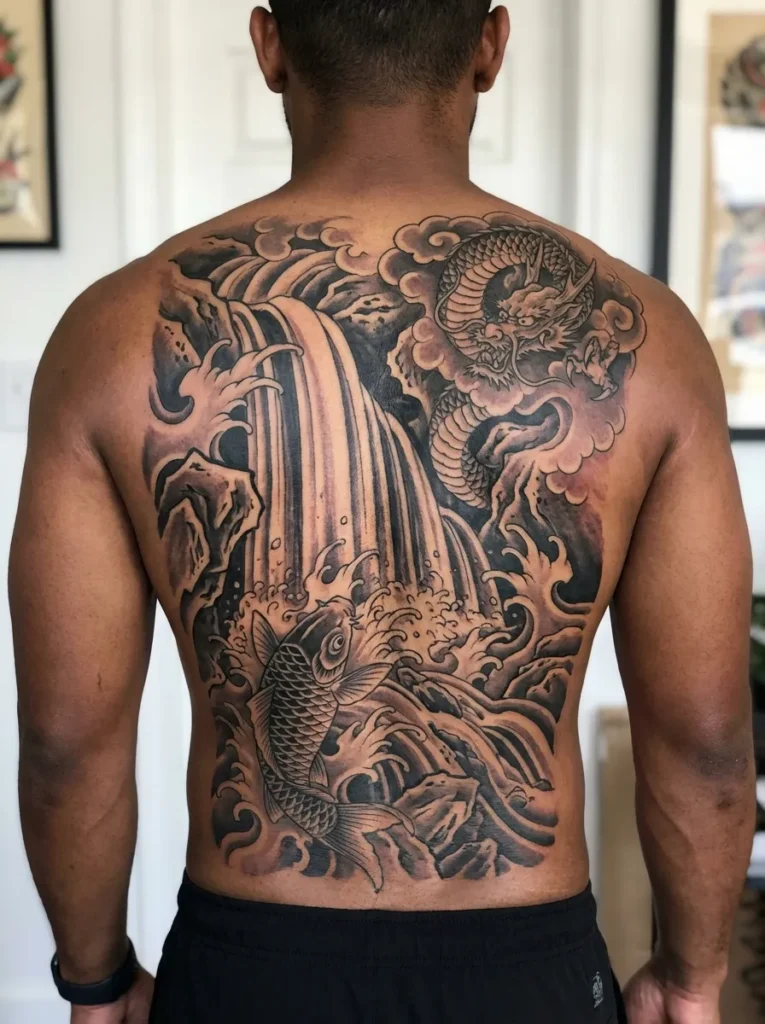
In Irezumi, the background is not an afterthought. It’s the foundation the whole composition stands on. Waterfalls are one of the most powerful background choices.
A waterfall brings movement, sound, and spiritual energy to a design. In Japanese culture, waterfalls represent purification and the flow of life.
Pair a waterfall with a koi swimming against the current and the symbolism writes itself. Add a dragon emerging from the mist at the top and you have a complete mythological story on your skin.
25. Lotus and Koi Tattoo
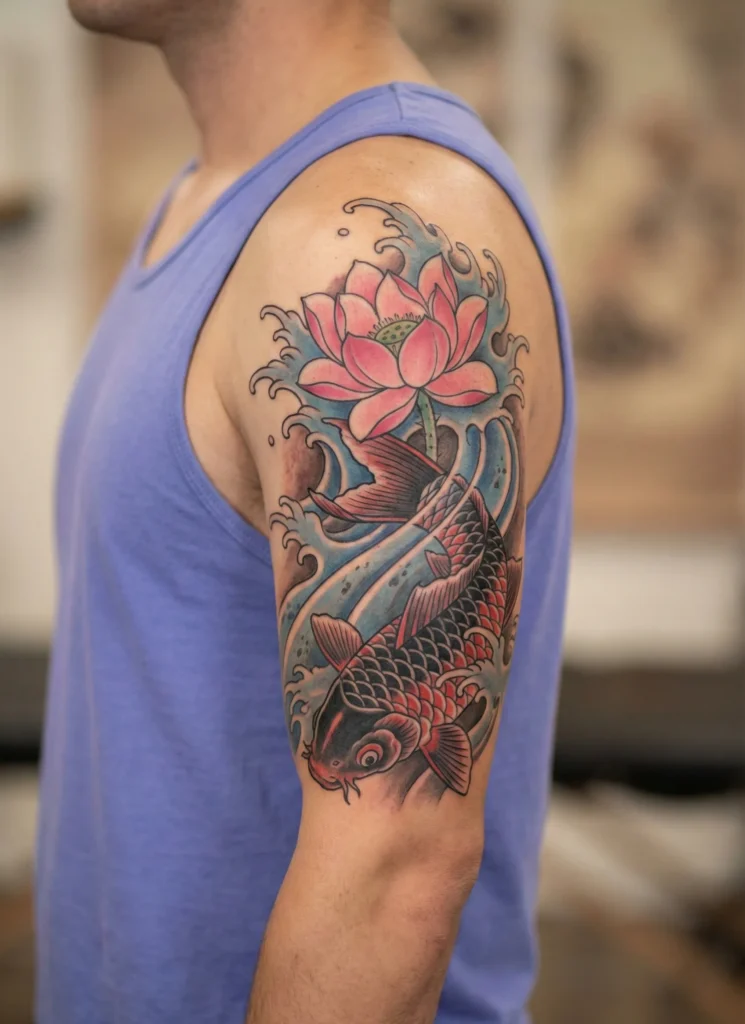
The lotus grows from mud and blooms above the water. The koi swims against the current. Both are symbols of rising above difficulty through persistence. Together, they tell the same story twice in the same image.
This pairing is one of the most popular in Japanese tattooing and for good reason. The contrast between the soft lotus bloom and the powerful koi body creates natural visual tension.
Color choice matters here. Pink lotus with a red or black koi is classic. White lotus with a golden koi feels more serene. Choose based on the mood you want to carry with you.
26. Three Wise Monkeys Tattoo
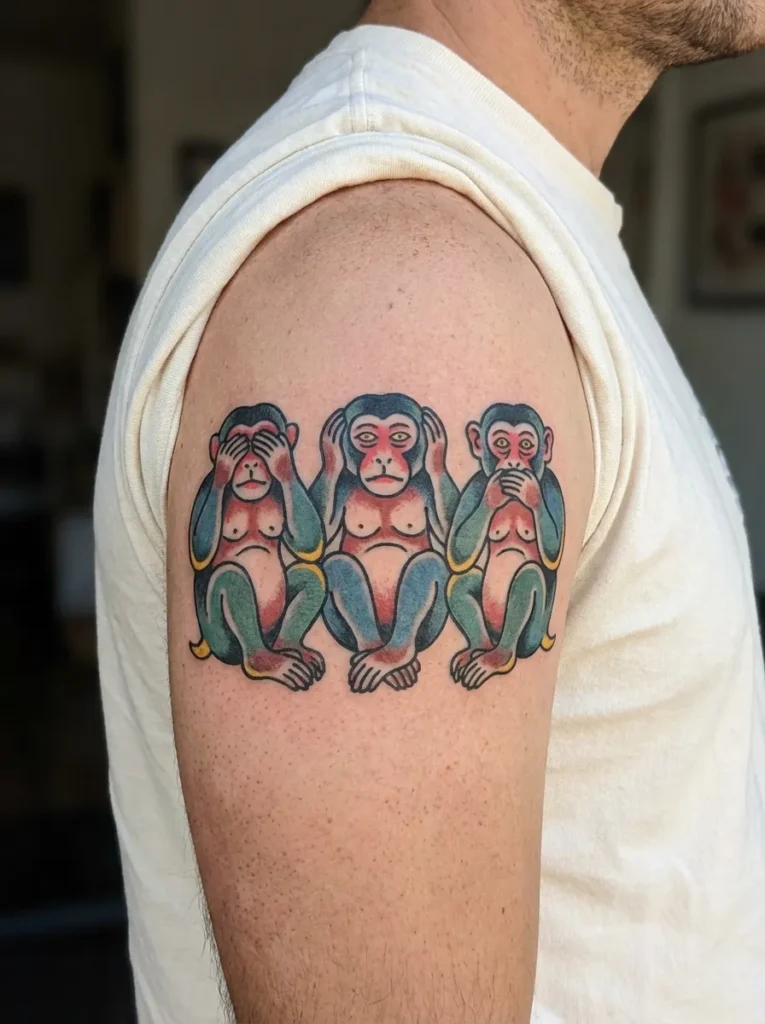
See no evil, hear no evil, speak no evil. The Three Wise Monkeys come from a 17th century carving at the Tosho-gu shrine in Nikko, Japan. They’re called Mizaru, Kikazaru, and Iwazaru.
The phrase is often misunderstood as passive ignorance. The original meaning is more about intentional choices, choosing not to engage with evil in what you see, hear, or say.
As a tattoo, they’re visually playful but philosophically deep. You can render them in a traditional Japanese style with bold lines and flat color, or lean into a more illustrative approach. Either way, the meaning travels with you.
So here’s the real question: with so much history, symbolism, and artistic tradition behind each of these designs, how do you choose just one? Or maybe the better question is, where do you even begin?