
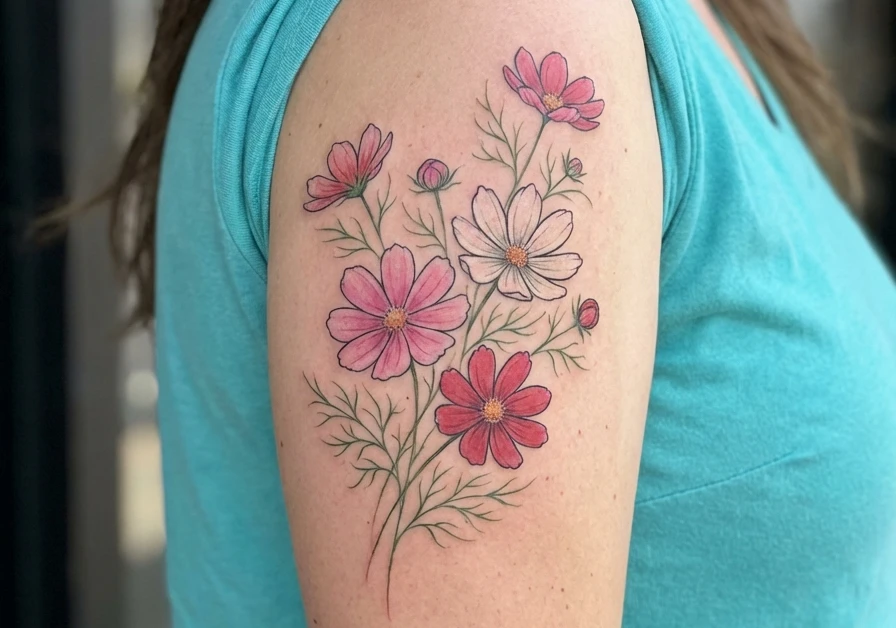
Japanese flower tattoos carry centuries of cultural symbolism. Each bloom represents specific virtues, seasons, or life philosophies rooted in Japanese tradition. These aren’t just pretty flowers. They’re visual poetry with deep spiritual meaning.
Irezumi, traditional Japanese tattooing, treats flowers as essential elements. They balance bold imagery like dragons or warriors with natural beauty and philosophical depth.
The technique uses flowing compositions and rich symbolism that Western styles can’t match.
Understanding the meaning behind each flower transforms your tattoo from decoration to declaration.
Japanese culture assigns specific values to different blooms based on appearance, blooming season, and historical associations. Your choice tells your story through botanical symbolism.
1. Lotus (Hasu)
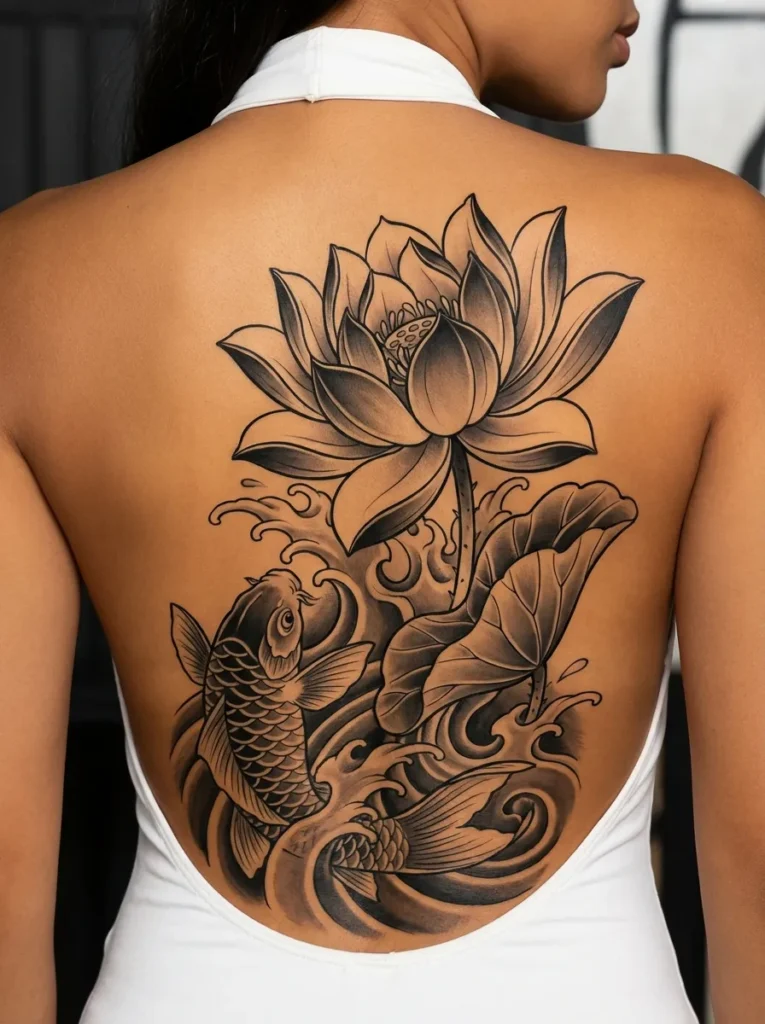
The lotus rises from muddy water to bloom in perfect purity. This flower represents spiritual enlightenment, rebirth, and rising above life’s struggles. It’s Buddhism’s most sacred symbol growing in tattoo form.
Japanese lotus designs show the flower in various stages. Closed buds represent potential, half-open blooms show the journey, and full flowers symbolize achieved enlightenment.
Large, layered petals work beautifully in traditional Japanese style with bold outlines and gradient shading.
Different colors carry different meanings. White lotus represents spiritual perfection. Pink shows the Buddha himself. Red symbolizes love and compassion. Blue represents wisdom and knowledge.
- Pair with koi fish for transformation themes
- Add water ripples for natural context
- Include leaves for complete composition
- Works in color or black and grey
This flower suits any placement from small wrist pieces to full back designs. The symmetrical petals create natural balance that Japanese composition loves.
2. Plum Blossom (Ume)
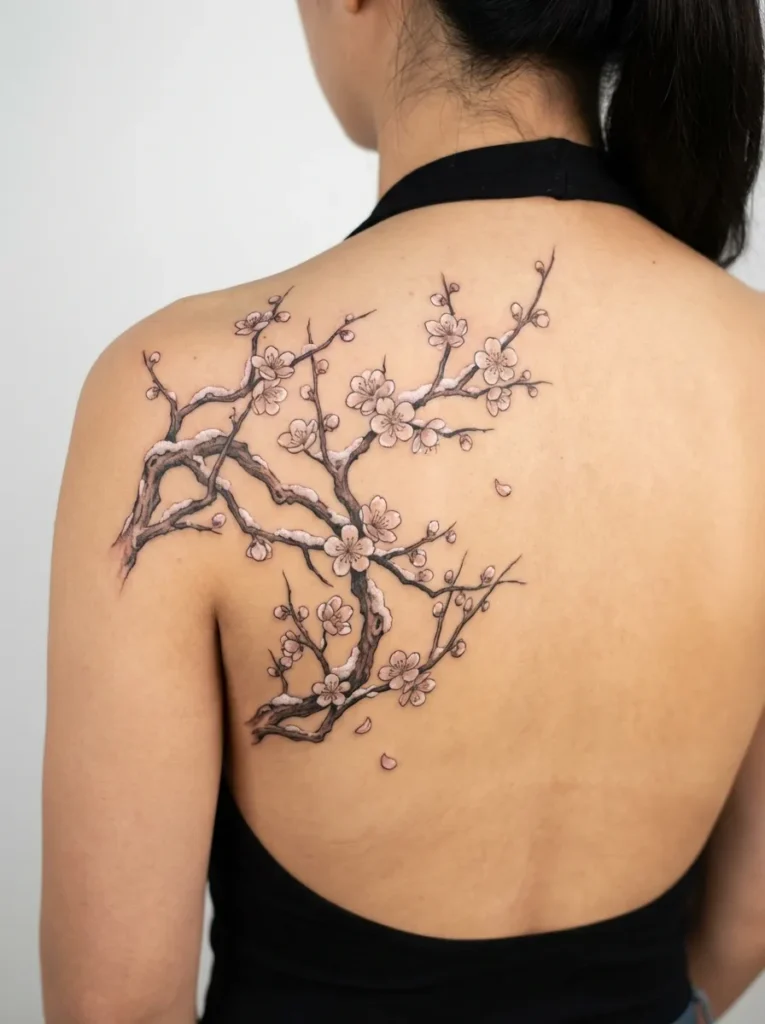
First flower of spring blooming in late winter snow. Plum blossoms represent perseverance, hope, and renewal. They flower when conditions seem impossible, showing strength through adversity.
Five delicate petals create simple but elegant compositions. Japanese designs often show branches heavy with blooms against contrasting backgrounds.
The flowers appear before leaves, creating stark, beautiful imagery perfect for tattooing.
Plum blossoms symbolize the entire cycle of life. The brief blooming period reminds us that beauty is temporary. In Japanese culture, they represent starting fresh and pushing through hardship to find beauty.
3. Camellia (Tsubaki)
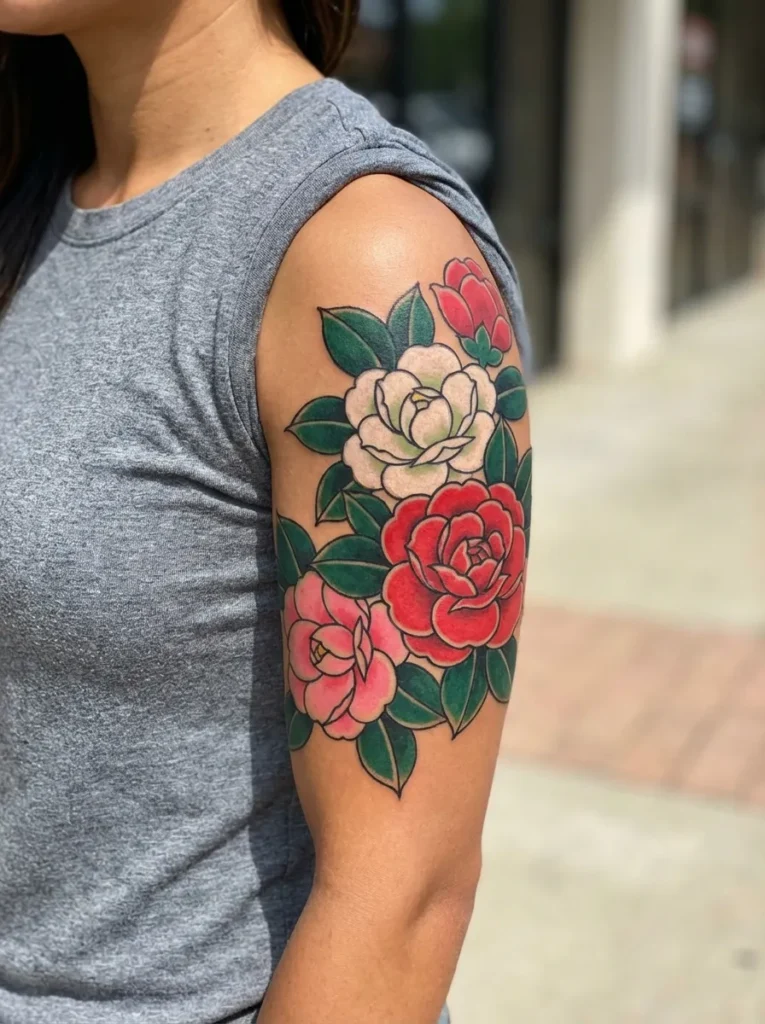
The winter rose that blooms when other flowers have died. Camellias represent noble death, divine love, and perfection. The flower drops as one complete bloom rather than petal by petal, symbolizing sudden beautiful endings.
Samurai loved camellias because the way they fall mirrors honorable death.
Full, round blooms with layered petals create lush tattoo imagery. Red camellias mean passionate love. White shows adoration. Pink represents longing.
- Bold, symmetrical petals suit Japanese style
- Glossy leaves add contrast
- Often paired with traditional Japanese elements
- Works beautifully in color or monochrome
Medium to large sizes show the camellia’s detailed petal structure. The flower’s cultural connection to warriors makes it popular for strength-themed pieces.
4. Wisteria (Fuji)
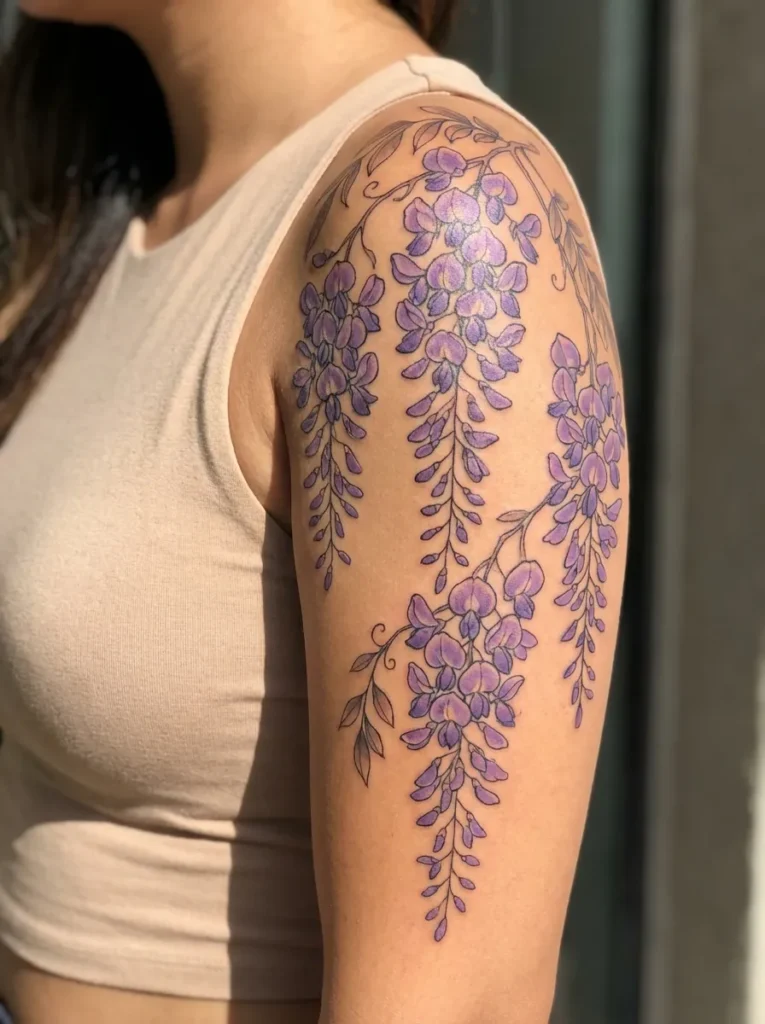
Cascading purple flowers that drape like nature’s curtains. Wisteria represents love, sensitivity, and tenderness. The hanging clusters create flowing, feminine compositions perfect for larger tattoo pieces.
Japanese wisteria designs emphasize the drooping flower clusters. Each raceme can be two feet long, creating dramatic vertical elements.
Purple is traditional, but white and pink varieties exist. The vine-like growth pattern allows creative placement following body contours.
In Japanese culture, wisteria symbolizes long life and immortality. The plants live for hundreds of years. The flowers’ gentle beauty contrasts with incredible strength and endurance.
5. Iris (Ayame)
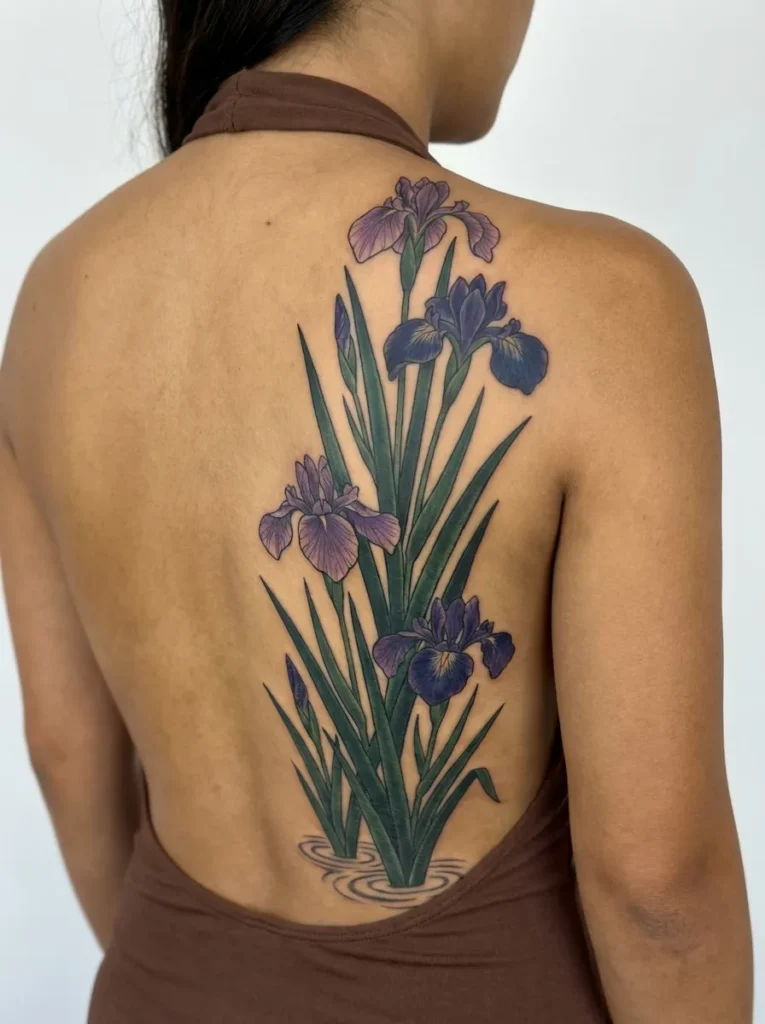
Sharp leaves like swords, delicate purple blooms. Irises represent courage, warrior spirit, and good news. May 5th, Boys’ Day in Japan, features irises because their leaves resemble blades.
Three large petals and three smaller ones create asymmetric beauty. Japanese iris designs show the flower emerging from water or growing in gardens. Deep purples and blues are traditional, though yellow and white varieties exist.
| Color | Meaning | Traditional Use |
| Purple | Wisdom, respect | Most common |
| Blue | Faith, hope | Classic choice |
| White | Purity, reverence | Memorial pieces |
| Yellow | Passion, courage | Warrior themes |
The sharp, vertical composition suits arm, leg, or back placements. Irises balance masculine symbolism with delicate flower beauty.
6. Hydrangea (Ajisai)
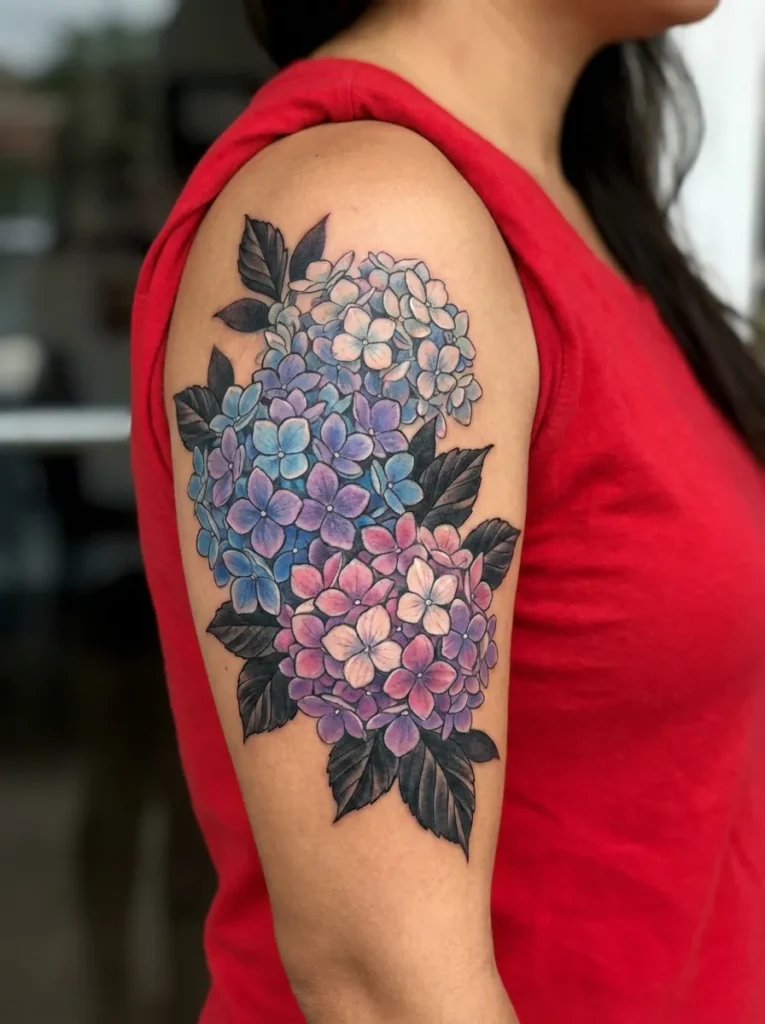
Color-changing blooms that shift with soil conditions. Hydrangeas represent gratitude, heartfelt emotion, and understanding. The clustered flowers create lush, full compositions.
Japanese hydrangeas bloom in the rainy season, connecting them to patience and endurance through difficult times.
Blue and purple are most common, but pink and white varieties add variety. The round flower clusters contrast beautifully with sharp leaves.
These flowers symbolize apology and gratitude in Japanese culture. Giving hydrangeas means “I’m sorry” or “thank you for understanding.” The changing colors represent life’s fluctuations and adaptability.
7. Red Spider Lily (Higanbana)
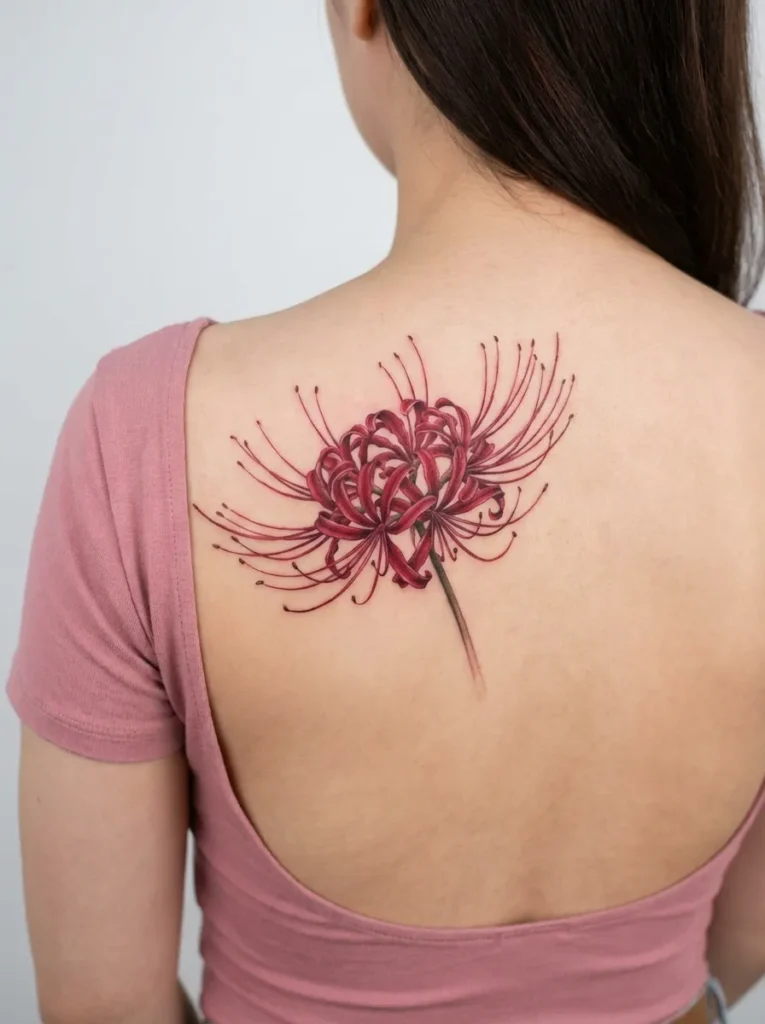
The death flower blooming on the autumn equinox. Red spider lilies grow in graveyards and represent final goodbyes, reincarnation, and the afterlife. They’re hauntingly beautiful with deep cultural weight.
Bright red petals curl backward dramatically. Long, thin stamens create spidery appearance.
These flowers never appear with their leaves, symbolizing the separation of life and death. They bloom on graves during Higan, when the living honor the dead.
- Deep red creates striking visual impact
- Often paired with skulls or death themes
- Represents lost love or farewell
- Powerful memorial tattoo choice
This isn’t casual flower imagery. The cultural associations run deep. Many choose it to honor lost loved ones or represent acceptance of mortality.
8. Morning Glory (Asagao)
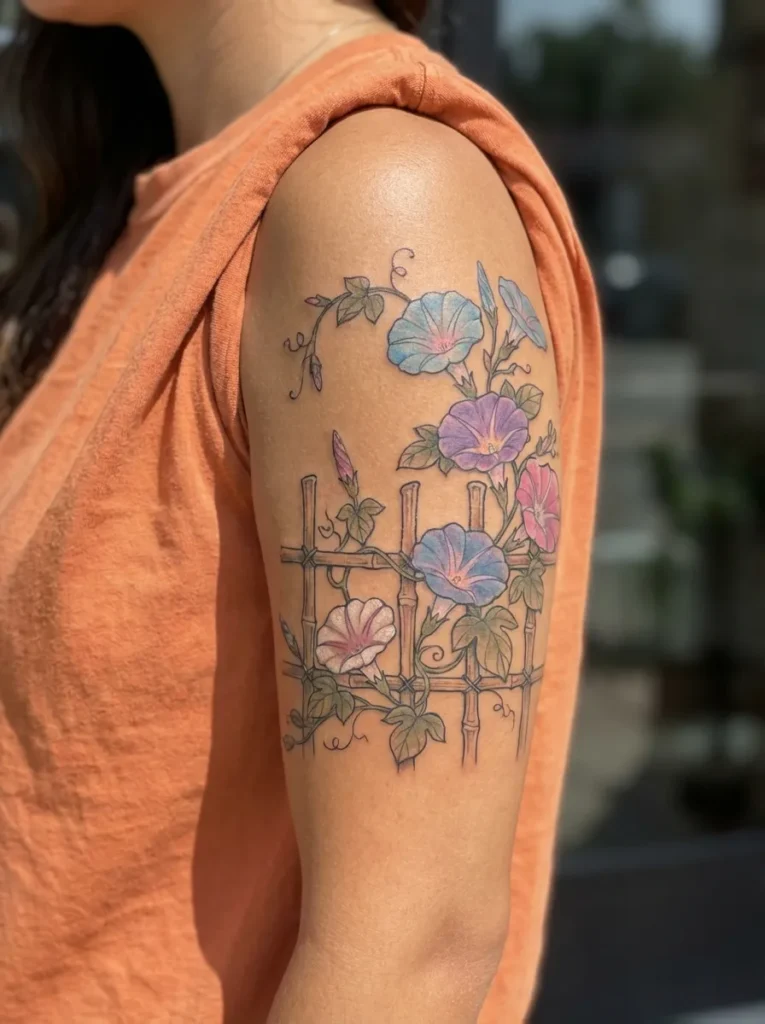
Flowers that bloom at dawn and die by afternoon. Morning glories represent fleeting beauty, mortality, and living in the moment. Each bloom lasts only hours, making every opening precious.
Trumpet-shaped flowers in blue, purple, pink, or white curl around climbing vines. Japanese designs often show them on fences or trellises. The short lifespan makes them powerful symbols for appreciating temporary beauty.
In Japanese culture, morning glories represent summer’s brief intensity.
They’re tied to childhood memories and the bittersweet nature of growing up. The vine’s constant climbing symbolizes perseverance despite life’s brevity.
9. Maple Leaves (Momiji)
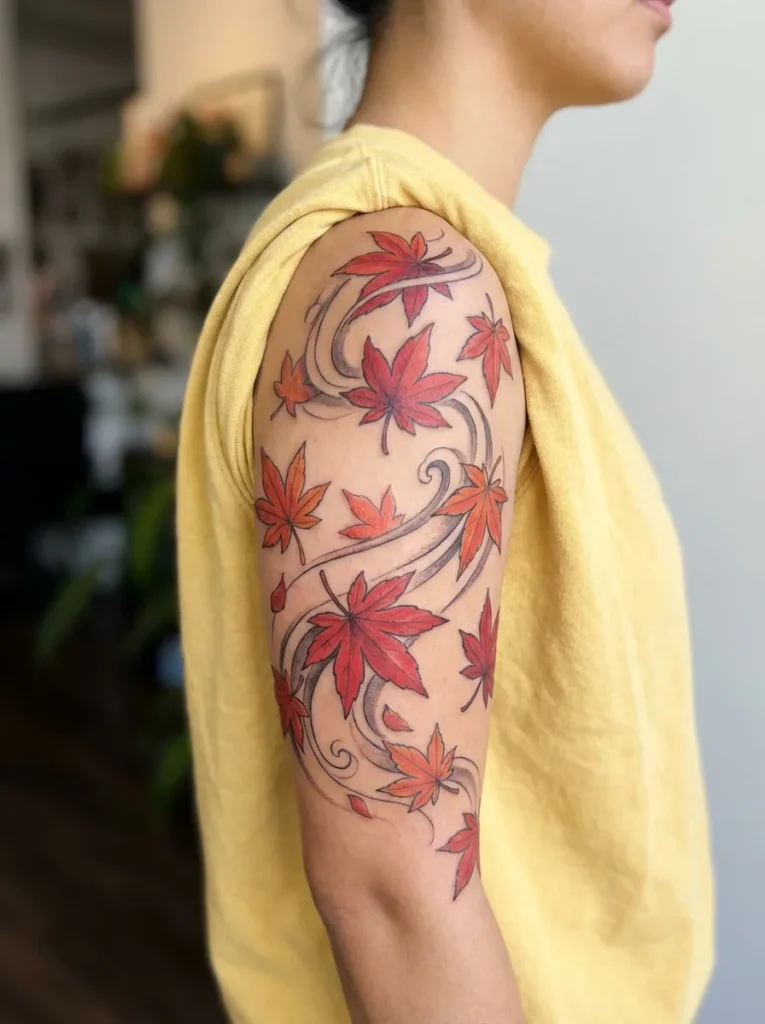
Autumn’s fire captured in foliage form. Maple leaves represent time’s passage, beauty in change, and life’s seasons. The brilliant red colors create dramatic tattoo imagery.
Japanese maple viewing (momijigari) is as important as cherry blossom season. The leaves transform from green to yellow, orange, and deep red. Designs often show leaves falling or floating on water, emphasizing impermanence.
- Vibrant reds and oranges dominate
- Often paired with water or wind elements
- Represents change and transformation
- Popular in full sleeve compositions
Scattered leaves create natural flow following body contours. They balance bold imagery while adding seasonal and philosophical depth.
10. Bamboo (Take)
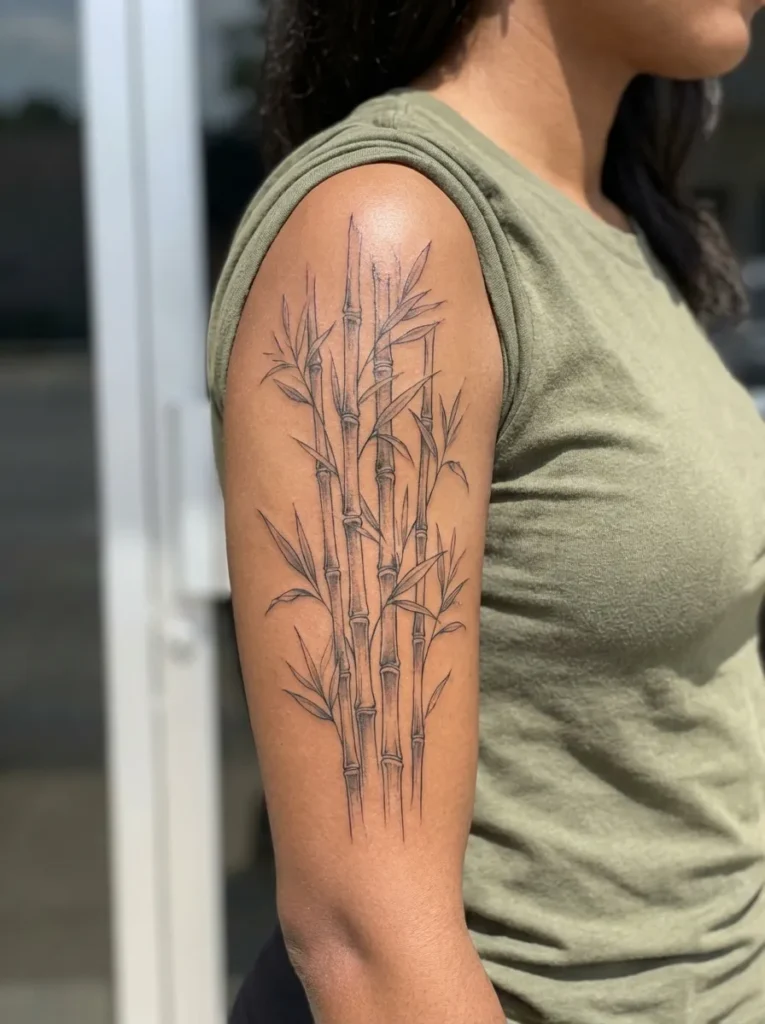
Technically grass, not a flower, but essential Japanese symbolism. Bamboo represents strength through flexibility, resilience, and prosperity. It bends in storms but never breaks.
Tall, segmented stalks with delicate leaves create vertical compositions.
Japanese bamboo designs emphasize the plant’s structural beauty and growth patterns. The hollow interior represents humility despite outer strength.
Bamboo grows incredibly fast and survives harsh conditions. In Japanese culture, it symbolizes adapting to challenges while maintaining core values. The evergreen nature represents longevity and endurance.
11. Pine (Matsu)
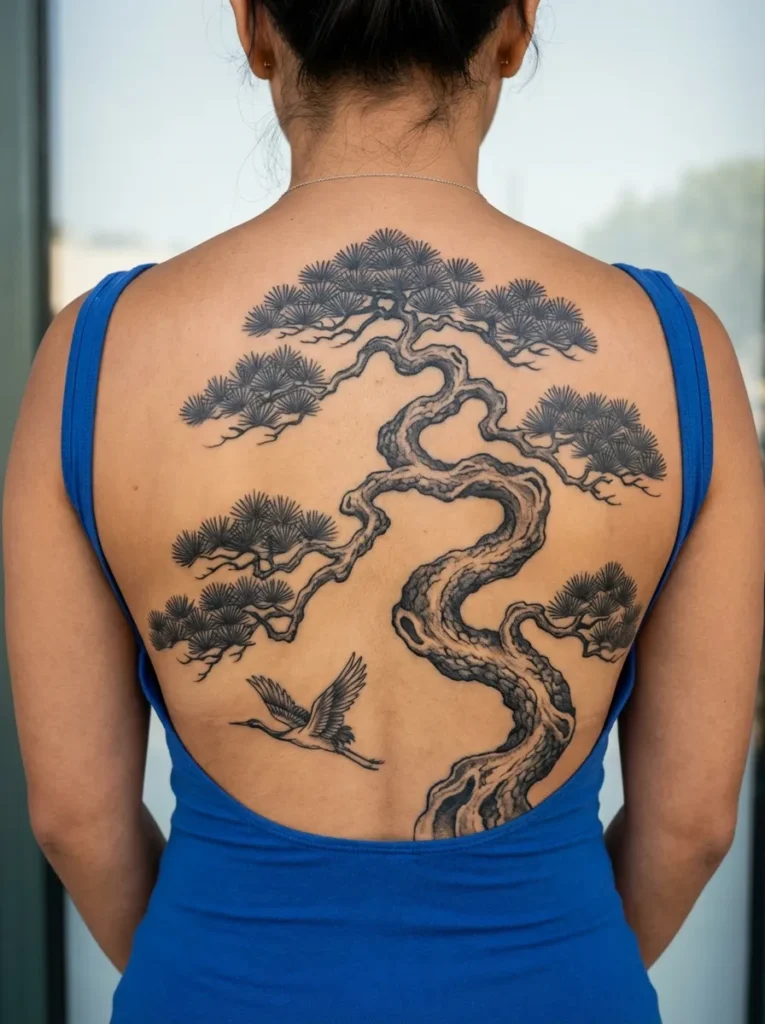
Eternal green surviving all seasons. Pines represent longevity, virtue, and steadfastness. They’re one of the “Three Friends of Winter” in Japanese art, along with plum and bamboo.
Needle clusters and gnarled branches create masculine, powerful imagery. Japanese pines twist and bend dramatically, shaped by wind and time. The trees live centuries, making them symbols of endurance and wisdom.
- Often paired with cranes for longevity themes
- Twisted trunks show character and age
- Evergreen nature represents eternal values
- Works in traditional landscape compositions
Large pieces showcase pine’s architectural beauty best. Back or sleeve placements allow the twisting branches to follow body movement naturally.
12. Paulownia (Kiri)
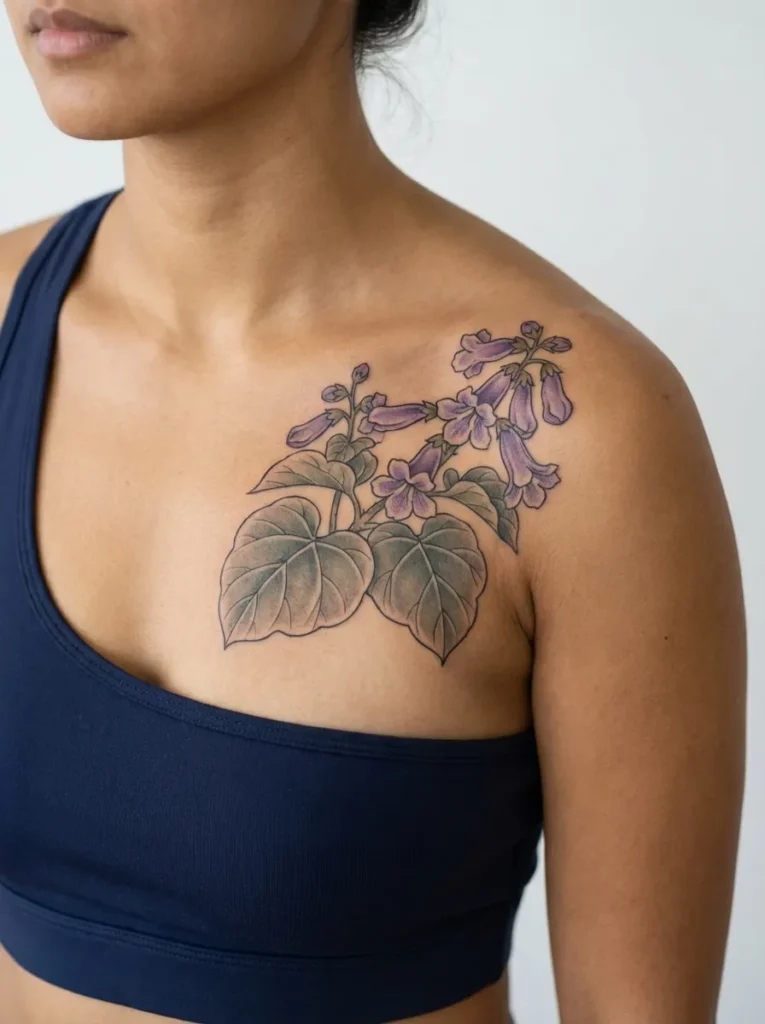
The imperial flower reserved for highest honor. Paulownia represents nobility, honor, and good fortune. It’s Japan’s highest civilian honor, appearing on government seals.
Large, heart-shaped leaves and purple trumpet flowers create elegant compositions. The wood is precious and light.
Traditionally, paulownia trees planted at a daughter’s birth were made into her wedding chest.
This flower carries serious cultural weight. It’s not casual decoration but represents aspiration toward nobility and honor. The government connection makes it popular for those serving or honoring service.
13. Water Lily (Suiren)
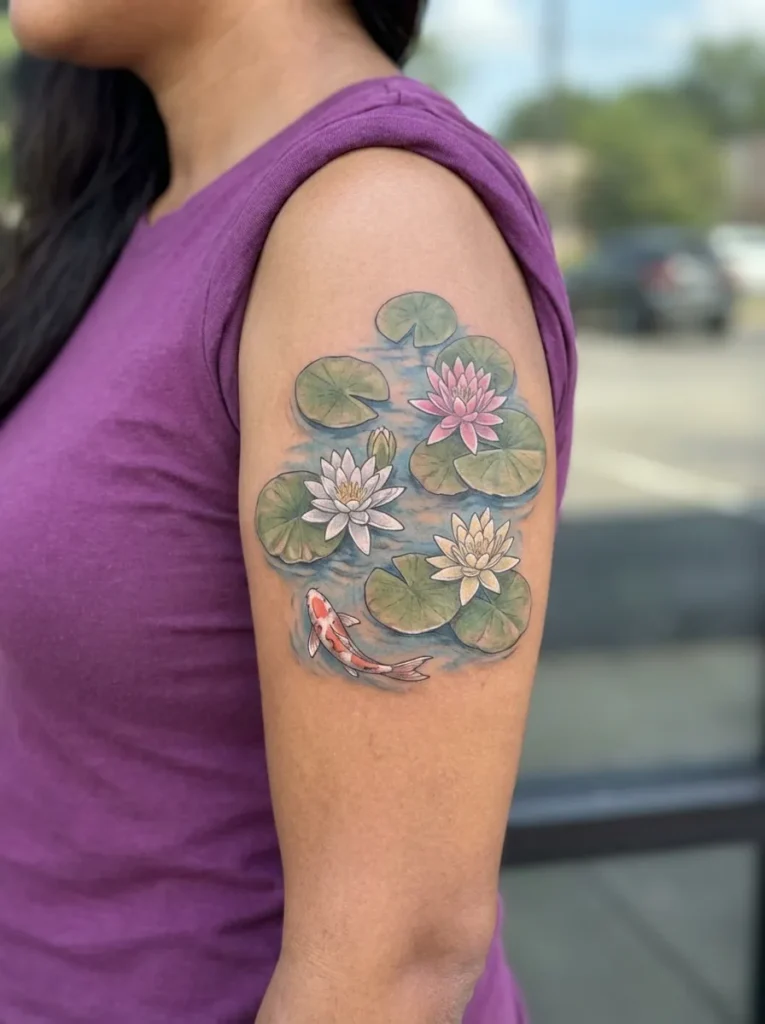
Floating serenity on still water. Water lilies represent purity, rebirth, and enlightenment. They’re close cousins to lotus but grow in different conditions with distinct meanings.
Circular pads and star-shaped blooms float on water surfaces. Japanese designs show them in peaceful pond settings.
Colors range from white and pink to yellow and purple. The flowers open with sunlight and close at night.
- Creates peaceful, meditative compositions
- Works beautifully with koi or water themes
- Represents spiritual awakening
- Softer symbolism than dramatic lotus
Medium to large pieces show the flower and pad together. The circular forms create balanced, calming imagery perfect for contemplative pieces.
14. Orchid (Ran)
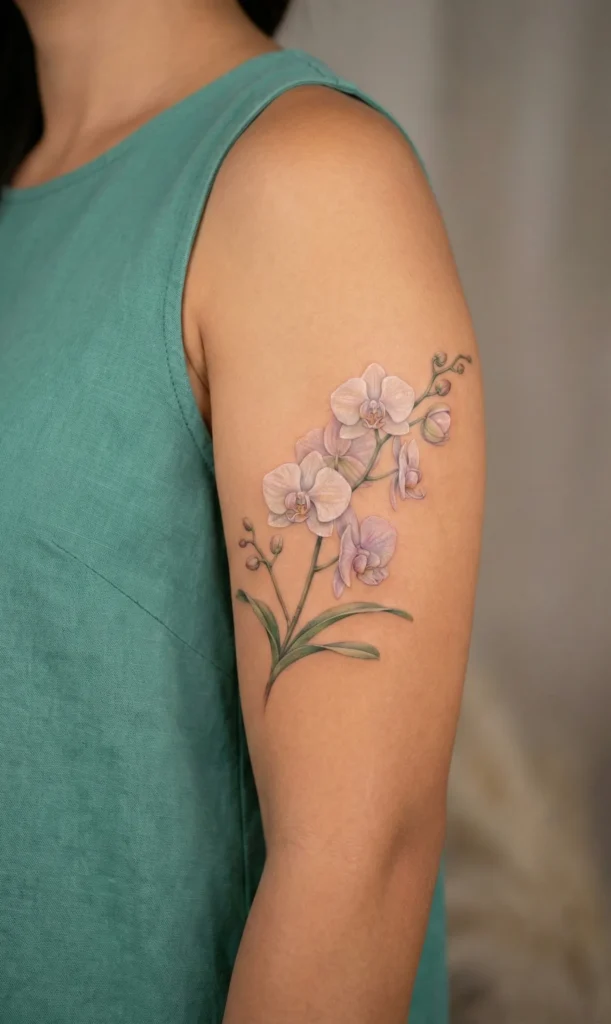
Elegant blooms representing refinement and nobility. Orchids symbolize beauty, luxury, and scholarly virtue. They’re one of the “Four Gentlemen” in Asian art alongside plum, chrysanthemum, and bamboo.
Complex petal structures and delicate forms create sophisticated compositions. Japanese orchids appear in subtle colors, white, pale pink, or light purple. The flowers represent cultured taste and intellectual beauty.
Orchids in Japanese culture connect to wealth and refinement. They’re grown by those with time to appreciate delicate beauty. The flower represents achieving elegance through patience and cultivation.
15. Japanese Anemone (Shūmeigiku)
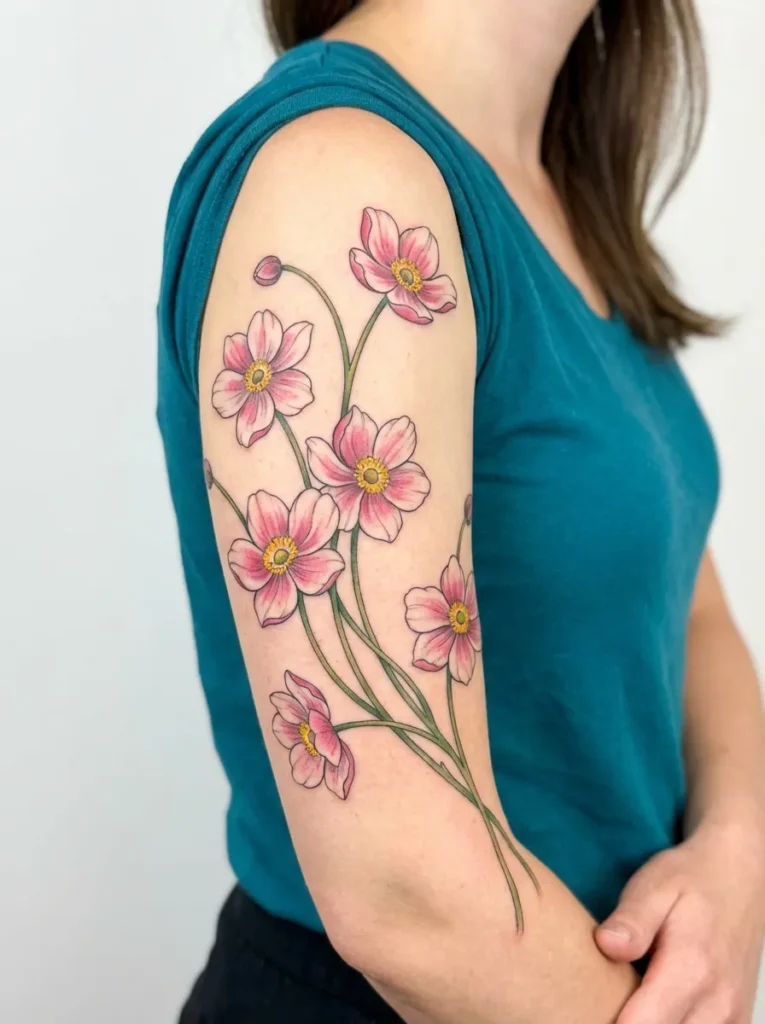
Autumn flowers representing protection against evil. Japanese anemones symbolize anticipation, protection, and forsaken love. The delicate petals belie tough, persistent plants.
Five or more simple petals surround bright yellow centers. Pink and white are traditional colors. The flowers bloom late in the season when most others have faded. Long stems create graceful, flowing compositions.
- Represents protection and warding off evil
- Associated with autumn and change
- Delicate appearance, hardy nature
- Works in traditional or minimalist styles
The flower’s cultural association with protection makes it popular for guardian or memorial pieces. The late blooming represents finding beauty when hope seems lost.
16. Cosmos (Akizakura)
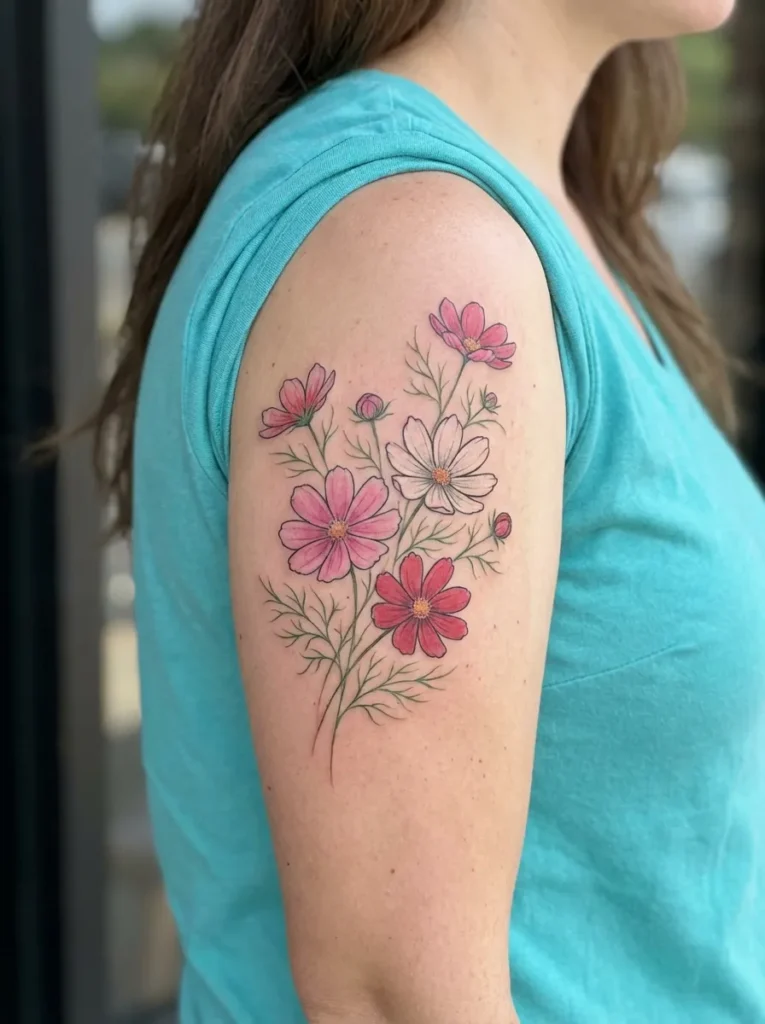
Autumn cherry blossoms bringing harmony and order. Cosmos flowers represent balance, harmony, and peaceful beauty. The name literally means “harmony” in Greek.
Simple, daisy-like flowers with eight petals in pink, white, or red. Delicate, feathery foliage adds texture.
Cosmos bloom in orderly rows, representing organization within natural beauty. They’re tougher than they look, thriving in poor soil.
In Japanese culture, cosmos represent modesty and cleanliness. The simple beauty and reliable blooming make them symbols of honest, uncomplicated virtue. They’re autumn’s answer to spring’s cherry blossoms.
17. Daffodil (Suisen)
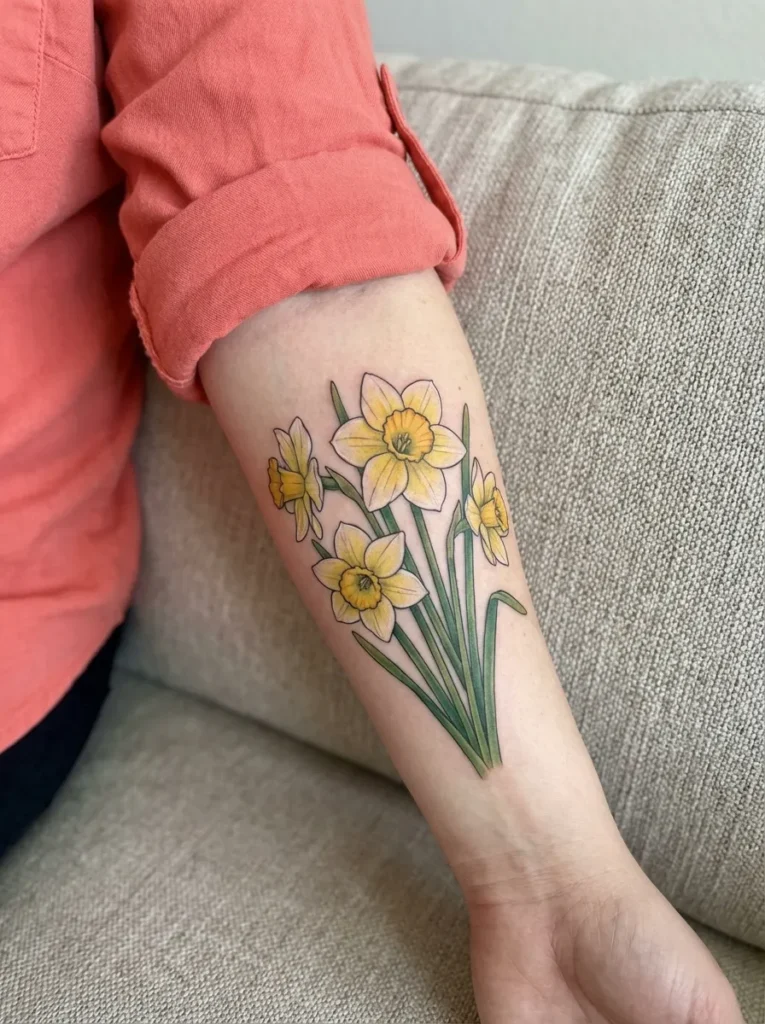
New year flowers representing respect and fresh starts. Daffodils symbolize rebirth, new beginnings, and respect. They bloom around Japanese New Year, making them lucky flowers.
Trumpet-shaped centers surrounded by six petals create distinctive forms. Yellow is traditional, but white varieties exist. The flowers emerge before leaves, creating clean, elegant compositions. Their early blooming represents courage and hope.
- Associated with new year celebrations
- Represents fresh starts and respect
- Bright yellows create optimistic imagery
- Symbol of overcoming winter darkness
Medium sizes show the flower’s unique structure clearly. The cultural connection to new beginnings makes them popular for marking life changes or fresh chapters.
18. Camphor Blossom (Kusunoki)
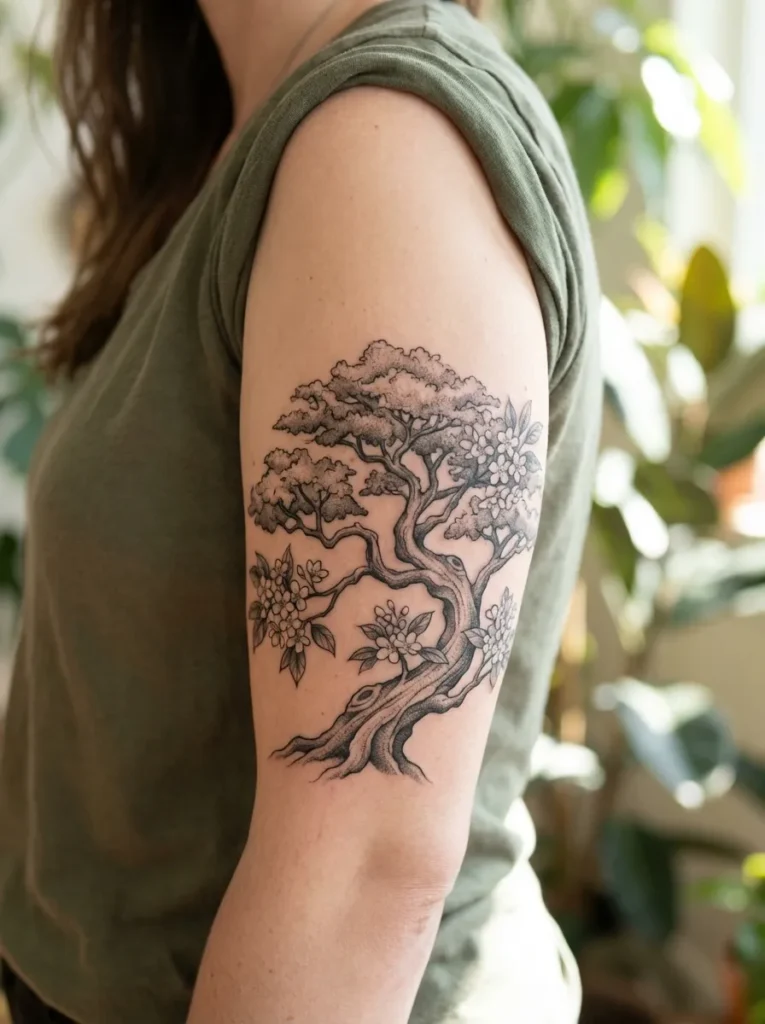
Sacred tree flowers representing protection and longevity. Camphor blossoms are tiny and white, but the trees themselves are massive and ancient. They represent endurance, protection, and spiritual power.
Small, clustered white flowers appear in spring. The trees grow enormous with thick trunks and spreading canopies. In Japanese culture, camphor trees house spirits and offer protection. Shrines often have ancient camphor trees on their grounds.
This is deeper symbolism than obvious beauty. The flowers themselves are subtle, but the tree’s cultural significance is massive. It represents quiet strength and spiritual protection across centuries.
19. Persimmon Flower (Kaki)
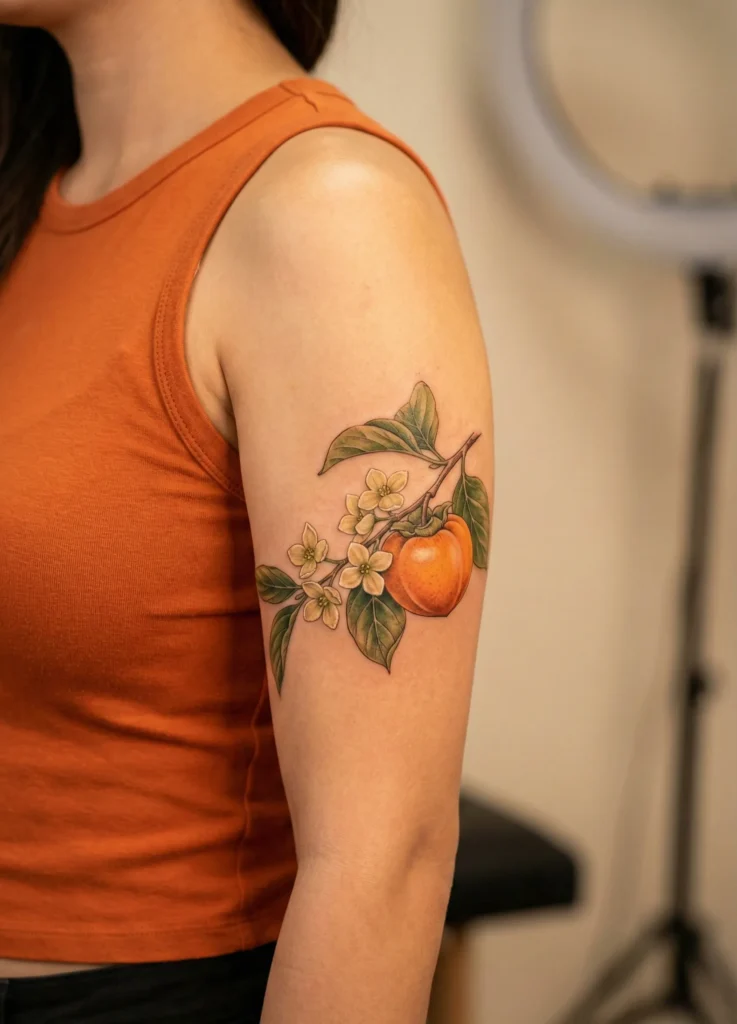
Humble blooms becoming sweet autumn fruit. Persimmon flowers represent transformation, patience, and nature’s generosity. Small, unremarkable flowers become brilliant orange fruit.
Pale yellow-white flowers with four petals appear in late spring. They’re not showy, but they promise autumn’s vibrant orange persimmons.
The contrast between subtle flower and bold fruit creates powerful transformation symbolism.
In Japanese culture, persimmon represents patience and long-term thinking. The flower-to-fruit journey shows that modest beginnings can yield rich rewards. The fruit’s importance in autumn connects to harvest and gratitude.
20. Bellflower (Kikyo)
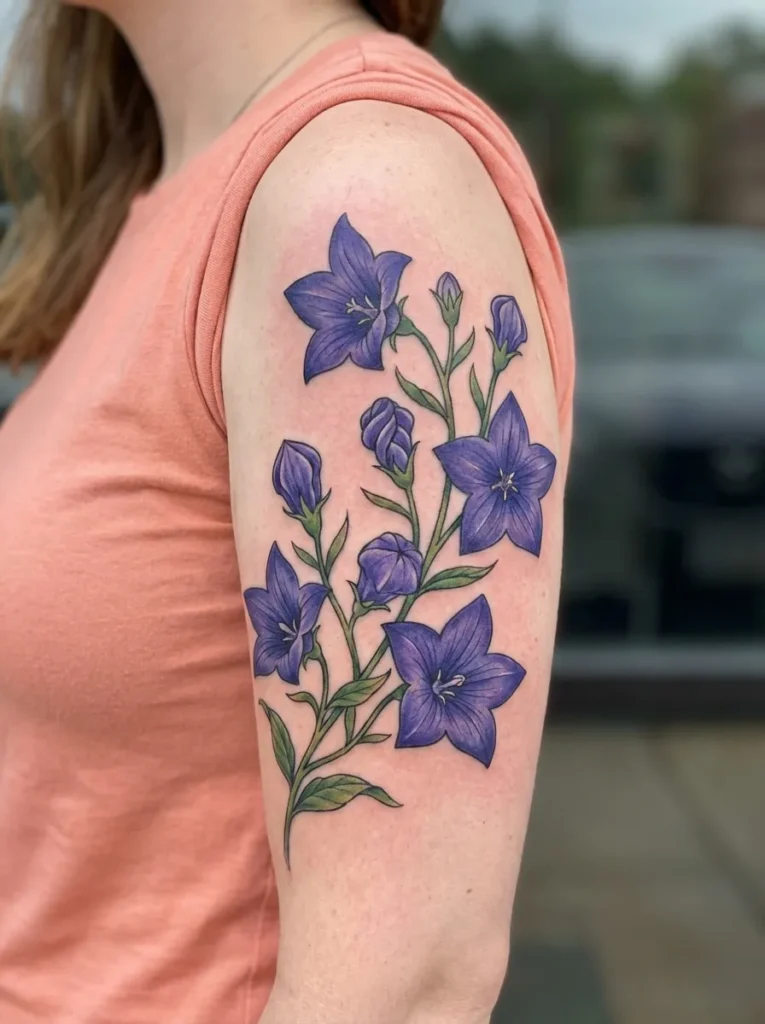
Five-pointed stars representing honesty and unchanging love. Bellflowers symbolize steadfast affection, honesty, and obedience. The flower opens from twisted buds into perfect stars.
Deep purple-blue five-petaled flowers with star shapes. The buds twist before opening, creating interesting compositional elements. White varieties exist but purple is traditional. The plant blooms reliably year after year.
| Aspect | Symbolism | Cultural Meaning |
| Five Points | Balance, harmony | Connection to five elements |
| Deep Blue | Sincerity, honesty | Unchanging truth |
| Reliable Bloom | Steadfast love | Enduring affection |
| Star Shape | Guidance, hope | Finding one’s way |
Bellflowers represent promises kept and loyalty maintained. In Japanese culture, they’re tied to samurai families and unwavering dedication. The simple beauty masks deep commitment symbolism.
21. Dianthus (Nadeshiko)
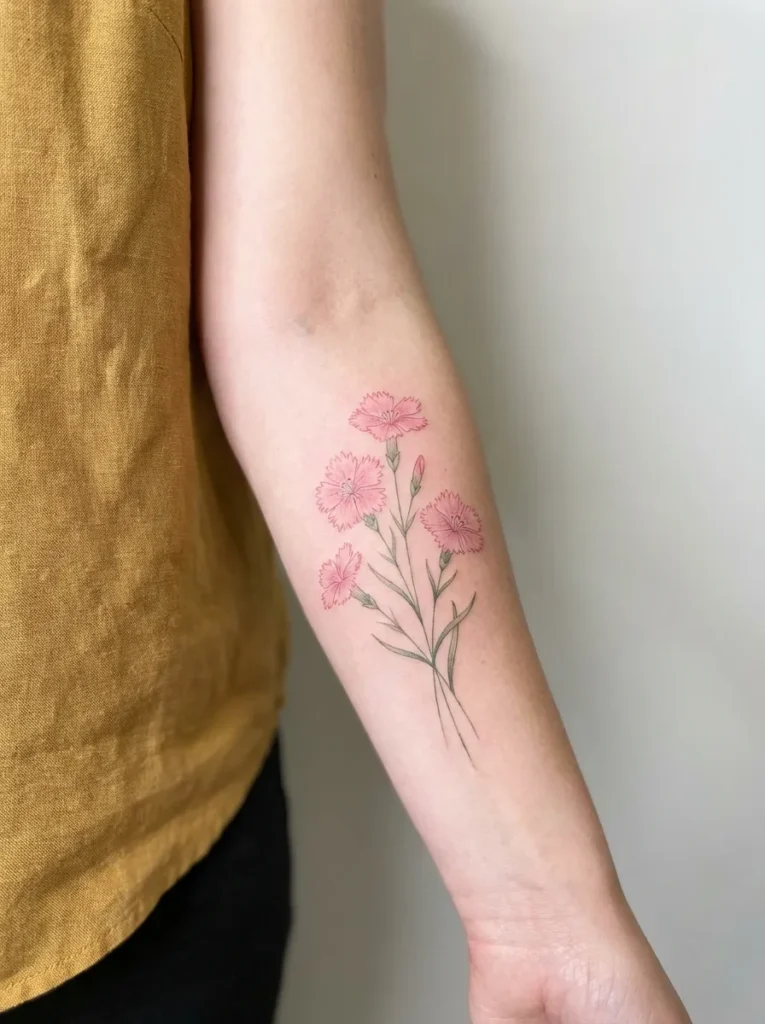
The beloved pink representing ideal femininity. Dianthus, called nadeshiko in Japanese, symbolizes pure love, admiration, and the ideal woman. The term “yamato nadeshiko” describes perfect feminine virtue.
Delicate pink flowers with fringed petals create soft, romantic imagery. The blooms appear simple but carry heavy cultural significance.
They represent gentleness combined with inner strength, the ideal balance of feminine qualities.
These flowers connect to traditional Japanese values of femininity. Grace, loyalty, beauty, and strength hidden beneath gentle exteriors. Modern interpretations celebrate any strength cloaked in beauty.
22. Kudzu Blossom (Kuzu)
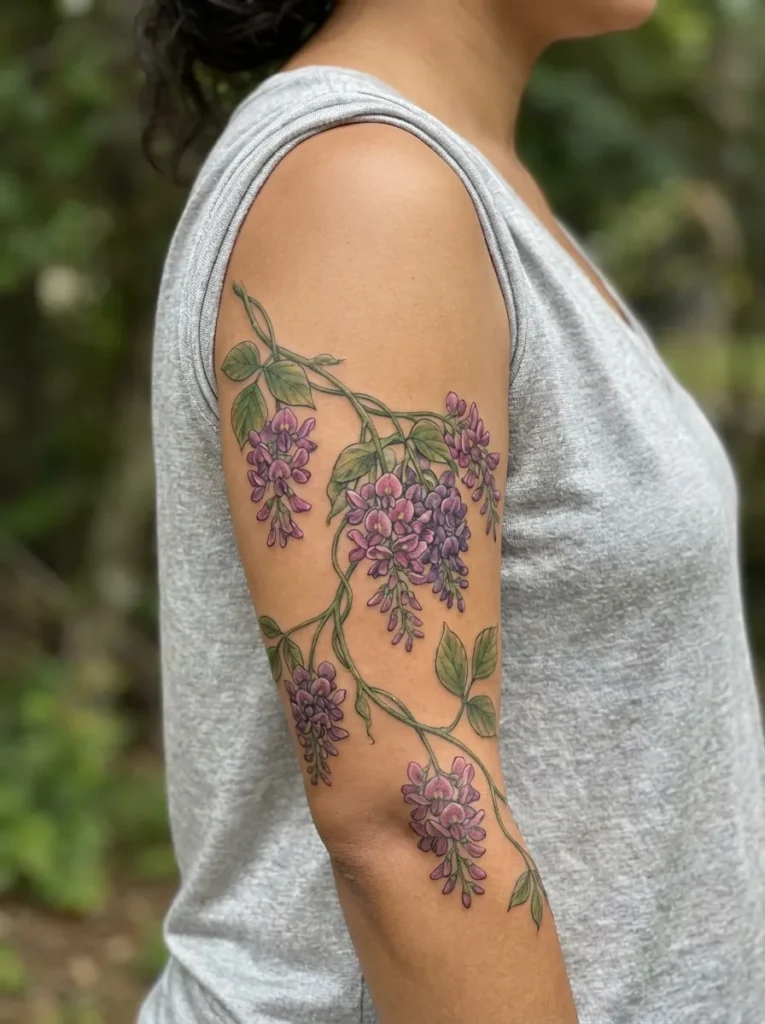
Invasive vines with sweet-smelling purple flowers. Kudzu represents perseverance taken too far, unstoppable growth, and adaptation. The plant survives anything and grows everywhere.
Grape-like clusters of purple-pink flowers smell sweet but the vines choke everything. In Japan, kudzu is useful for food and medicine. The flowers represent beauty arising from aggressive survival instinct.
This flower carries complicated symbolism. Adaptation and survival at all costs. Beauty emerging from what others consider invasive. It represents thriving where you’re planted, no matter what others think.
Final Thoughts
Japanese flower tattoos offer rich symbolism beyond Western floral designs. Each bloom carries specific cultural meanings developed over centuries. From lotus enlightenment to spider lily farewells, these flowers tell stories through natural beauty.
Understanding traditional symbolism helps create meaningful tattoo choices. These aren’t random pretty flowers.
They’re philosophical statements, cultural connections, and personal declarations wrapped in botanical form. Japanese tattooing treats flowers as essential storytelling elements.
Which flower’s symbolism resonates with your life journey, and what Japanese bloom would tell your personal story through ink?