
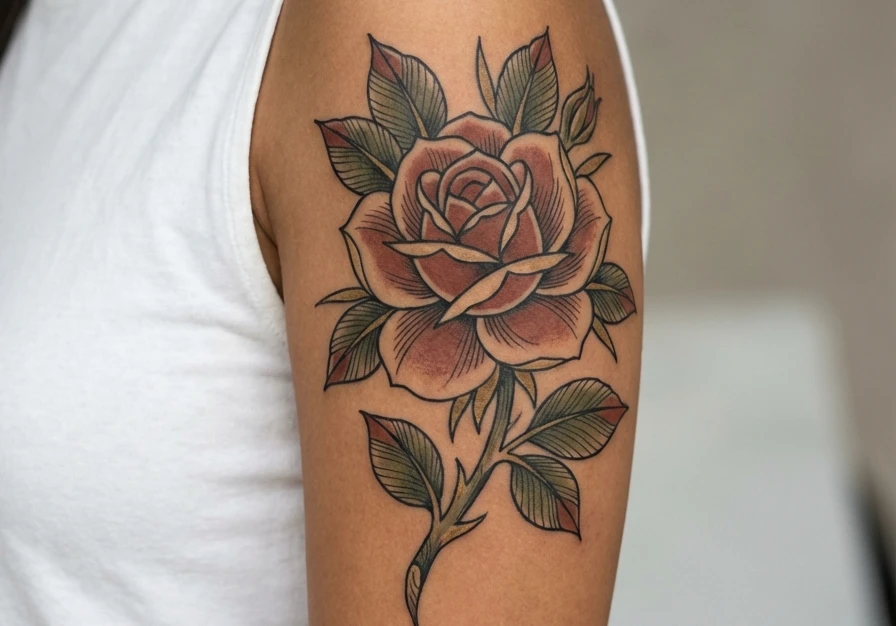
There’s a reason people keep returning to vintage aesthetics in tattoo design. Something about aged illustration, faded color, and the particular linework of old botanical prints feels more permanent than modern styles. More considered. More like something that was always meant to last.
Vintage flower tattoos draw from a rich visual history. Botanical illustration plates from the 18th and 19th centuries.
Victorian pressed flower arrangements. Old apothecary labels with hand-rendered florals. Faded wallpaper patterns from rooms that no longer exist.
These aren’t just pretty references. They’re a whole way of seeing flowers that treats them as worthy of serious artistic attention and precise documentation.
This list covers 17 vintage flower tattoo designs that tap into that old art energy and bring it permanently into the present.
1. Vintage Tulip Flower Tattoo
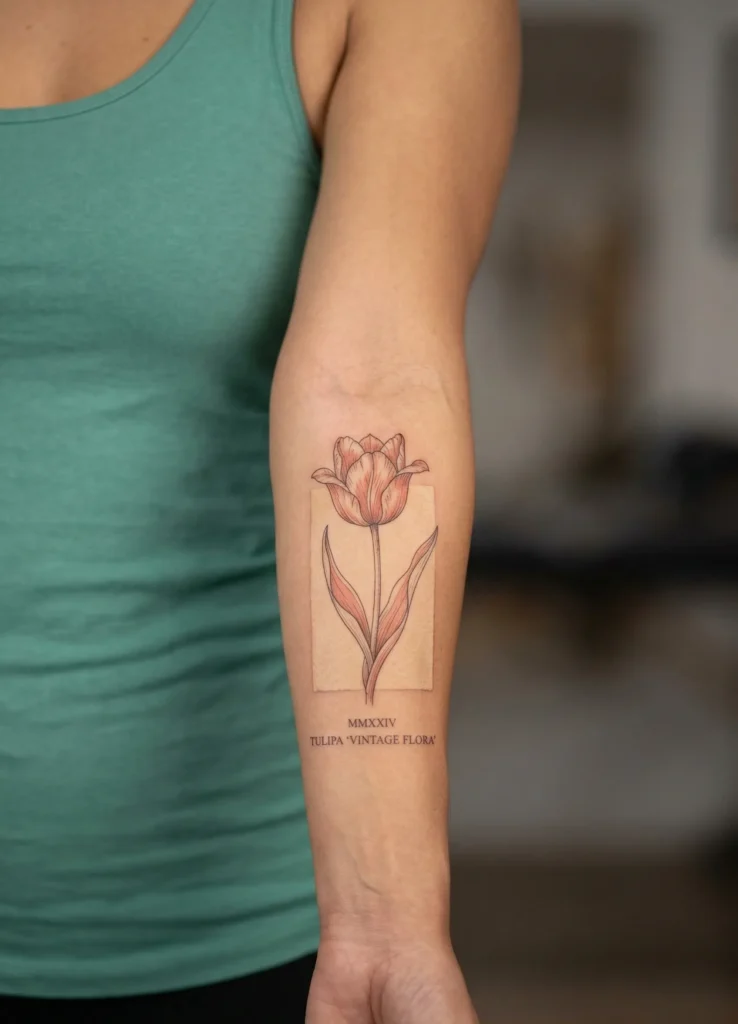
Vintage tulip illustrations from Dutch Golden Age botanical prints are some of the most beautiful flower drawings ever made.
Those early tulip traders commissioned meticulous illustrations of their prized blooms with a reverence that comes through in every carefully rendered petal.
A vintage tulip tattoo drawn in that same spirit, fine linework, slightly formal petal arrangement, the whole flower treated as something worth documenting precisely, carries that historical weight into permanent ink.
Muted color palettes work particularly well. Faded coral, dusty rose, aged cream. Colors that look like they’ve been sitting in a beautiful old book for a few hundred years.
- Slightly irregular linework that suggests hand-drawing rather than perfection adds authentic vintage character
- A small Roman numeral or latin botanical name beneath the bloom completes the illustration plate feeling
- Aged paper color wash behind the flower creates a background that reinforces the vintage document aesthetic
2. Vintage Lily Flower Tattoo
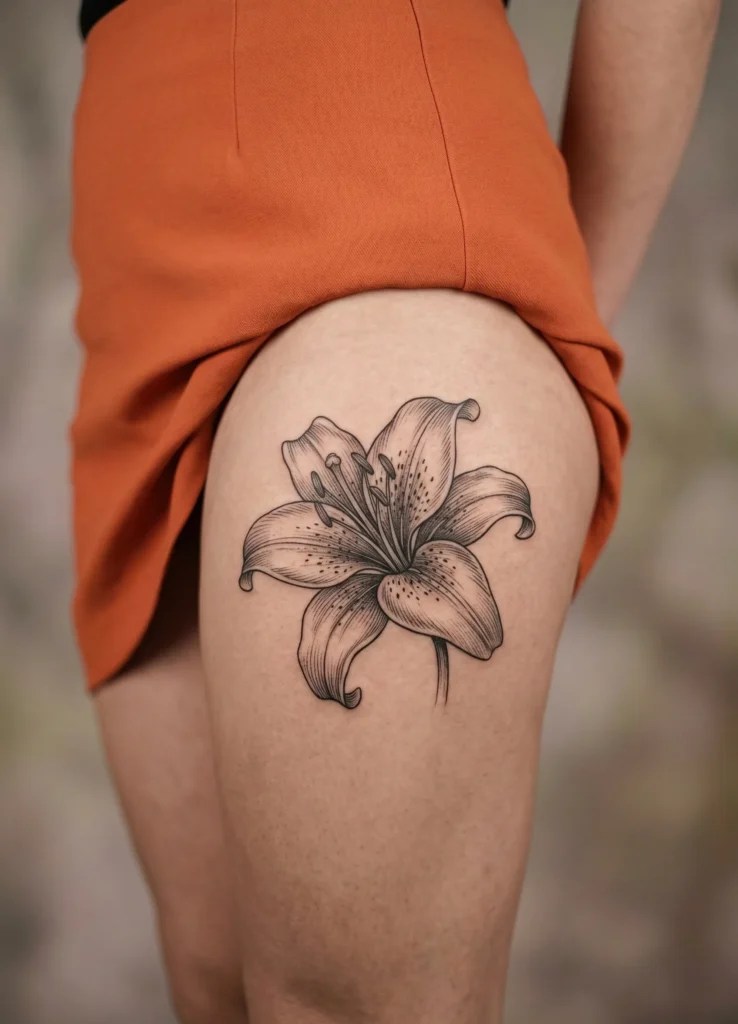
Victorian botanical illustrators had a particular love for the lily. Those swept-back petals, the prominent stamens, the spotted interior markings on certain varieties.
All of it was documented with the careful attention of people who believed they were recording something scientifically important.
A vintage lily tattoo rendered in that illustrative tradition has an elegance that modern realism styles rarely achieve.
The lines are precise but not photographic. The shading is careful but retains a quality of the artist’s hand.
Black and gray with fine line hatching for shading is the most authentic approach to this vintage illustrative style.
The cross-hatching technique visible in old engravings gives the design a textural quality that feels genuinely historical.
3. Vintage Poppy Flower Tattoo
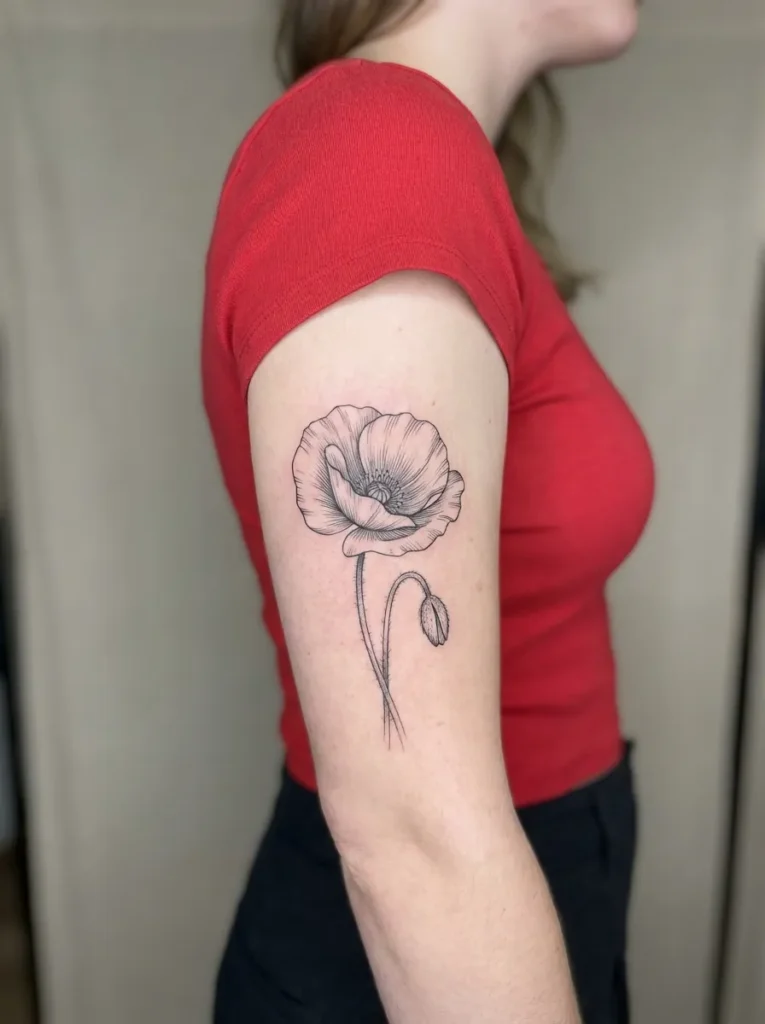
The poppy appears throughout old botanical illustration with a frequency that reflects its long cultural significance.
From Victorian wallpaper patterns to Art Nouveau prints to 19th century apothecary illustrations, the poppy has been rendered in vintage styles across multiple artistic traditions.
Each tradition brings its own vintage quality to the flower. Art Nouveau poppies have flowing organic lines and stylized forms.
Victorian botanical poppies have precise scientific accuracy. Apothecary illustrations have a functional directness that treats the poppy as medicine first and beauty second.
Choosing which vintage tradition to draw from is part of what makes a vintage poppy tattoo interesting to design.
| Vintage Style Source | Visual Character | Ink Approach |
| Botanical illustration | Precise, scientific, formal | Fine line with hatching |
| Art Nouveau | Flowing, organic, stylized | Bold curves, decorative |
| Victorian wallpaper | Repeated, patterned, flat | Graphic and structured |
| Apothecary label | Functional, direct, honest | Clean line, minimal shading |
4. Vintage Carnation Flower Tattoo
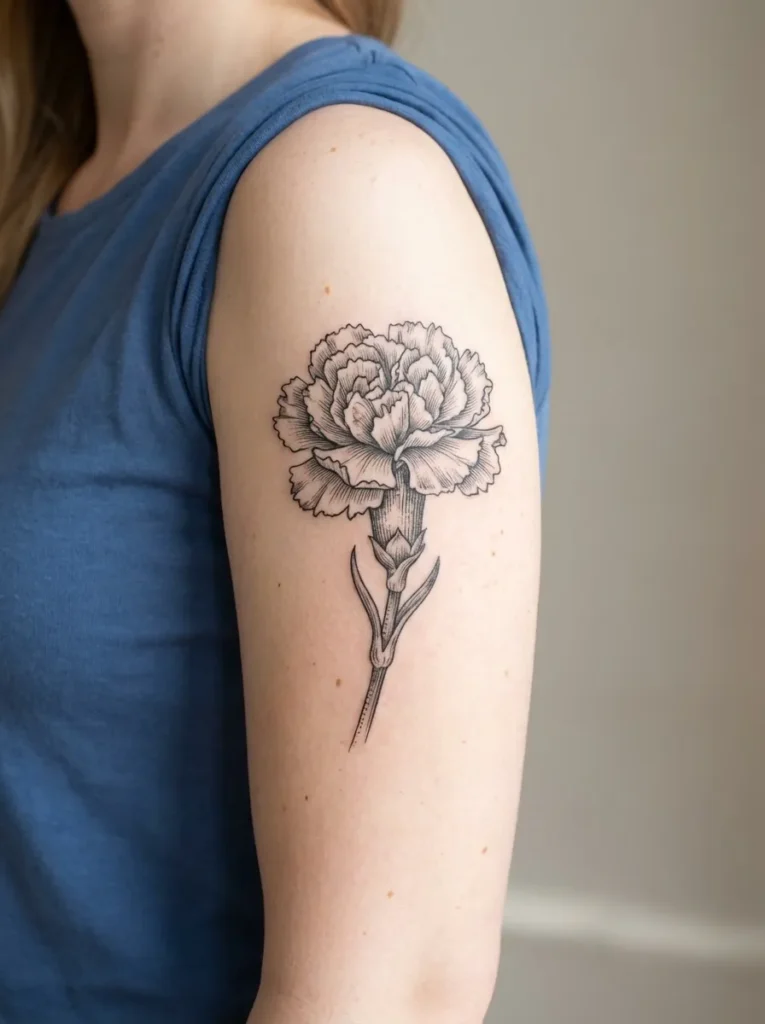
The carnation in vintage illustration style carries a formality that suits the flower’s long history as a symbol of meaning and status.
Renaissance paintings are full of carnations held by subjects as coded messages. Flemish still life paintings rendered them with painstaking botanical accuracy.
A vintage carnation tattoo drawing from that still life tradition has a richness and historical depth that more casual floral designs can’t access.
The ruffled petals rendered with fine line hatching, the stem treated with botanical correctness, the whole design feeling like it was lifted from a painting that’s been hanging in a museum for four centuries.
That sense of age and cultural weight is available in a tattoo for anyone willing to seek it.
5. Vintage Gardenia Flower Tattoo
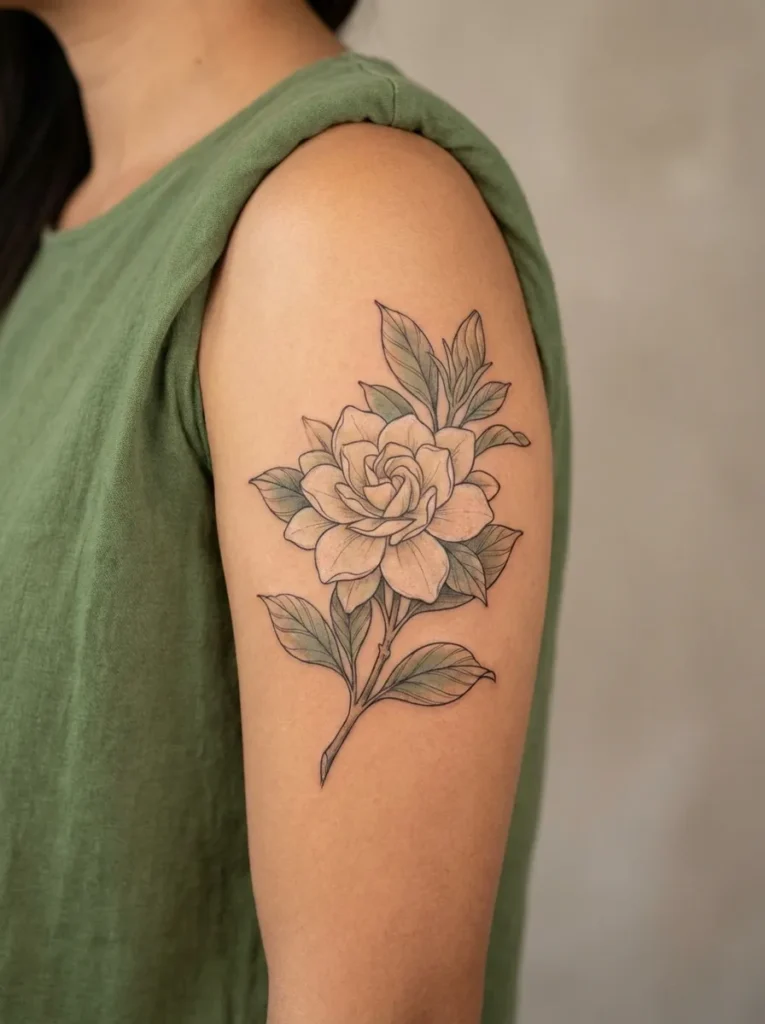
The gardenia in vintage illustration style suits the flower’s own associations with a particular kind of refined, slightly formal beauty.
Gardenias appear in vintage perfume advertisements, in Art Deco illustrations, in the kind of mid-century graphic design that treated flowers as symbols of elegance rather than mere decoration.
A vintage gardenia tattoo rendered in that mid-century illustration style, clean lines, slightly simplified forms, a color palette drawn from vintage print techniques with their limited color range and slightly faded quality, carries that whole aesthetic era permanently.
It’s a tattoo that feels like it arrived from a more considered time.
6. Vintage Camellia Flower Tattoo
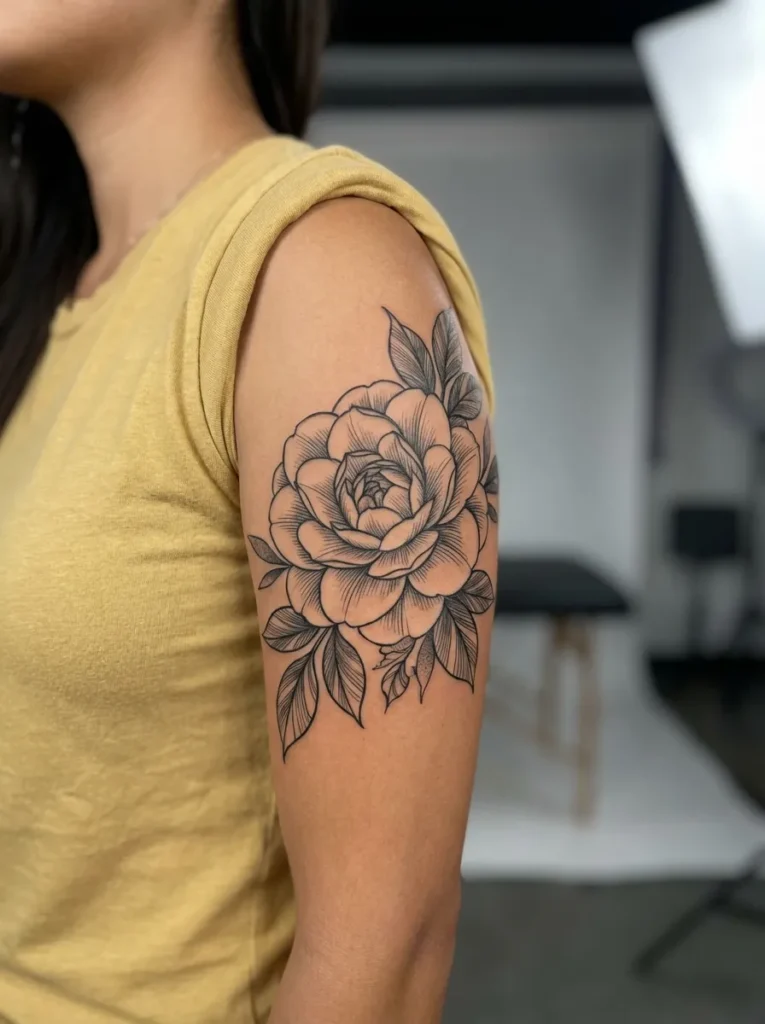
The camellia has strong vintage associations through Japanese woodblock print traditions and through Victorian England where camellia cultivation was a serious pursuit.
Both traditions produced their own distinctive visual language for rendering the flower.
Japanese woodblock camellias are bold, flat, and graphic. High contrast between deep colors and white paper. Clean decisive lines.
A confidence of mark-making that comes from a completely different artistic tradition than European botanical illustration.
Either reference creates a compelling vintage camellia tattoo. The Japanese woodblock approach produces something bold and graphic.
The Victorian botanical approach produces something precise and formal. Both are genuinely beautiful and genuinely vintage.
- Japanese woodblock style suits bold black ink with flat red or pink color fills
- Victorian botanical style suits fine line with careful hatching shading
- Mixing elements from both traditions creates something with a layered vintage complexity
7. Vintage Iris Flower Tattoo
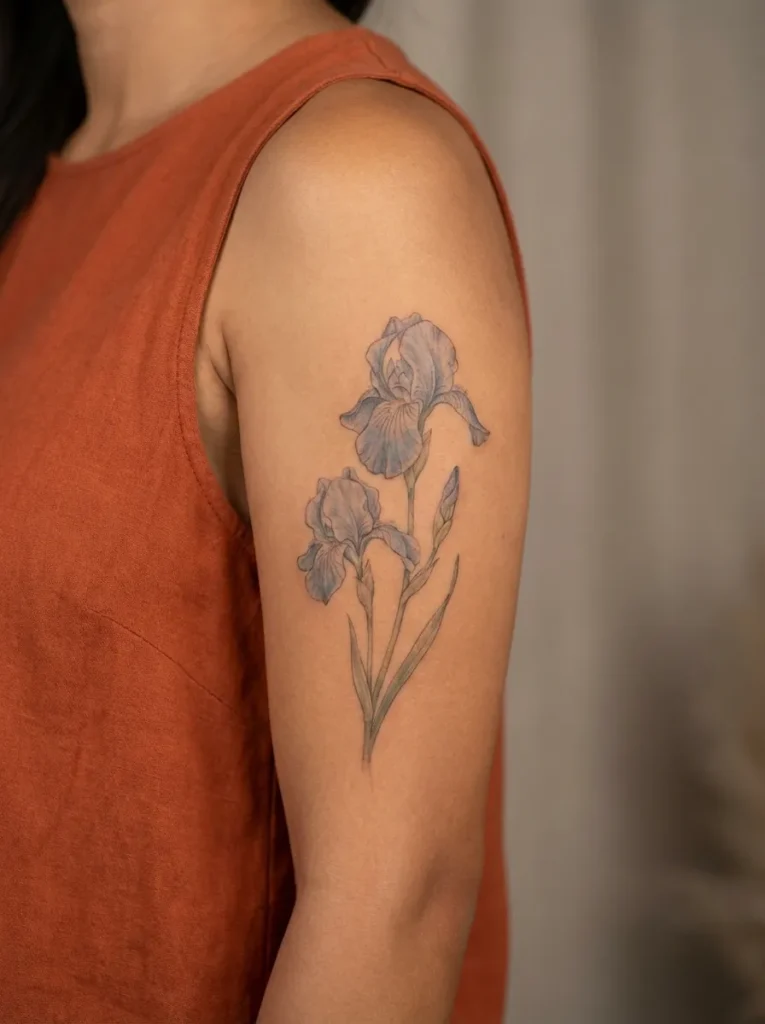
The iris is one of the most documented flowers in art history. From ancient Egyptian tomb paintings to Van Gogh’s famous botanical studies to the elaborate iris illustrations of early botanical encyclopedias, the flower has been a subject of serious artistic attention across millennia.
A vintage iris tattoo drawn in that long tradition of careful observation has a depth of reference that most flower tattoos can’t approach.
You’re not just getting an iris tattoo. You’re connecting to thousands of years of human beings finding this flower worth documenting.
The particular blue-purple of the iris rendered in the muted, slightly faded tones of vintage illustration has a quality of preserved memory that no other color treatment achieves.
8. Vintage Lavender Flower Tattoo
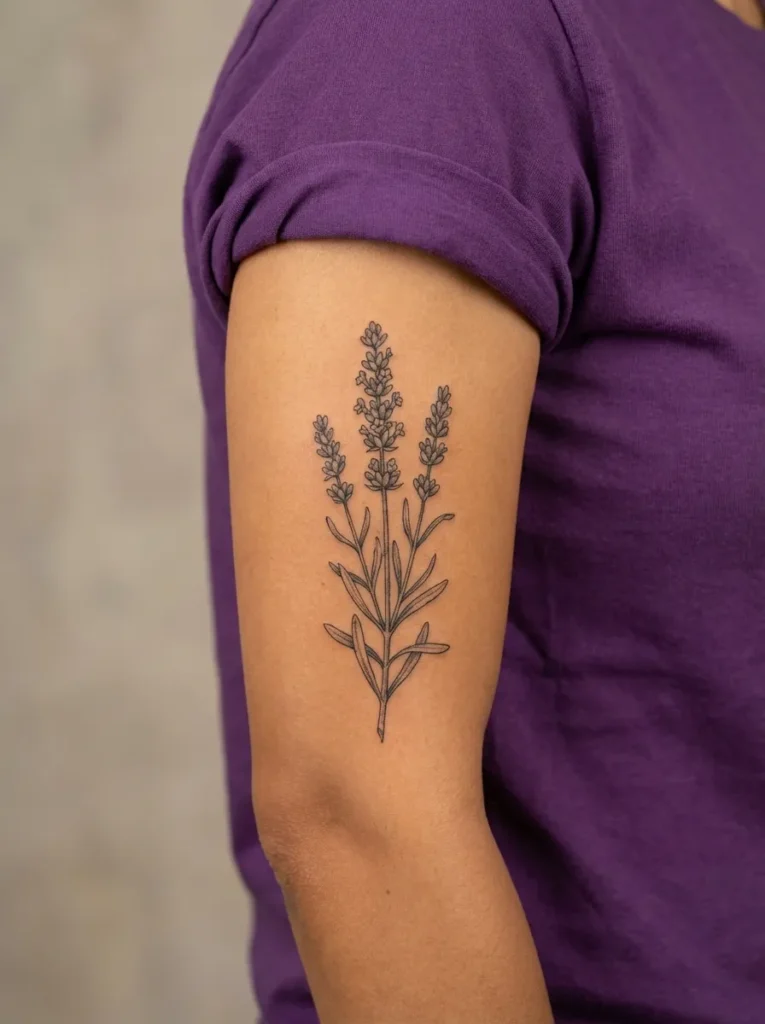
Lavender in vintage botanical illustration style has a specific quality tied to the old herbalism tradition.
Lavender was documented as medicine before it was appreciated as decoration, and that functional seriousness comes through in how old herbalists drew it.
Those vintage herbal illustrations show lavender with a directness that modern stylized versions often lose. The stem drawn with botanical accuracy.
The buds documented rather than decorated. The whole plant treated as something worth understanding rather than just admiring.
A vintage lavender tattoo in that herbalist tradition feels grounded and purposeful. Not just a pretty stem but a record of something that matters.
9. Vintage Sunflower Flower Tattoo
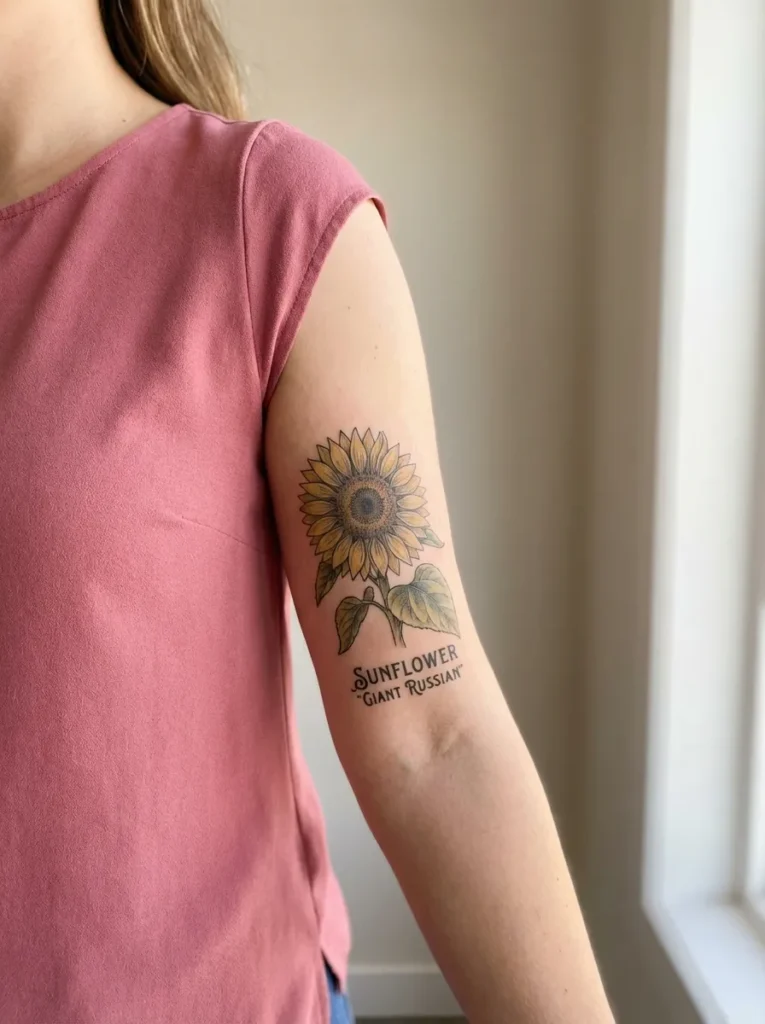
The sunflower in vintage illustration carries associations with a specific moment in art history. Post-Impressionist botanical studies, Art Nouveau decorative patterns, early 20th century seed catalog illustrations that treated flowers with a cheerful commercial earnestness.
Each of these vintage references produces a different visual character for the sunflower. The Art Nouveau version is stylized and decorative.
The botanical study version is precise and observational. The seed catalog version is warm and approachable.
The seed catalog aesthetic is perhaps the most interesting vintage direction for a sunflower tattoo because it’s the least expected.
Those old agricultural illustrations had a particular combination of accuracy and warmth that feels genuinely original as a tattoo reference.
10. Vintage Wildflower Flower Tattoo
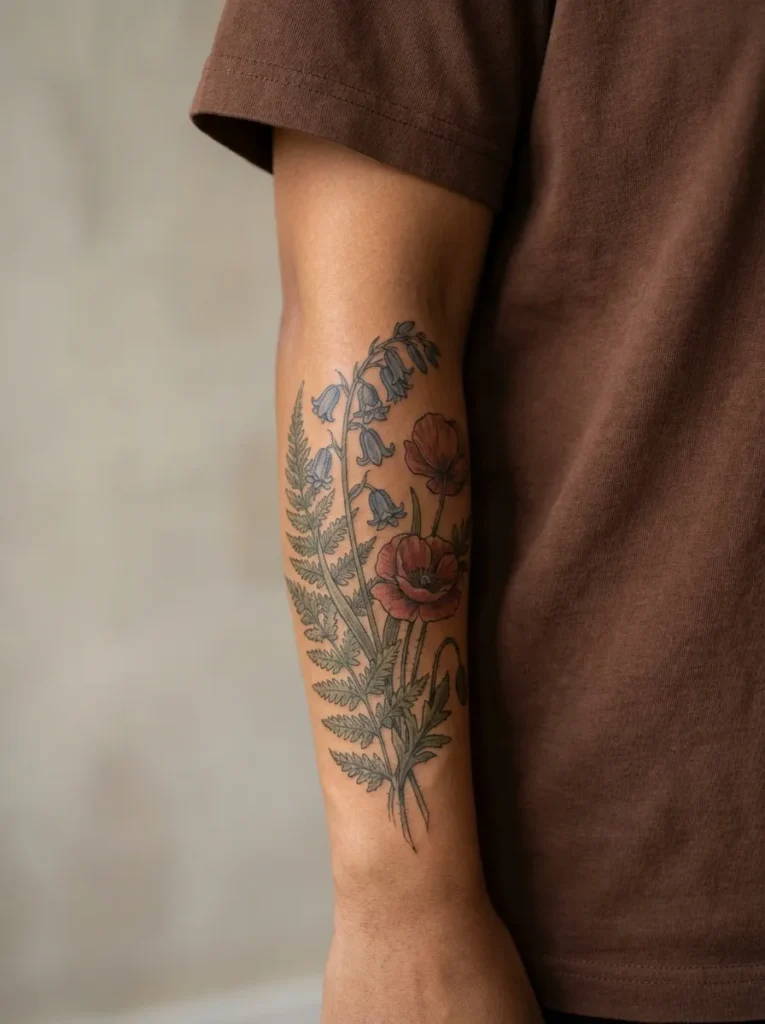
Vintage wildflower illustrations appear most beautifully in old field guides and nature journals.
Those 19th century naturalists who documented plants in their field notebooks produced illustrations that combine scientific accuracy with the unmistakable quality of drawings made outdoors, in real light, with real flowers in hand.
A vintage wildflower tattoo in that field journal tradition has a specific texture of authenticity. The slight imperfections of hand observation.
The mix of careful detail and necessary simplification that comes from drawing what you actually see rather than what the ideal version would be.
It feels discovered rather than designed. Which is exactly what wildflowers always feel like.
| Field Guide Era | Visual Style | Tattoo Character |
| Early Victorian | Formal, precise, colored plates | Rich and scientific |
| Mid 19th century | Engraved, black and white | Graphic and historical |
| Late Victorian | Romantic, slightly loose | Soft and observational |
| Edwardian | Clean line, gentle color | Refined and natural |
11. Vintage Anemone Flower Tattoo
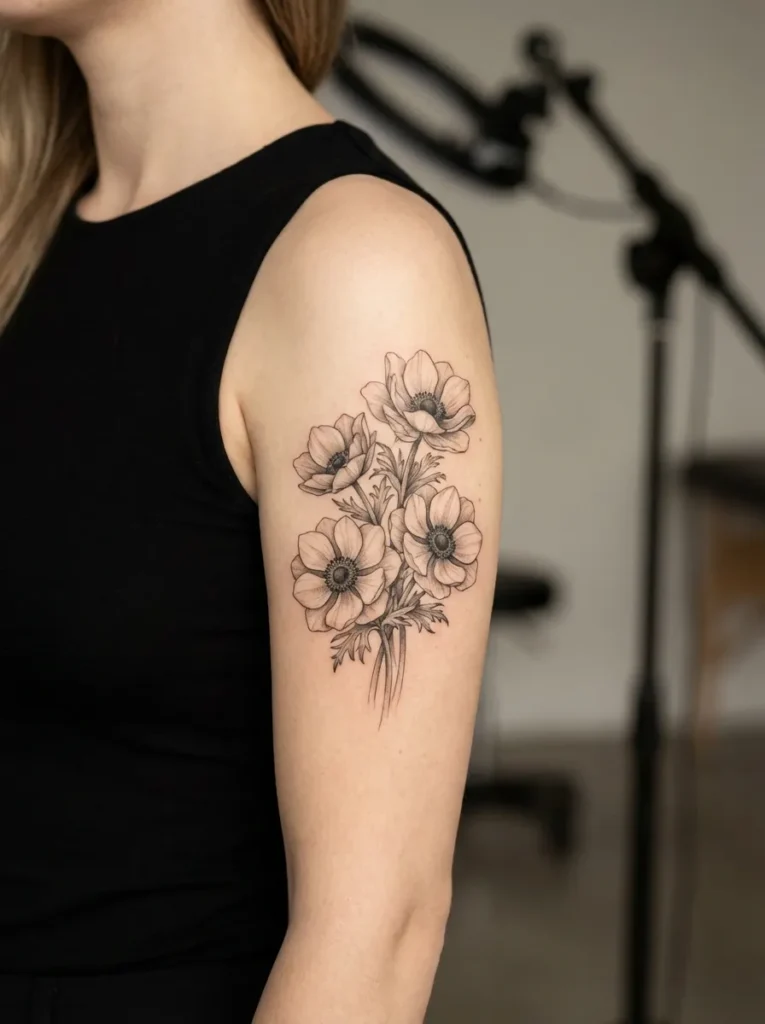
The anemone appears throughout Renaissance botanical illustration with a regularity that reflects the flower’s long cultivation history in European gardens.
Those early illustrations show the anemone with a straightforwardness that treats the flower’s natural drama, light petals against dark center, as something worth recording faithfully rather than stylizing.
A vintage anemone tattoo in that Renaissance illustration spirit has a quality of honest observation. The petals rendered as they actually are.
The dark center documented because that’s what the flower actually looks like. No interpretation required because the truth is already beautiful enough.
That commitment to honest documentation is one of the most attractive qualities of vintage botanical style in tattoo design.
12. Vintage Rose Flower Tattoo
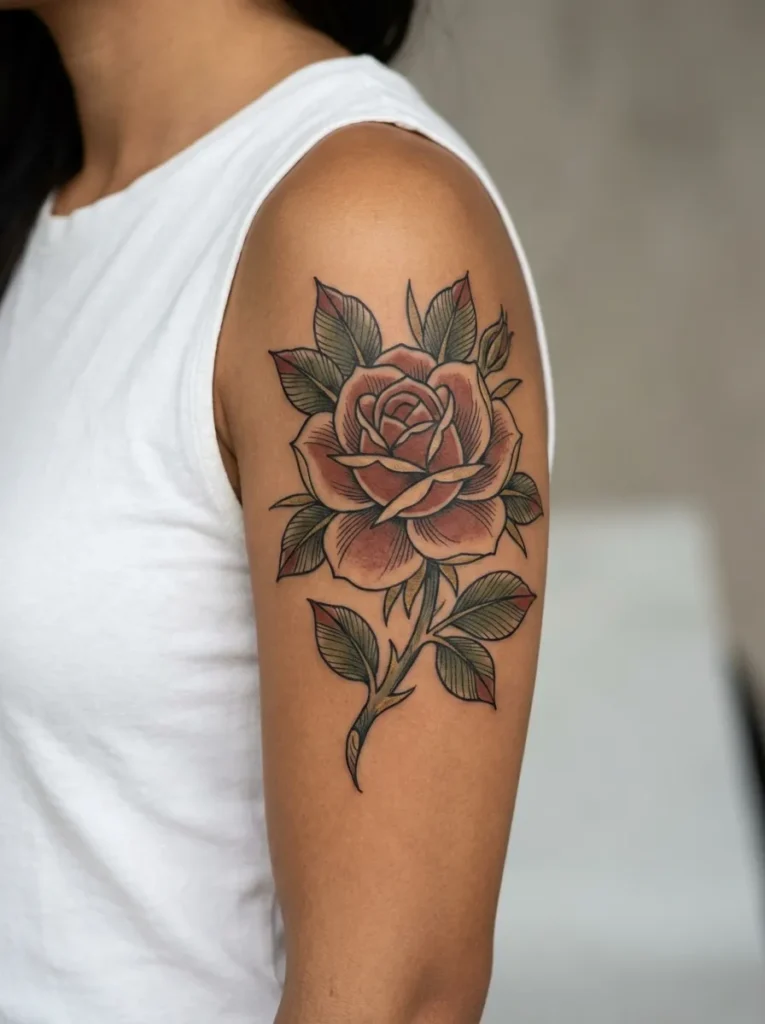
The vintage rose in tattoo design occupies its own specific category distinct from modern rose interpretations.
Old school traditional tattoo roses, with their bold outlines and limited color palette, are themselves a vintage style that draws from sailor tattoo traditions and early 20th century flash art.
But the vintage rose can also reference much older traditions. Medieval manuscript rose illustrations. Tudor botanical plates. Flemish still life paintings where roses carried symbolic weight and were rendered with profound care.
Each vintage tradition produces a rose with completely different character while all of them sharing that quality of age and care that makes vintage florals so compelling.
- Traditional old school tattoo roses suit bold black outlines with red and green color
- Botanical illustration roses suit fine line with careful hatching and muted color
- Medieval manuscript roses suit flat color, gold accent, and a deliberate formality
13. Vintage Cosmos Flower Tattoo
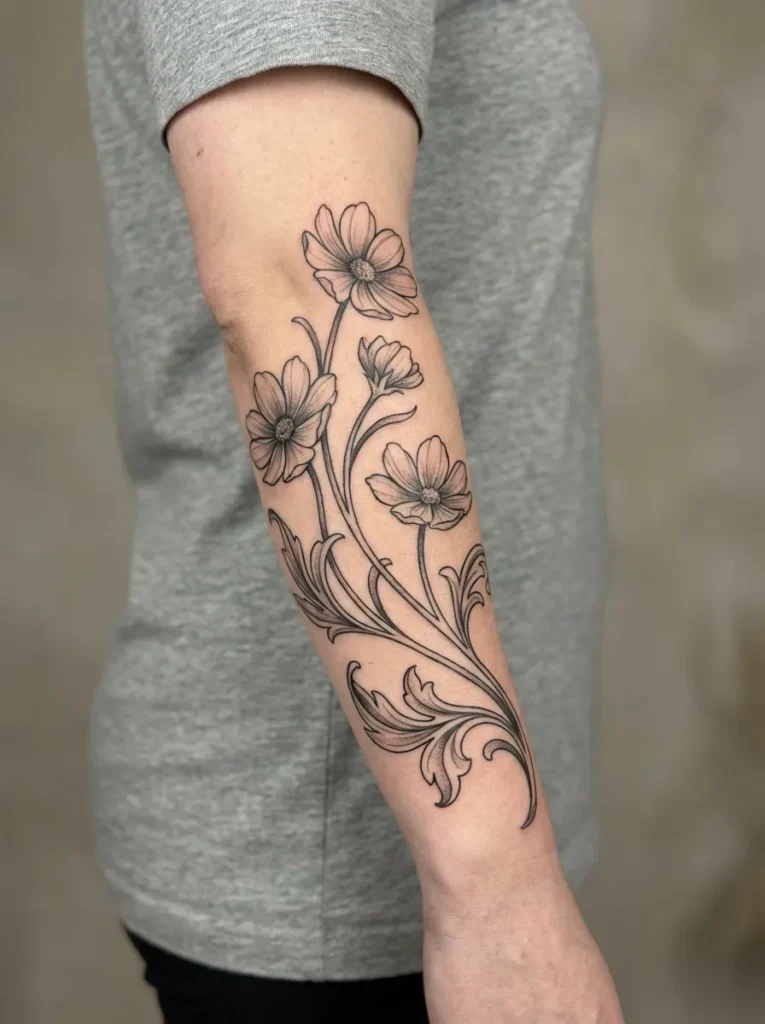
The cosmos appears in vintage illustration primarily through Art Nouveau and early 20th century decorative art traditions.
Those artists loved the cosmos for its airiness and its long delicate stems. The flower suited their interest in organic flowing forms that move between botanical accuracy and pure decoration.
A vintage cosmos tattoo in Art Nouveau style has a specific sinuous quality. Lines that curve with a deliberate grace.
Stems that move more fluidly than nature strictly requires. The flower rendered as decorative object as much as botanical subject.
That decorative quality, treating the flower as worthy of artistic interpretation rather than just documentation, is a vintage perspective that still feels fresh and distinctive in contemporary tattoo design.
14. Vintage Primrose Flower Tattoo
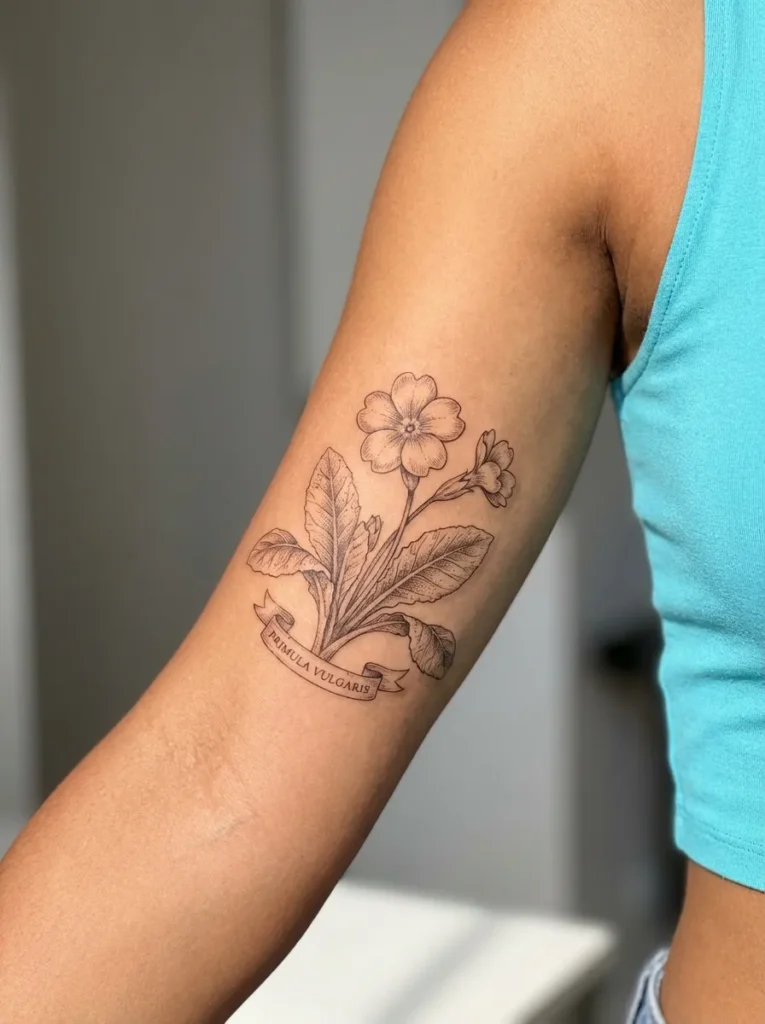
The primrose in Victorian botanical illustration was a flower given serious attention because it bloomed at a time when gardens were otherwise empty. That early arrival made the primrose worth documenting carefully.
Those Victorian primrose illustrations have a quality of relief and affection in them. This was a flower people were genuinely glad to see. That emotional warmth comes through in the care with which it was rendered.
A vintage primrose tattoo in that Victorian botanical spirit carries that same quality. Something small and early, documented with care because its arrival mattered to someone who took the time to draw it properly.
15. Vintage Buttercup Flower Tattoo
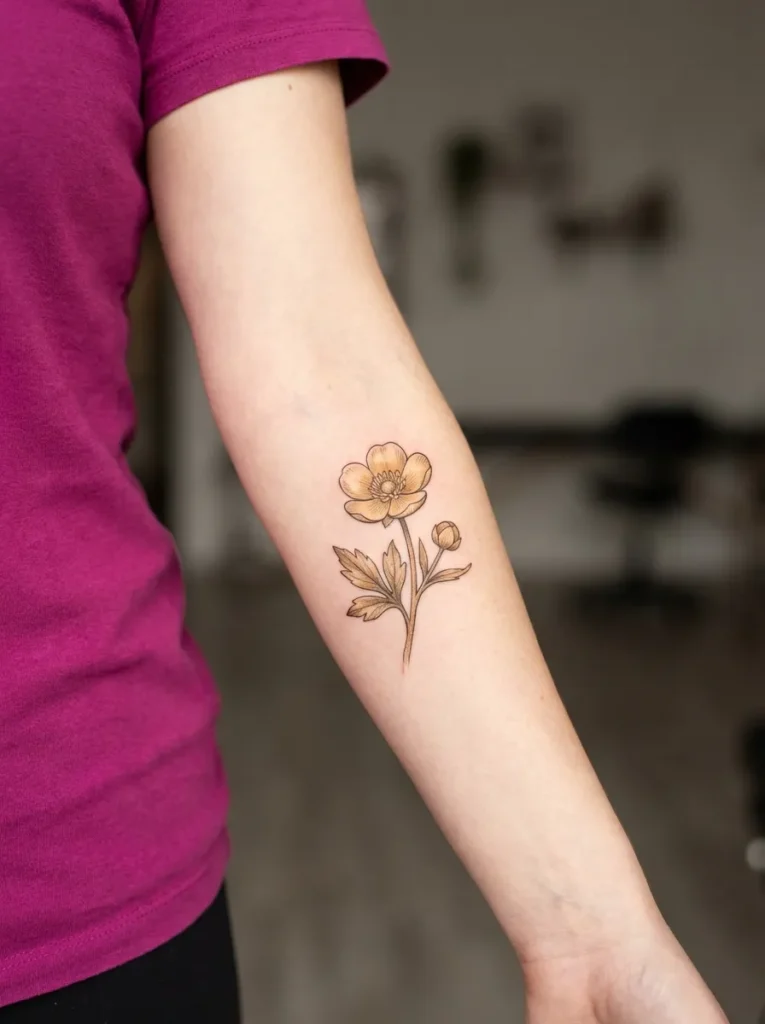
The buttercup in vintage illustration appears most often in Victorian children’s book illustration and in old field guide engravings. Both are genuinely charming vintage references for completely different reasons.
Victorian children’s book buttercups have a warmth and friendliness that reflects how the flower was understood culturally. Small, golden, associated with childhood games and meadow light.
Field guide buttercups have a botanical directness. Every stamen documented. Every petal given its proper shape. The glossy petal surface noted through shading technique.
Either direction creates a vintage buttercup tattoo with genuine character and a specific connection to how people in the past chose to look at this small but important flower.
16. Vintage Petunia Flower Tattoo
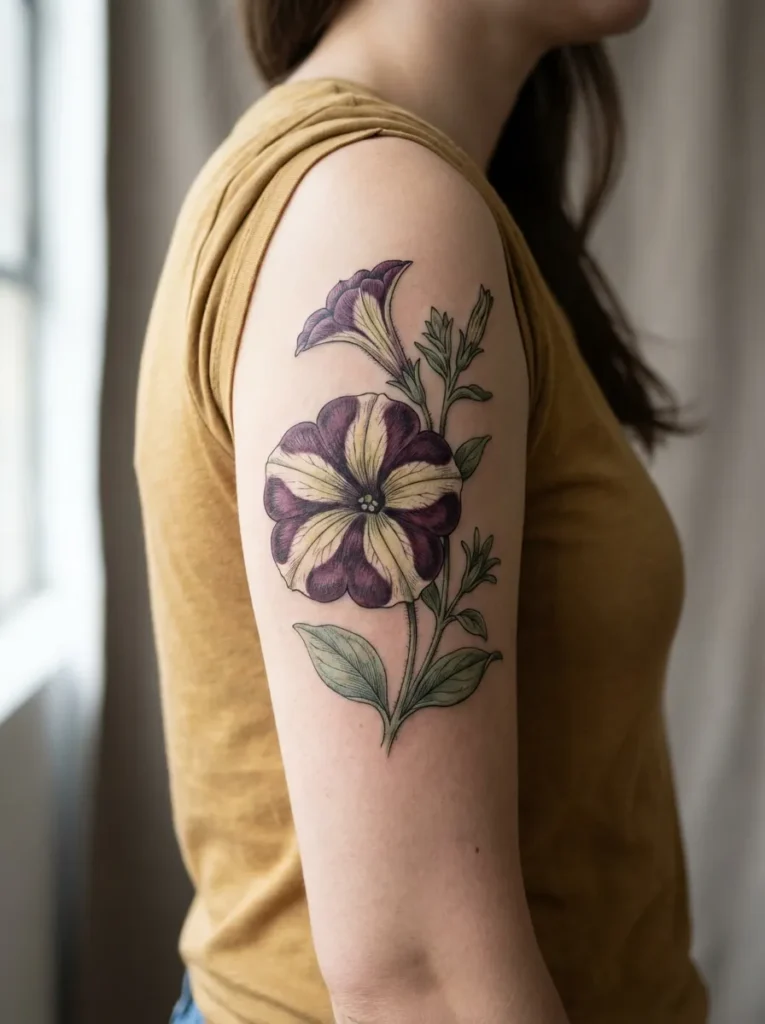
The petunia’s vintage illustration history connects primarily to Victorian seed catalog culture and early horticultural society prints.
Those documents treated new petunia varieties with the same seriousness that technology companies use to announce new products today.
The illustration style from these Victorian horticultural documents is distinctive. Slightly formal, precisely colored, the whole flower presented as an achievement worth admiring carefully.
A vintage petunia tattoo in that horticultural print tradition has an earnest quality that feels genuinely charming.
This was a flower somebody was proud of cultivating. That pride comes through in how carefully it was illustrated and how carefully it can be tattooed.
17. Vintage Lotus Flower Tattoo
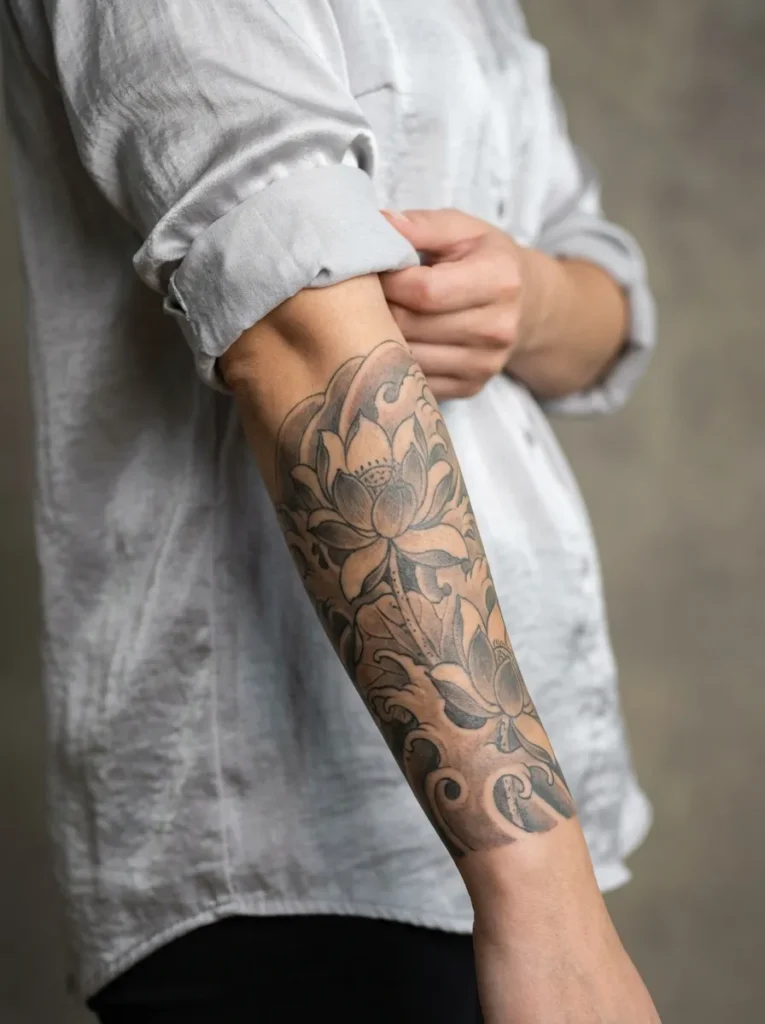
The vintage lotus tattoo connects to a longer and wider art historical tradition than any other flower on this list.
Ancient Egyptian lotus illustrations. Buddhist manuscript illuminations. Mughal botanical paintings. Japanese woodblock lotus prints.
Each tradition represents a completely distinct visual language for rendering the same flower across thousands of years of human artistic attention.
The lotus has been a vintage subject for longer than most vintage styles have existed.
A vintage lotus tattoo that draws from any one of these traditions connects the wearer to something genuinely ancient.
Not just an aesthetic preference for old things but an actual link to how human beings have been representing this specific flower since before recorded history began.
That depth of reference is available to anyone willing to look for it and patient enough to find the right artist to render it. The oldest vintage of all. Which old visual tradition feels most like yours?