There’s something about a Japanese wave tattoo that never gets old.
It moves. It breathes. It feels alive on the skin in a way that very few other designs can match. The Nami wave has been a cornerstone of Japanese tattooing for centuries, and artists today are still finding new ways to make it hit just as hard as ever.
Whether you’re drawn to the raw power of crashing water or the meditative flow of calm swells, there’s a wave composition for every kind of tattoo lover. Here are 22 of the best.
1. Japanese Wave (Nami) Forearm Tattoo
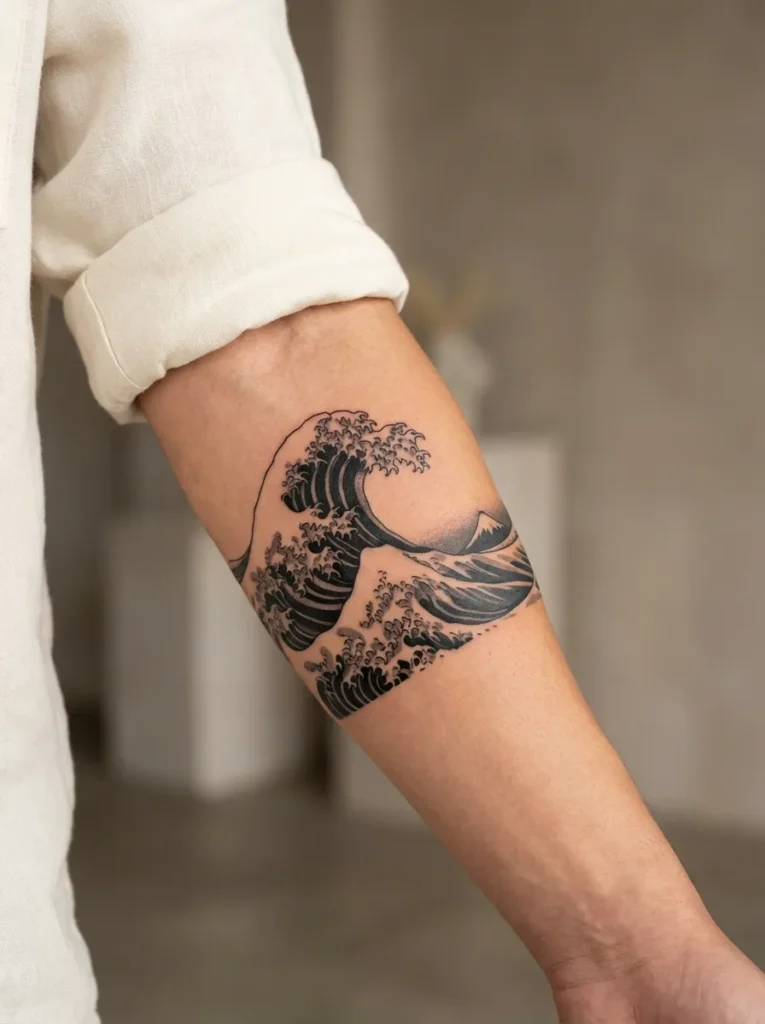
The forearm is one of the best spots for a Japanese wave. You can see it every day, and so can everyone else.
A single bold wave wrapping around the forearm looks clean and intentional. It doesn’t need much else to make an impact.
Keep the linework tight and the foam tips crisp. That’s where the detail really sells the whole piece.
2. Japanese Wave Sleeve Composition
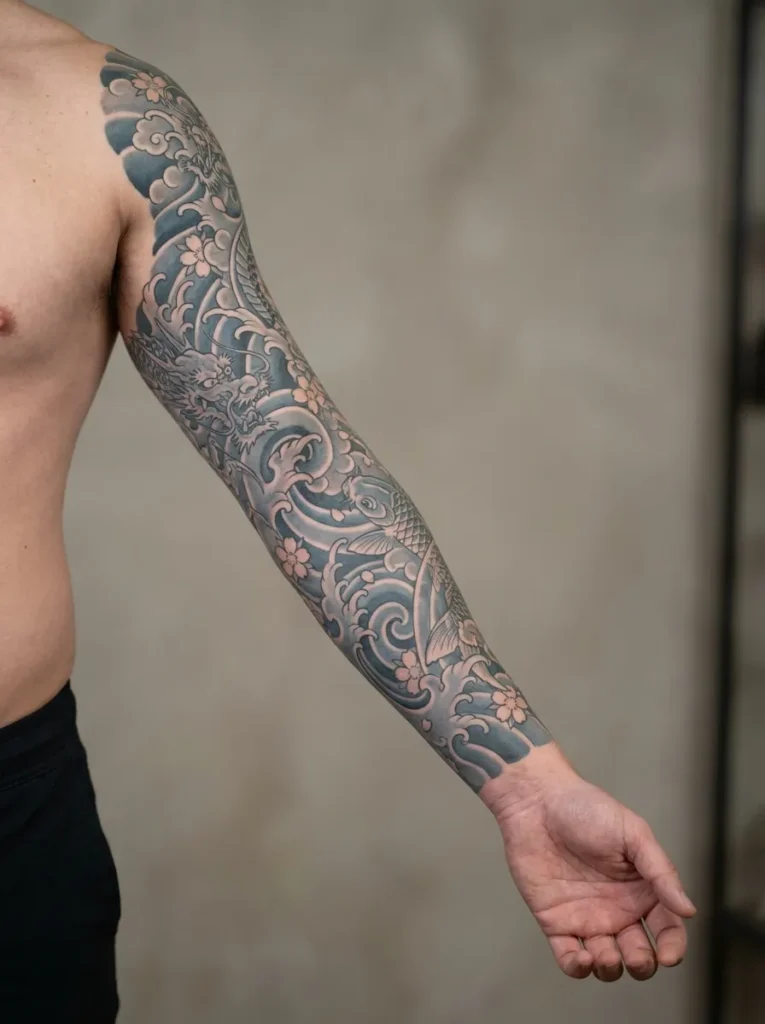
A full sleeve built around Japanese waves is one of the most iconic looks in tattooing, full stop.
The water becomes the connective tissue that holds everything together. Dragons, koi, clouds, and florals all sit naturally inside a wave-based sleeve without looking forced.
- Start with a clear focal point before filling in wave background
- Work with an artist who understands Japanese flow and negative space
- Plan for multiple sessions, color sleeves especially take time
- Avoid overcrowding, the water needs room to move visually
The best wave sleeves feel like they’re still moving when you look at them.
3. Japanese Wave and Koi Fish Design
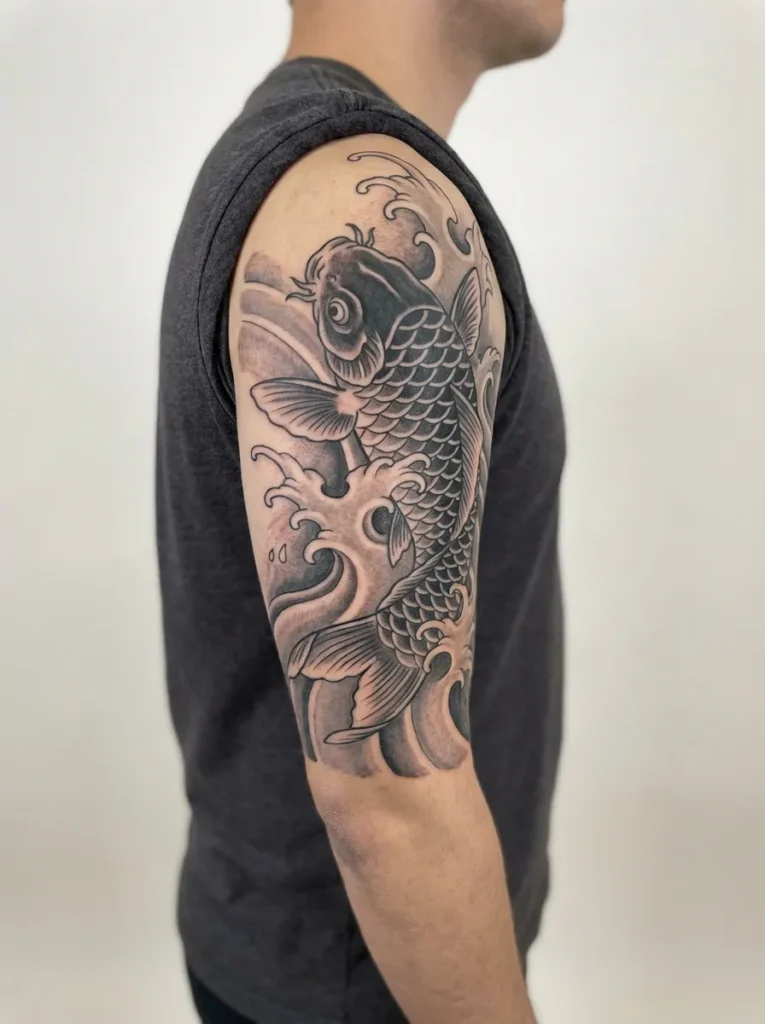
Koi fighting upstream through crashing waves is one of the most loaded combinations in Japanese tattoo culture.
The koi represents perseverance and determination. The wave represents the obstacles and resistance that life throws at you. Together they tell a story that a lot of people connect with on a very personal level.
The contrast between the scaled body of the koi and the smooth flowing water creates incredible visual texture. This one rarely needs anything else added to feel complete.
4. Japanese Wave with Cherry Blossoms (Sakura)
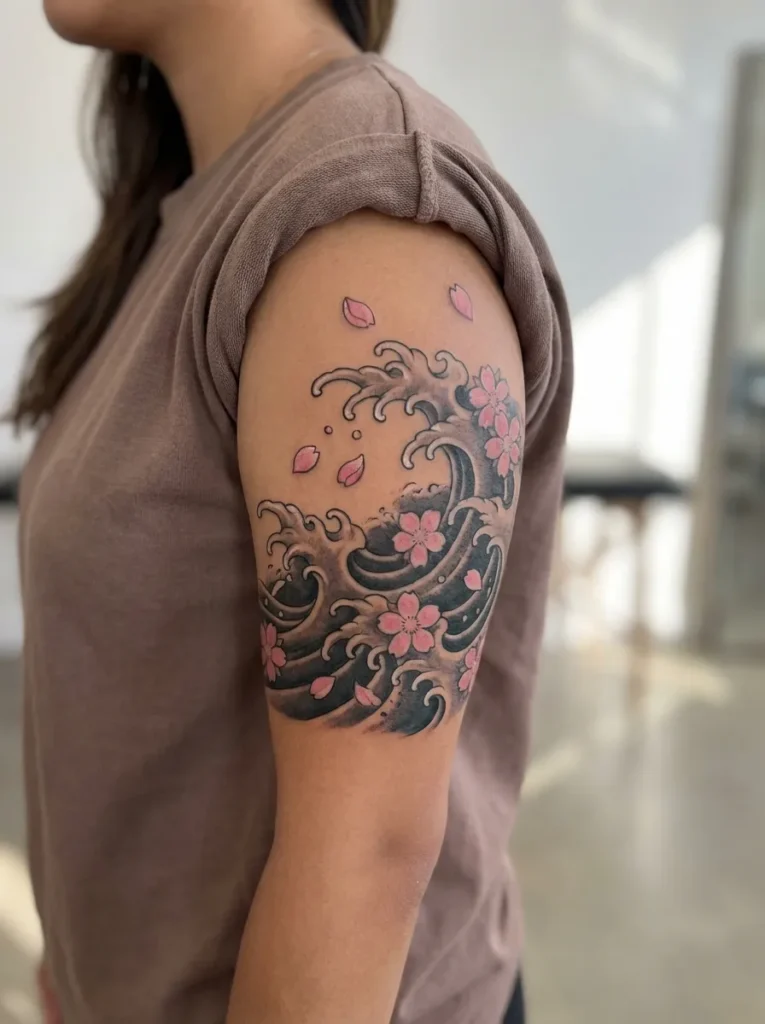
Waves and sakura together feel like spring at the ocean. It’s a very specific kind of beautiful.
The delicate pink petals scattered across dark churning water create a contrast that’s almost poetic. One thing is fleeting and soft, the other is powerful and relentless.
This combination works especially well on the thigh or upper arm where there’s enough surface to let the petals drift naturally across the composition.
5. Japanese Wave with Peony (Botan)
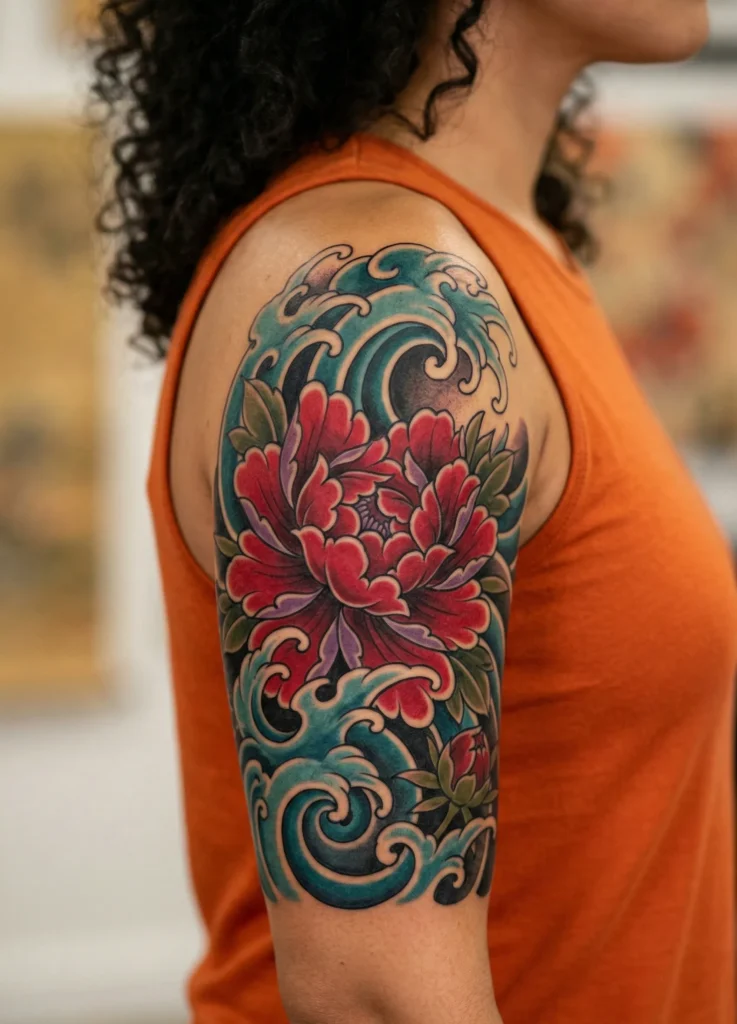
The peony brings boldness to a wave design. It doesn’t whisper, it announces itself.
Large peony blooms sitting above or within the waves add a lush, layered quality to the whole piece. The full petals and the full curling waves share a similar sense of abundance that makes them feel like they belong together.
| Feature | Sakura with Waves | Peony with Waves |
| Overall Mood | Soft, melancholic | Bold, luxurious |
| Visual Weight | Light and scattered | Heavy and structured |
| Best Placement | Thigh, upper arm | Back, chest, sleeve |
| Color Palette | Soft pinks, white foam | Deep reds, purples |
| Symbolism | Impermanence | Fortune, bravery |
Deep red peonies against blue-green waves is a color combination that never misses.
6. Japanese Wave and Tiger (Tora) Scene
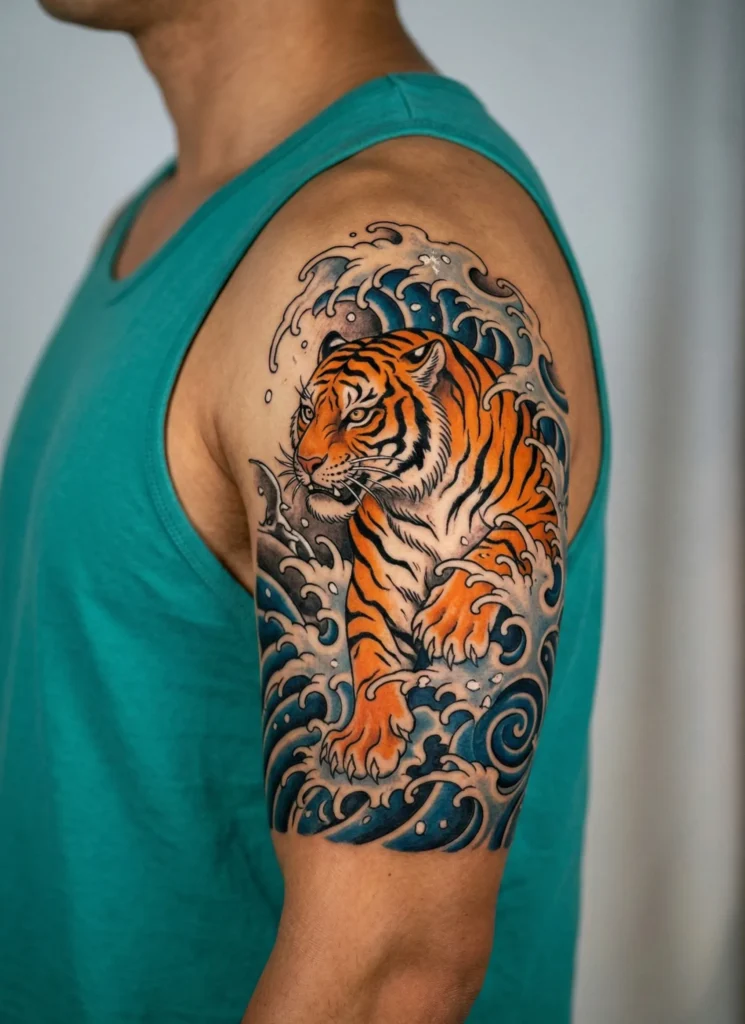
A tiger emerging from crashing waves is one of the most dramatic compositions in the entire Japanese tattoo canon.
The tiger looks like it owns the ocean. That energy, fierce and completely unintimidated by the chaos around it, is exactly what makes this design so compelling.
Orange and black striped fur bursting through white foam and deep blue water creates a contrast that’s almost impossible to ignore. This one demands a larger canvas to do it justice.
7. Japanese Wave Backpiece Concept
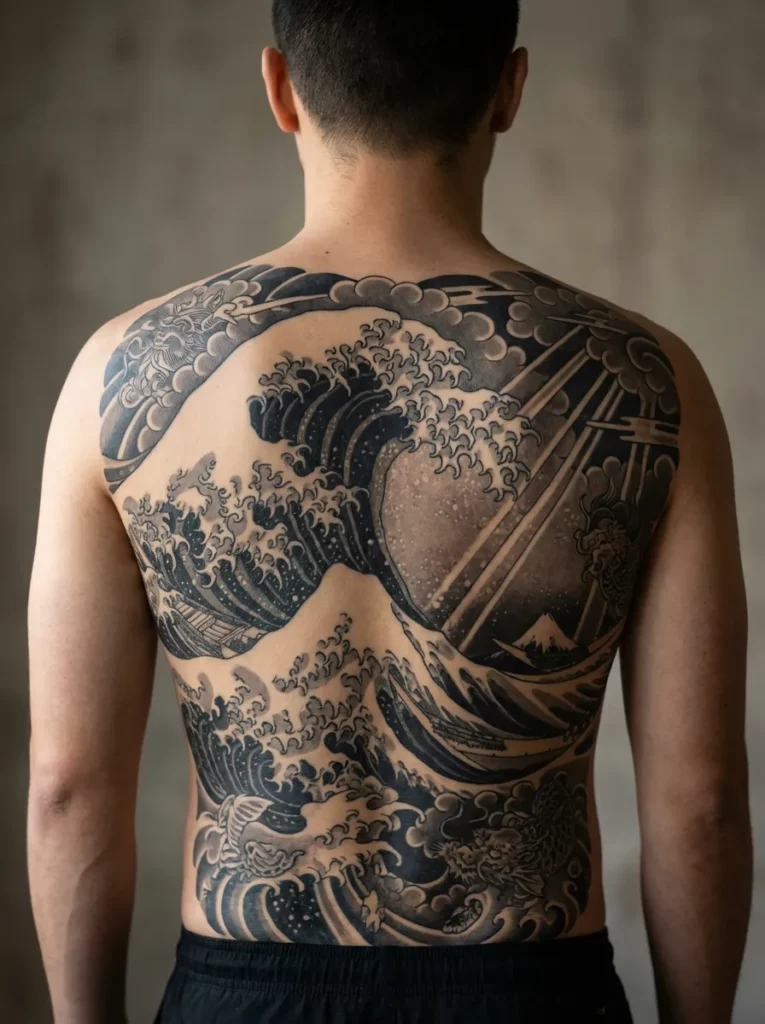
The back is where Japanese wave tattoos truly become something monumental.
You have the full canvas to build an entire world. A massive curling wave can stretch from shoulder to shoulder with creatures, clouds, and wind bars filling the space naturally around it.
This is a multi-year project for most people. But the end result is genuinely breathtaking when it comes together the right way.
8. Japanese Wave and Crane (Tsuru)
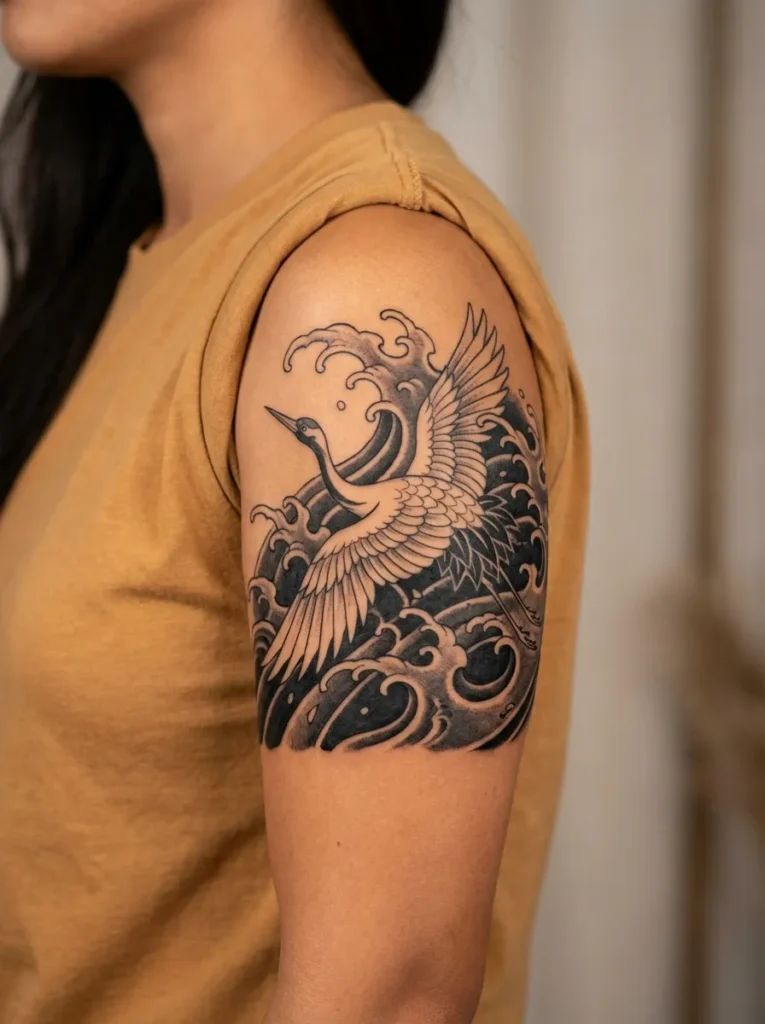
A crane in flight above or through a wave carries real elegance. It’s one of the quieter combinations on this list, but no less powerful.
The crane represents longevity, loyalty, and good fortune in Japanese culture. Paired with the eternal movement of the ocean, it creates a design that feels both peaceful and deeply meaningful.
White cranes against dark stormy waves hit especially hard. The negative space used to suggest the white feathers against inked water is a technique that separates great artists from good ones.
9. Japanese Wave with Lotus (Hasu)
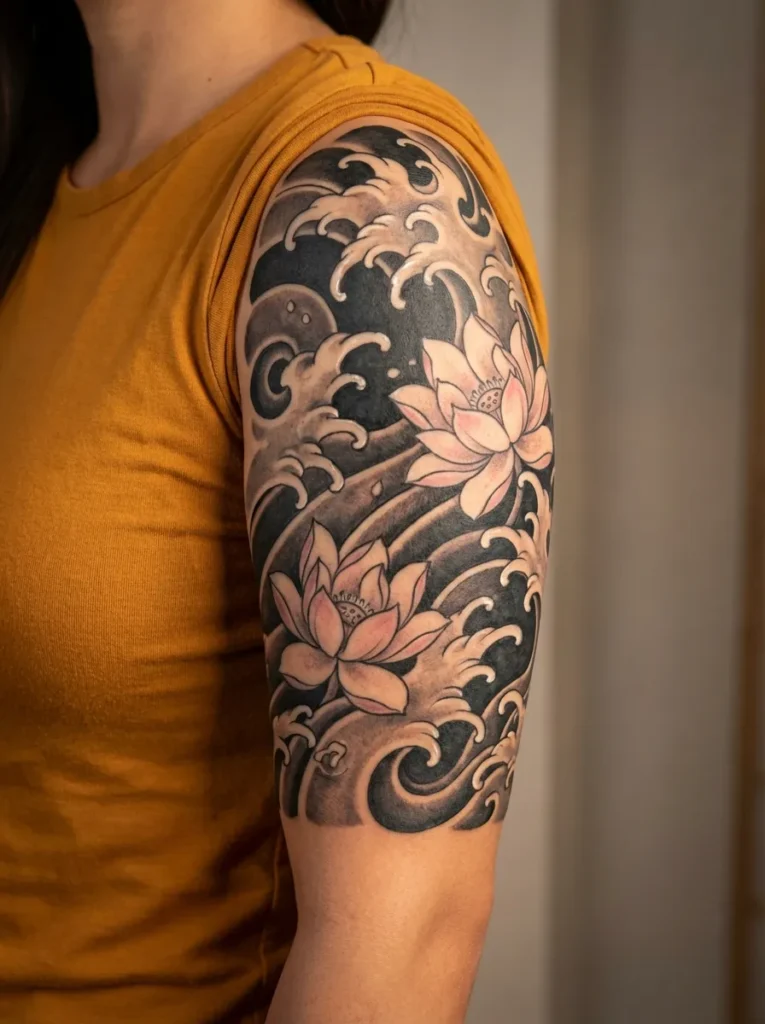
The lotus rises from murky water to bloom cleanly above the surface. Combining it with Japanese waves leans hard into that symbolism.
It’s a design about endurance and emergence. Coming through something difficult and still managing to be beautiful on the other side.
Soft lotus blooms floating on the surface of churning water creates a visual calm within the chaos. That contrast is the whole point of this design.
10. Japanese Wave and Snake (Hebi)
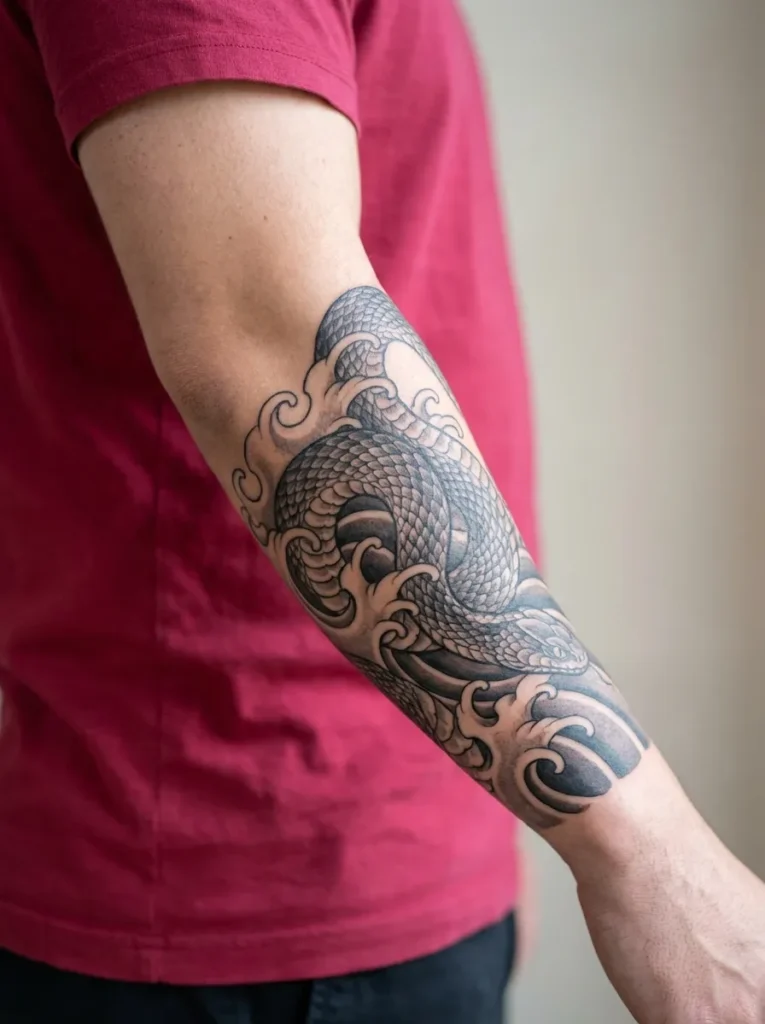
A snake moving through ocean waves is slick, fluid, and a little bit dangerous looking.
Both elements share a similar sinuous quality. The snake’s body and the curves of the waves mirror each other in a way that makes the composition feel naturally unified.
- The snake can appear to swim through the water rather than sit on top of it
- Scale texture on the body contrasts beautifully against smooth wave shapes
- Works well wrapping around an arm or thigh naturally
This is a design where the placement and the subject almost merge into one concept.
11. Japanese Wave Chest Panel
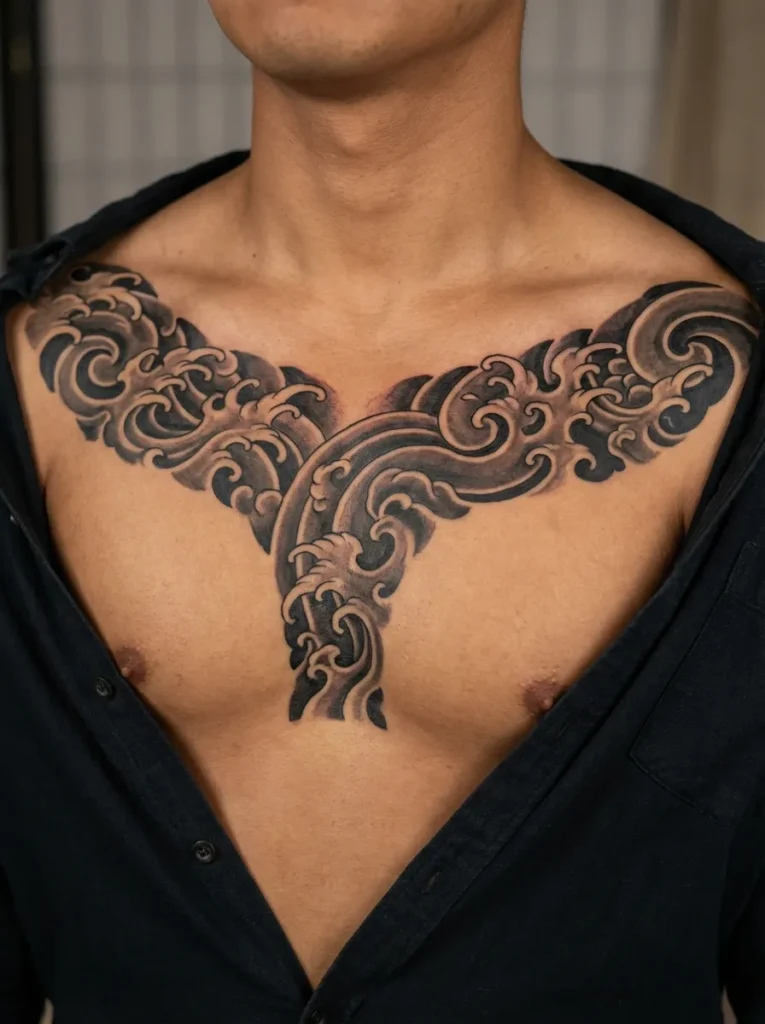
A chest panel anchored by Japanese waves creates a strong, balanced foundation for a larger tattoo journey.
The waves can span across the collarbones and down toward the sternum, framing the chest naturally. It’s a placement that looks powerful even under a partially unbuttoned shirt.
Many people use the chest wave panel as the starting point before extending into a sleeve or connecting down to the ribs.
12. Japanese Wave with Wind Bars
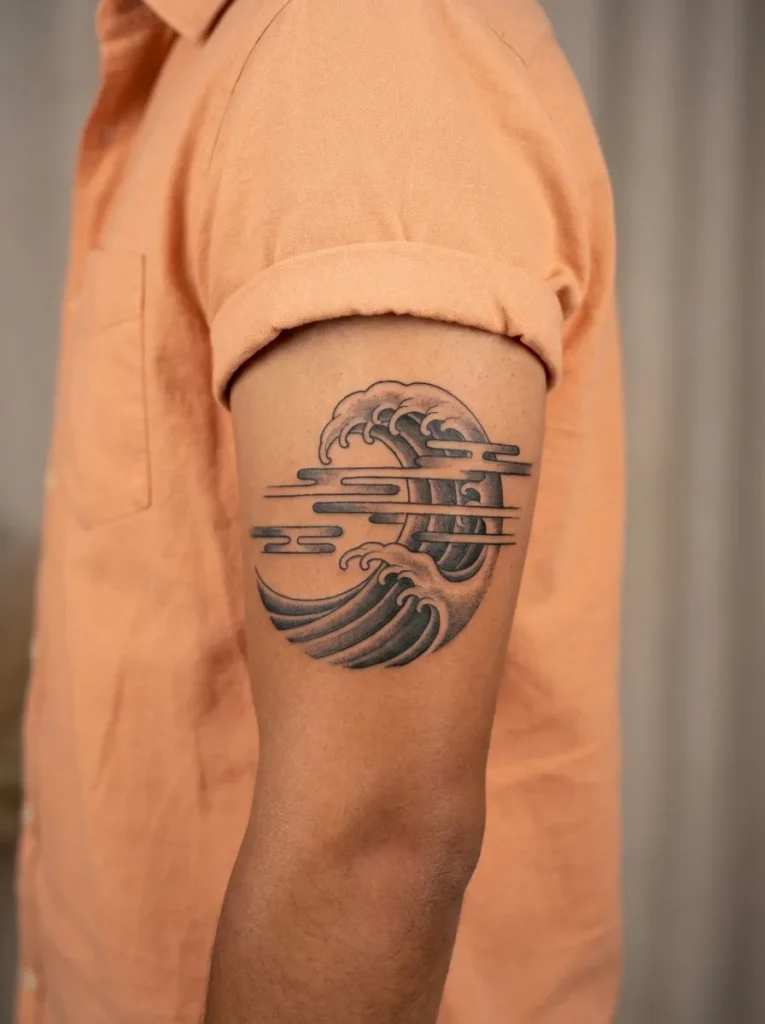
Wind bars are one of those elements that most non-tattoo people don’t immediately recognize, but they make a Japanese piece feel unmistakably authentic.
The horizontal lines of the wind cut across the composition and give the whole design a sense of atmosphere. They suggest movement, energy, and the invisible forces driving the water into those massive curls.
Wind bars work best when they’re used with restraint. A few well-placed lines across the upper section of a wave piece adds atmosphere without cluttering the design.
13. Japanese Wave Hand Tattoo
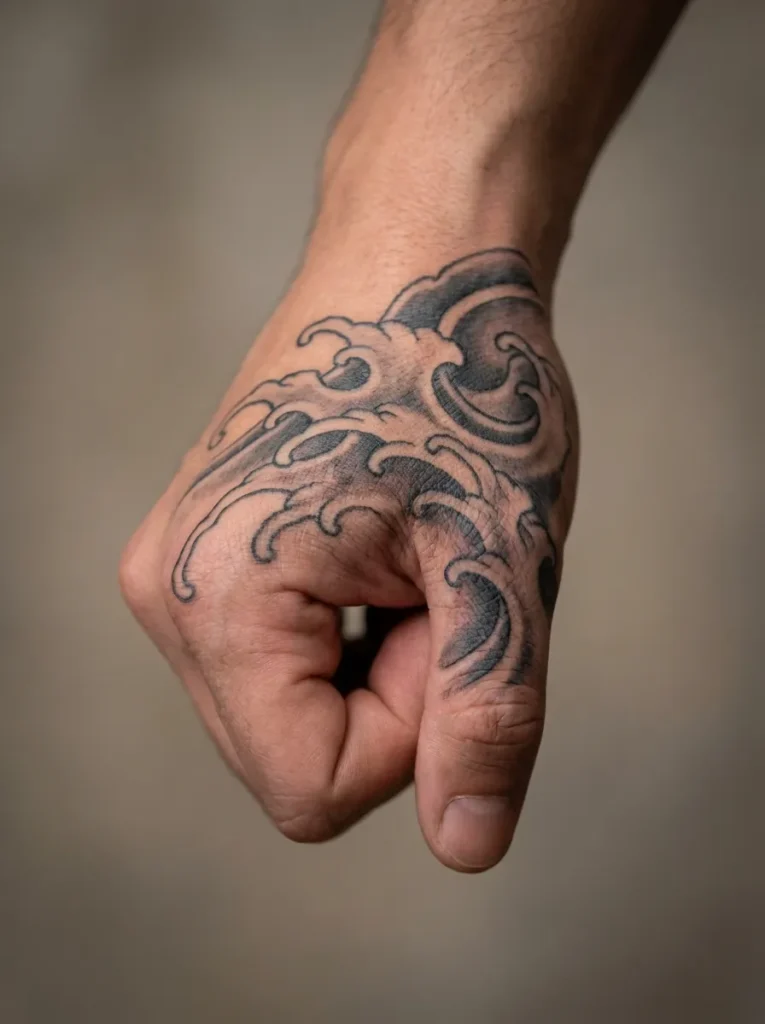
A hand tattoo is a statement before you even say a word. Putting Japanese waves there doubles that energy.
The natural curves of the hand actually complement wave designs really well. Artists can wrap the water across the back of the hand and down between the fingers with surprisingly elegant results.
Be aware that hands fade faster than almost anywhere else on the body. Touch-ups are part of the deal with this placement.
14. Japanese Wave and Samurai Theme
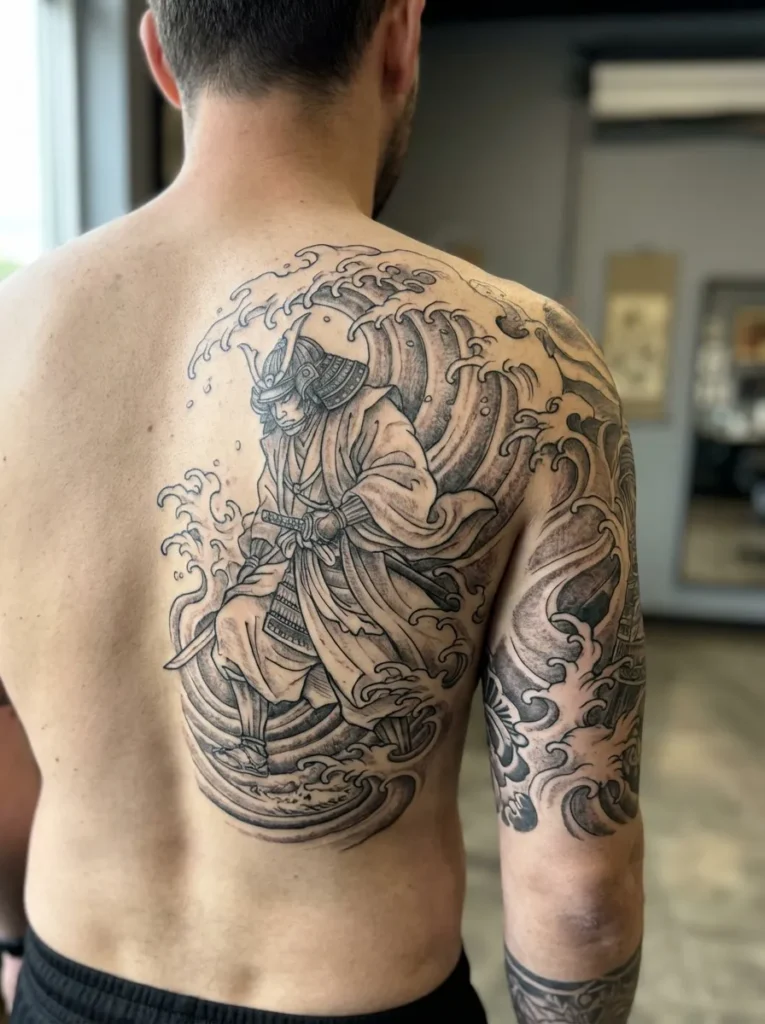
Waves and a samurai figure together create an image that feels pulled from a woodblock print.
The lone warrior standing against or within the crashing ocean is a deeply romantic concept. It speaks to endurance, discipline, and facing overwhelming forces without flinching.
This works beautifully as a back piece or an upper arm composition where the samurai can be rendered with enough detail to really tell the story. The waves become both backdrop and adversary.
15. Japanese Wave with Maple Leaves (Momiji)
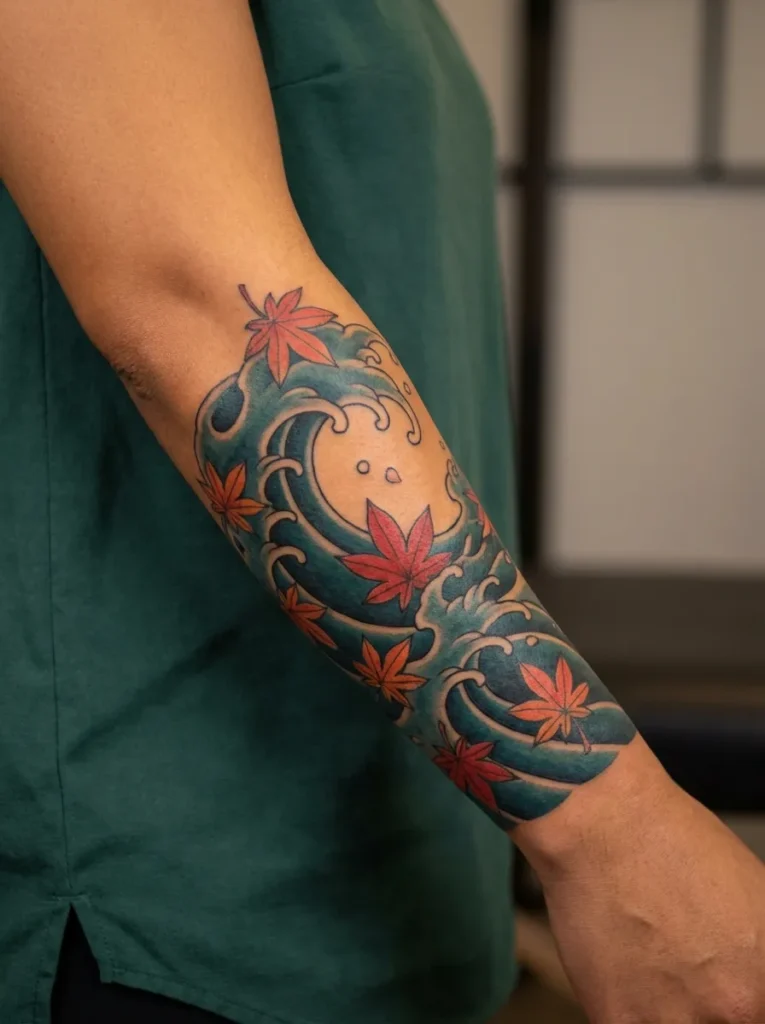
Autumn maple leaves carried by ocean waves bring a seasonal warmth to a traditionally cool subject.
The red and orange tones of momiji against deep blue-green water create a color combination that feels genuinely unexpected in the best way. It hints at autumn storms and the beauty of things in motion.
Scattered leaves floating across the surface or being pulled into the curl of a wave look especially natural. It never feels forced when the two are done well.
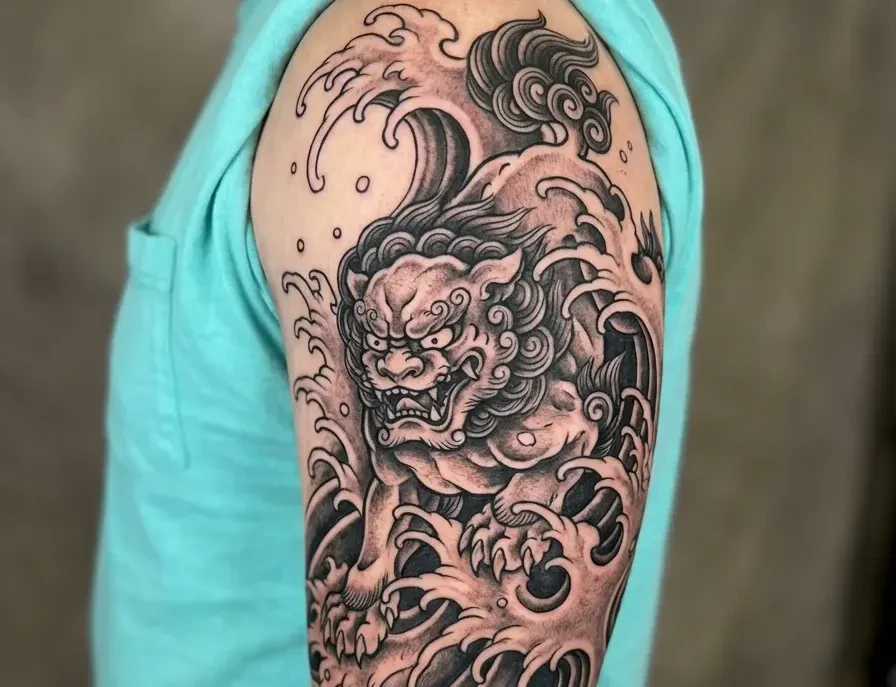
16. Japanese Wave and Karajishi Guardian Theme
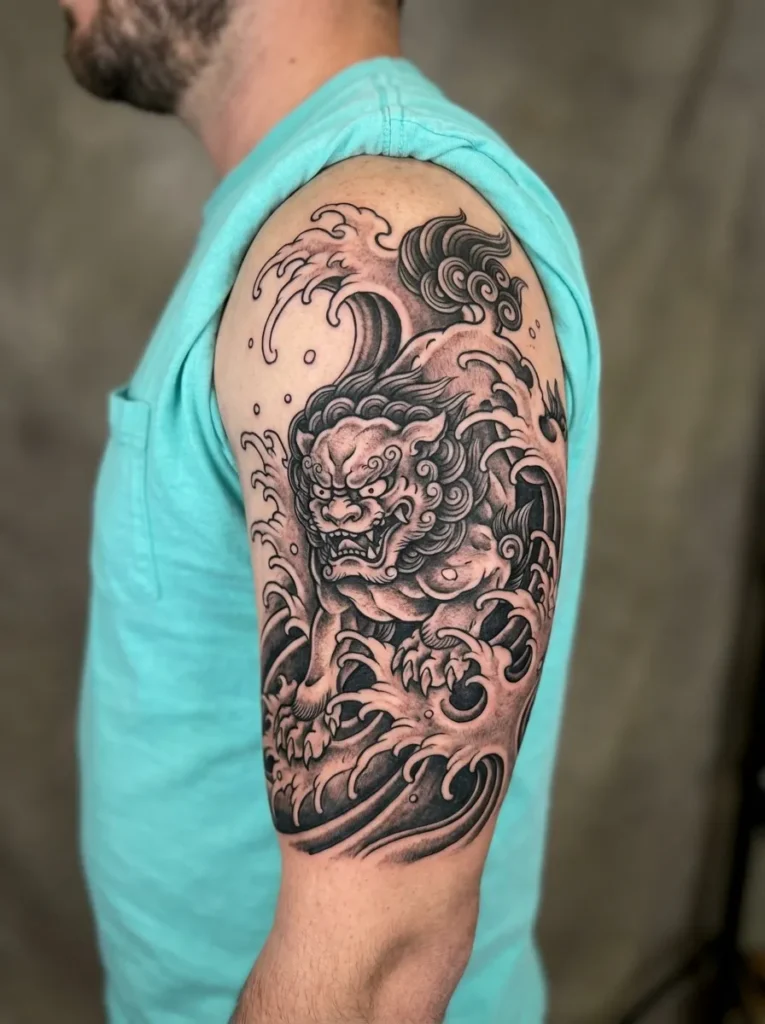
The Karajishi, or lion-dog guardian, bursting through waves is an ancient and powerful pairing in Japanese art.
These mythical protectors traditionally sit at temple entrances. Placing one within crashing ocean waves adds a sense of sacred energy to the whole design. It looks like something guarding the boundary between the human world and something far beyond it.
This is a design that benefits from bold, confident linework and heavy shading. It should look like it has weight.
17. Japanese Wave and Hannya Mask Fusion
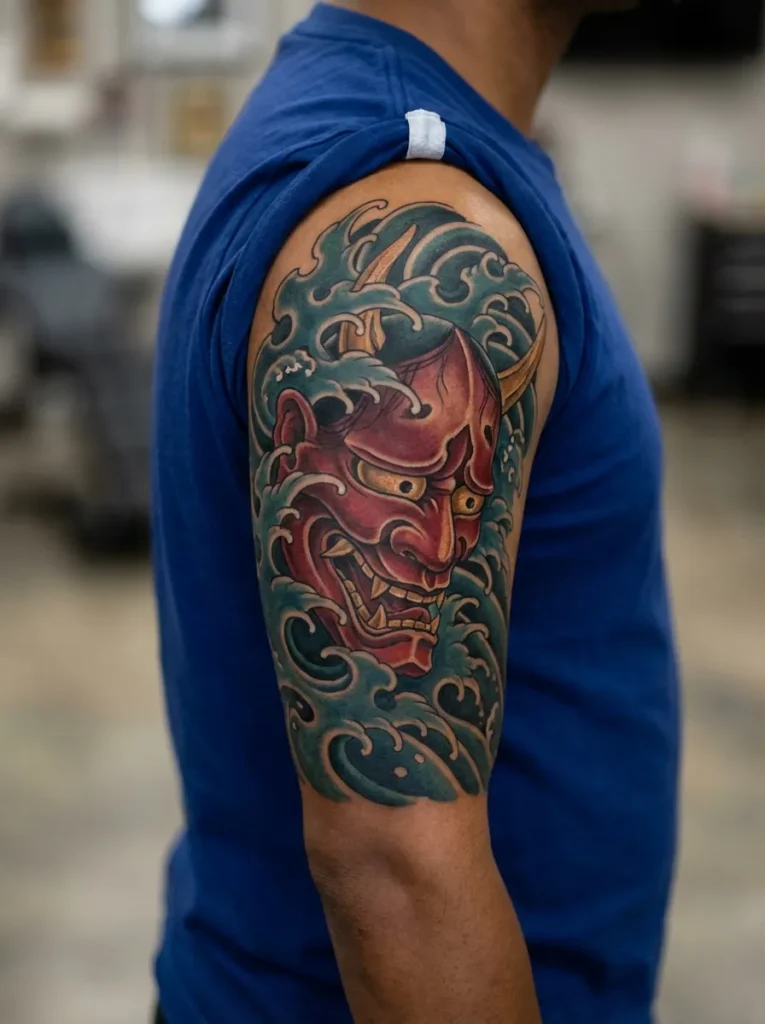
A Hannya mask emerging from or surrounded by waves creates an unsettling and unforgettable image.
The Hannya represents jealousy, obsession, and pain transformed into something monstrous. The relentless movement of the waves amplifies that emotional intensity. Nothing about this design is calm.
Deep blue-green water around a red or gold Hannya mask creates a color tension that mirrors the emotional tension of the subject. This one tends to stop people mid-conversation.
18. Japanese Wave Thigh Panel Design
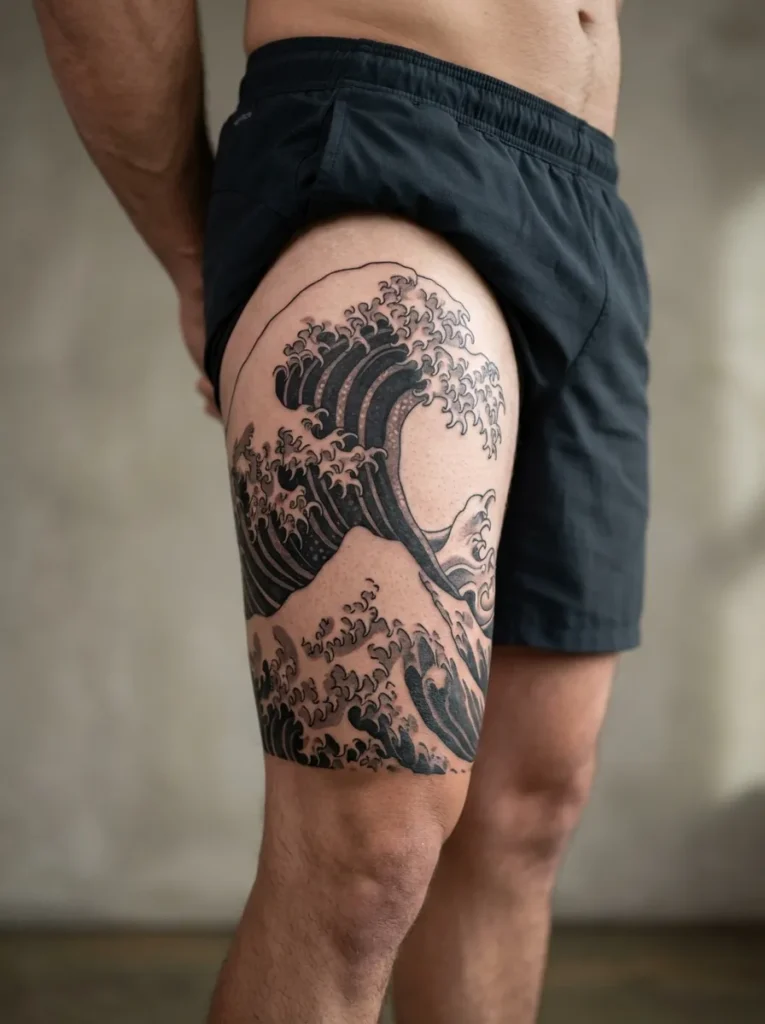
The thigh is one of the most underrated placements for Japanese wave work.
There’s a generous surface area that allows for real compositional depth. The waves can flow with the natural curves of the leg in a way that looks almost custom-made for the body.
- The front of the thigh suits bold, forward-facing compositions
- The outer thigh works well for longer horizontal wave scenes
- Wrapping from inner to outer thigh creates an immersive effect
Healing is generally straightforward on the thigh, which is another reason tattoo collectors keep coming back to this spot.
19. Japanese Wave with Bamboo (Take) Accents
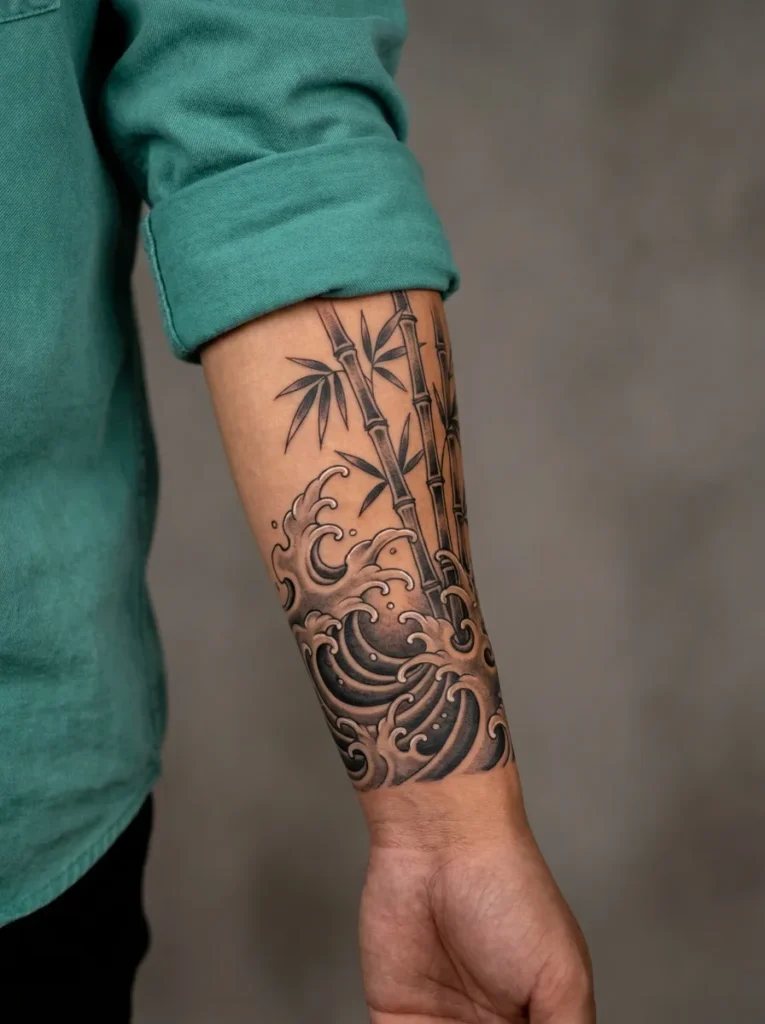
Bamboo stalks rising from or beside ocean waves bring a grounded, earthy quality to an otherwise very fluid design.
Bamboo in Japanese culture represents resilience and flexibility. The stalks bend but never break, which pairs naturally with the idea of waves that crash endlessly without losing their form.
Vertical bamboo against horizontal wave movement creates a visual tension that keeps the eye moving across the whole composition. It’s a subtle dynamic that works beautifully in practice.
20. Japanese Wave and Geisha Portrait
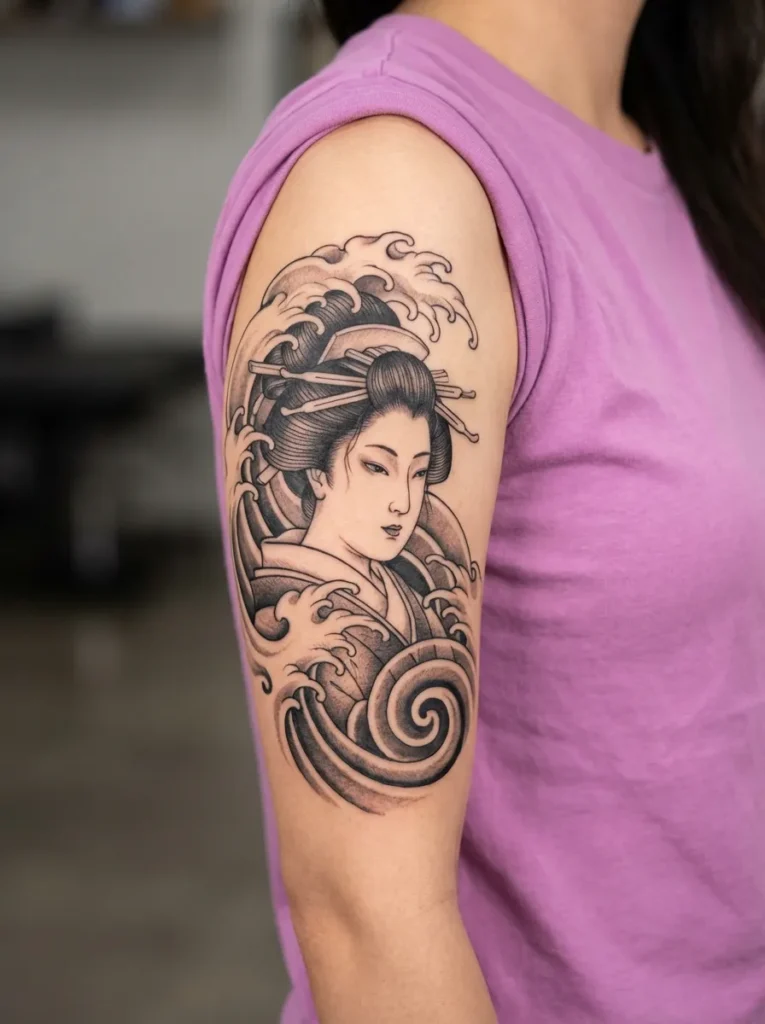
A geisha portrait within a wave composition is as striking as Japanese tattooing gets.
The delicate features and elaborate styling of the geisha sit in beautiful contrast to the raw power of the ocean around her.
It creates a tension between refinement and nature that feels very intentional.
This design requires an artist who can render portrait-level facial detail within a larger traditional composition.
Choosing the right person for this one matters more than almost any other design on this list.
21. Japanese Wave and Kirin Mythical Scene
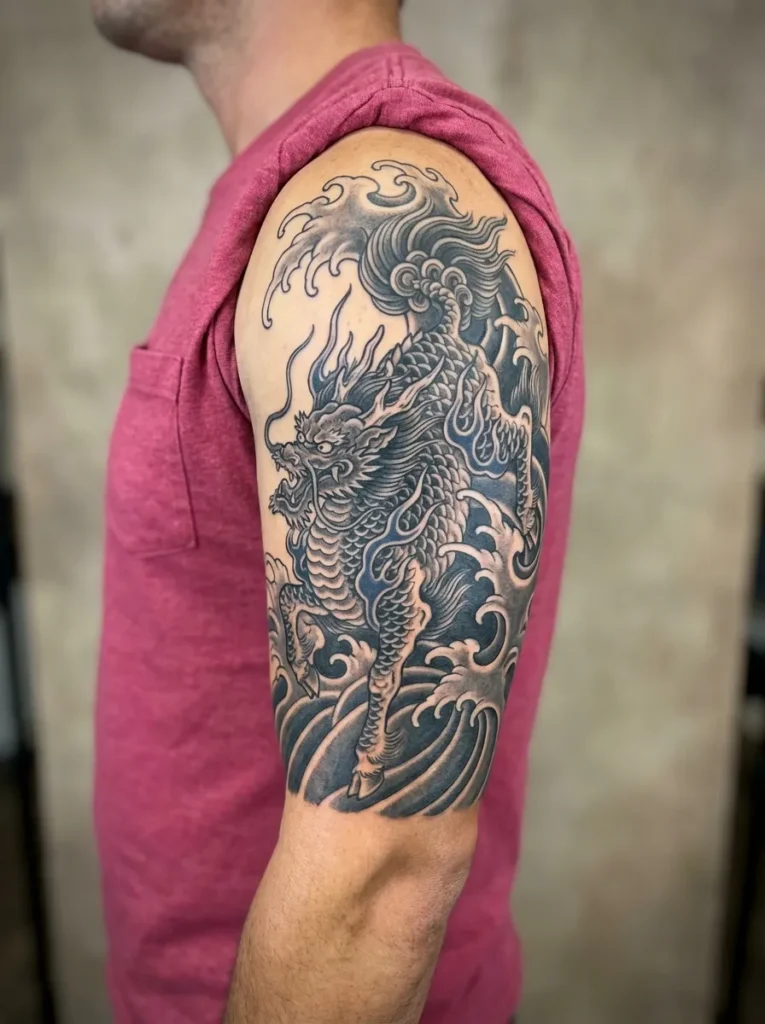
The Kirin is one of the rarest subjects in Japanese tattooing. It’s a mythical creature associated with good omens, purity, and the arrival of a great leader.
Placing a Kirin within crashing waves elevates the design into something almost cosmic.
It feels like witnessing something that exists at the edge of myth and reality.
Scaled body, flowing mane, and flame details on the Kirin contrast with smooth wave water in a way that gives the tattoo incredible visual complexity. This one rewards a long look.
22. Japanese Wave with Lotus Pond Concept
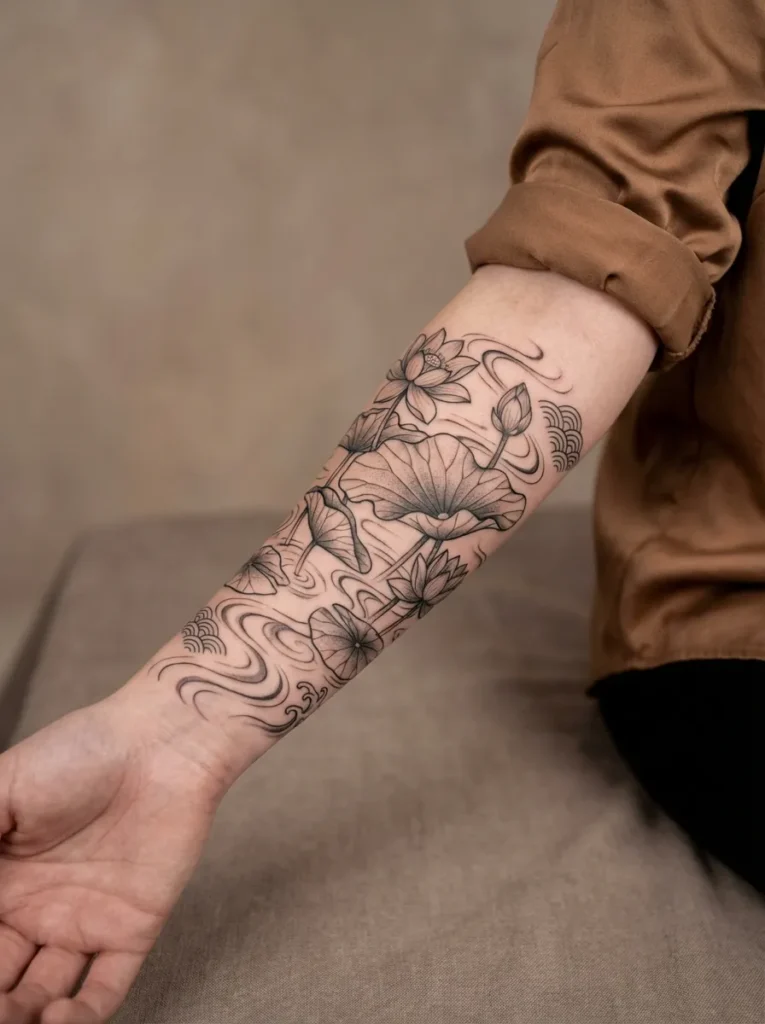
This is the quieter end of the Japanese wave spectrum, and it’s genuinely beautiful for it.
Instead of crashing ocean waves, this concept draws from still or gently moving water with lotus blooms sitting across the surface.
It’s the same visual language of Nami but turned inward and meditative rather than explosive.
Soft ripples, large lotus pads, and flowers in various stages of bloom create a sense of peace that’s rare in tattoo art.
It’s a design for someone who wants the depth of Japanese tattooing without the intensity.
Final Thoughts
Japanese wave tattoos have carried meaning for centuries and they’re not slowing down anytime soon. From a single bold forearm piece to a full back composition that tells an entire story, the Nami wave adapts to whatever you need it to be.
The ocean has always symbolized things beyond our control, the forces we navigate rather than stop. Maybe that’s why so many people find something personal in these designs.
So what does your wave look like, and what is it carrying with it?