
Japanese tattooing has always carried a certain kind of magic. The bold lines, the rich symbolism, the way a single image can hold an entire story.
For women, Irezumi offers something especially powerful. It blends strength with elegance in a way few tattoo styles can. Fierce imagery softened by flowers. Mythical creatures rendered with breathtaking delicacy.
These 21 ideas are for women who want tattoos that mean something. Designs that feel personal, feminine, and deeply rooted in tradition.
1. Peony Tattoo
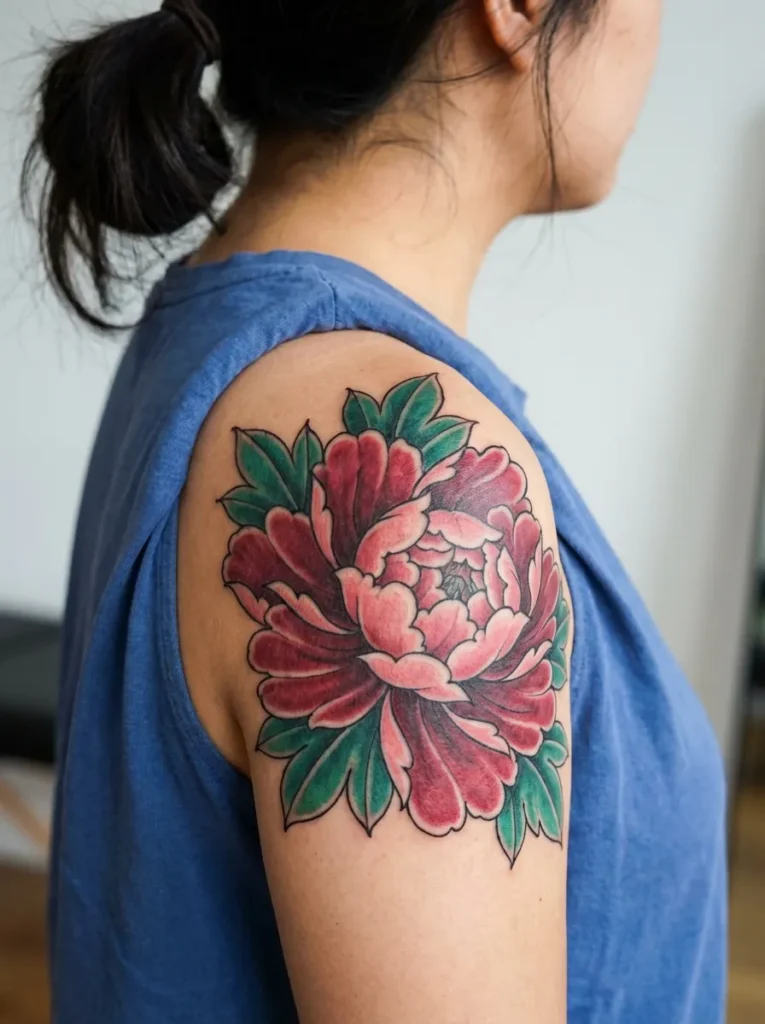
The peony is called the king of flowers in Japan, but honestly it feels more like a queen. Bold, layered, and unapologetically beautiful. It represents prosperity, bravery, and feminine power all at once.
What makes peony tattoos so special is the depth. Petal on petal, each one catching light differently. A skilled artist can make it look almost three dimensional.
It works as a standalone piece or as part of a larger composition. Shoulder, thigh, ribs. It suits every placement.
- Deep reds and soft pinks are the most traditional color choices
- Black and grey peonies have a moody, sophisticated feel
- Pair with a snake or koi for added symbolic contrast
2. Koi Fish Tattoo
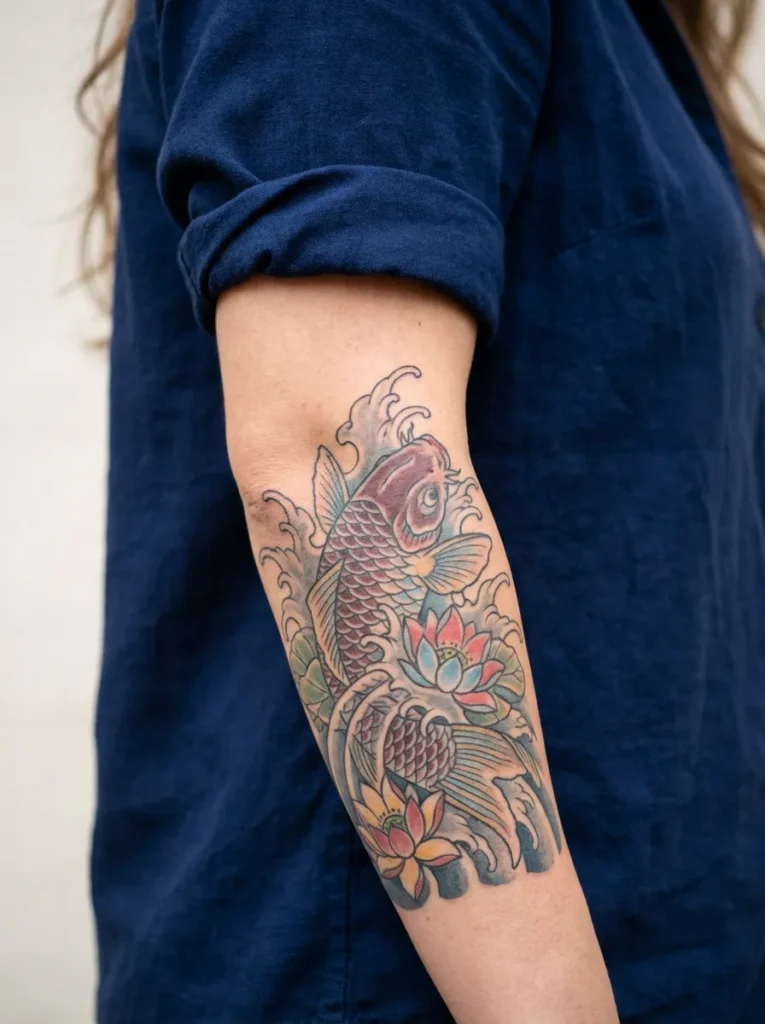
A koi swimming upstream is one of the most enduring images in Japanese tattooing. It represents perseverance and the courage to keep moving against the current. That’s a story a lot of women connect with deeply.
The koi’s scales, fins, and trailing tail make it one of the most visually dynamic subjects in Irezumi. The design has natural movement built in.
Pair it with rushing water or lotus blossoms for a composition that feels complete and alive.
3. Kitsune Tattoo
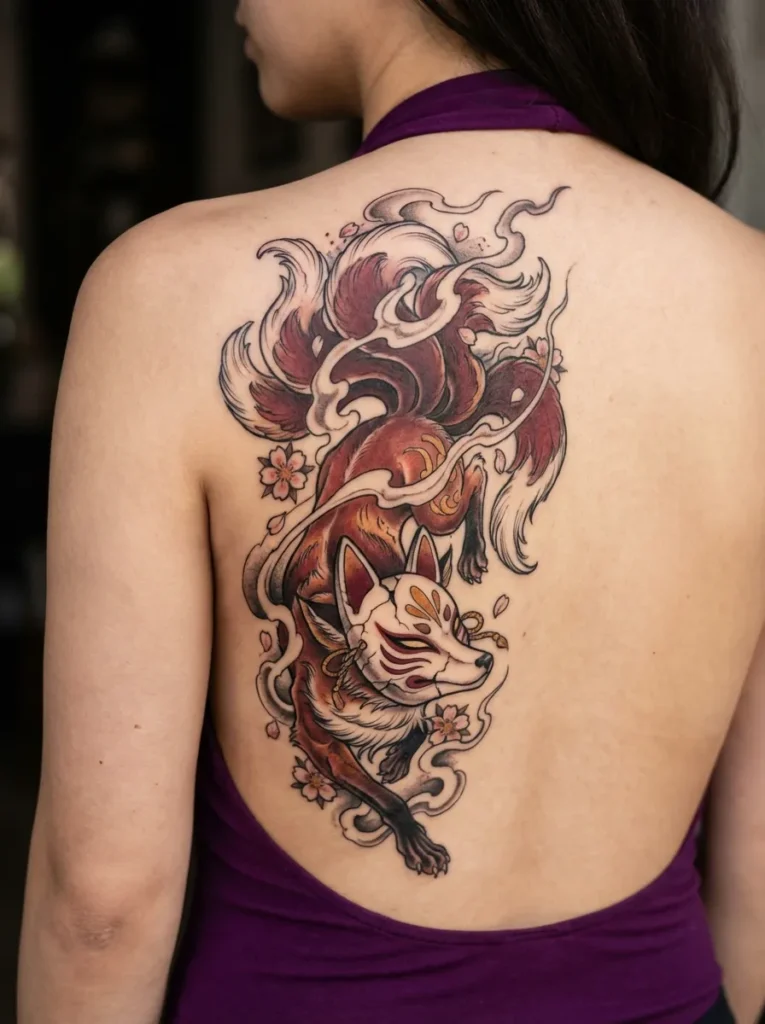
The Kitsune is a fox spirit with the ability to shapeshift. In Japanese folklore, she’s intelligent, mysterious, and deeply powerful. The more tails she has, the wiser and more formidable she becomes.
For women, the Kitsune carries a particular kind of resonance. She exists between worlds. She’s never quite what she appears to be. That duality is fascinating.
A Kitsune emerging from a fox mask, mid transformation, is one of the most striking image concepts in all of Japanese tattooing. It rewards a large canvas like the back or thigh.
4. Hannya Mask Tattoo
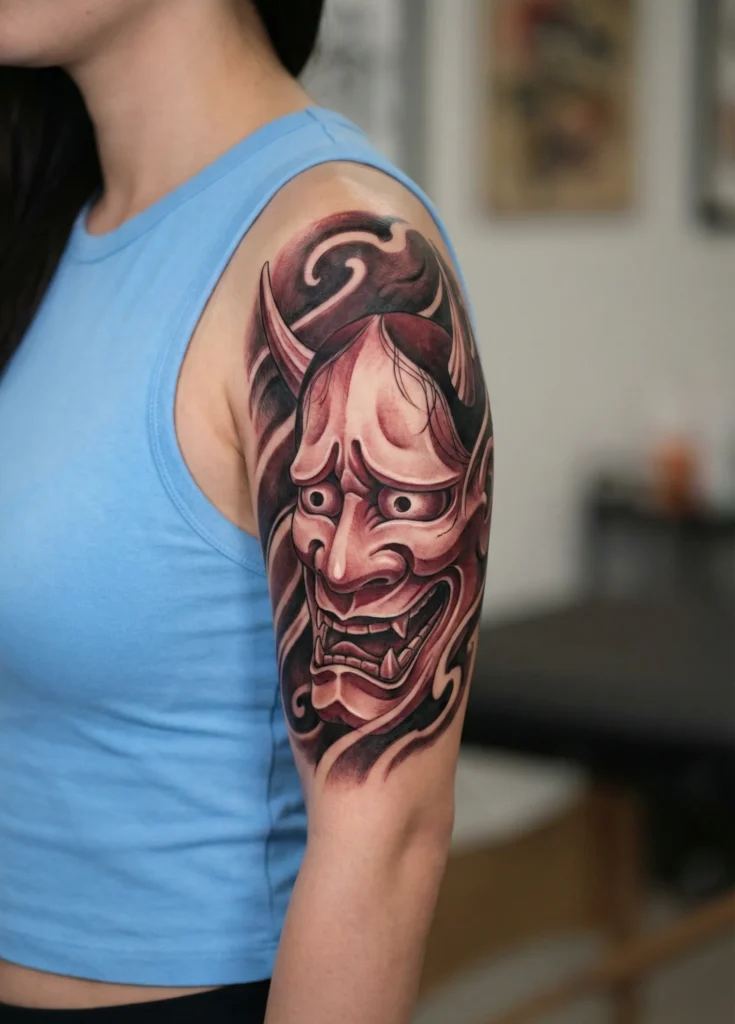
The Hannya mask is the face of a woman transformed by heartbreak and jealousy into something demonic. That backstory is what makes it such a powerful image for women specifically. It’s not just a demon. It’s an emotion taken to its furthest extreme.
The mask is beautiful and terrifying at the same time.
| Mask Tone | Meaning |
| Pale or light colored | Early stage of jealousy and longing |
| Red | Intense rage and full transformation |
| Gold accents | Divine or spiritual connection |
| Dark background | Drama, depth, and emotional weight |
Knowing the story changes how you wear this tattoo. It becomes a statement about emotional experience rather than just a striking image.
5. Chrysanthemum Tattoo
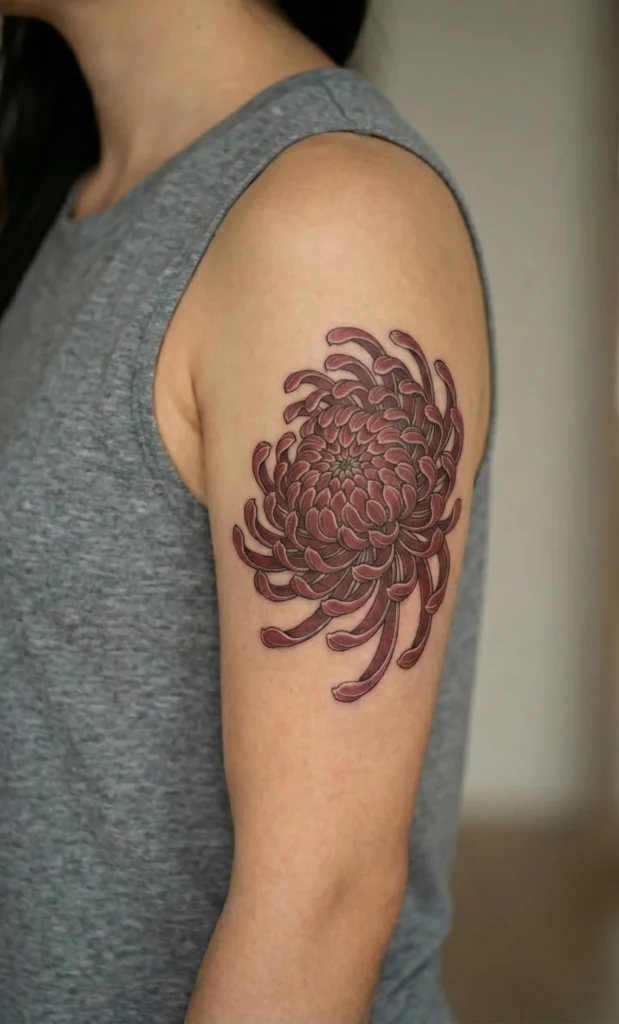
The chrysanthemum is the imperial flower of Japan. It sits on the emperor’s seal and represents longevity, renewal, and nobility. Wearing one is a quiet act of elegance.
The petals are tight, symmetrical, and incredibly detailed when done in traditional Irezumi style. It’s technically demanding and visually rewarding.
For women, a large chrysanthemum as a chest piece or shoulder cap feels regal without being loud.
6. Butterfly Motif Tattoo
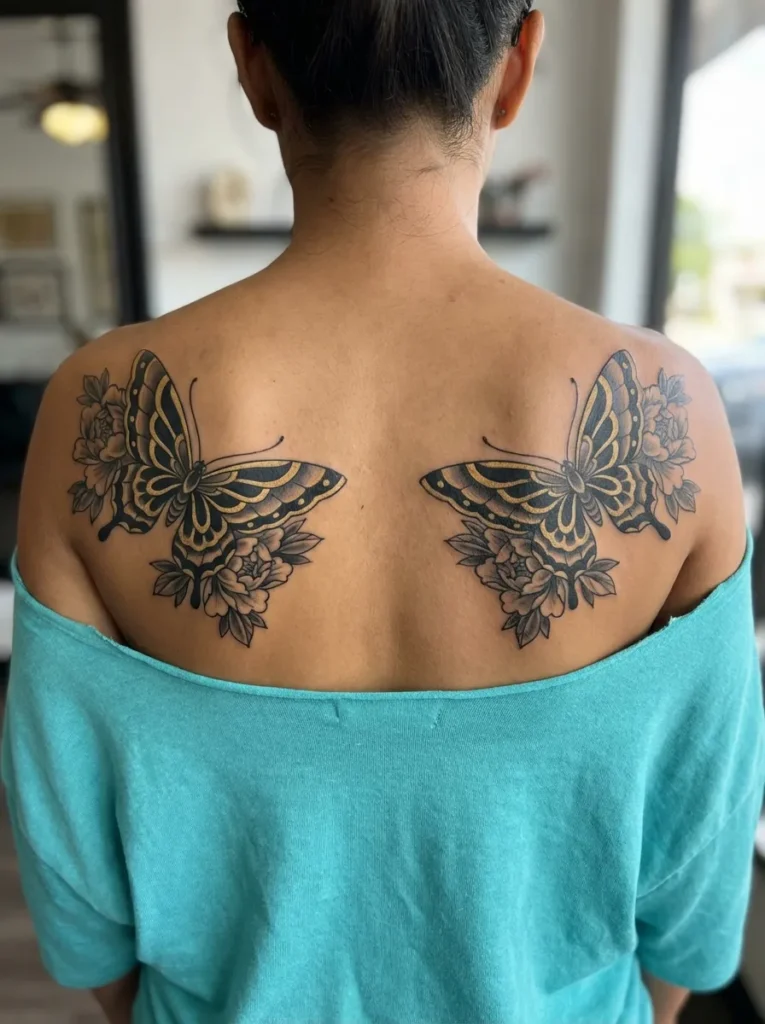
In Japan, the butterfly represents the soul. It’s also tied to transformation, which is why it resonates so strongly as a tattoo choice for women marking a major life change.
Japanese style butterfly designs are different from Western ones. They’re bolder, with defined outlines and often incorporated into larger floral scenes. They feel substantial rather than delicate.
- A butterfly resting on a peony or cherry blossom is a classic pairing
- Matching butterflies on each shoulder blade is a striking placement idea
- Black and gold color combinations feel luxurious and distinctly Japanese
7. Geisha Portrait Tattoo
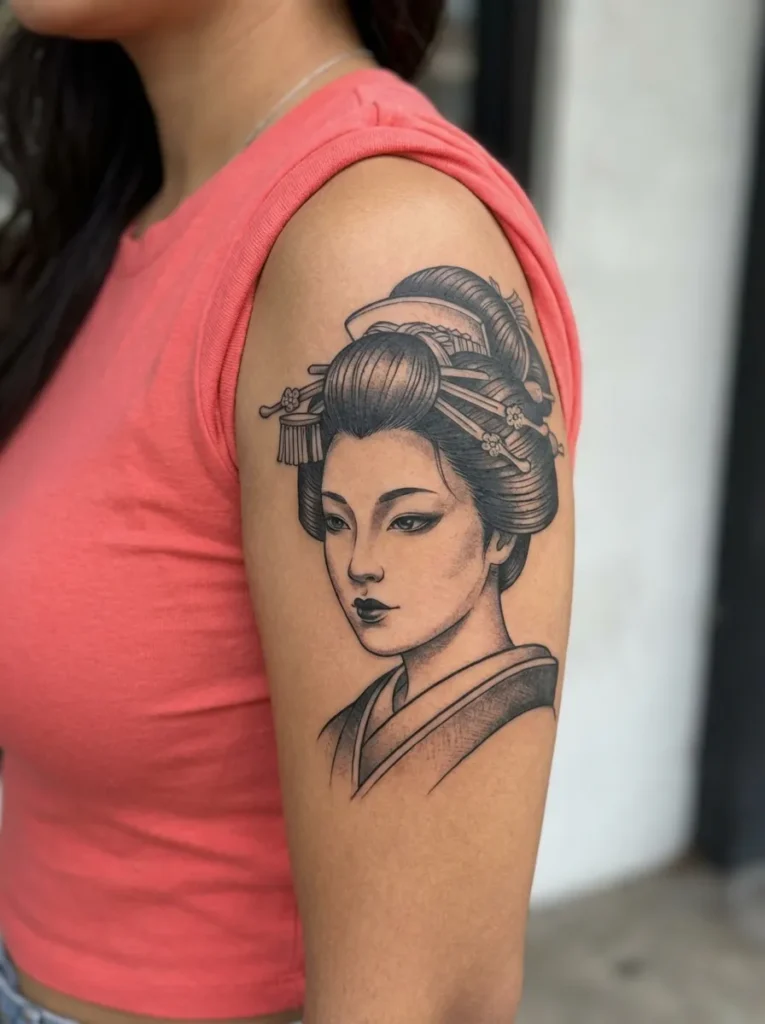
A geisha is not just a beautiful image. She represents a life of discipline, artistry, and mastery. Getting her portrait tattooed is a tribute to what it takes to dedicate yourself completely to your craft.
The face is the heart of this design. The white makeup, the precise lips, the dark eyes framed by an elaborate wig. Every detail matters.
Find an artist with strong portrait work in the traditional Japanese style specifically. This is not a design to compromise on.
8. Crane Tattoo
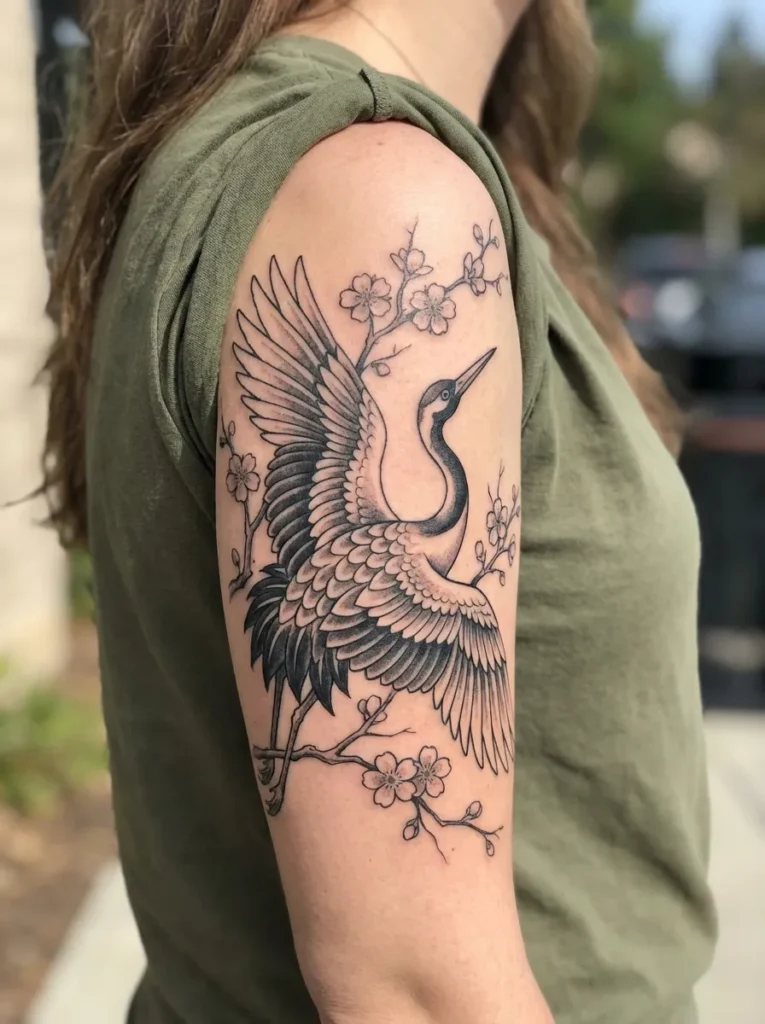
The crane is one of Japan’s most beloved symbols. It represents longevity, grace, and fidelity. The bird is said to live for a thousand years. It also mates for life.
As a tattoo, the crane has an effortless elegance. Wings outstretched, neck curved, feathers trailing. The silhouette alone is beautiful.
Pair it with a rising sun for a sense of hope, or with cherry blossoms for a softer, more romantic composition.
9. Snake with Flowers Tattoo
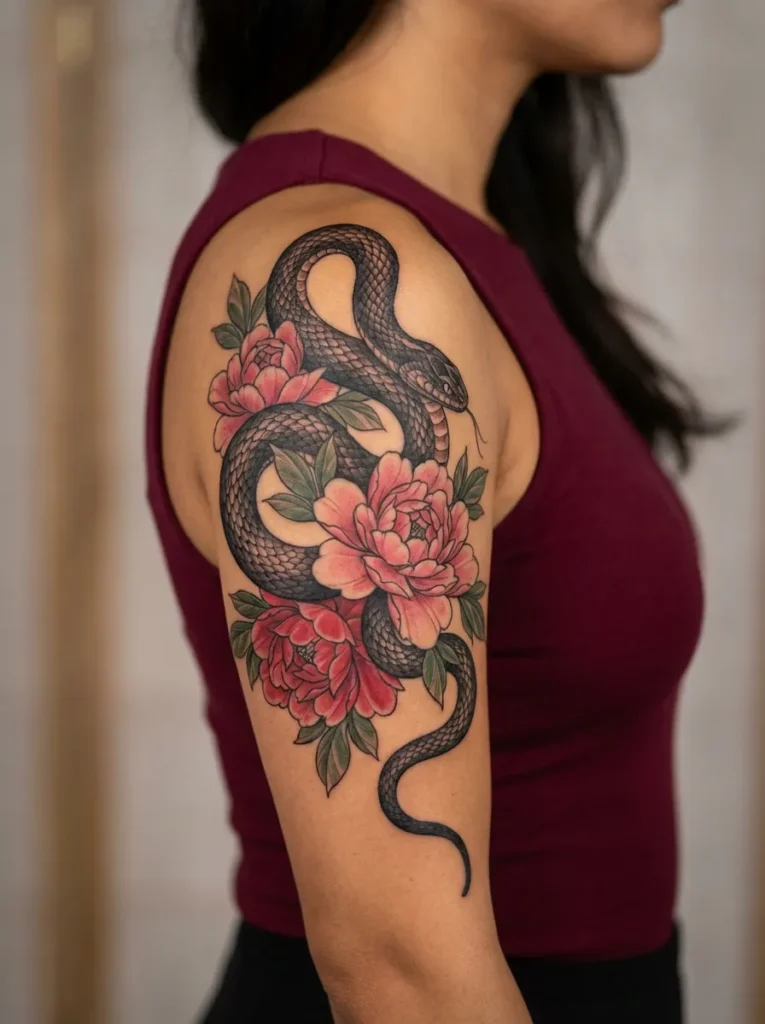
The Japanese snake is a symbol of protection, transformation, and good fortune. Wrapped around a bouquet of peonies or cherry blossoms, it creates a design that is sensual, flowing, and full of tension.
The contrast between the serpent’s scales and the softness of petals is visually electric. Hard and soft, dangerous and beautiful, all in one image.
This design moves with the body naturally. It’s especially stunning wrapping around the arm, thigh, or ribcage.
10. Lotus Flower Tattoo
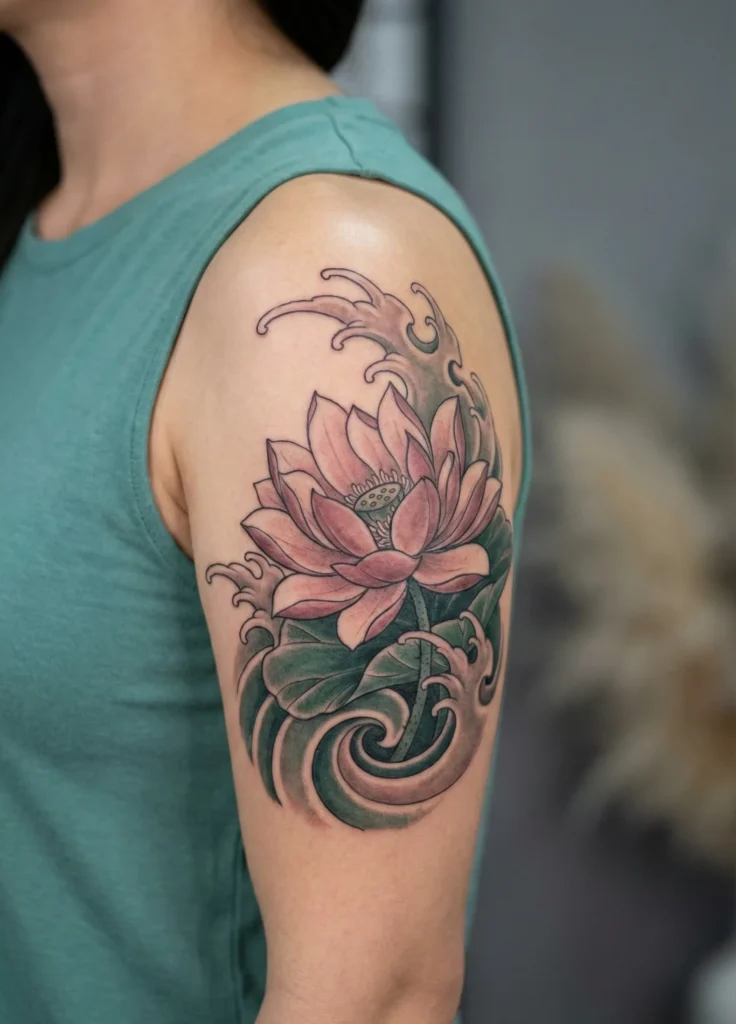
The lotus grows from mud at the bottom of a pond and blooms above the water untouched and perfect. That journey is the whole point. It’s a symbol of purity, resilience, and rising above difficulty.
For women who have been through something hard and come out the other side, this one hits differently.
The lotus works beautifully in both large and small formats. A detailed single bloom on the collarbone is as powerful as a full back piece surrounded by koi and water.
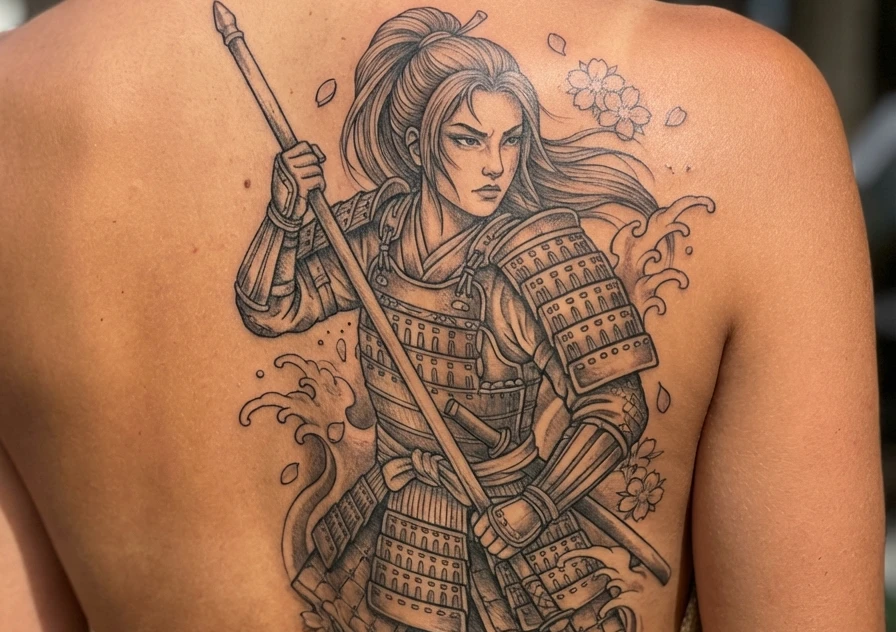
11. Female Samurai Tattoo
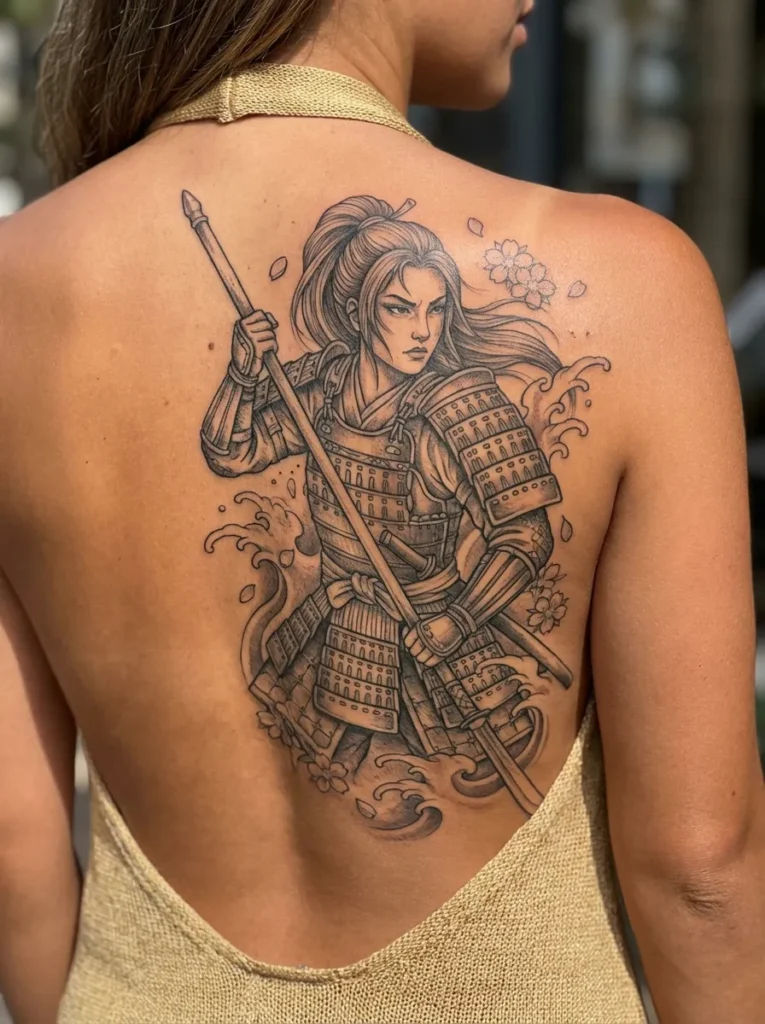
The onna bugeisha were Japanese female warriors. They trained in combat and defended their homes and communities with the same dedication as male samurai. Their history is real and it’s remarkable.
A female samurai tattoo is a statement about inner strength and the willingness to fight for what matters.
Full armor, naginata in hand, expression fierce and focused. This is a large piece that earns its space. A back or thigh panel does it justice.
12. Japanese Fan Tattoo
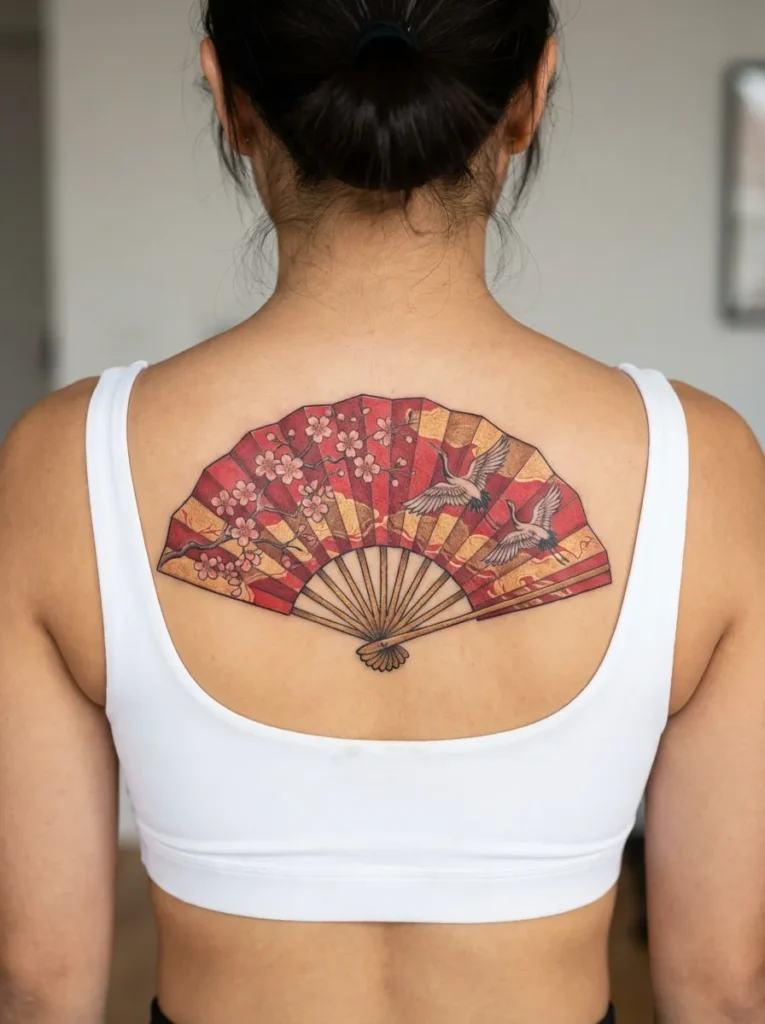
The folding fan has been a symbol of status and refinement in Japan for over a thousand years.
In art, it’s used to frame compositions, suggest elegance, and carry decorative patterns that tell their own stories.
As a tattoo, a Japanese fan is versatile. It can stand alone as a beautifully detailed piece or work as a framing element around a portrait or floral design.
- Fans decorated with cherry blossoms or cranes are a popular and timeless combination
- Placement on the upper back or chest allows the fan shape to open naturally
- Gold and red color palettes feel especially rich and traditional
13. Goldfish Tattoo
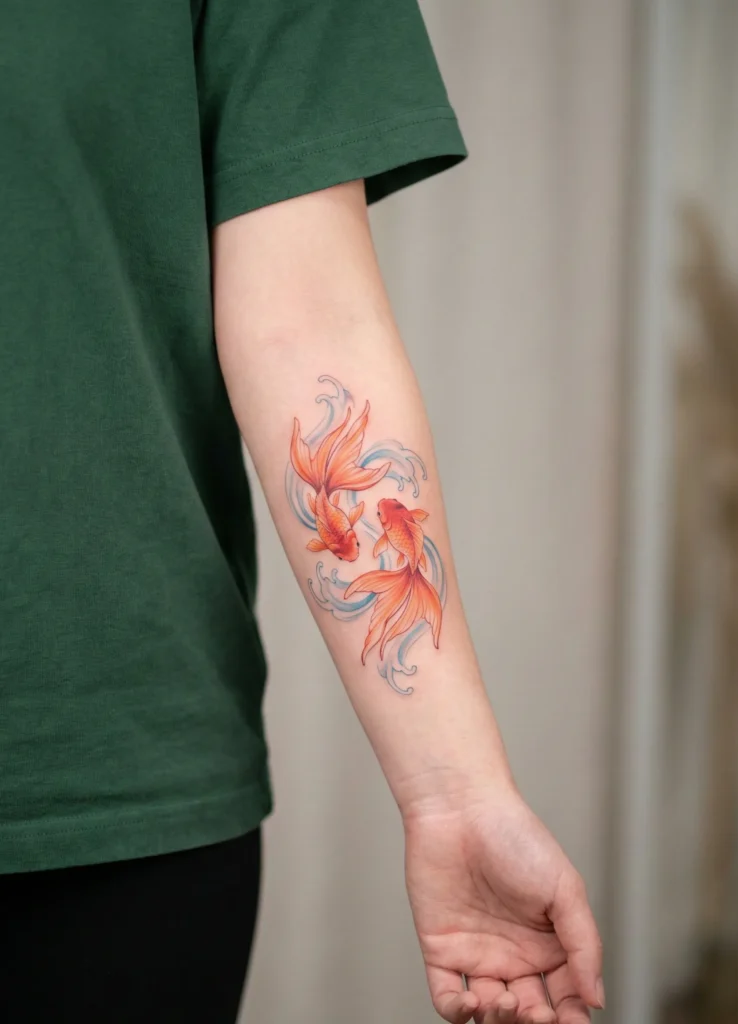
The goldfish in Japanese culture is associated with luck, abundance, and the simple beauty of everyday life. Unlike the powerful koi, the goldfish has a gentler energy. It floats rather than fights.
Goldfish tattoos are delicate and luminous. The flowing fins and translucent scales give artists a chance to work with light and color in a really special way.
A pair of goldfish circling each other makes a beautiful small to medium sized piece for the wrist, ankle, or inner arm.
14. Moon and Blossoms Tattoo
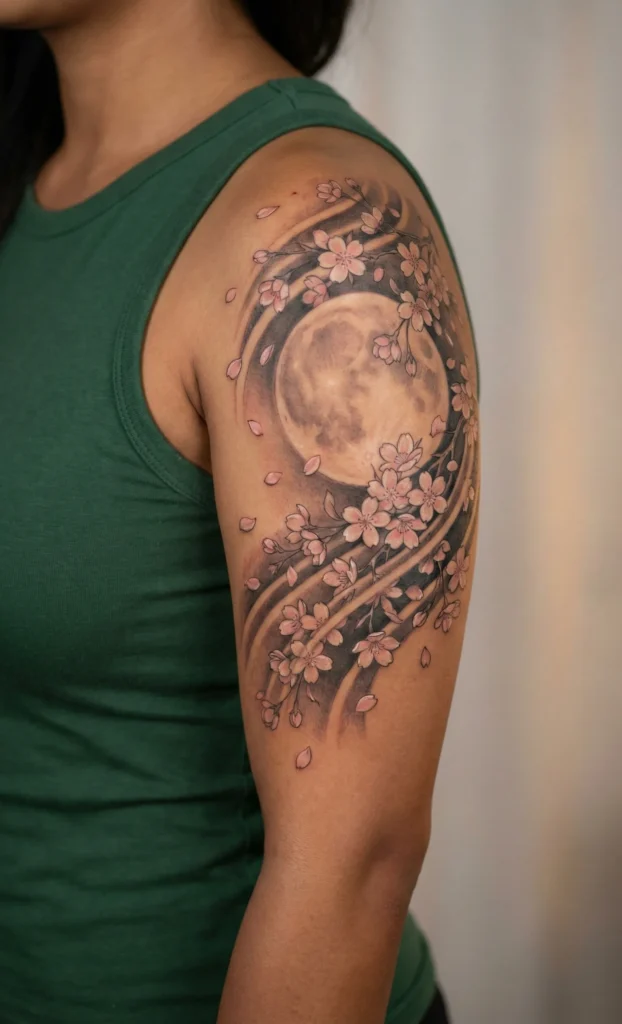
A full moon hanging over falling cherry blossoms is one of the most quintessentially Japanese images there is. It’s calm, melancholic, and deeply beautiful.
It captures that feeling of standing outside at night and feeling the weight of everything impermanent.
This design suits women who want something peaceful rather than fierce. It’s a quieter kind of power.
The round moon gives the composition a natural anchor point. Blossoms can scatter across the surrounding skin for a dreamy, flowing effect.
15. Minimal Dragon Tattoo
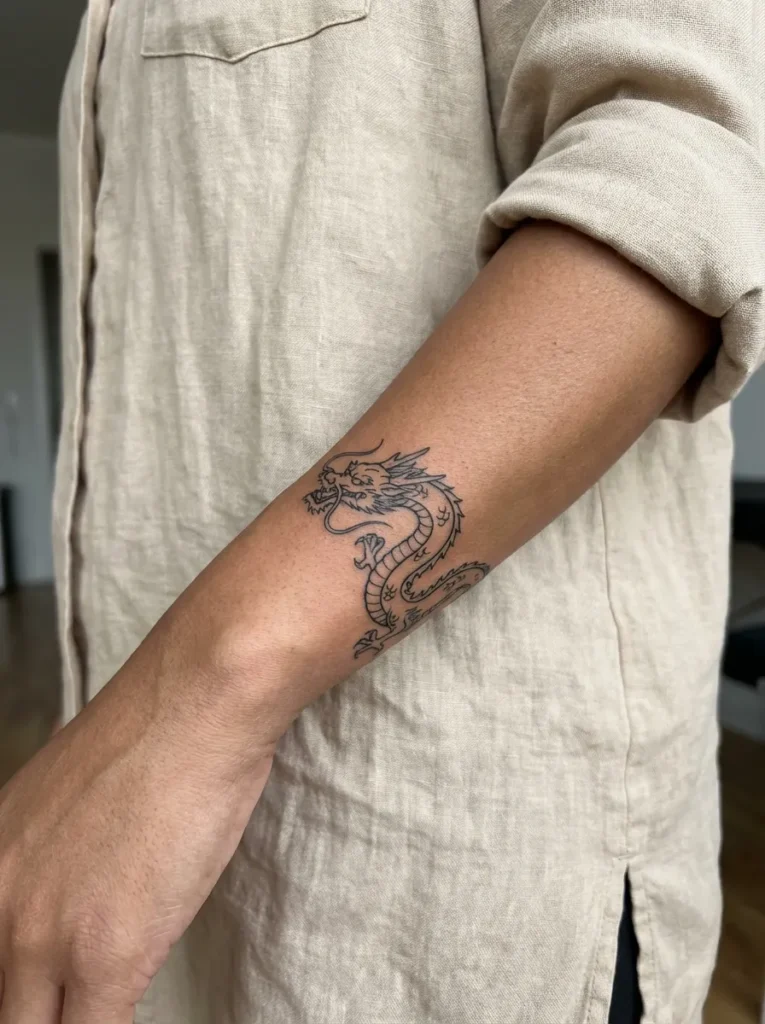
Not every dragon tattoo needs to fill an entire sleeve. A minimal Japanese dragon, rendered with clean lines and restrained detail, carries just as much symbolic weight in a smaller format.
The dragon represents wisdom, protection, and a connection to the natural world. Getting a smaller version doesn’t diminish those meanings. It just wears them differently.
A dragon coiling around the forearm or curving across the collarbone in a simplified Irezumi style is quietly powerful. It says something without needing to shout.
16. Floral Half Sleeve Tattoo
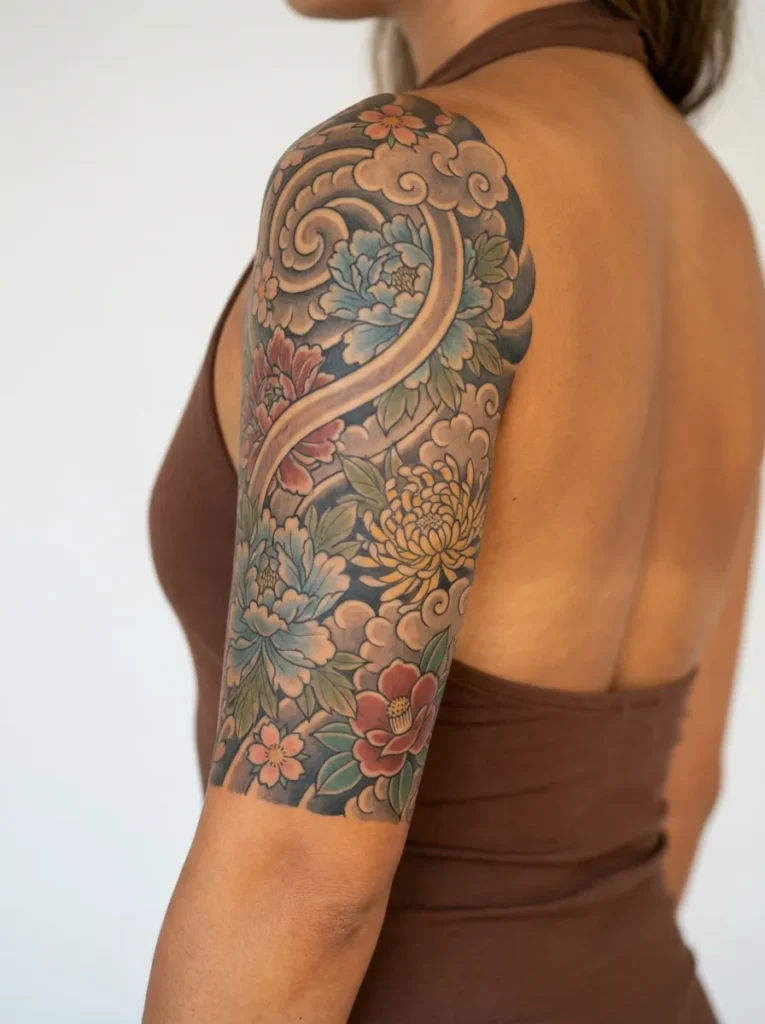
A floral half sleeve in the Japanese style is one of the most wearable and timeless choices for women.
Peonies, chrysanthemums, cherry blossoms, and camellia layered together with wind bars and clouds creates a composition that feels both complete and alive.
The beauty of a half sleeve is that it tells a bigger story than a single piece but doesn’t demand the commitment of a full sleeve.
Work with your artist to plan the composition from the start.
Placement of each flower, the flow from shoulder to elbow, the way the background connects everything. This is where the planning matters as much as the tattooing.
17. Garden Scene Tattoo
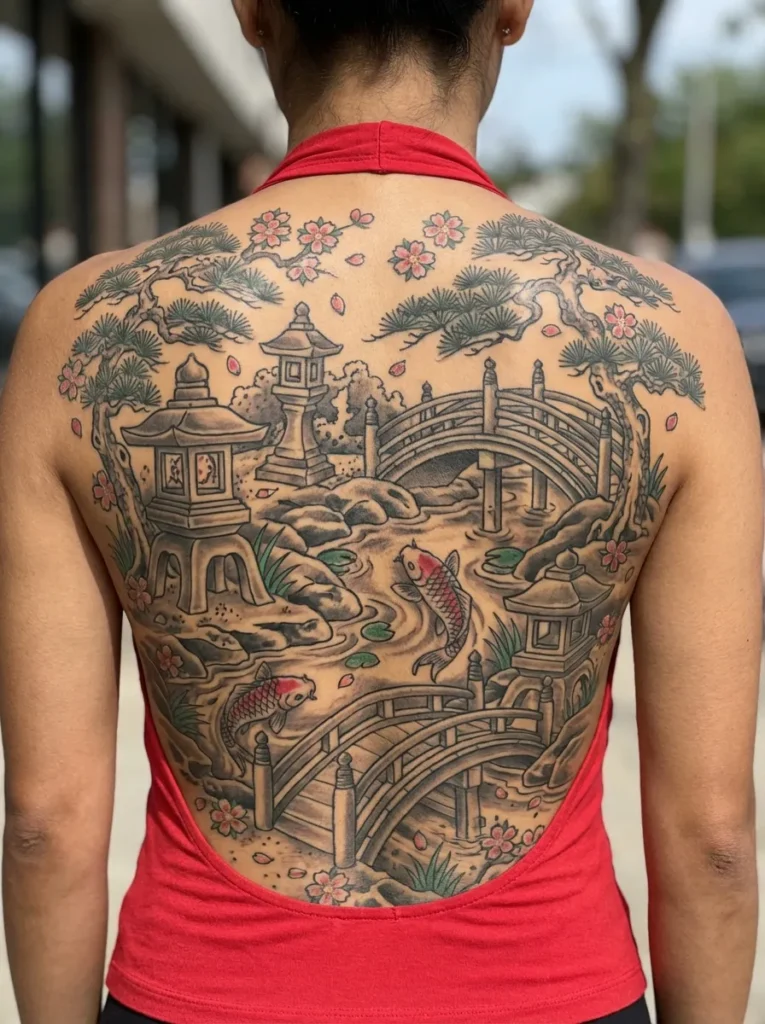
A Japanese garden scene as a tattoo is a meditation in ink. Stone lanterns, koi ponds, arching bridges, pine trees, and scattered blossoms. All of it rendered in the traditional Irezumi palette.
This design works as a large back piece where the landscape can breathe and unfold across a wide canvas.
It’s a peaceful, layered choice for someone who wants a tattoo that rewards a long look. The more you study it, the more details you find.
18. Wind Bars Tattoo
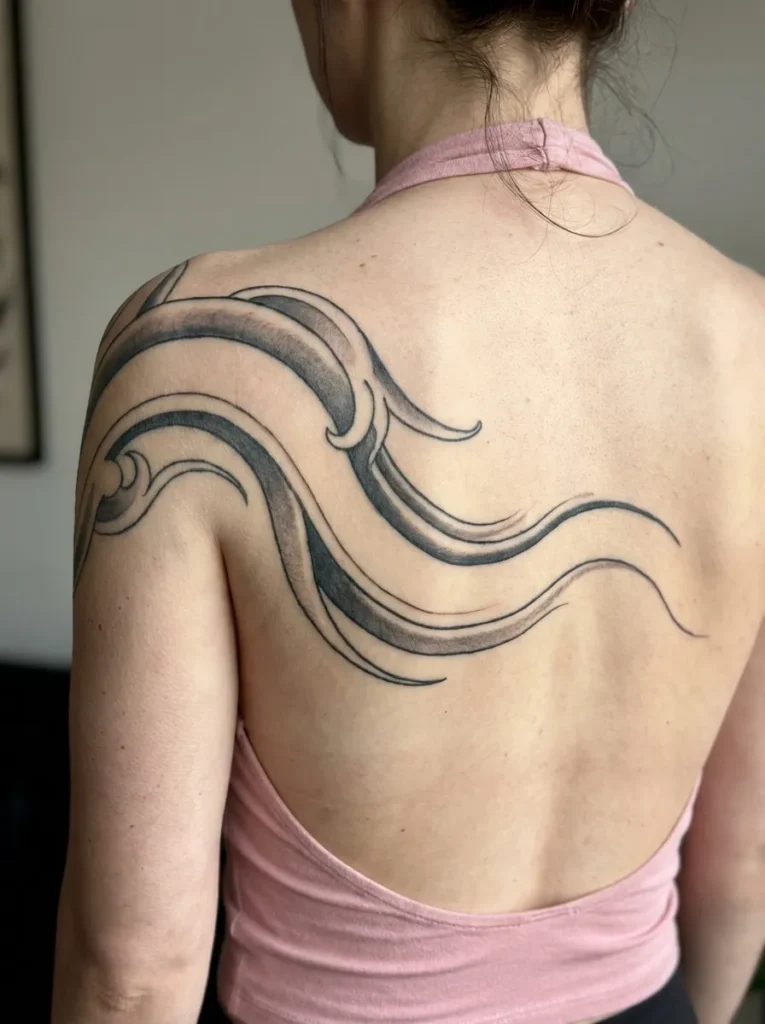
Wind bars, called Gust Lines or Kaze in Japanese tattooing, are those sweeping curved lines that appear in the background of traditional Irezumi designs.
Most people don’t know they have a name or a meaning. They represent the movement of wind and the invisible forces that shape the world.
As a standalone tattoo or a background element, wind bars add a sense of motion and traditional grounding to any composition.
They also work beautifully as a minimalist piece on their own. Clean, graphic, and unmistakably Japanese.
19. Camellia (Tsubaki) Tattoo
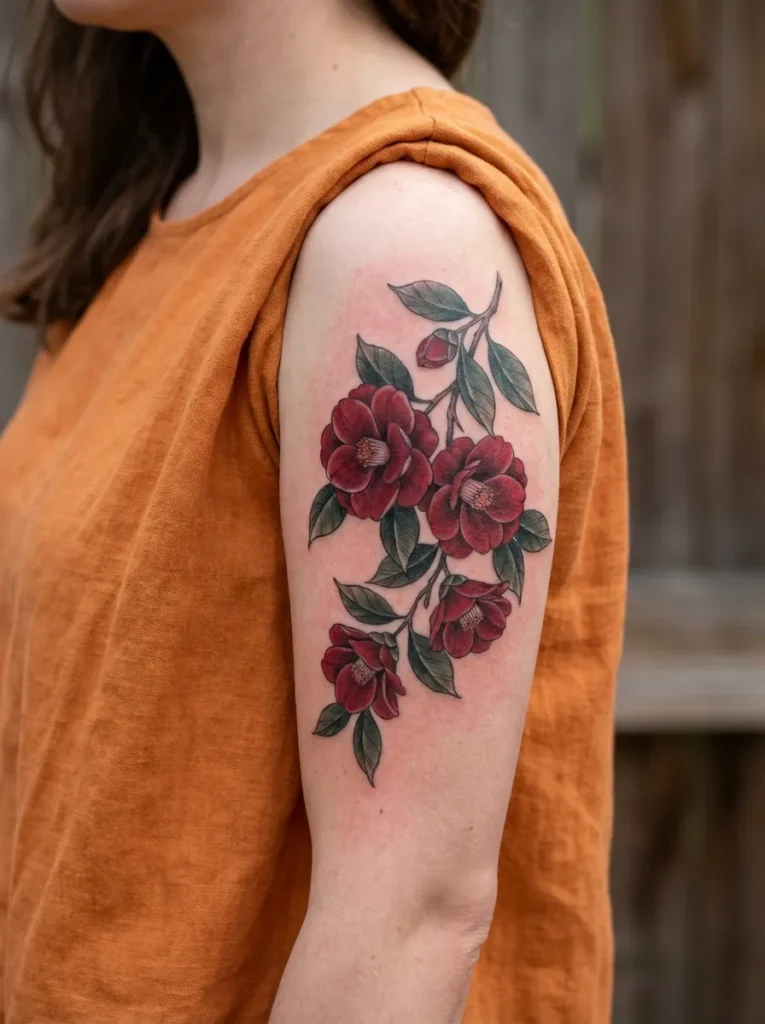
The Tsubaki, or camellia, is one of Japan’s most beloved and underrepresented flowers in Western tattoo culture.
It blooms in winter when almost nothing else does. It represents devotion, love that endures, and a quiet kind of strength.
The flower drops from the branch whole rather than petal by petal. That image alone carries its own poetry.
Camellia tattoos tend to be more refined and less bold than peonies. They suit women who want something that feels personal and a little rare. Deep reds against dark green leaves are the classic rendering.
20. Temari Ball Tattoo
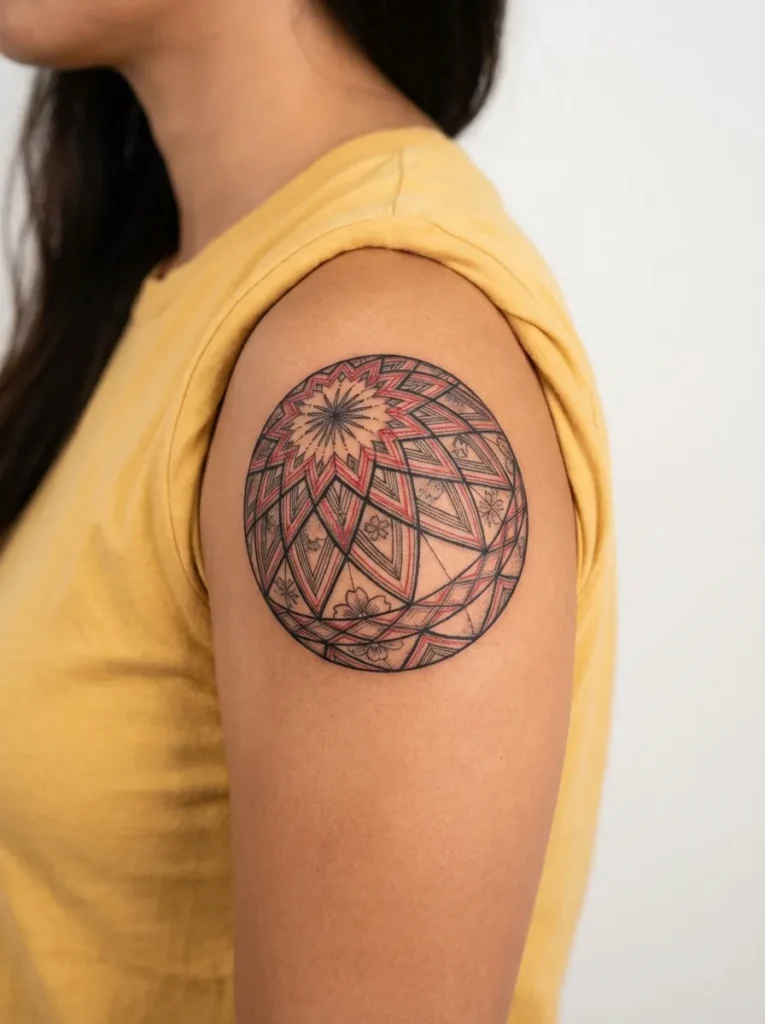
Temari balls are traditional Japanese folk toys, handmade from silk thread wound into intricate geometric patterns. They were originally made by mothers as gifts for their children and the patterns themselves carry wishes for happiness and luck.
As a tattoo, the Temari ball is a stunning choice. The geometric precision, the radial symmetry, the interlocking patterns. It looks like a mandala with a Japanese soul.
This is a design that rewards an artist with strong linework and a good understanding of pattern and symmetry. The result is something that looks unlike anything else in tattooing.
- Black and red thread patterns are the most traditional color combination
- Adding subtle floral elements within the geometric design softens the overall feel
- Placement on the shoulder, knee, or upper arm suits the round composition naturally
21. Water Lily Tattoo
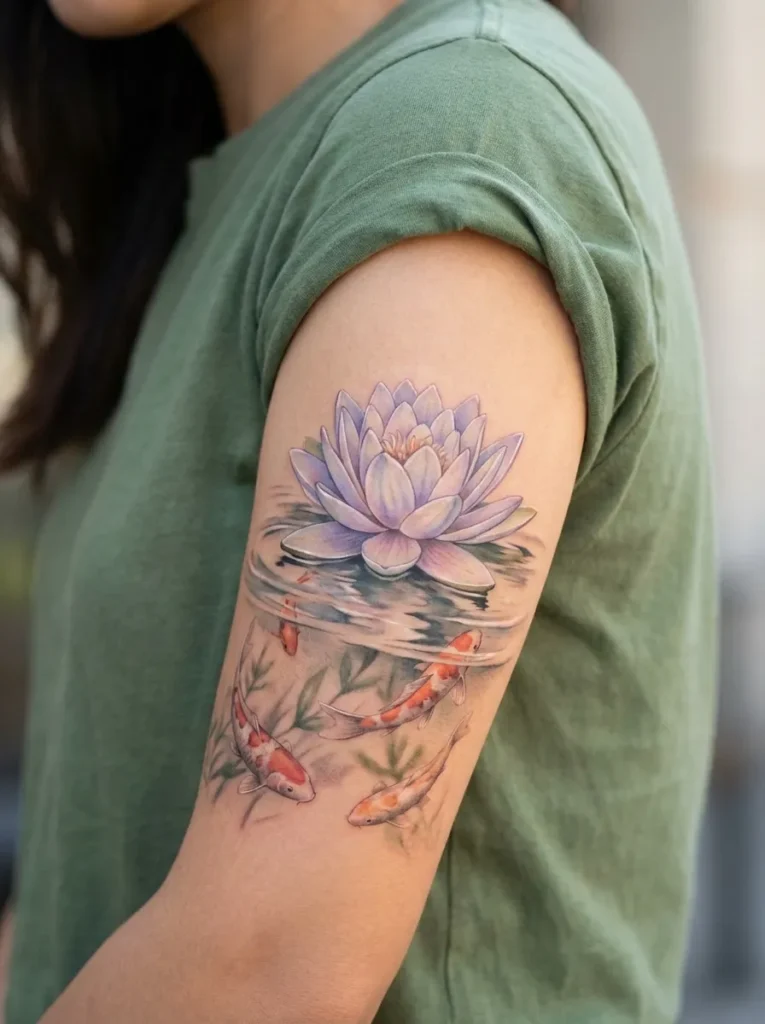
The water lily and the lotus are cousins in symbolism. The water lily represents serenity, feminine energy, and a connection to the natural world. It floats on still water, unhurried and at peace.
Where the lotus suggests struggle and triumph, the water lily suggests acceptance and calm. That distinction matters when choosing what you want to carry on your skin.
Soft purples, whites, and pale pinks work beautifully in the Japanese style. Pair with still water reflections and trailing koi beneath the surface for a composition that has real depth.
So here’s something worth thinking about: with so much symbolism available, which of these designs speaks to who you actually are right now, and which one speaks to who you’re becoming?