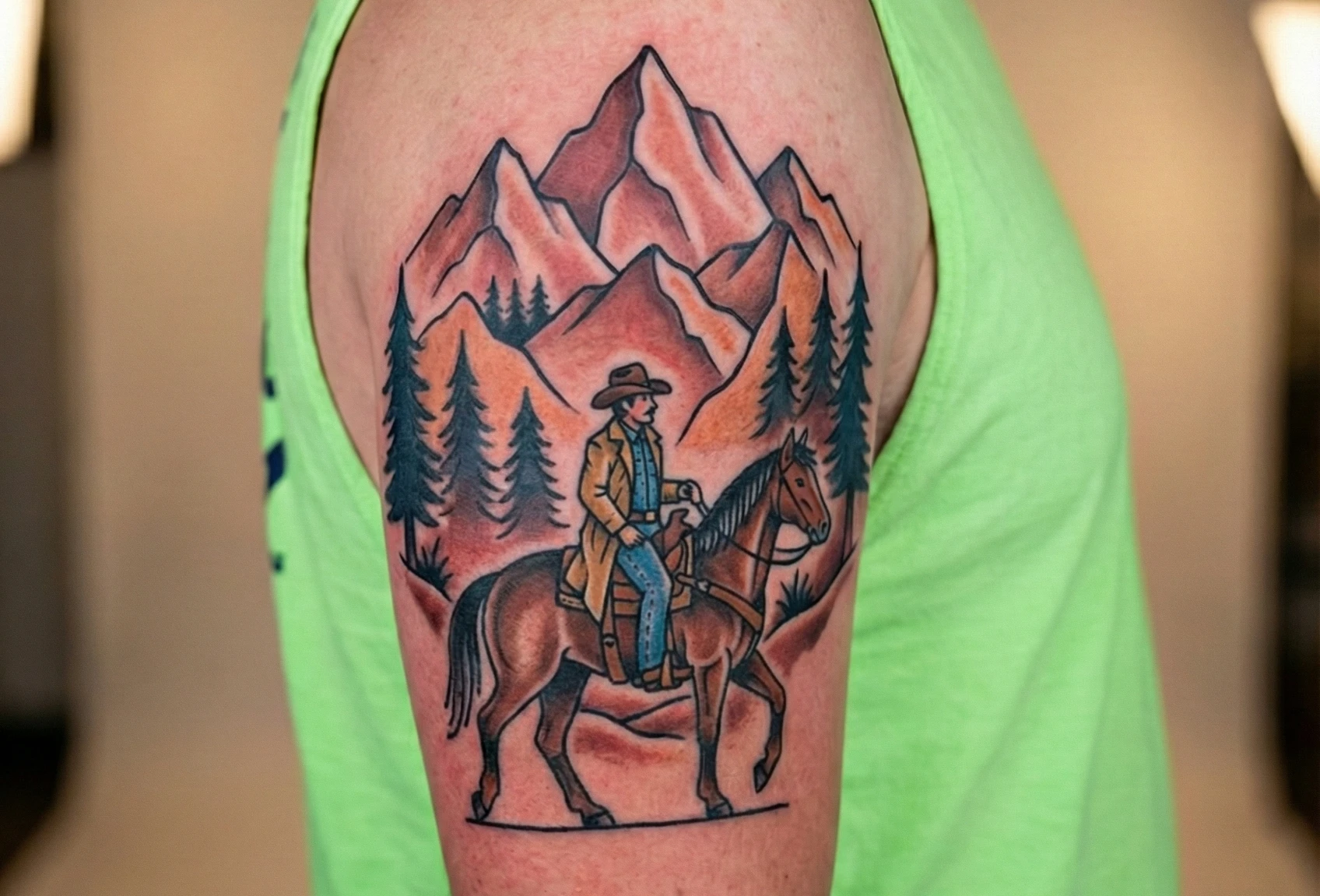
The American cowboy represents freedom, grit, and adventure. These lone riders tamed the frontier with nothing but skill, courage, and an unbreakable spirit. Cowboy tattoos capture that legendary energy in bold, timeless ink.
American Traditional style and cowboy culture share the same roots. Both emerged from the same era of American history.
The bold lines and vintage colors feel authentic to the Old West aesthetic.
From rugged portraits to full Western scenes, cowboy tattoos offer something for everyone who respects the code of the range. These designs honor a way of life that shaped a nation and still inspires wanderers today.
1. Classic Cowboy Portrait Tattoo
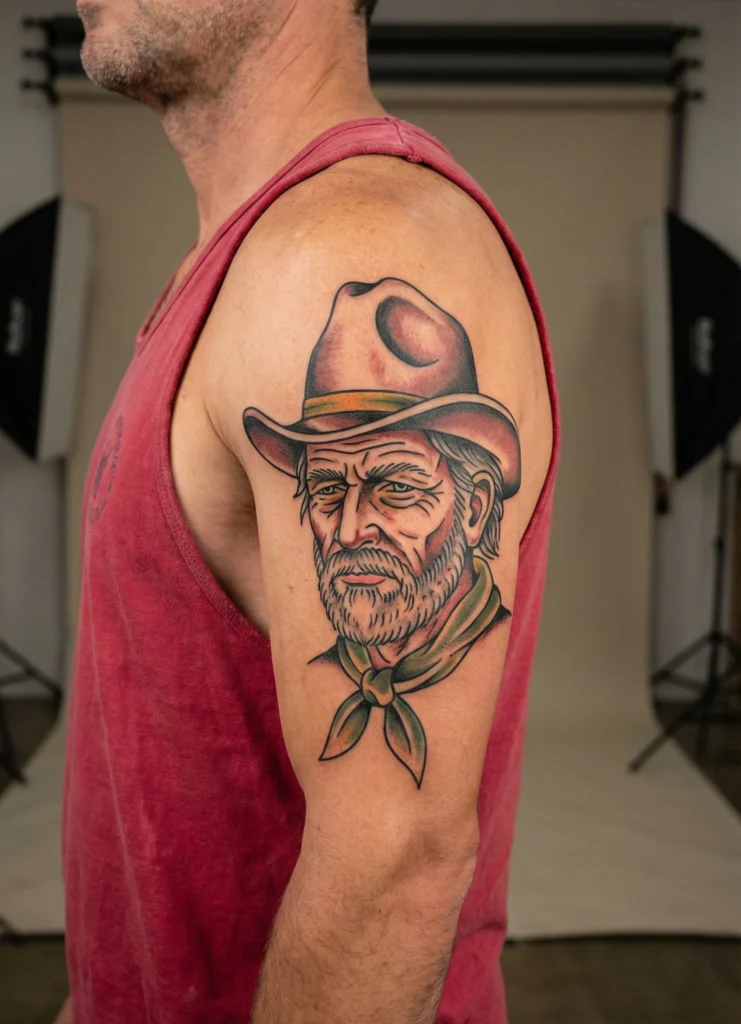
The weathered face tells a thousand stories. A classic cowboy portrait shows hard-earned lines, determined eyes, and that unmistakable frontier toughness. He’s seen it all and survived to tell the tale.
Traditional portraiture captures character through simplified features. Strong jaw, squinting eyes from years under the sun, maybe a few days of stubble. The style focuses on personality over photorealism.
Upper arms, chest, or thighs work perfectly for portraits. The face needs enough space to show those defining features clearly. It’s wearable Western history that commands respect.
2. Cowboy with Wide Brim Hat Tattoo
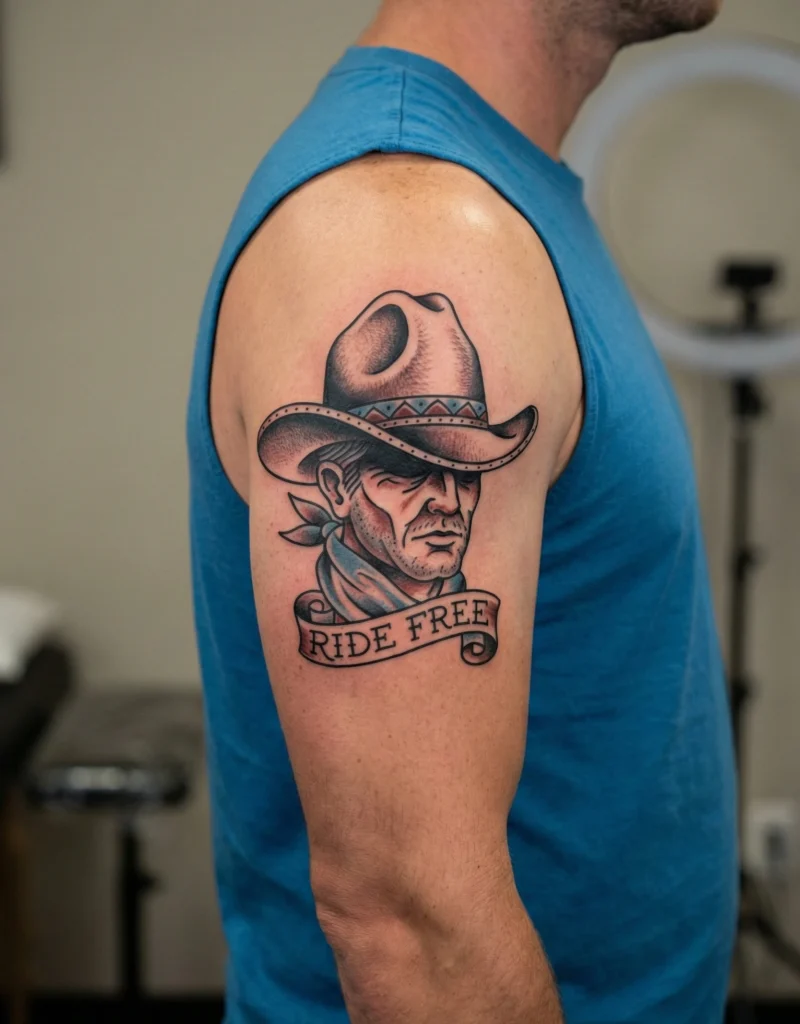
That Stetson is more than fashion. A wide-brimmed cowboy hat shades the eyes, shows status, and creates an instantly recognizable silhouette. It’s the crown of the range worn with earned pride.
The hat’s shadow adds natural drama to any design. Positioned low over the eyes, it creates mystery. Tipped back shows confidence and openness. The brim’s curve provides beautiful compositional lines.
- Weathered felt texture shows character
- Hatband details personalize the design
- Shadow across the face adds depth
- Different angles convey different attitudes
This element elevates any cowboy design from good to iconic. Medium to large sizes let the hat details shine through traditional bold line work.
3. Cowboy Riding Horse Tattoo
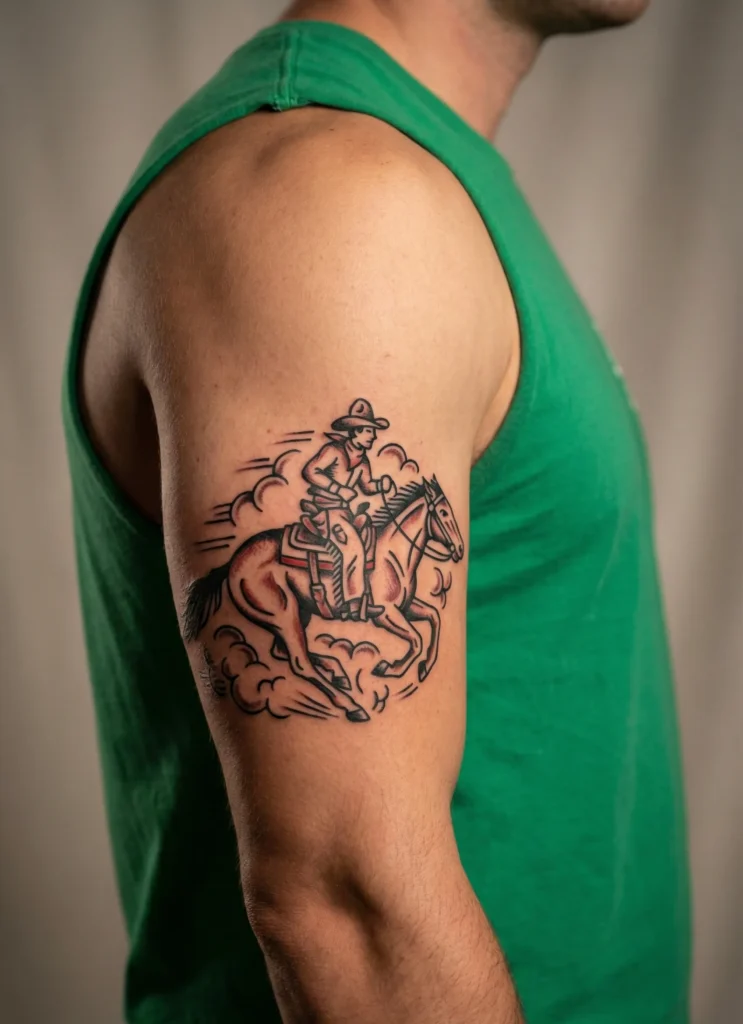
Motion and power combined. A cowboy on horseback captures the essence of frontier life. Man and animal working as one unit, crossing impossible terrain with skill and determination.
Traditional horse anatomy uses bold, simplified muscle groups. Your cowboy sits tall in the saddle, reins in hand, completely in control. Dust clouds or motion lines add energy to the scene.
This design needs serious real estate. Back, thigh, or outer arm placements accommodate the horizontal composition. The movement creates dynamic energy that brings the whole piece to life.
4. Cowboy with Lasso Tattoo
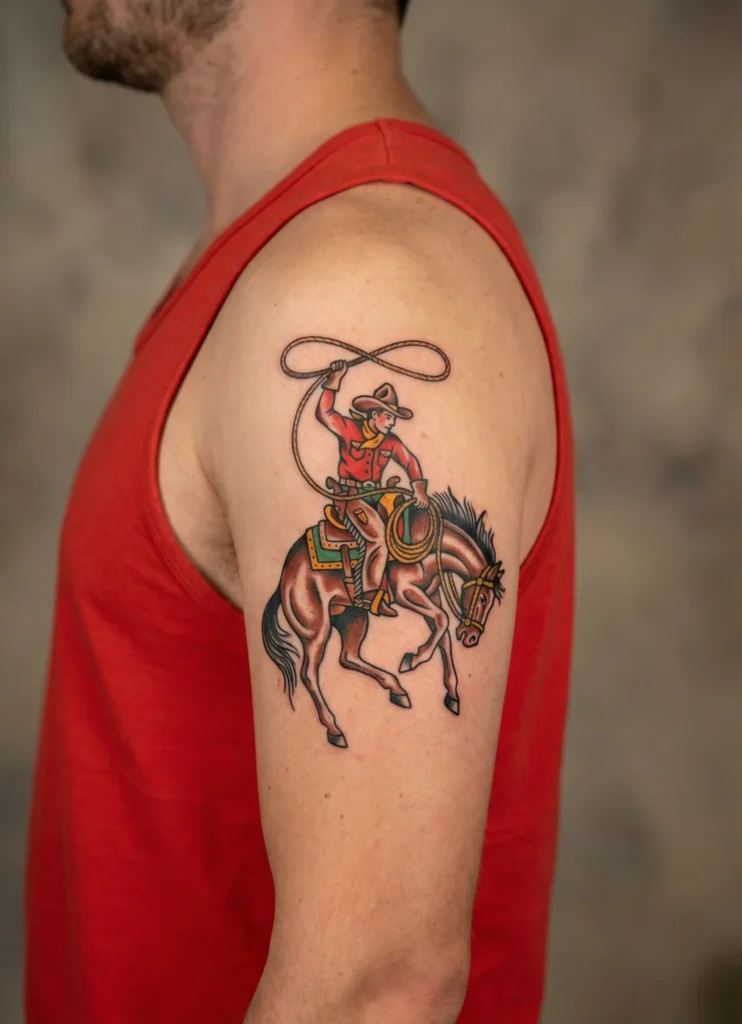
Skills on display. A rope twirling overhead or coiled in hand shows cowboy expertise. It’s functional art that represents the working side of Western life beyond Hollywood romance.
The lasso creates beautiful circular shapes and flowing lines. It can frame the cowboy’s portrait, add movement to a full-body design, or stand as its own focal element. Traditional rope texture reads clearly in bold ink.
- Spinning lasso adds circular motion
- Coiled rope shows preparedness
- Can incorporate the rope into larger compositions
- Works in various sizes and placements
Medium designs showcase this concept well. The rope provides natural framing that makes the composition self-contained. It’s authentic Western imagery with visual appeal.
5. Cowboy with Revolver Tattoo
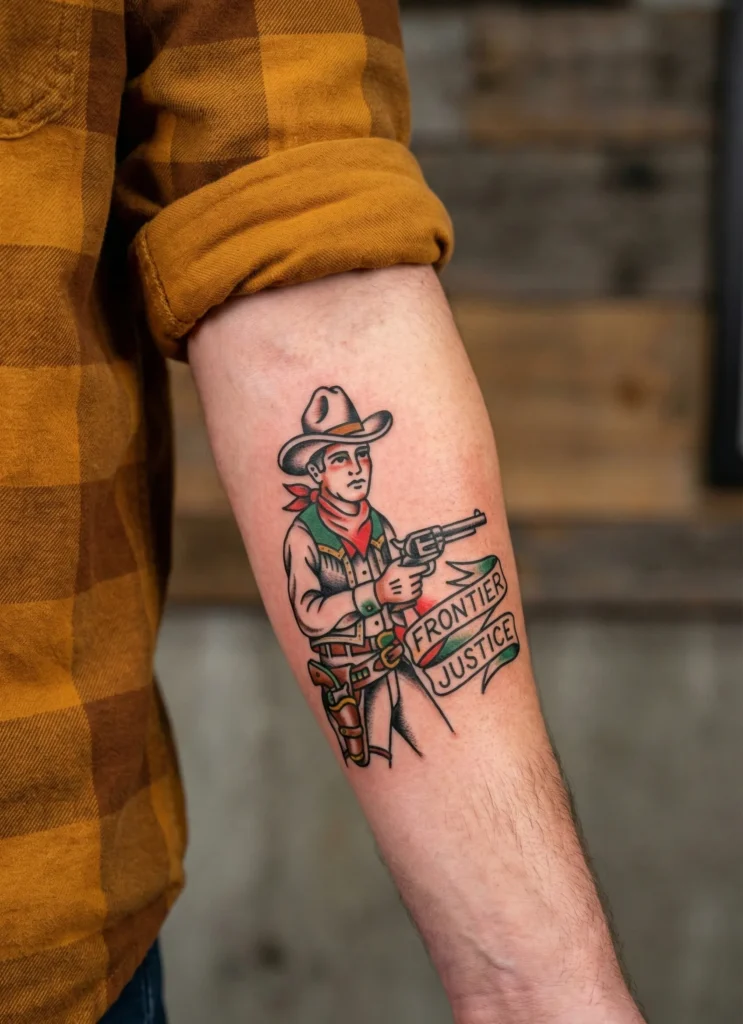
The gun that won the West. A revolver holstered on the hip or held ready represents frontier justice and self-reliance. Your cowboy doesn’t look for trouble, but he’s always prepared.
Traditional gun work is clean and iconic. Six-shooter details, worn leather holster, maybe a gun belt with ammunition loops. The weapon adds edge and authenticity to any cowboy design.
| Gun Element | Design Impact | Symbolism |
| Holstered Revolver | Ready confidence | Prepared, not aggressive |
| Drawn Gun | Active confrontation | Standing ground |
| Spinning Revolver | Showmanship | Skill, flair |
| Double Guns | Serious business | Maximum frontier authority |
This works anywhere from small to large scale. The revolver adds that authentic cowboy element that separates your design from generic Western imagery.
6. Cowboy and Desert Sunset Tattoo
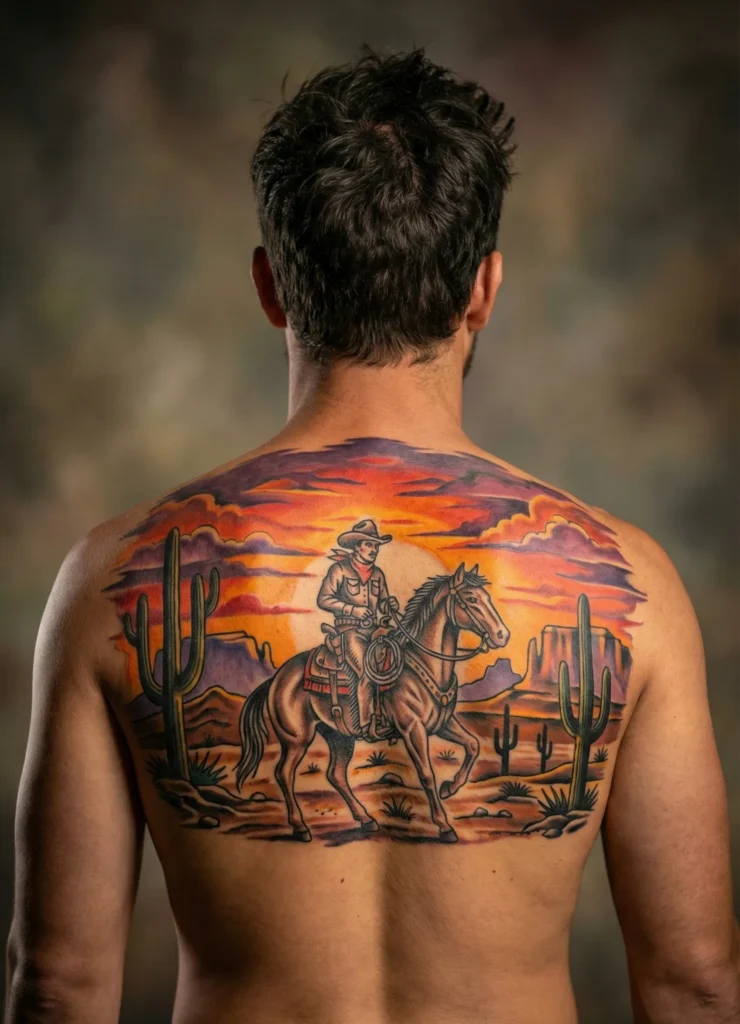
The landscape becomes part of the story. Desert cacti, rolling mesas, and a blazing sunset create authentic Western atmosphere. Your cowboy walks or rides through this harsh, beautiful environment.
Traditional sunset colors are bold and saturated. Orange, red, yellow, and purple skies create drama without complex shading. Silhouetted cacti and distant mountains layer the composition perfectly.
Larger pieces let scenes breathe properly. Thigh, back, or upper arm placements accommodate multiple elements. The cowboy and environment work together to tell a complete frontier story.
7. Cowboy Forearm Tattoo
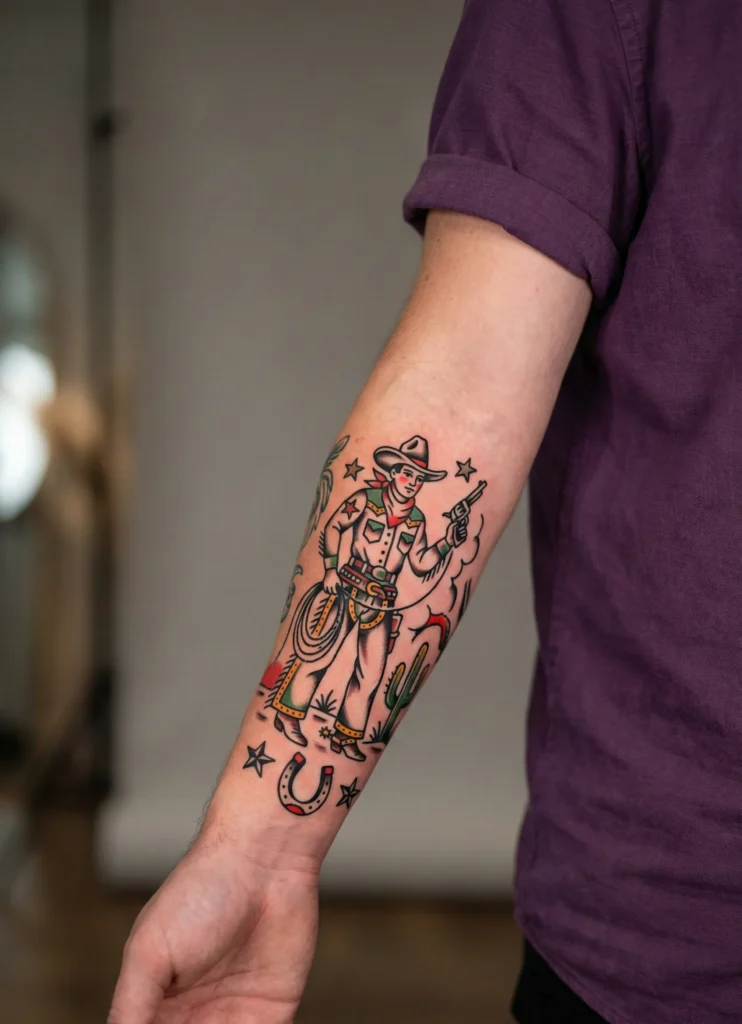
Prime visibility meets classic placement. Your forearm provides perfect vertical space for standing cowboy figures or portrait designs. It’s bold, visible, and shows off traditional line work beautifully.
The natural muscle contours add dimension to flat designs. A full cowboy figure fits from wrist to elbow, or a detailed portrait centers on the wider part of the forearm. Traditional high contrast makes these designs pop.
- Inner forearm offers flatter canvas
- Outer forearm displays to others
- Vertical compositions work naturally
- Can extend into larger sleeve designs
You’ll see this tattoo every single day. Choose imagery that represents your values and inspires your journey. It’s wearable Western philosophy on your arm.
8. Cowboy Back Piece Tattoo
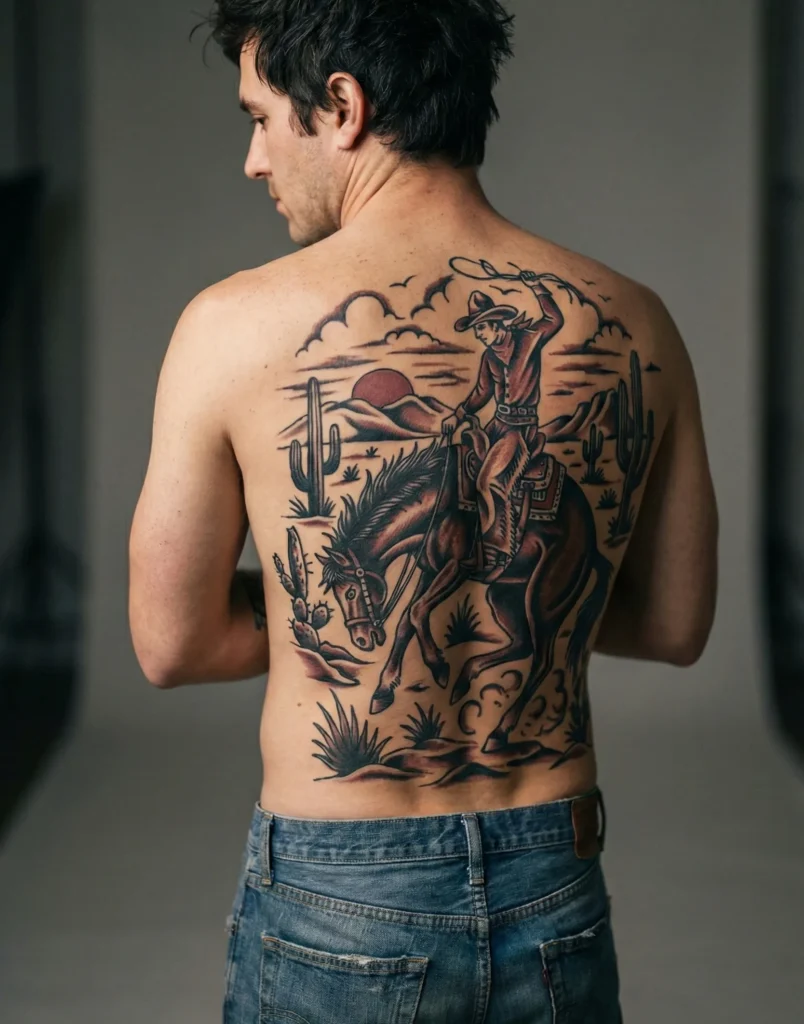
Maximum canvas for maximum impact. A full back cowboy piece allows for elaborate scenes, large-scale figures, or multiple Western elements combined. It’s the ultimate statement in traditional Western tattooing.
Back pieces can span shoulder to shoulder or run vertically down the spine. A cowboy on horseback riding across your shoulders, a full sunset scene, or a massive portrait that dominates the space. Traditional style keeps even huge pieces clean and readable.
The back’s flat surface is perfect for complex compositions. Include cattle, mountains, prairies, or other cowboys. It’s gallery space for your Western masterpiece.
- Multiple sessions required
- Consider body’s natural symmetry
- Can incorporate existing tattoos
- Ultimate collector’s canvas
This is serious commitment to the cowboy aesthetic. The scale and complexity create museum-quality wearable art that turns heads.
9. Cowboy with Bandana Tattoo
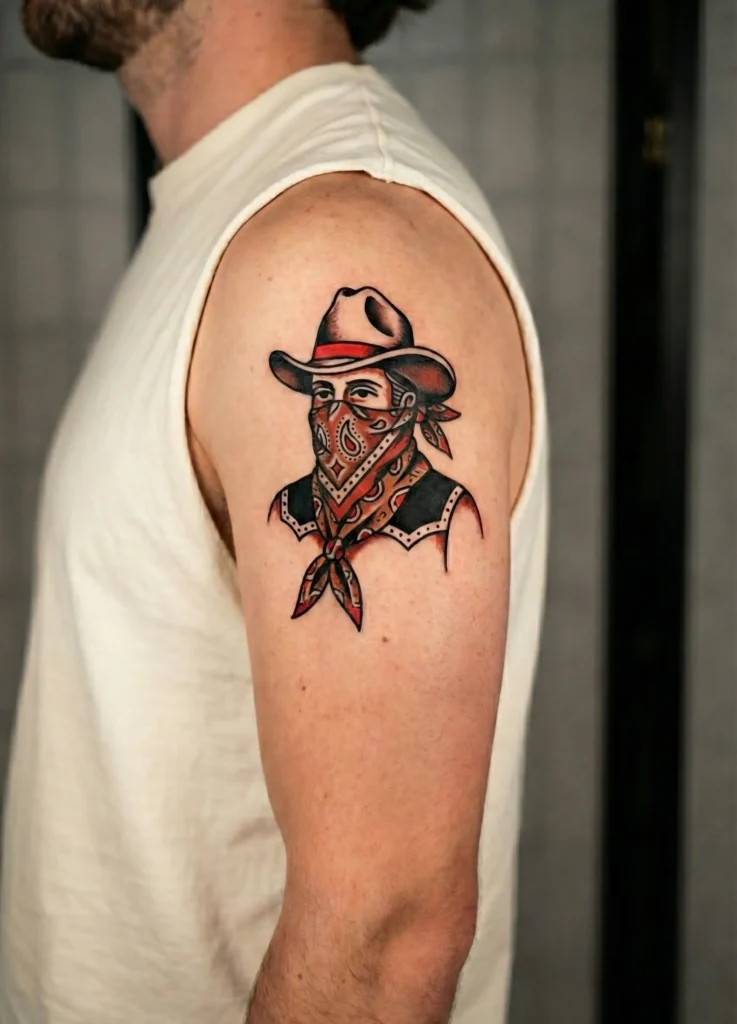
Function meets frontier style. A bandana around the neck, tied across the face, or tucked into the shirt collar adds authentic cowboy detail. It protected against dust, sun, and identification when needed.
Traditional paisley patterns look incredible in bold ink. Red is classic Western, but blues, blacks, or earth tones all work. The fabric creates flowing lines and adds color opportunities to the design.
- Neck-tied shows classic cowboy style
- Face-covering adds outlaw mystique
- Hanging from pocket creates casual detail
- Pattern details showcase traditional technique
This detail elevates simple cowboy portraits into authentic period pieces. It shows attention to real Western gear beyond just the hat and boots.
10. Cowboy and Longhorn Skull Tattoo
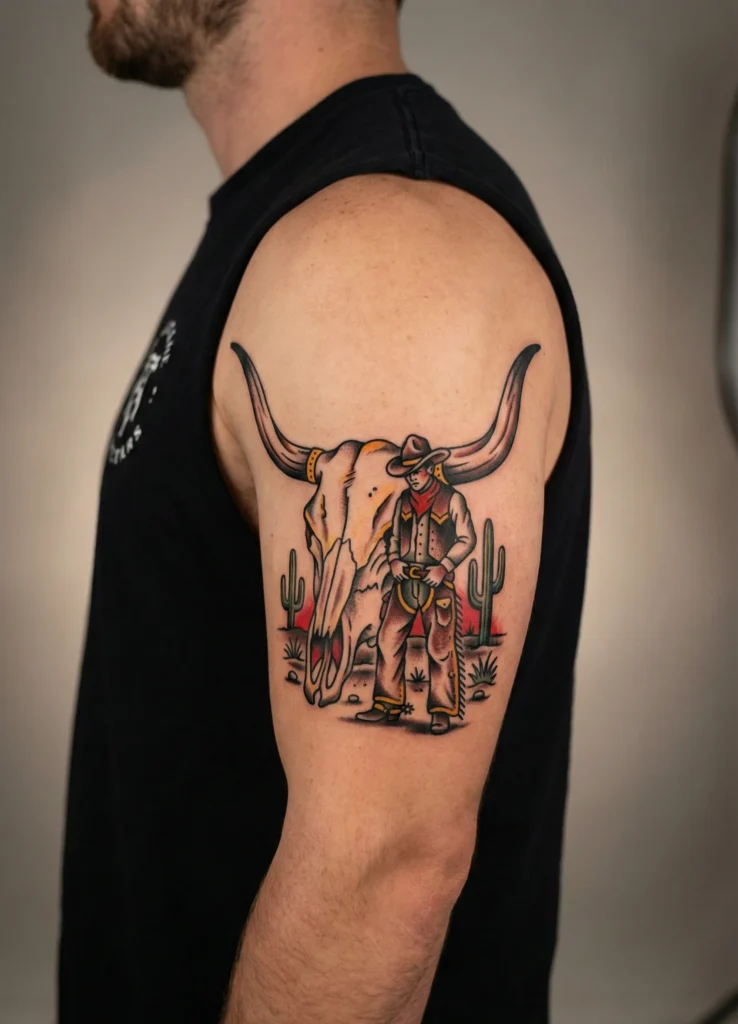
Death and the West go hand in hand. A bleached longhorn skull represents the harsh realities of frontier life. Paired with your cowboy, it’s pure memento mori with Western flavor.
Traditional skull work uses simplified bone structure. The longhorns create dramatic horizontal lines that balance vertical cowboy elements. Sun-bleached white against bold blacks creates natural contrast.
- Skull can sit at cowboy’s feet
- Horns frame the composition
- Desert floor setting feels authentic
- Represents survival and mortality
Medium to large designs handle both elements well. Thigh, upper arm, or back placements give proper space. It’s Western imagery with philosophical depth about life’s temporary nature.
11. Cowboy Sitting by Campfire Tattoo
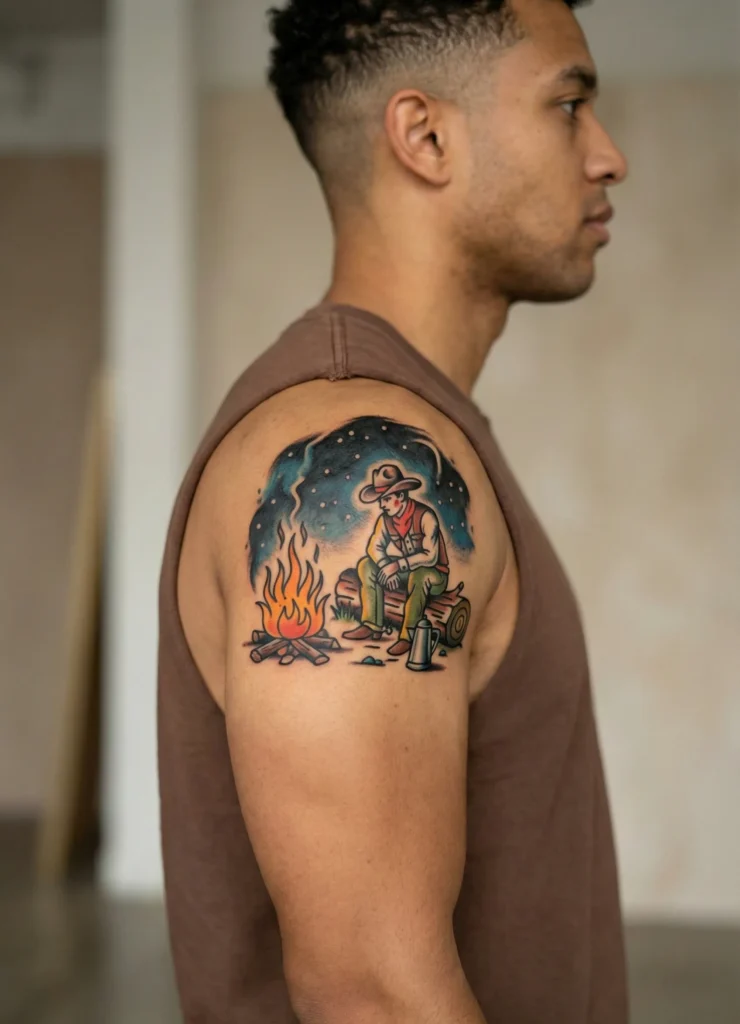
The quiet moments tell their own stories. A cowboy resting by his campfire after a long day shows the contemplative side of Western life. It’s less about action and more about solitude and reflection.
The fire provides a natural light source and color opportunity. Orange and yellow flames contrast with night blues and blacks. Your cowboy sits with coffee, gazing at stars, or tending the fire. It’s peaceful frontier existence.
This design works on thighs, ribs, or upper arms. The horizontal composition of sitting figure and fire creates balance. Add a bedroll, coffee pot, or distant horse for extra detail.
- Campfire creates warm color focal point
- Sitting pose shows relaxed moment
- Night sky adds atmospheric depth
- Smoke rising adds vertical movement
It’s Western life beyond the shoot-outs and cattle drives. The design celebrates the solitary peace that drew men to the frontier in the first place.
12. Cowboy and Western Banner Tattoo
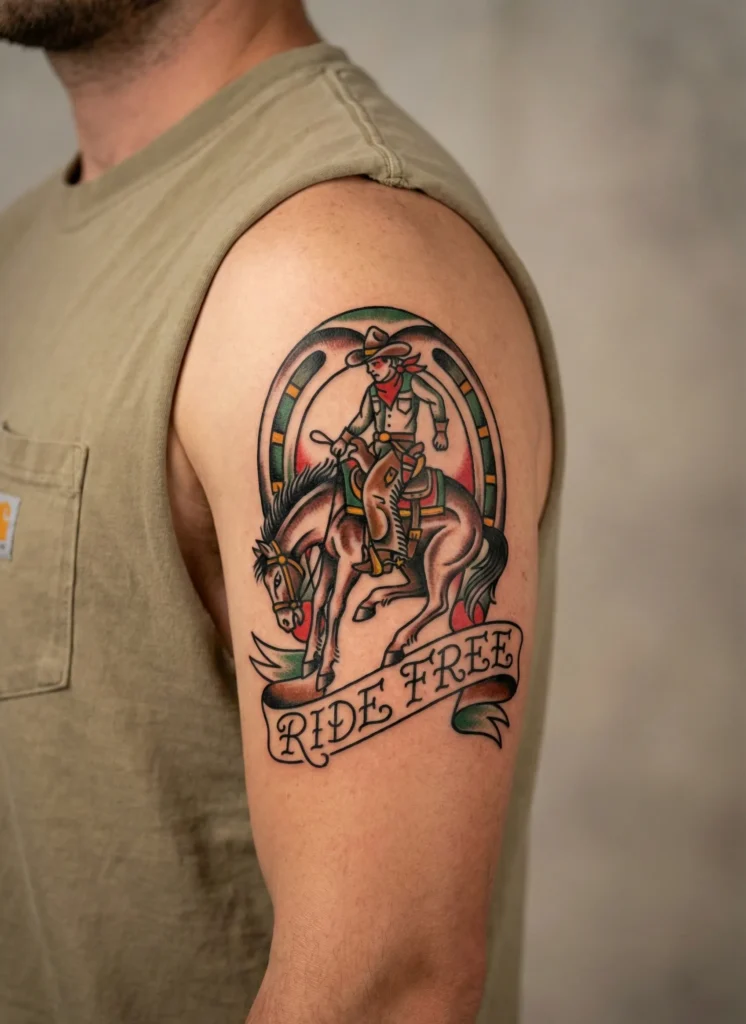
Personal mottos meet classic imagery. Traditional banner ribbons flowing beneath or around your cowboy add customization. “Ride Free,” “Never Settle,” or “Own Your Destiny” become part of the design.
The banner integrates seamlessly with traditional composition. It can wrap around design elements, flow from the cowboy’s hand, or ribbon across the bottom. Western script fonts match the aesthetic perfectly.
- Choose words that define your path
- Keep text readable at scale
- Banner adds compositional balance
- Makes the design uniquely yours
This combination offers classic Western imagery with personal meaning. The cowboy represents the archetype while your words make it specifically about your journey.
13. Cowboy in Dust Storm Scene
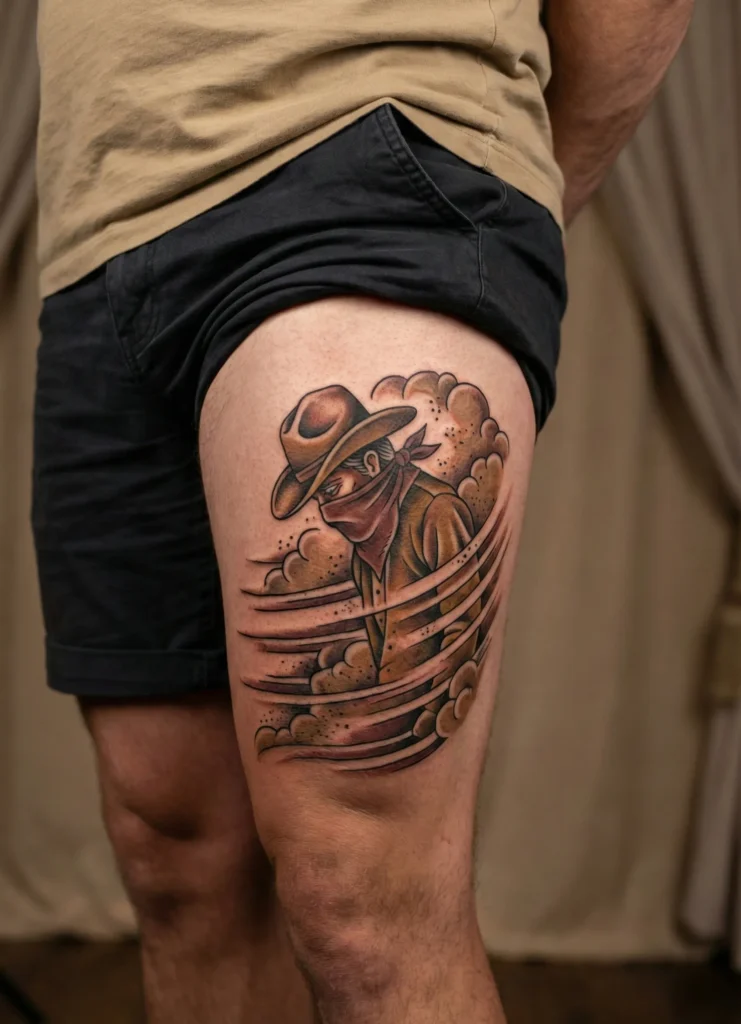
Nature’s fury captured in ink. A cowboy bracing against a dust storm shows determination against impossible odds. It’s man versus environment in the harshest conditions imaginable.
Traditional techniques handle atmospheric effects through line work and limited shading. Dust clouds swirl around your cowboy as he pushes forward. His hat pulled low, bandana up, pure grit on display.
- Horizontal wind lines create movement
- Dust obscures background details naturally
- Cowboy becomes the clear focal point
- Shows struggle and perseverance
Larger pieces showcase this drama best. The storm needs space to feel overwhelming while your cowboy stands defiant. It’s visual storytelling about facing life’s hardest challenges head-on.
14. Cowboy and Galloping Horse Tattoo
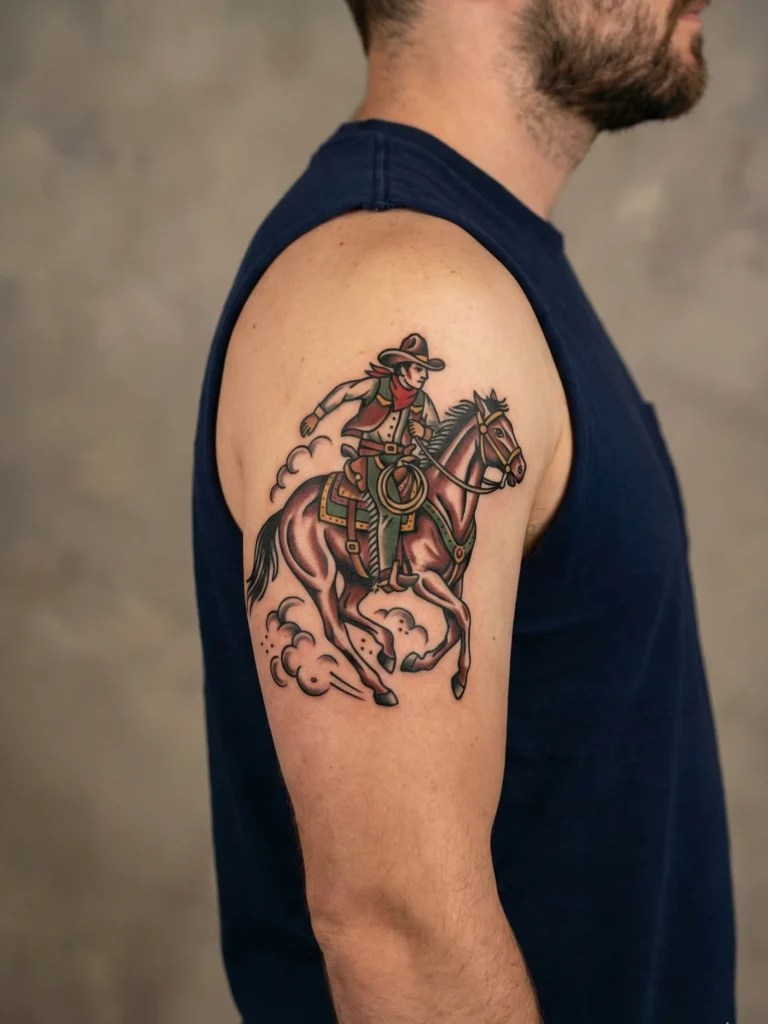
Pure speed and power. A cowboy on a galloping horse captures maximum energy and movement. The horse’s hooves barely touch ground, mane flying, muscles rippling with explosive force.
Traditional dynamic poses use exaggerated angles and flowing lines. Your cowboy leans into the gallop, becoming one with his mount. Dust clouds trail behind showing the speed. It’s action frozen in time.
| Composition | Visual Effect | Best Placement |
| Side Profile | Classic, clear | Outer arm, thigh |
| Three-Quarter View | Dimensional, dynamic | Back, chest |
| Low Angle | Heroic, powerful | Ribs, calf |
| Overhead View | Unique perspective | Shoulder, back |
This needs horizontal space to show the full stride. Thigh, back, or outer arm placements work perfectly. It’s Western action that never gets old.
15. Cowboy in Mountain Range Scene
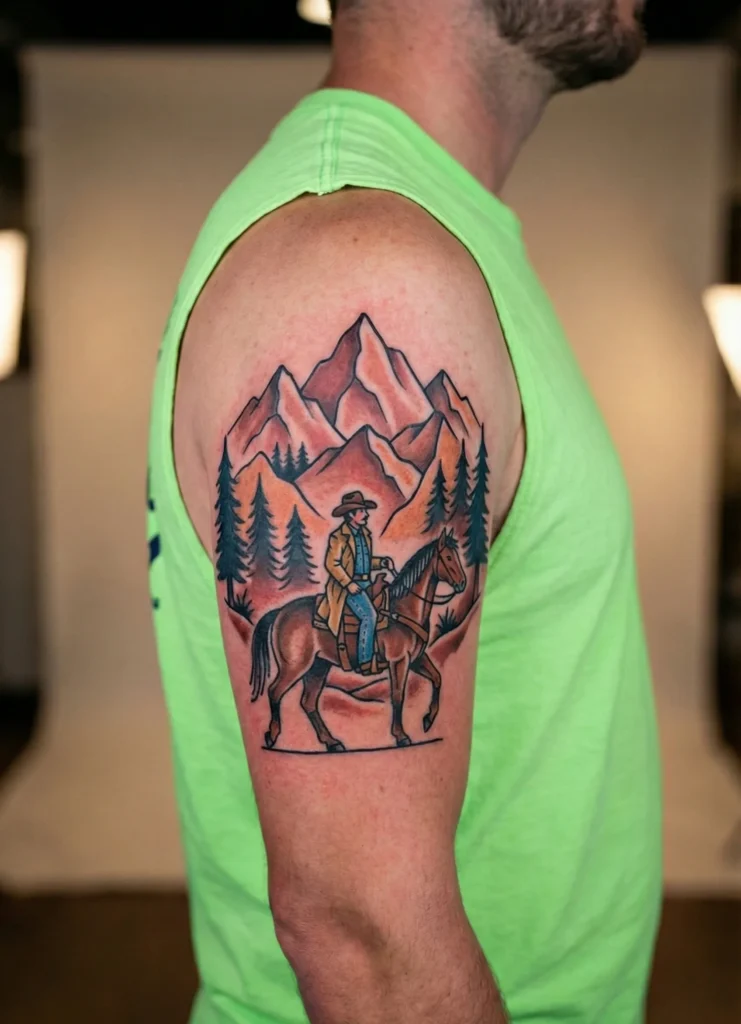
Majestic peaks frame your frontier hero. A cowboy on horseback or standing against distant mountains creates epic scale. The landscape dwarfs the figure but he holds his own through sheer presence.
Traditional mountain silhouettes use bold shapes and layered peaks. Your cowboy in the foreground provides human scale against nature’s grandeur. It’s about respecting the land while claiming your place in it.
- Multiple mountain layers create depth
- Cowboy silhouette against sky works beautifully
- Pine trees add mid-ground interest
- Works in various color schemes
Large canvas areas showcase this composition best. Back pieces or full thighs accommodate the scene’s scope. It’s Western imagery that speaks to wanderlust and respect for wild places.
16. Cowboy with Western Skull Tattoo
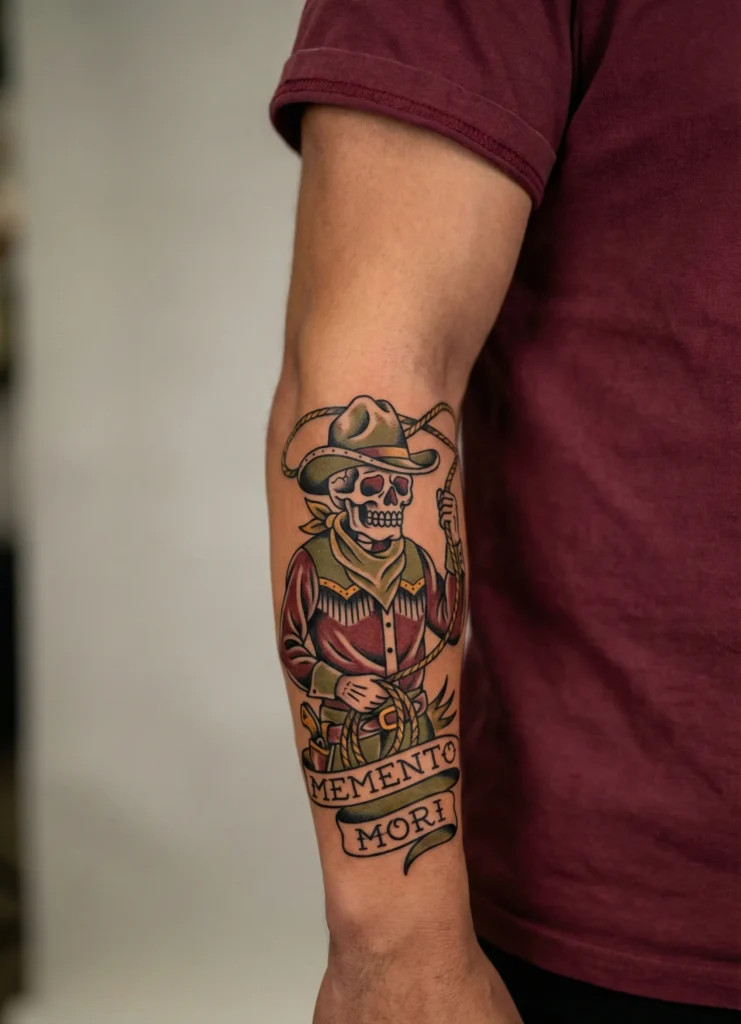
Double the mortality symbolism. A human skull incorporated into your cowboy design adds layers of meaning about life, death, and frontier danger. It’s memento mori with Western authenticity.
The skull can replace the cowboy’s head for surreal impact, sit at his feet like a trophy, or appear as a bandana print. Traditional skull work pairs perfectly with cowboy imagery through shared aesthetic roots.
- Skull with cowboy hat creates iconic hybrid
- Represents mortality on the frontier
- Works in various compositional arrangements
- Appeals to darker Western aesthetics
Medium to large sizes let both elements shine. The combination speaks to people who appreciate Western culture’s relationship with death and danger.
17. Cowboy and Prairie Wind Scene
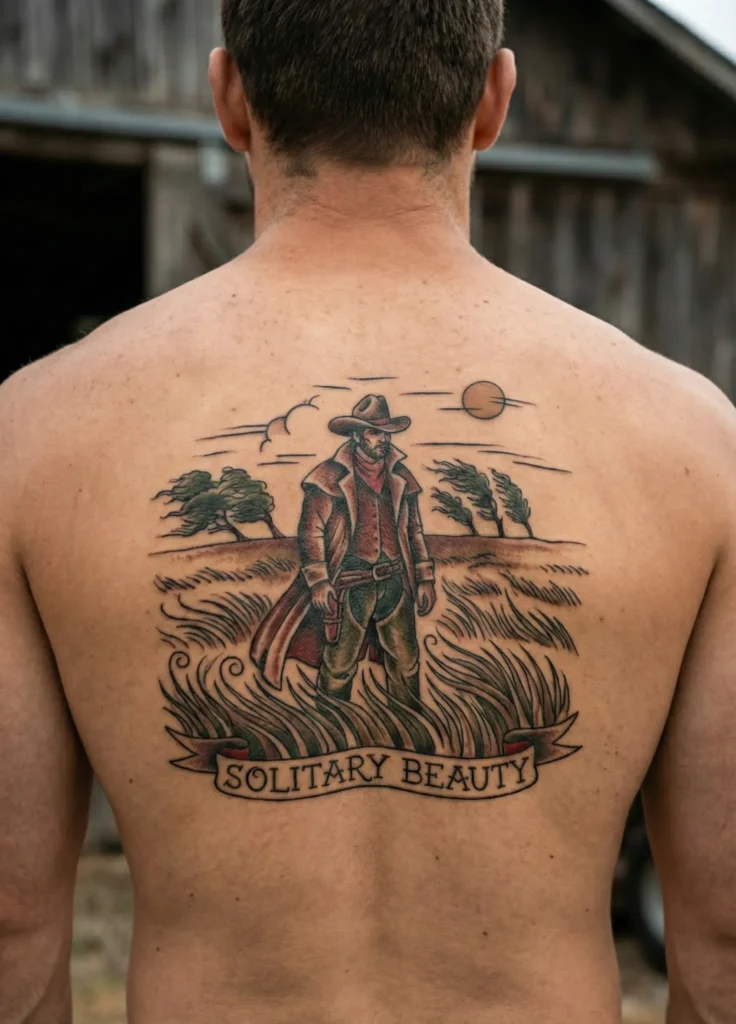
Endless grasslands and open sky. A cowboy standing in tall prairie grass with wind whipping around him shows the solitary beauty of the Great Plains. It’s minimalist Western imagery that focuses on space and atmosphere.
The prairie creates flowing horizontal lines through windblown grass. Your cowboy stands alone, surveying his territory with quiet authority. Traditional techniques handle grass texture and movement through selective line work.
- Wind direction creates unified composition
- Tall grass can partially obscure the figure
- Sky takes up significant design space
- Emphasizes isolation and independence
This works best on larger, flatter areas like thighs or back. The open composition needs room to convey that sense of endless frontier. It’s about freedom, solitude, and claiming your space in the world.
Final Thoughts
American Traditional cowboy tattoos honor the spirit of the Old West through timeless technique. Each design celebrates independence, courage, and the code of the range. From classic portraits to sweeping Western scenes, there’s a cowboy design that speaks to your frontier soul.
These tattoos stand alone beautifully or combine into larger Western-themed collections. The vintage aesthetic connects you to both tattoo history and the legendary cowboy era. Bold lines ensure your ink stays sharp and striking for life.
Which cowboy design calls to your adventurous spirit, and what does the code of the West mean to your personal journey?