Dragons have never gone out of style in tattoo culture. Neo traditional style takes them somewhere deeper with bold linework, layered shading, and colors that feel almost electric on skin.
This isn’t your average flash sheet dragon. These ideas are for people who want something that actually commands attention and carries real visual weight.
1. Coiling Dragon Forearm Wrap
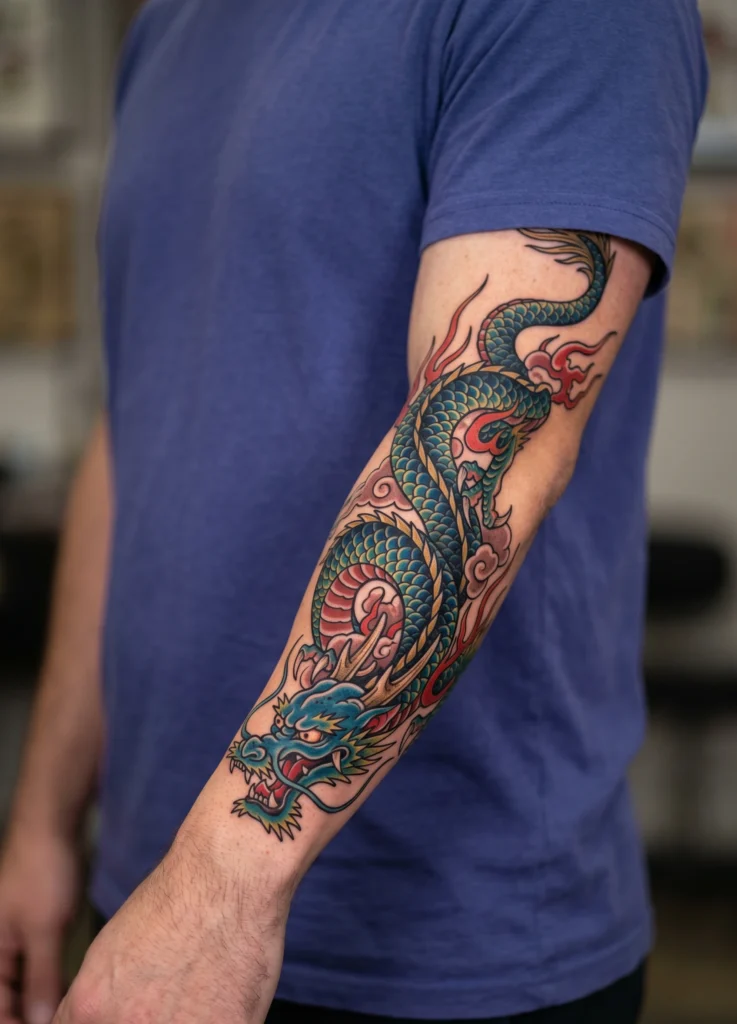
A dragon coiling around the forearm is one of those placements that just makes sense. The natural shape of the arm gives the dragon a body to move around and the design follows your anatomy.
The coil creates movement even when you’re standing still. Every angle someone sees your arm from, they catch a different part of the dragon.
Neo traditional linework on scales across a forearm wrap is genuinely some of the most satisfying tattoo work to look at up close. The detail rewards every second of attention it gets.
2. Dragon Head in Smoke Cloud
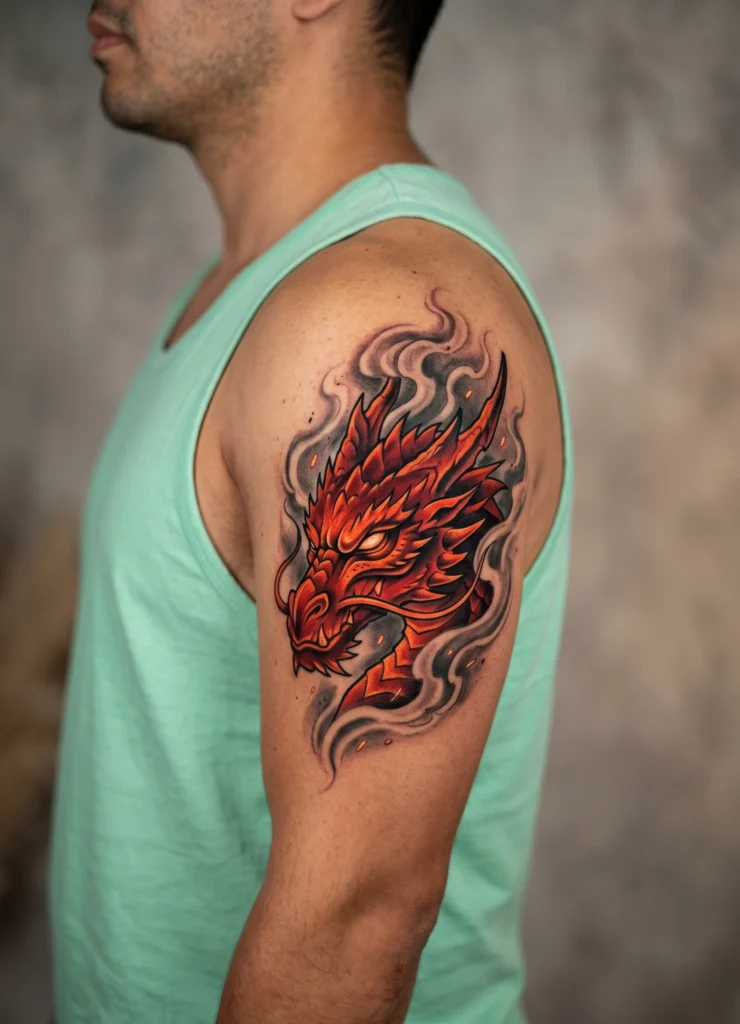
A dragon head emerging through swirling smoke is all about contrast and atmosphere. The soft, wispy smoke against sharp scales and fierce eyes creates instant visual tension.
The smoke gives your artist room to blend and fade while keeping the dragon itself crisp and defined. That push and pull between soft and hard is what makes neo traditional compositions so compelling.
- Deep charcoal and grey smoke with vivid color on the dragon head makes it pop
- Adding faint embers or sparks in the smoke adds depth without clutter
- This works especially well as an upper arm or chest piece
3. Twin Dragons Facing Each Other
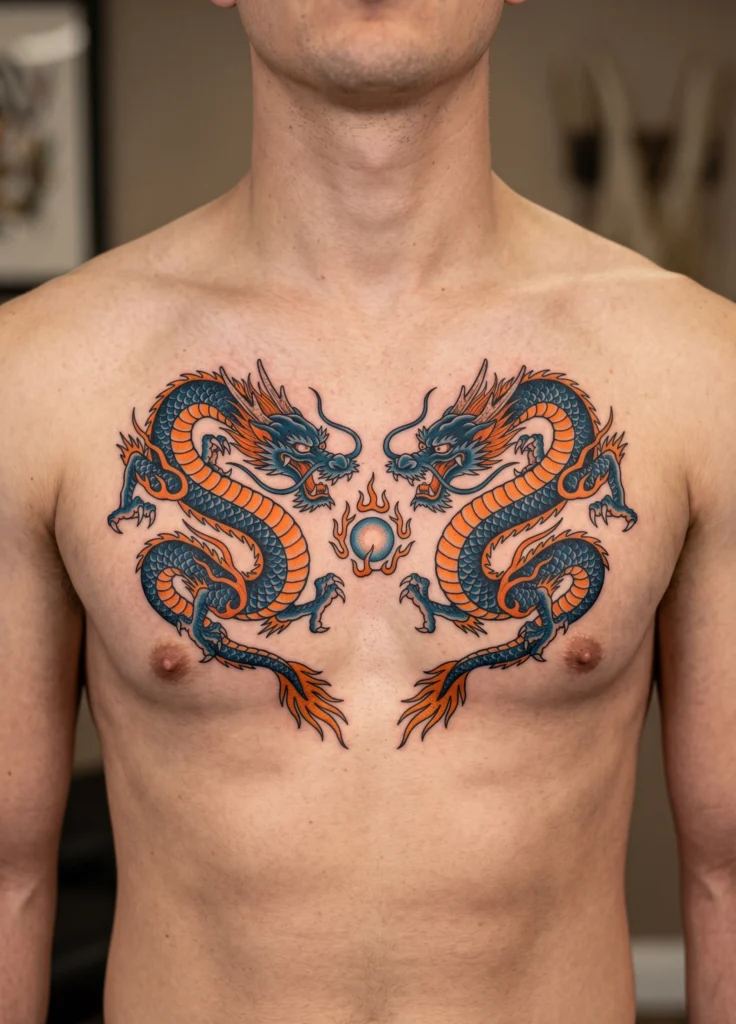
Two dragons facing each other creates perfect symmetry and instant visual drama. It reads as conflict, balance, or duality depending on how your artist approaches the energy between them.
The space between them is as important as the dragons themselves. Whether it’s empty, filled with flames, or a glowing orb, that gap becomes the emotional center of the whole design.
This concept is built for a chest or back placement where the body naturally provides that central axis. The symmetry follows your spine or sternum and feels intentional rather than forced.
4. Dragon Wrapped Around Sword
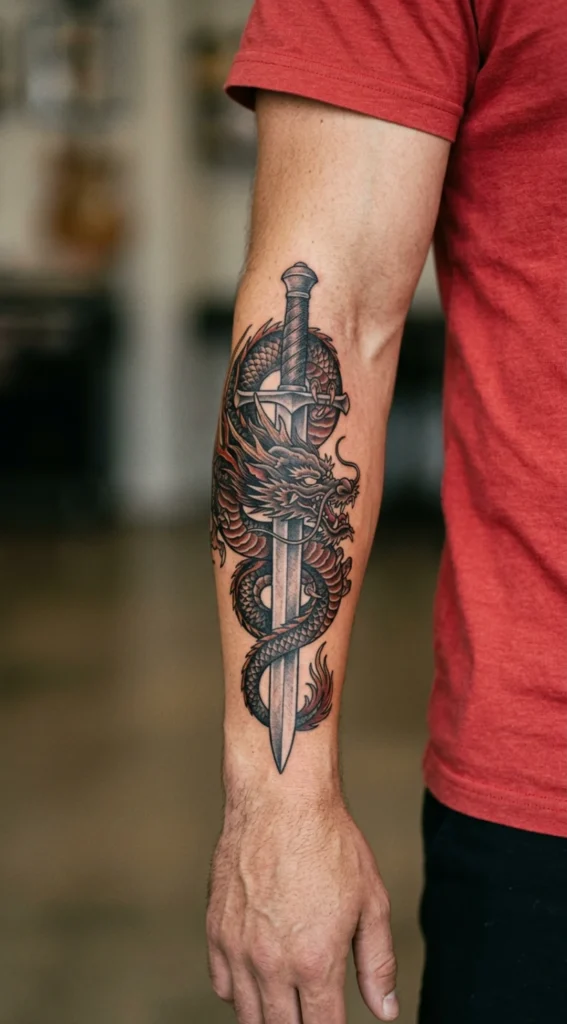
A dragon coiling around a sword is one of those classic combinations that earns its reputation.
The sword gives the dragon a strong vertical structure to work against and the dragon gives the sword a living, breathing energy.
The contrast between cold sharp steel and warm scaled flesh is visually rich. Neo traditional shading on both materials shows serious range from an artist.
This is a strong forearm or calf design where the vertical shape of the sword runs naturally along the limb. The dragon wrapping around it adds dimension to what could otherwise be a flat composition.
5. Long Serpentine Dragon Body Flow
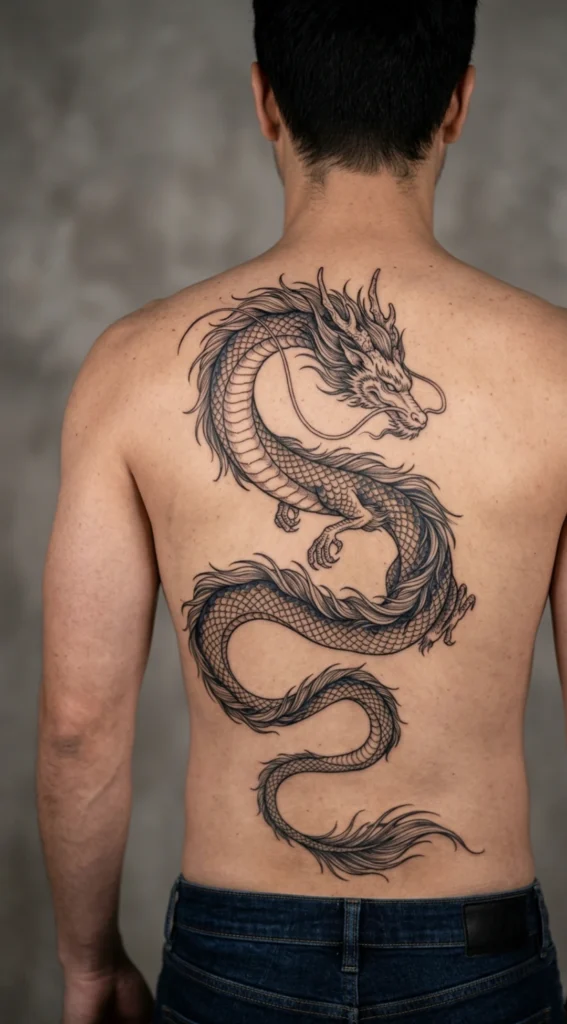
A long serpentine dragon that stretches and curves across a large area is pure movement. It doesn’t need to be aggressive or dramatic, the flow itself is the whole point.
This style leans more into East Asian dragon aesthetics with a slender, elegant body rather than a bulky Western one. The difference in energy is significant and worth deciding on early with your artist.
| Style | Body Shape | Energy | Best Placement |
| East Asian | Slim, serpentine | Fluid, wise, spiritual | Sleeve, back, leg |
| Western | Bulky, winged | Fierce, powerful, dominant | Chest, back, thigh |
| Neo Traditional | Hybrid bold lines | Dark, expressive | Any large area |
A back piece or full leg sleeve gives this design the real estate it needs to fully breathe and move.
6. Dragon Guarding Orb or Pearl
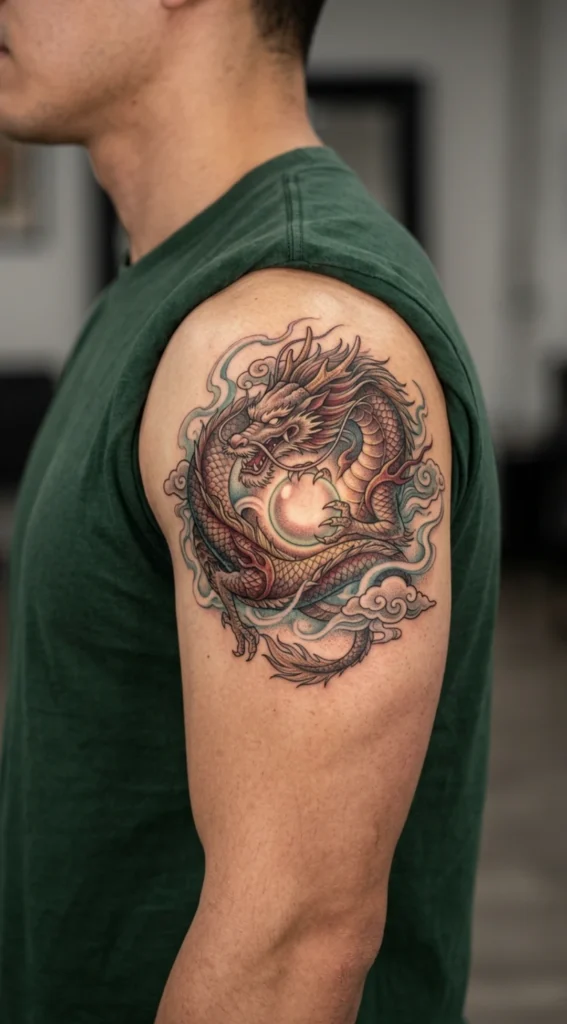
A dragon coiled protectively around a glowing orb or pearl is loaded with symbolism.
In East Asian tradition the pearl represents wisdom, power, and cosmic energy and the dragon pursuing or guarding it is one of the oldest visual stories in the world.
The glowing orb gives your artist a light source to work from across the whole design. Everything around it catches that glow and creates natural depth without forcing it.
This composition works beautifully as a circular or compact piece on the shoulder, thigh, or chest. The dragon naturally wraps the orb into a contained and balanced shape.
7. Dragon Flying Through Clouds
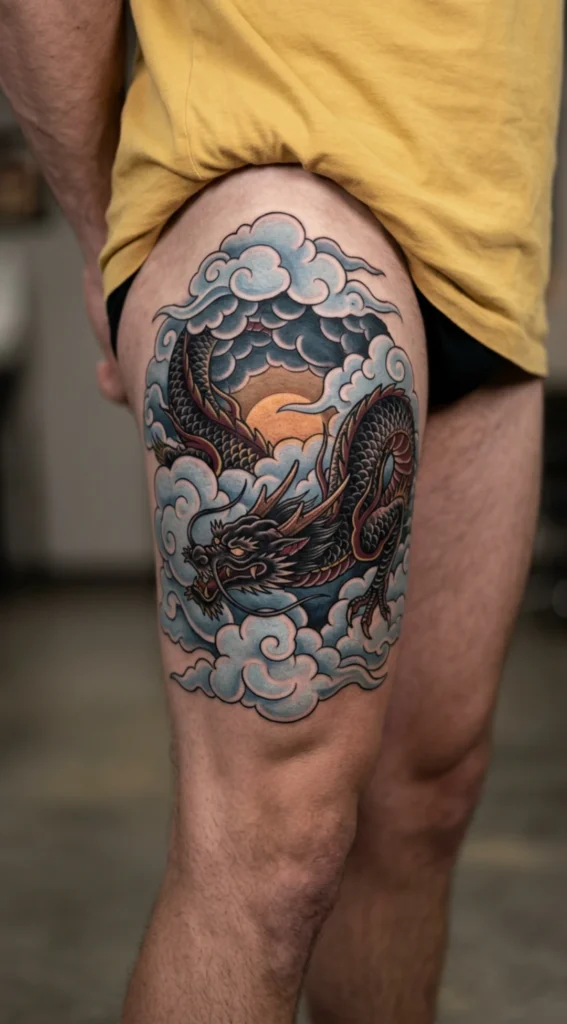
A dragon soaring through layered clouds is expansive and cinematic. The clouds let your artist build an entire atmospheric backdrop that makes the dragon feel genuinely airborne.
Neo traditional clouds have this stylized puffiness that feels both graphic and dimensional. They frame the dragon without competing with it, which is a hard balance to get right.
- Layering lighter clouds in front of darker ones creates real depth
- A setting sun or moon behind the clouds adds color contrast without extra complexity
- This design suits the back, thigh, or a chest panel where scale enhances the flying motion
8. Dragon Skull Head Design
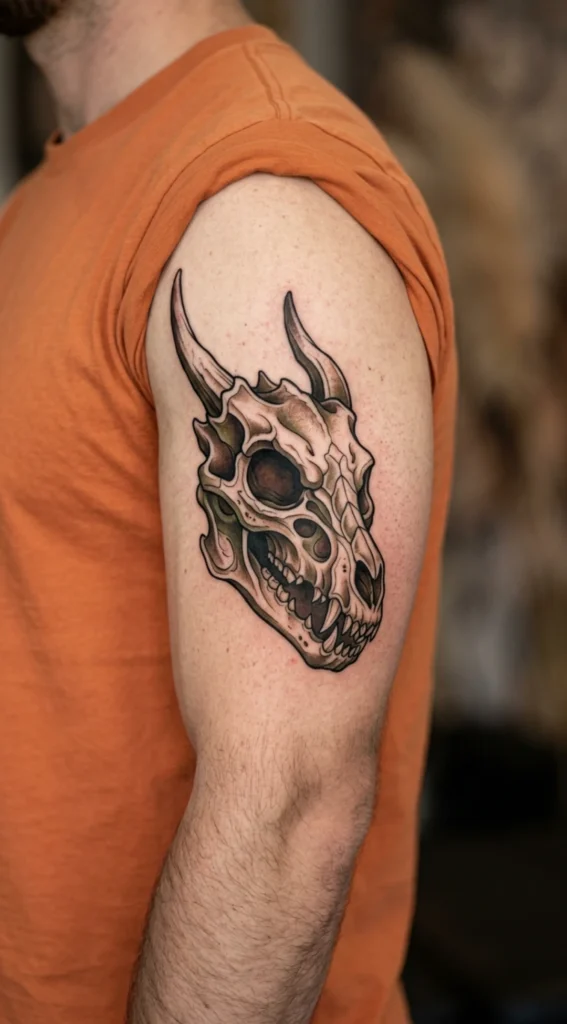
A dragon skull strips everything back to structure and darkness. No scales, no color drama, just bone and shadow and the architecture of something terrifying that used to be alive.
The hollow eye sockets give neo traditional shading a perfect showcase. Deep shadows inside bone cavities look incredible with bold outlining around them.
This works as a standalone statement piece almost anywhere. The skull shape is naturally compact and readable from a distance, which makes smaller placements viable too.
9. Dragon with Cherry Blossom Accents
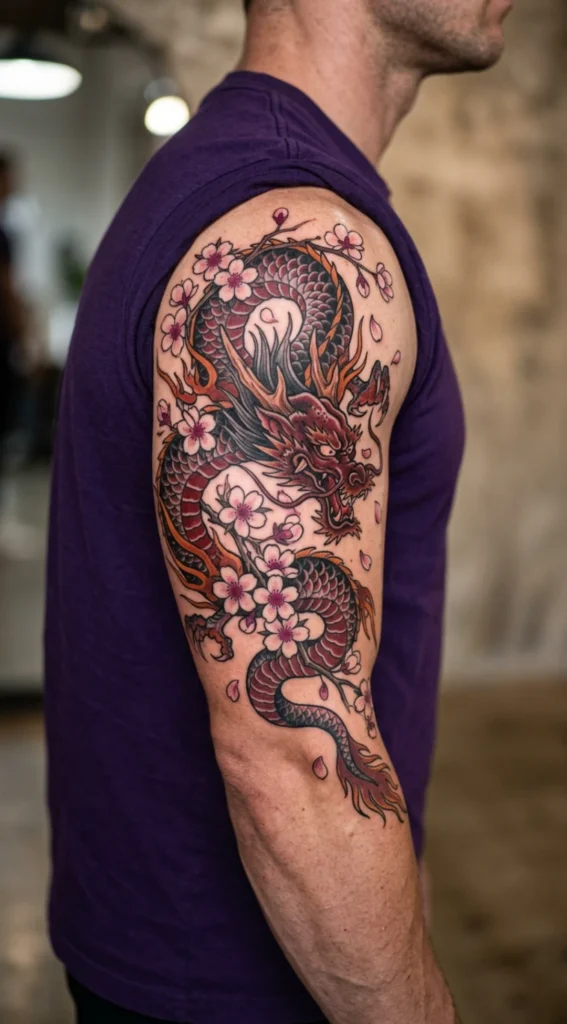
Cherry blossoms around a dragon create this beautiful tension between violence and fragility.
The dragon is ancient power and the blossoms are fleeting beauty and together they say something genuinely interesting.
The soft pink against deep reds and blacks is a color combination that neo traditional handles with real elegance. It never looks soft, it looks intentional.
The blossoms can be falling, growing from a branch the dragon wraps around, or scattered loosely in the background.
Each approach changes the relationship between the two elements and shifts the meaning slightly.
10. Dragon Sleeve Wrap
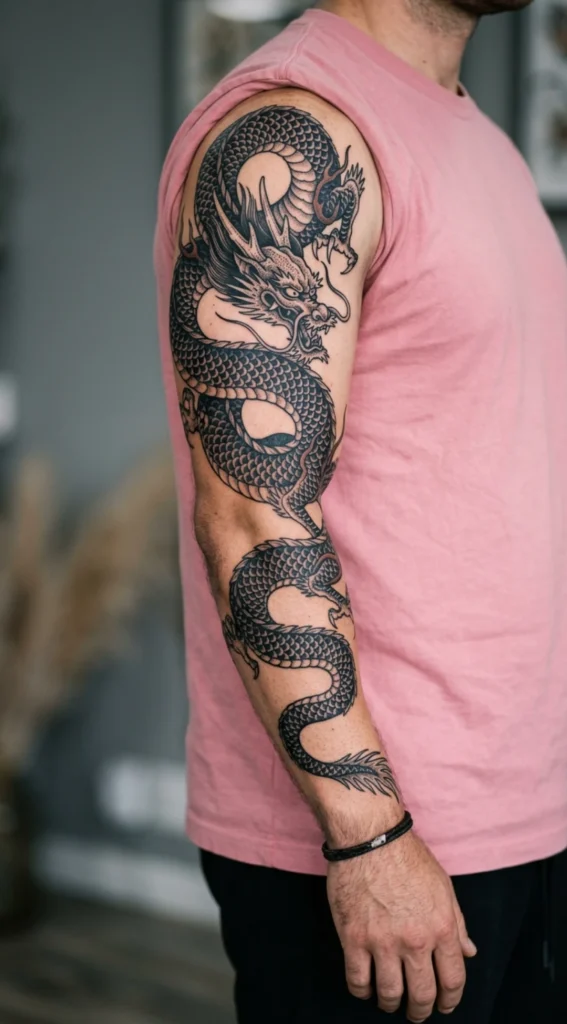
A dragon sleeve in its simplest form is just the dragon moving through space across your arm.
No complex background needed, just strong linework, scale detail, and a composition that uses the arm intelligently.
The challenge with a sleeve is flow. The dragon needs to move with the arm rather than against it and that’s where artist experience really shows in the planning stage.
- Discuss the viewing angle with your artist before finalizing the layout
- A dragon that coils rather than runs straight down reads better from most angles
- Leave negative space strategically, overcrowding a sleeve kills readability
11. Dragon Emerging from Temple Gate
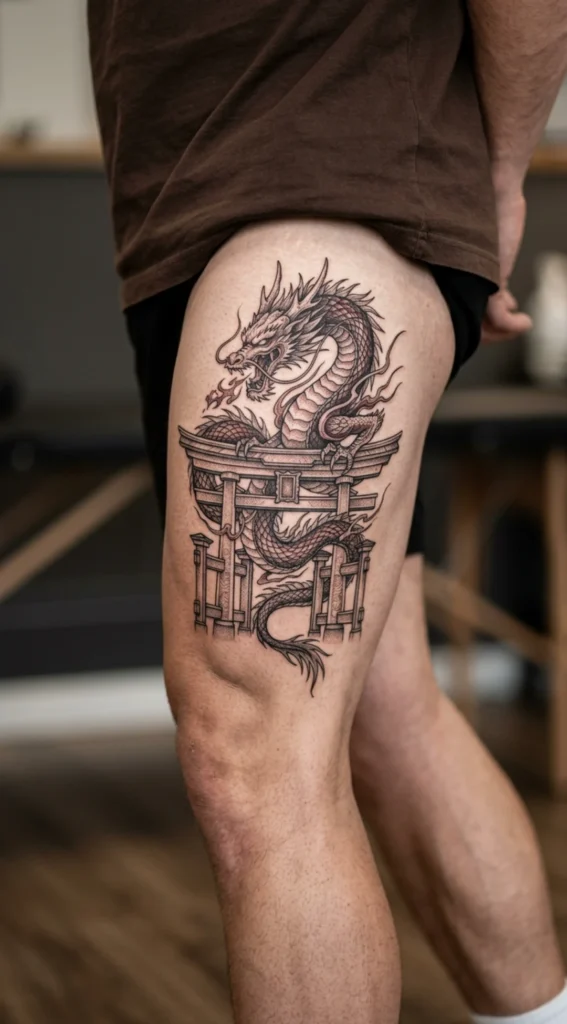
A dragon bursting through or rising above a temple gate combines two heavy symbols into one layered composition.
The temple grounds it in a specific cultural weight while the dragon breaks free from that structure.
The architectural detail of a gate gives your artist hard geometry to contrast against organic dragon scales and movement. That clash of rigid structure and living creature is visually exciting.
This works best as a larger piece where the gate can have enough detail to read properly. A thigh, back, or chest panel gives both elements the space they deserve.
12. Roaring Dragon Head Close Up
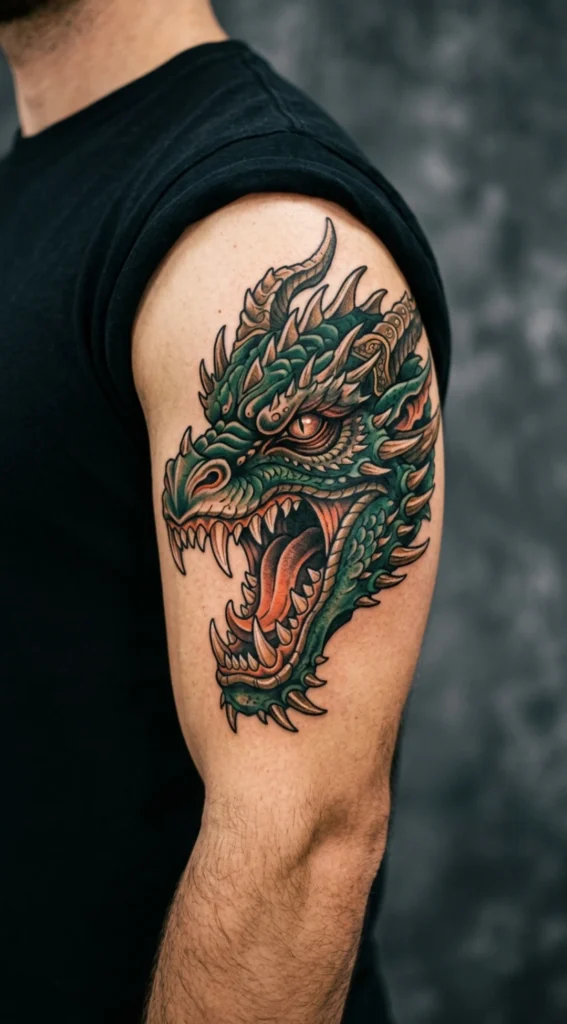
A tight close-up on a roaring dragon head is maximum aggression and detail in minimum space. Open jaw, visible teeth, flared nostrils, the full display of something that does not want to be approached.
Neo traditional style makes dragon faces genuinely terrifying in the best way. The eyes especially carry enormous expressive weight when an artist gives them real attention.
This placement works on the upper arm, knee, or shoulder where the circular or square face composition fits naturally. The roar creates a natural outward energy that suits those placements well.
13. Dragon Wrapped Around Dagger
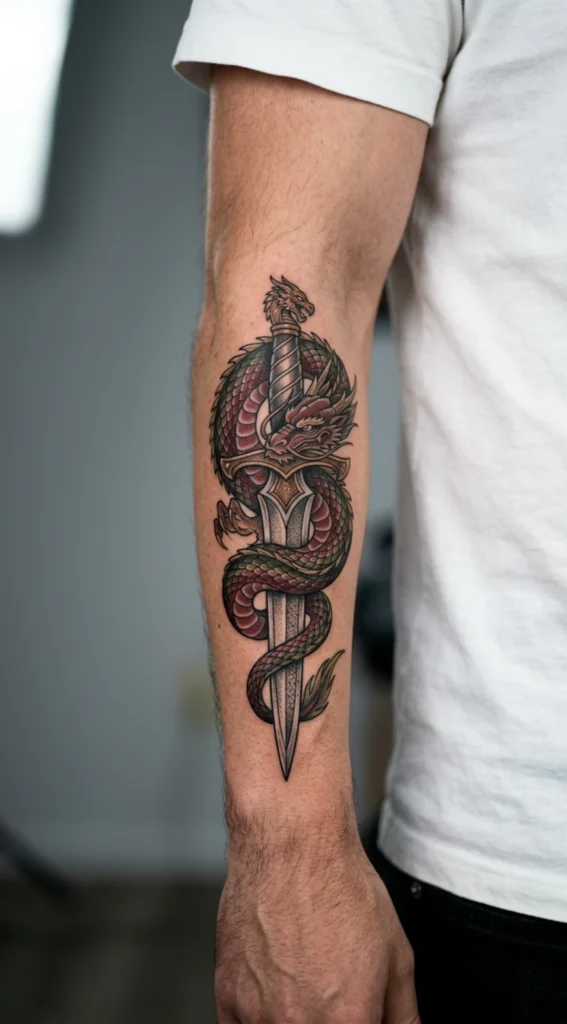
A dragon and dagger combination reads as conflict and control.
The dragon doesn’t just decorate the dagger, it owns it, and that relationship between the creature and the weapon says a lot about the energy of the piece.
The coil of the dragon around the blade gives the dagger visual texture it wouldn’t have alone. Neo traditional shading on both the metal and the scales is a real showcase of range.
| Element Combination | Symbolic Reading |
| Dragon coiled tight | Possession, fierce protection |
| Dragon loosely draped | Casual dominance, effortless power |
| Dragon biting blade | Aggression, danger, dark edge |
| Dragon above hilt | Authority, command, guarding |
A forearm or calf placement suits this best where the dagger’s vertical line runs along the natural length of the limb.
14. Water Dragon with Wave Base
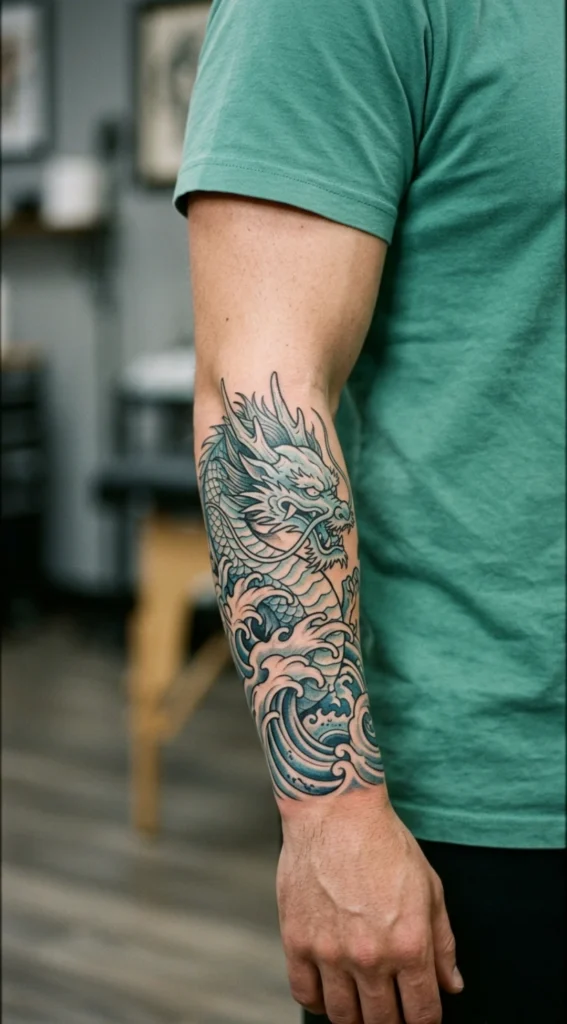
A water dragon rising from crashing waves is elemental and deeply rooted in East Asian mythology. The dragon and the ocean belong together in a way that feels ancient rather than decorative.
The waves give your artist enormous creative freedom with movement and layering. Neo traditional wave work is bold, graphic, and absolutely stunning when it’s done well.
The water dragon tends to be lighter in color, blues, greens, and whites, which creates a cooler palette that feels genuinely aquatic.
It’s a strong contrast from the fire and smoke dragon concepts and stands on its own because of it.
15. Ouroboros Dragon Circle
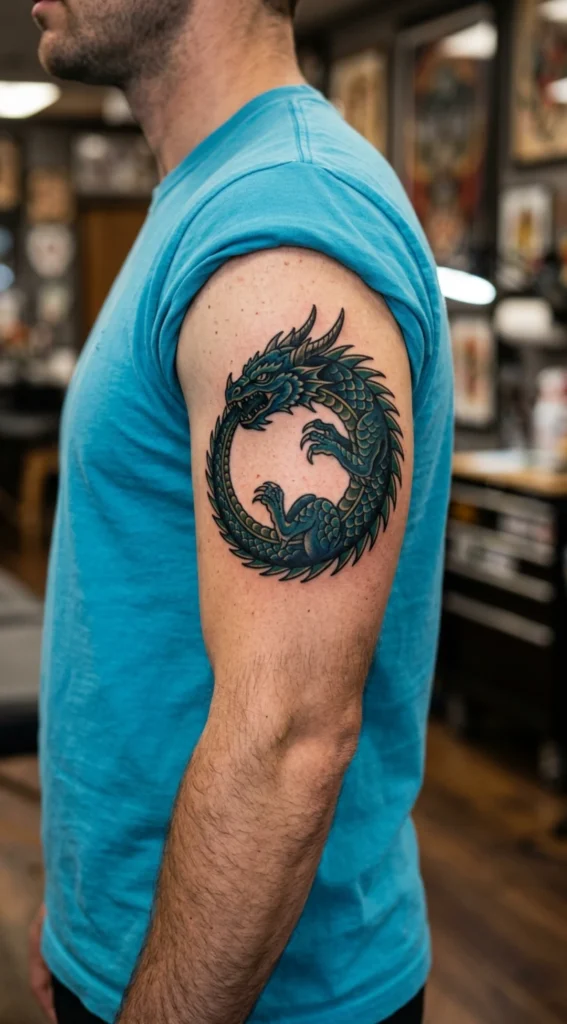
A dragon eating its own tail to form a perfect circle is one of the oldest symbols in human history. It represents cycles, infinity, self-destruction and rebirth, and endless transformation.
In neo traditional form the ouroboros becomes graphically powerful because the bold linework and color make the circular shape feel complete and intentional. It doesn’t look like a gimmick, it looks like a seal.
This is a design built for the upper arm, thigh, or knee where circular compositions sit naturally on the body.
The enclosed shape gives it a medallion quality that looks incredible as a standalone piece.
16. Dragon and Armor Hybrid Head
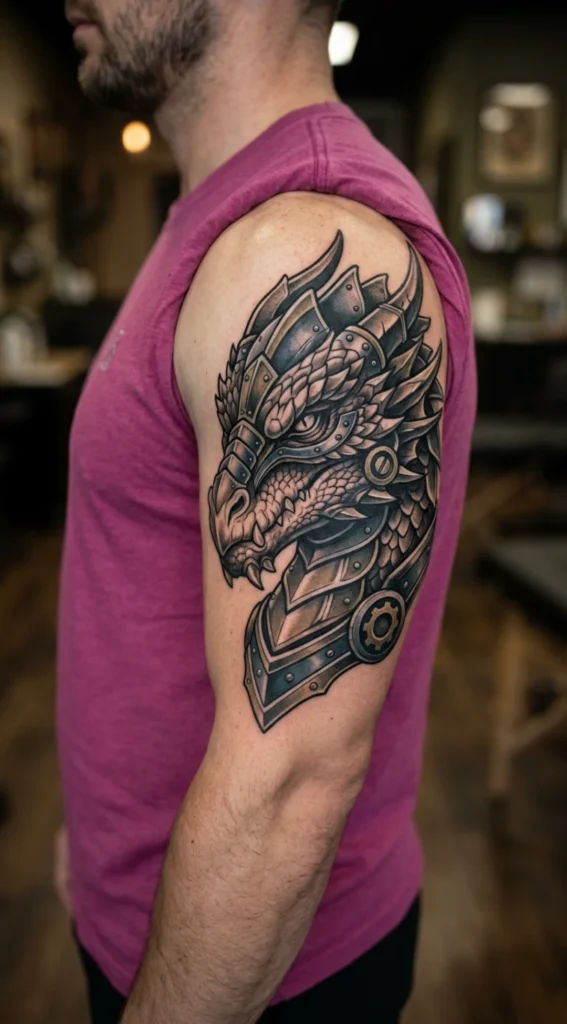
A dragon head that incorporates armor elements, plating, rivets, and metal accents across its face creates something that feels mechanical and ancient at the same time. Like it was built as much as it was born.
The combination of organic scales and hard geometric metal is a real challenge for an artist and a real reward when it lands.
Neo traditional handles this material contrast better than almost any other style.
This is a bold concept that works on the upper arm, thigh, or as part of a larger sleeve where the armor detailing can be given enough space to actually register.
17. Elder Dragon with Smoke Beard
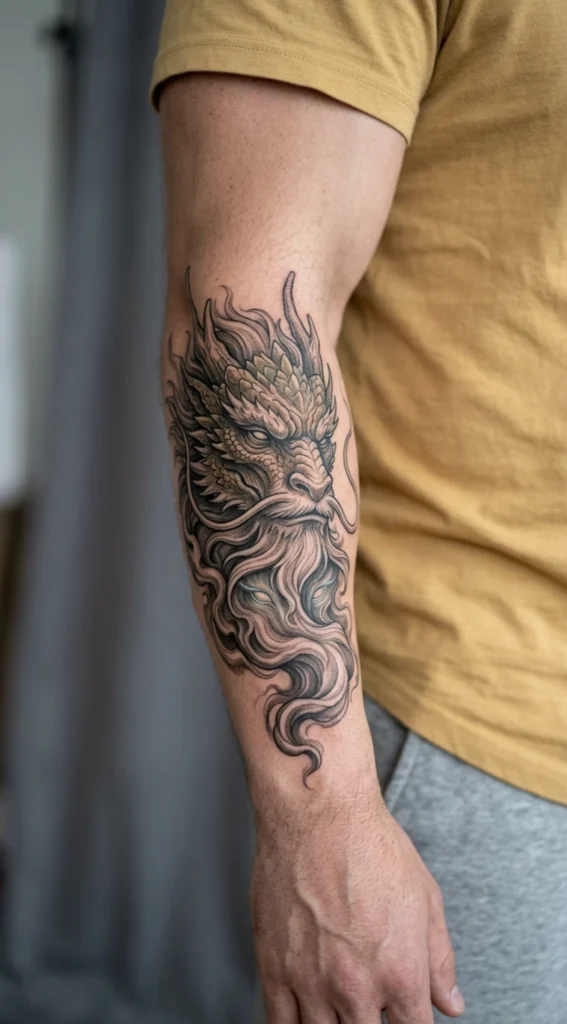
Long flowing whiskers and a smoke beard on an elder dragon give it age, wisdom, and a kind of quiet authority that younger dragon designs don’t carry. This isn’t a creature that attacks, it observes.
The smoke beard flows and drifts like it has its own weight, which gives your artist beautiful soft shading work against the harder lines of the face and scales.
The contrast between the two textures is what elevates this concept.
- Long whiskers framing the face naturally direct the viewer’s eye toward the center
- Adding faint glowing eyes within the smoke creates an ethereal depth
- This design suits people drawn to wisdom and age over aggression and fire
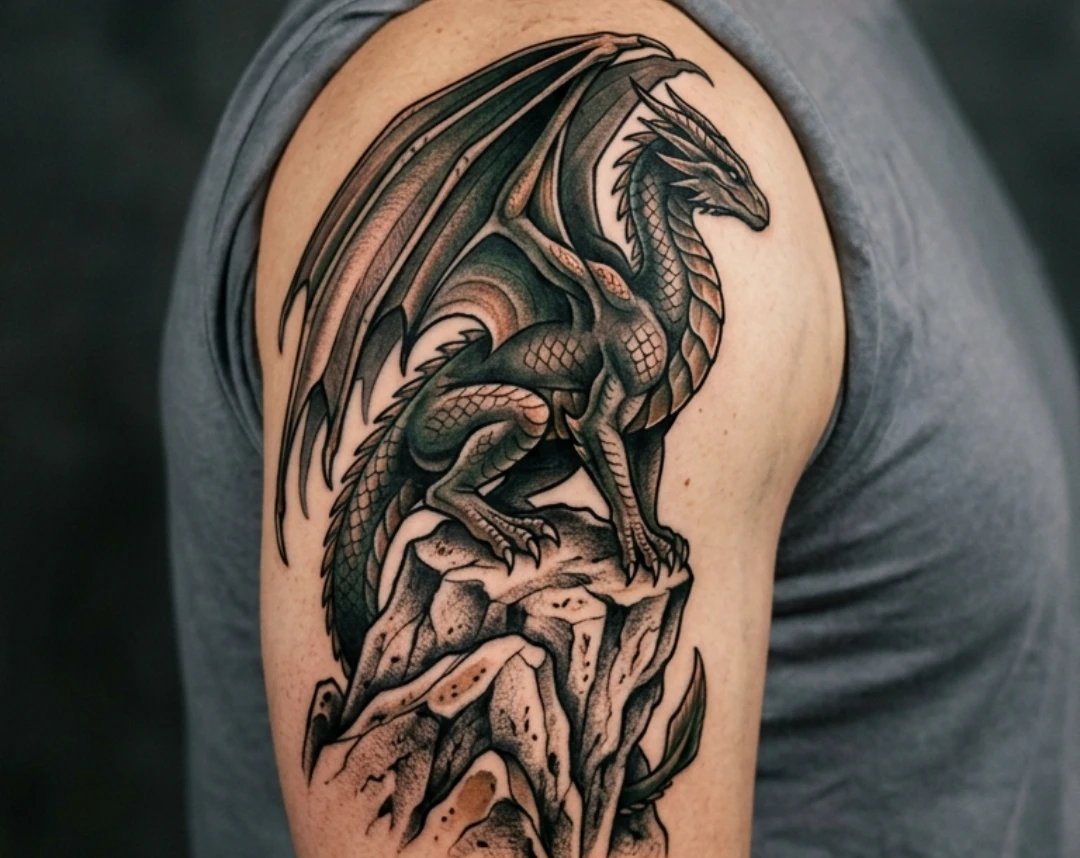
18. Dragon Perched on Rock
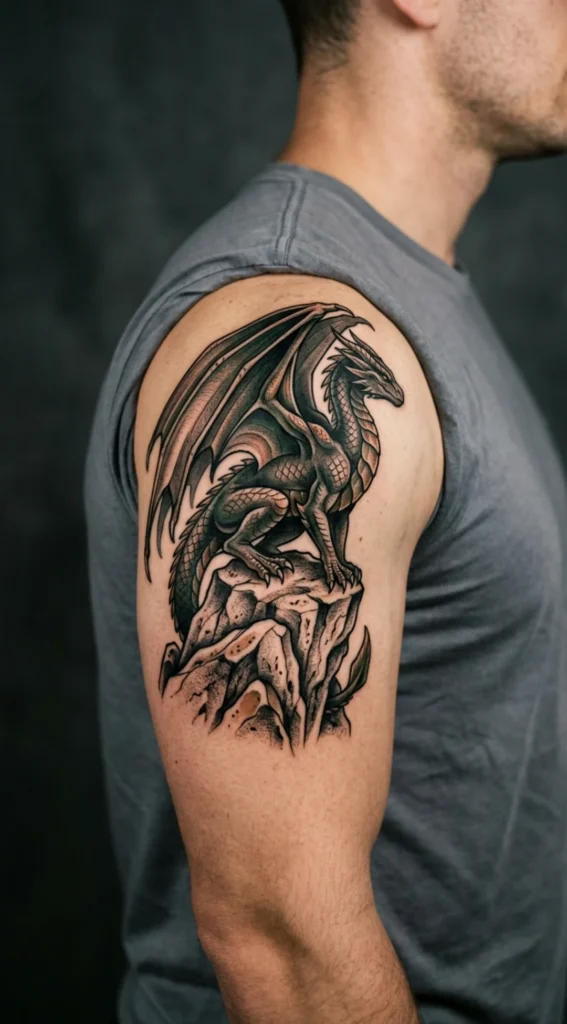
A dragon crouched and perched on a rock, wings folded, is still and powerful in a way that roaring designs aren’t. It’s watching, waiting, and completely unbothered.
That stillness creates a different kind of energy. It feels more controlled and more dangerous because of it.
Neo traditional shading on folded wings with the rough texture of rock beneath creates rich material contrast.
This is a strong shoulder or thigh design where the low crouching shape of the dragon fits the natural curve of those placements.
The rock can be minimal or detailed depending on how much background atmosphere you want.
19. Dragon Head Emerging from Flame Burst
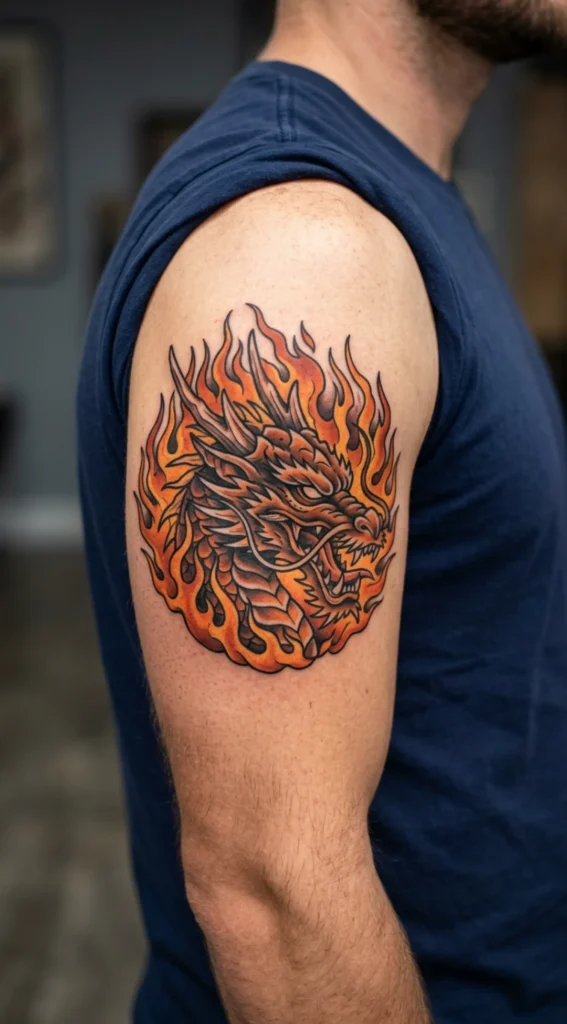
A dragon head pushing through a burst of flame turns fire into a doorway rather than a weapon. It looks like the dragon is crossing through from somewhere else entirely.
The flames create a natural circular border around the head which gives the whole piece a medallion composition.
Neo traditional fire work in deep oranges, reds, and yellows with dark black linework is visually explosive.
This is one of those designs that reads perfectly from across a room and holds up under close inspection. It’s bold, it’s clear, and it never loses its impact with age.
20. Side Profile Dragon with Sharp Whiskers
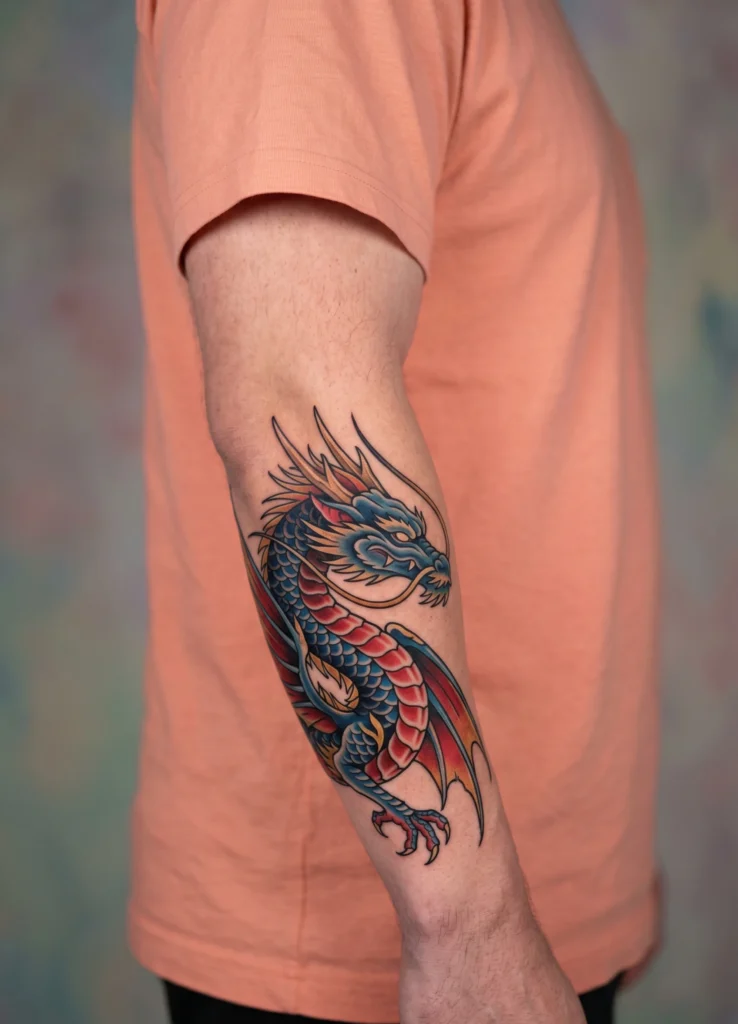
A clean side profile of a dragon with long sharp whiskers and a defined jaw line is about elegance and structure. It’s not performing, it’s simply existing, and that confidence is its own kind of statement.
The profile angle lets your artist focus entirely on the silhouette, which in neo traditional becomes a graphic and refined shape. Every whisker placement and scale edge matters in this view.
This works well as a forearm, calf, or neck piece where a clean horizontal or diagonal profile can stretch naturally across the placement. The minimalism of a single profile reads surprisingly large.
21. Dragon Wrapped Around Rose Stem
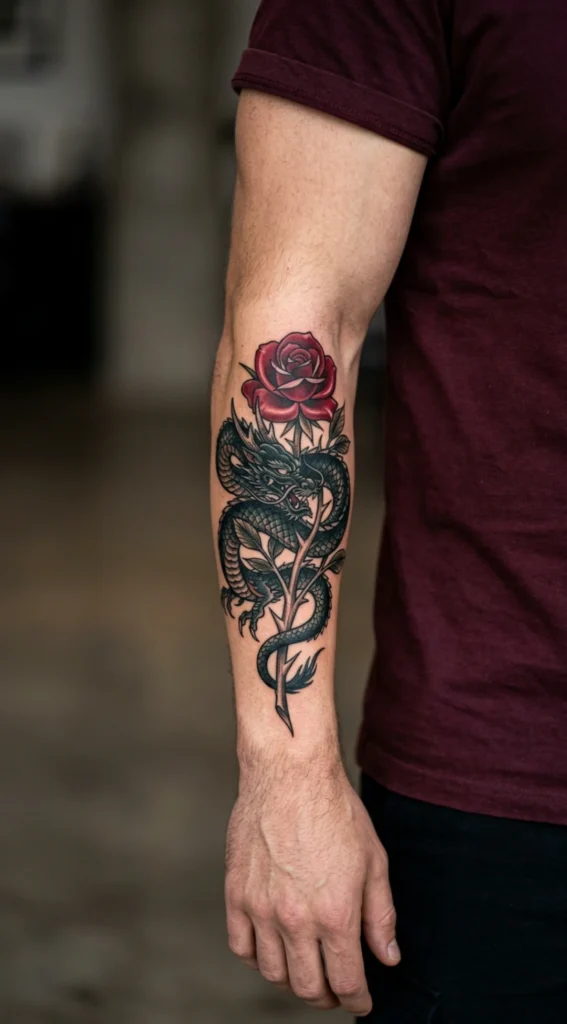
A dragon coiling around a rose stem with thorns running alongside it creates a conversation between beauty and danger that never gets old.
The rose softens nothing, it just makes the contrast sharper.
The thorns and dragon scales rhyme visually, both are sharp, both are protective, and neo traditional linework plays with that similarity in a really satisfying way. They feel like they belong together.
Deep red rose against a dark scaled dragon in black, green, or deep blue is a color combination that works every single time.
It’s bold without being loud and carries real symbolic weight without needing explanation.
22. Dragon Crossing Through Broken Chain Loop
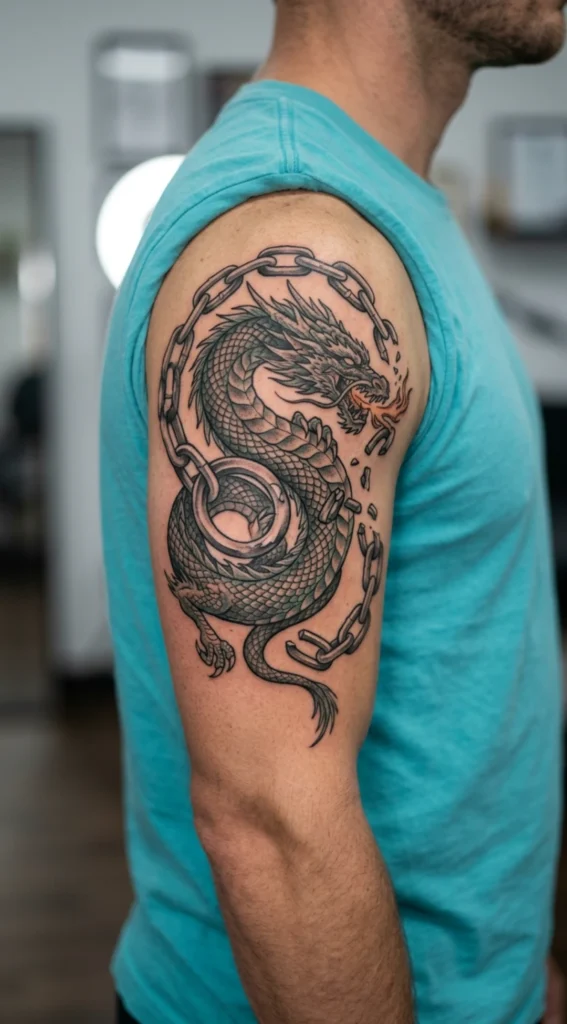
A dragon moving through or breaking apart a chain loop is about freedom, power, and the refusal to be contained. The chain doesn’t restrain this dragon, it’s already through it.
The broken links scattered around the composition add dynamic energy and give your artist small detailed elements to fill space with purpose. Nothing feels random because every broken link tells part of the story.
Neo traditional metal shading on chain links alongside organic dragon scales is a pairing that rewards a skilled artist. The two textures could not be more different and that contrast is exactly what makes it work.
So looking at all 22 of these, are you drawn more toward the mythological and symbolic concepts like the ouroboros or pearl guardian, or do you find yourself pulled toward the raw energy of the flame burst and roaring close ups? The dragon you choose says a lot more about you than you might expect.
