
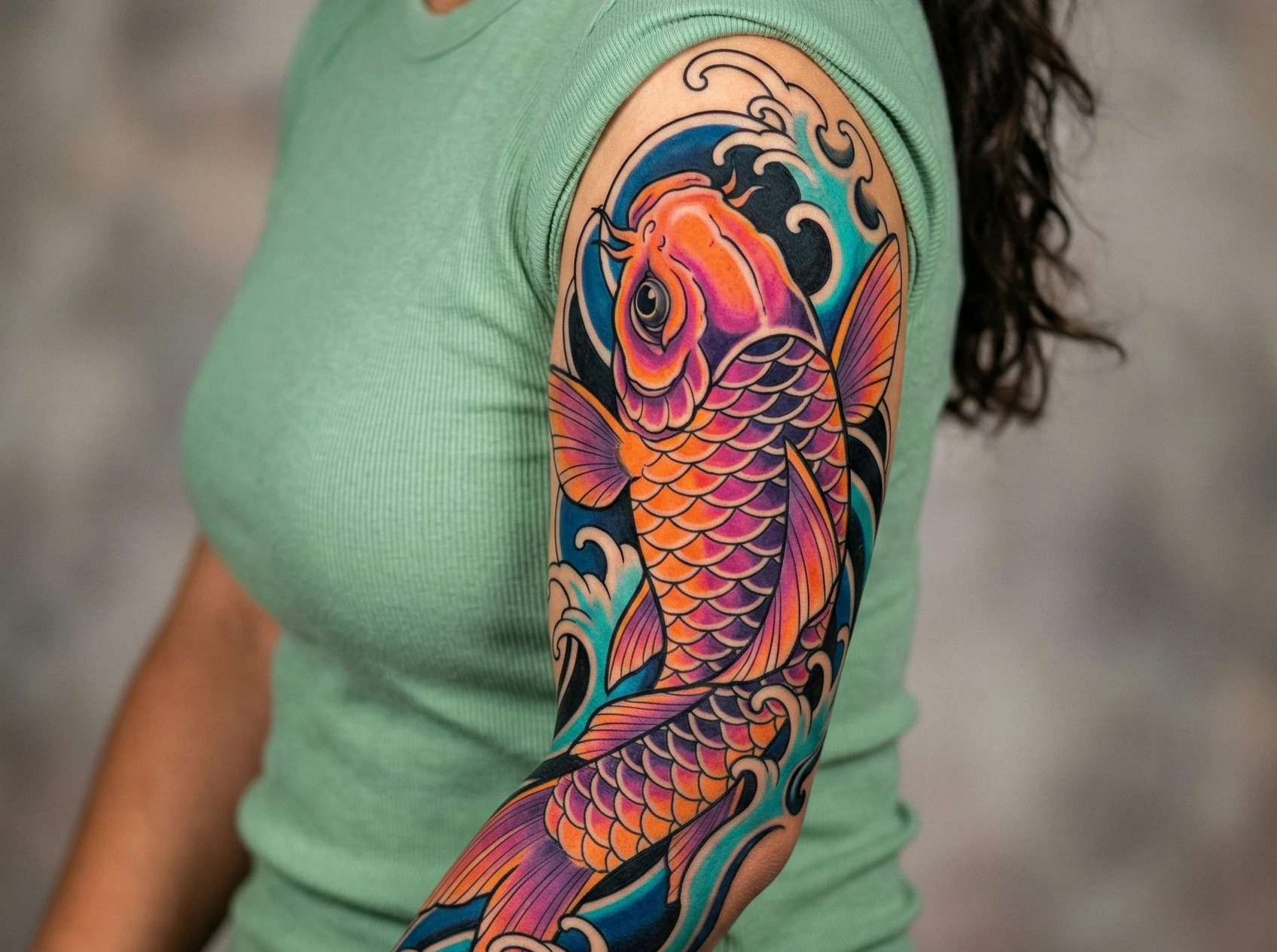
Japanese tattooing has hundreds of years of history behind it. Neo-traditional takes all of that and asks one question. What happens when you push it further?
Neo-traditional Japanese tattoos keep the soul of Irezumi intact. The mythology, the symbolism, the bold compositions. But the execution gets a modern upgrade. Thicker outlines, richer color saturation, exaggerated proportions, and shading techniques borrowed from illustrative and fine art tattoo styles.
It is not a replacement for traditional. It is a conversation with it. Respectful enough to honor the source material and confident enough to evolve it.
The result is a style that hits harder visually than almost anything else in tattooing right now. If you want Japanese meaning with a contemporary edge, neo-traditional is where you land.
1. Neo-Traditional Japanese Dragon (Ryū)
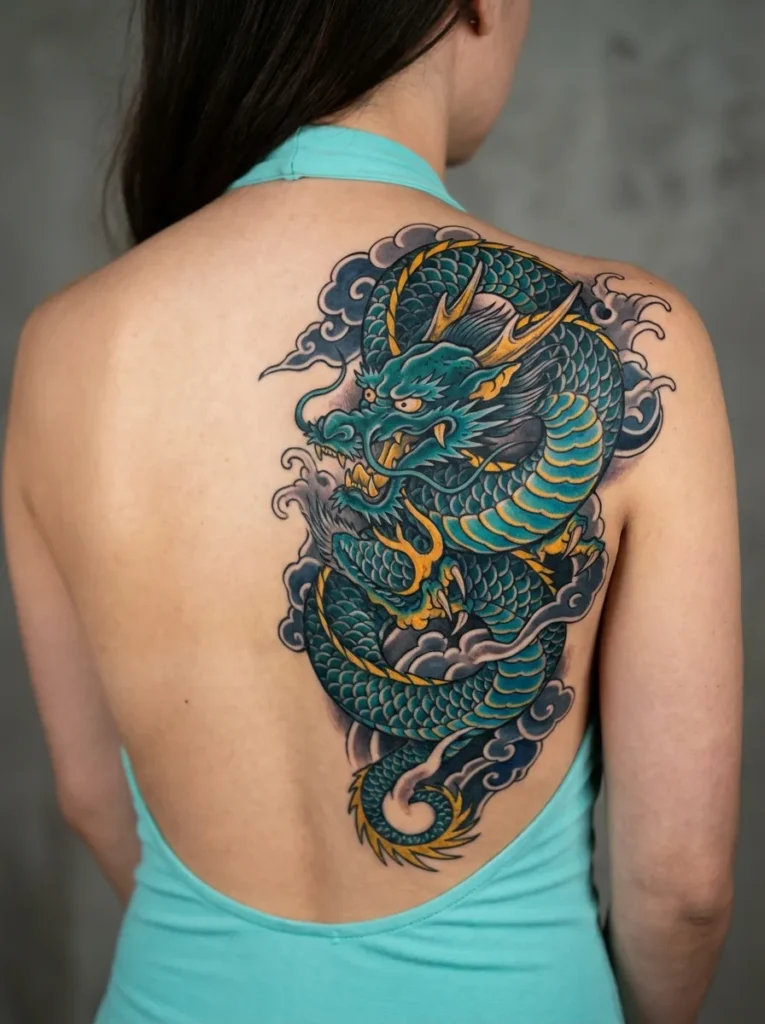
The neo-traditional dragon keeps the serpentine Japanese body but turns up every visual dial. The scales are rendered with more individual detail. The colors push further into jewel tones, deep teal, electric blue, vivid gold. The linework gets bolder at the outline and tapers dramatically inside.
What changes most is the sense of personality. Neo-traditional dragons have expression and attitude in a way that purely classical versions often hold back.
The cloud and wave backgrounds go through the same transformation. Graphic, almost illustrated in their execution but still rooted in Japanese compositional tradition. The whole piece feels like it jumped off the screen of an incredibly well-designed game and landed on skin.
2. Neo-Traditional Koi Fish with Vibrant Waves
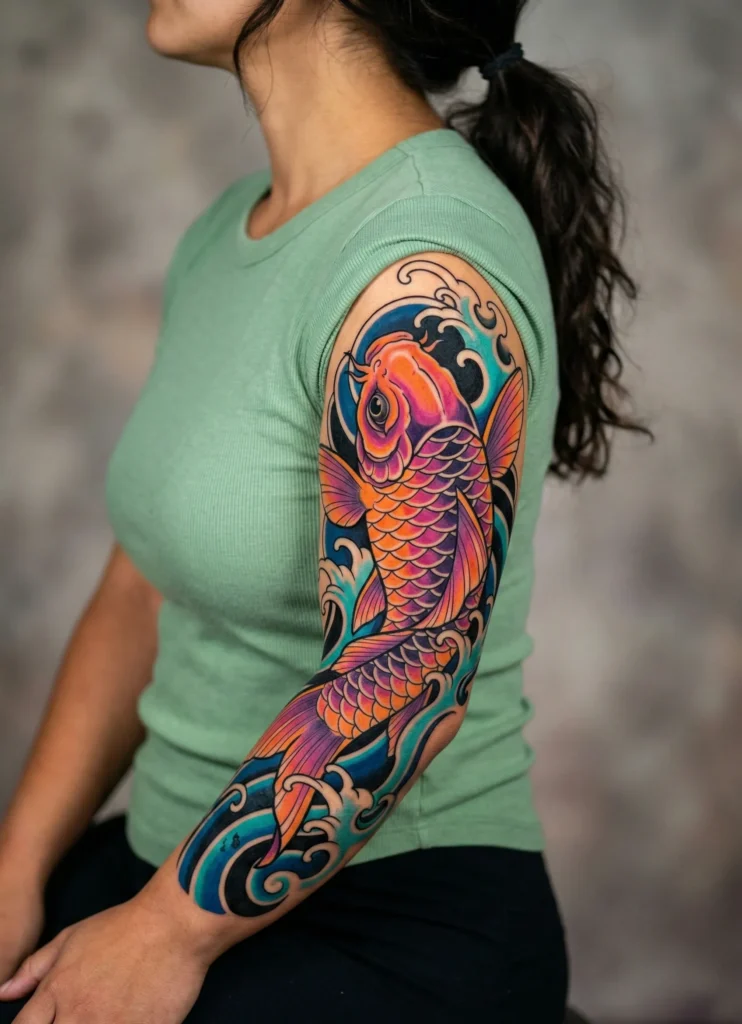
A neo-traditional koi does not whisper. It announces itself with the most saturated version of every color it touches.
The scales become individual graphic elements, each one outlined, each one carrying its own highlight and shadow. The fins get exaggerated length and translucency. The eye holds a depth that makes the fish feel genuinely sentient.
The waves surrounding the koi go full graphic in neo-traditional. Bold curved outlines, flat color fields inside each wave section, white foam rendered in clean shapes rather than soft blending. The contrast between the detailed fish and the stylized water creates a tension that is uniquely neo-traditional.
Colors that would feel too loud in traditional Irezumi are exactly right here. Magenta, electric orange, deep violet. The koi earns all of it.
3. Neo-Traditional Phoenix (Hō-ō) Design
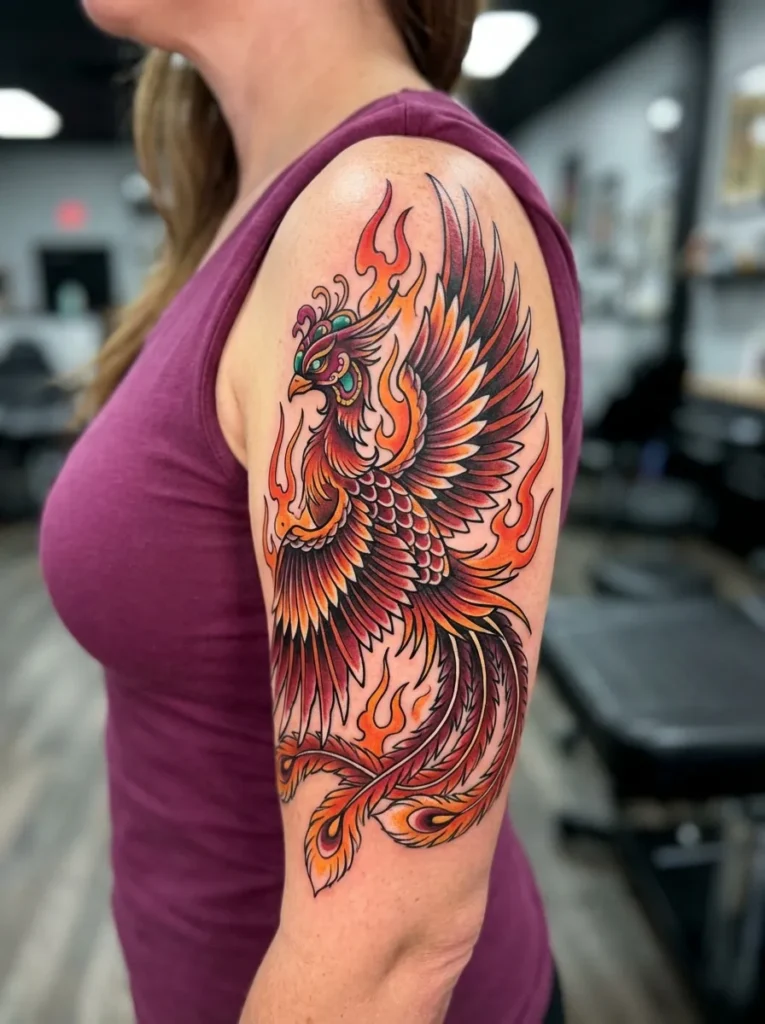
The Japanese phoenix in neo-traditional style becomes something between a divine creature and a visual explosion. Every feather is a canvas for color gradients. Every flame is a graphic shape with weight and movement.
What neo-traditional adds to the Hō-ō is drama in the details. Individual feathers are rendered with illustrative complexity, shading from one saturated color into another within a single plume. Tail feathers trail in long, graphic arcs with bold outline work that would feel at home in a high-end animation studio.
The flame environment around the phoenix pushes further than traditional allows. Hot white cores bleeding into yellow, orange, and deep crimson at the edges. Each flame a deliberate shape rather than a gestural brushstroke.
- Exaggerated feather length adds theatrical movement to the composition
- Jewel-toned color palettes separate it visually from classic Irezumi versions
- Fine detail work in the face and crest creates a focal point that anchors the whole piece
4. Neo-Traditional Oni Mask with Bold Colors
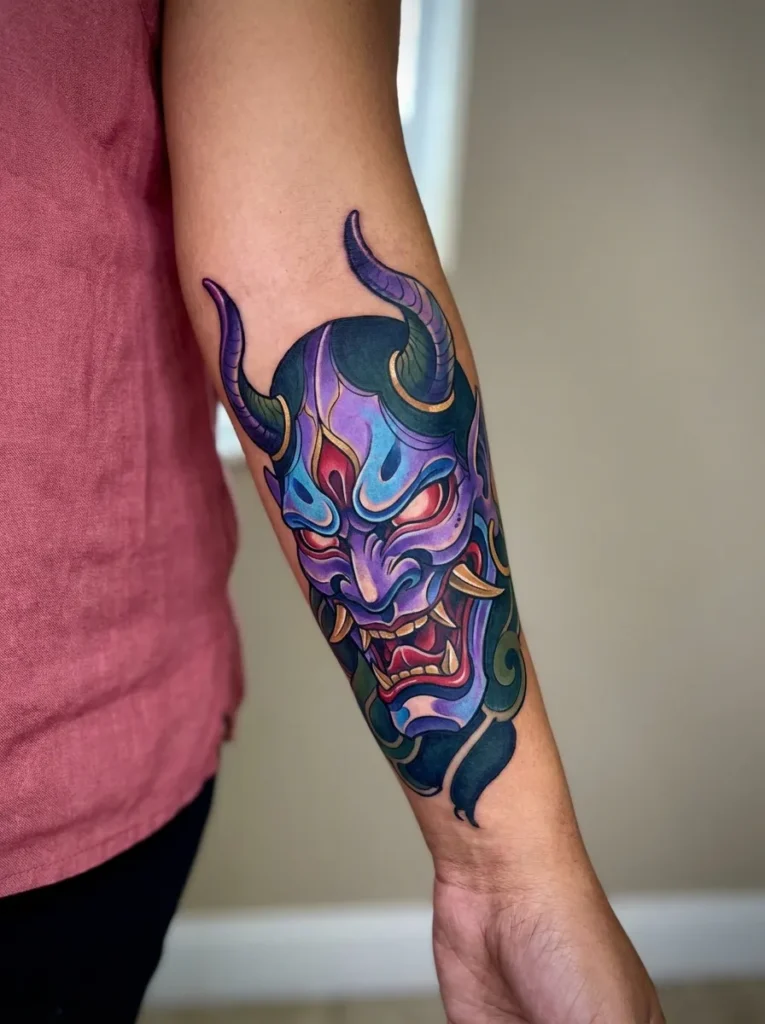
The Oni mask in neo-traditional style gets louder in every possible way. The horns grow more dramatic. The linework gets heavier at the silhouette. The colors push further into territory that traditional Irezumi never reaches.
Purples and electric blues alongside the classic red. Gold accents with graphic precision. Shadow work that uses deep navy or forest green instead of just black. The mask starts looking like it was designed for a premium art print and then tattooed with absolute commitment.
What stays is the aggression and the protective symbolism. What changes is everything surrounding those qualities. Neo-traditional Oni masks feel like the demon leveled up.
5. Neo-Traditional Hannya Mask with Modern Shading
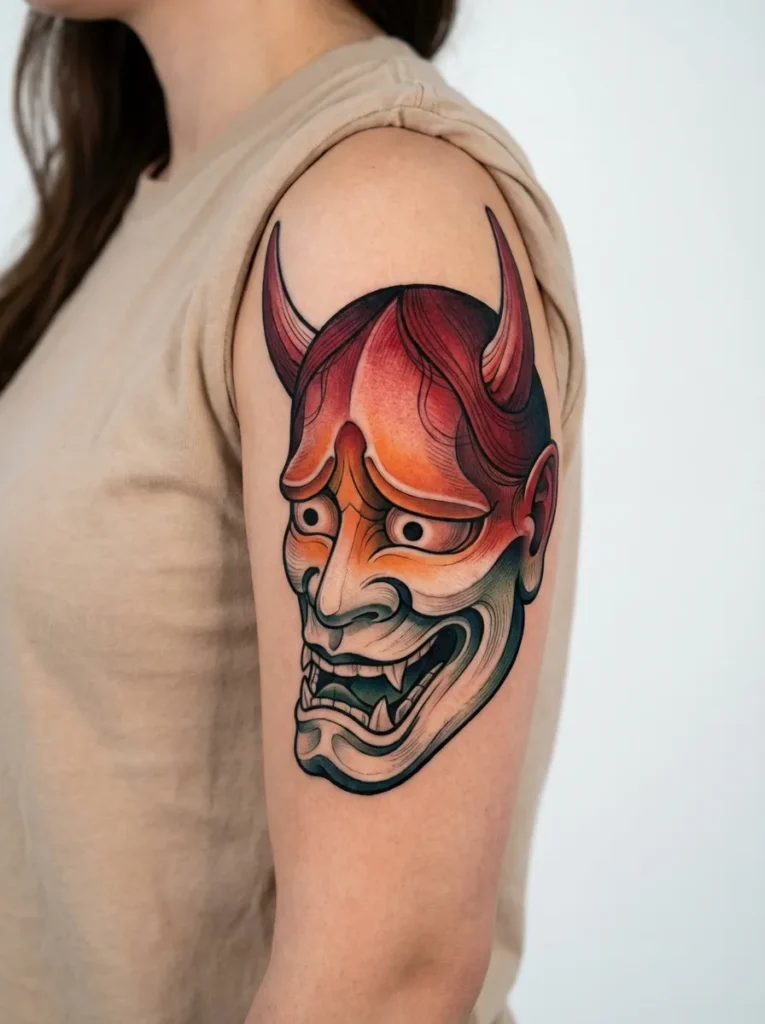
The Hannya mask carries so much emotional weight that neo-traditional shading only amplifies it. Modern gradient techniques allow the color to move across the mask in ways that traditional flat fills cannot achieve.
The transition from red at the horns through orange and into the pale grief-stricken lower face becomes a full color story told in shading alone. Each zone of the mask feels emotionally distinct because the color shifts make those zones feel physically and psychologically separate.
Fine detail linework inside the mask surface, texture on the horns, subtle patterning in the brow area, adds a layer of complexity that rewards long looking. This is a mask you could study for ten minutes and still find new things in.
| Shading Technique | Traditional Approach | Neo-Traditional Approach |
| Color fills | Flat with minimal blending | Rich gradients, multiple tones per zone |
| Outline weight | Consistent bold line | Variable, heaviest at silhouette |
| Shadow work | Black shading | Deep color shadows, navy or green |
| Texture detail | Minimal surface texture | Fine linework adding dimension |
6. Neo-Traditional Tiger (Tora) with Dynamic Lines
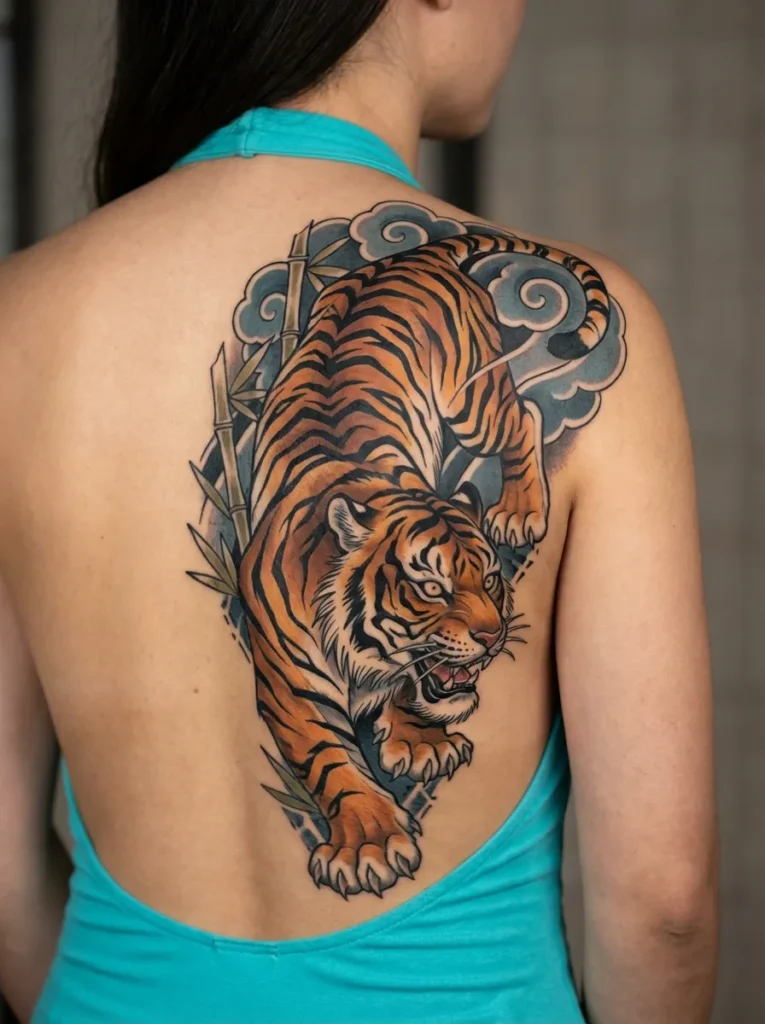
The neo-traditional tiger trades naturalistic anatomy for something more expressive and graphic. The proportions get pushed. The head larger. The paws heavier. The stripes more deliberate in their pattern.
What this creates is a tiger that communicates power more directly than a realistic rendering ever could. It is not trying to look like a photograph. It is trying to feel like the idea of a tiger distilled to its absolute essence.
Dynamic linework in the fur adds movement without relying on soft blending. Sharp, directional lines that follow the body contours give the coat texture while keeping that graphic edge intact.
Background elements get the same treatment. Bamboo becomes more geometric. Storm clouds take on bold graphic shapes. The whole piece operates as a unified illustrative world rather than a naturalistic scene.
7. Neo-Traditional Samurai Portrait
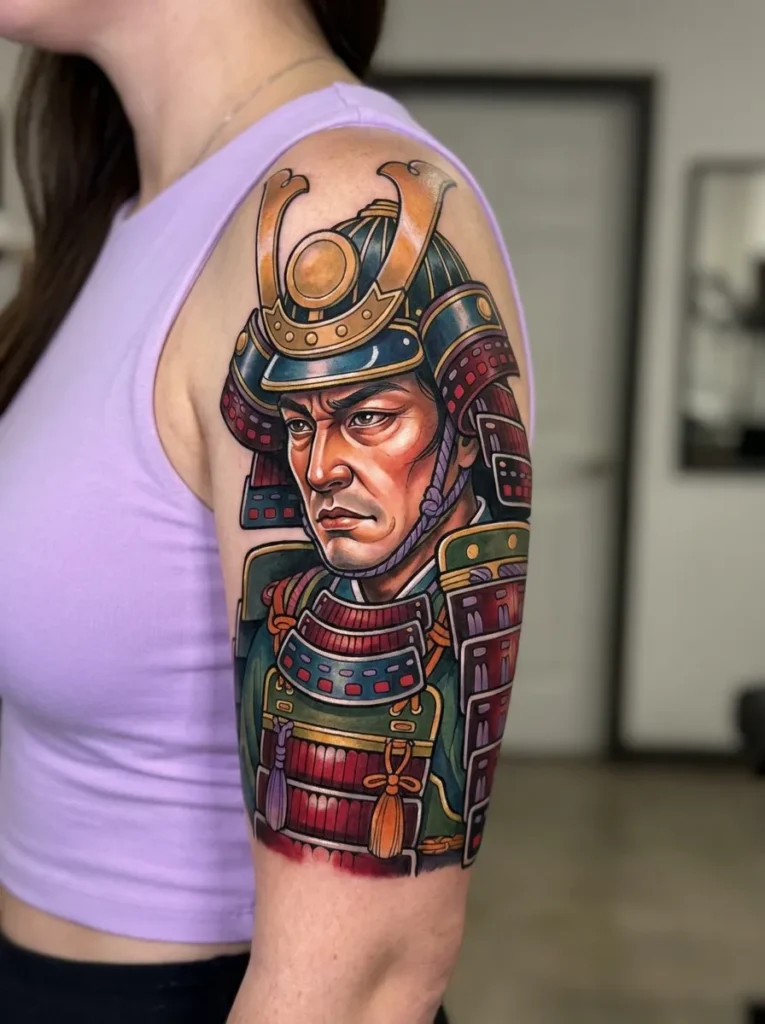
A samurai portrait in neo-traditional style is where the style gets to show real range. The face requires genuine portraiture skill. The armor requires graphic design sensibility. Getting both right in the same piece is a serious achievement.
The face carries more expression in neo-traditional than in classical Japanese portrait work. The eyes have depth and personality. The skin tones use full modern shading techniques with warm highlights and cool shadows creating real dimensional form.
The armor around the face goes fully graphic. Lacquered plates rendered in flat color with bold outlines and precise highlight placement. The silk lacing picks up accent colors that push the palette into neo-traditional territory. Everything is more deliberate and more saturated than tradition would allow.
The result is a samurai that feels like a legendary figure rather than a historical document. More myth than record.
8. Neo-Traditional Kitsune with Fire Accents
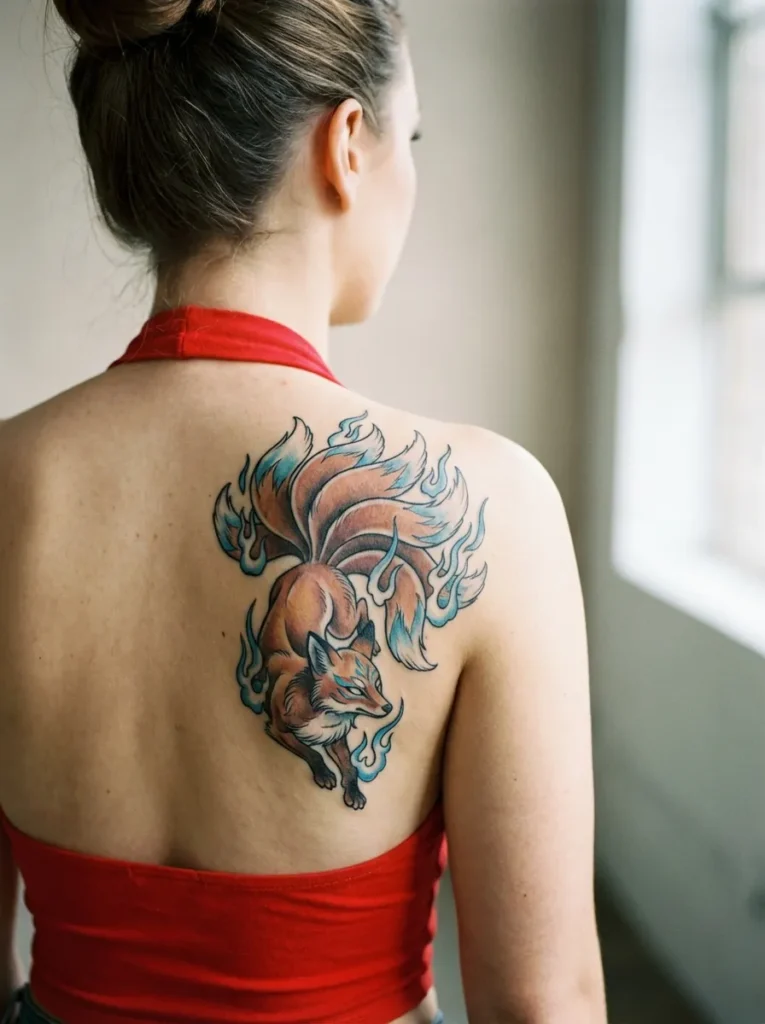
The Kitsune in neo-traditional style leans into the supernatural quality of the fox spirit more aggressively than any other approach can. The fire accents are not background decoration. They are part of the creature itself.
Foxfire, the supernatural blue or white flame that Kitsune are said to create, wraps around the tails and eyes in neo-traditional versions with a graphic precision that makes it feel genuinely magical. Each flame shape is deliberate. Each glow is created through color layering rather than soft airbrush-style blending.
Multiple tails give the composition enormous visual complexity. Each tail can carry its own color accent, different tones of fire, different degrees of glow, building a creature that looks like it has been accumulating power across centuries.
9. Neo-Traditional Peony (Botan) with Gradient Colors
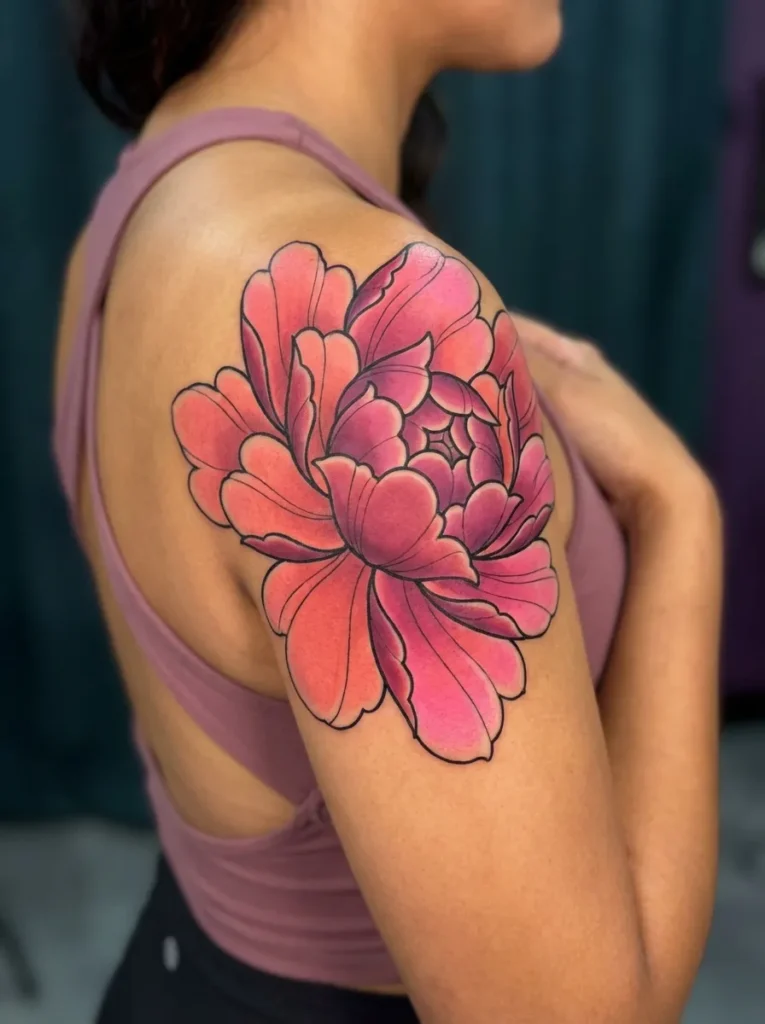
The peony in neo-traditional style becomes a study in what gradient color work can do to a familiar subject. The classic deep pink and red peony gets a full modern color treatment.
Individual petals shift from one saturated color to another within a single petal. Coral into magenta. Deep rose into bright pink at the outer tip. The transitions are smooth but the colors are bold enough that the gradients read clearly even from a distance.
Outlines on each petal give the flower that neo-traditional graphic quality while the internal color work keeps it feeling organic and lush. The contrast between the bold linework and the delicate gradient fill is where neo-traditional truly earns its name.
Background colors in neo-traditional peony compositions often go unconventional. Deep teal, rich purple, or midnight blue behind warm pink petals creates complementary contrast that makes both colors vibrate harder.
10. Neo-Traditional Cherry Blossoms (Sakura) Flow
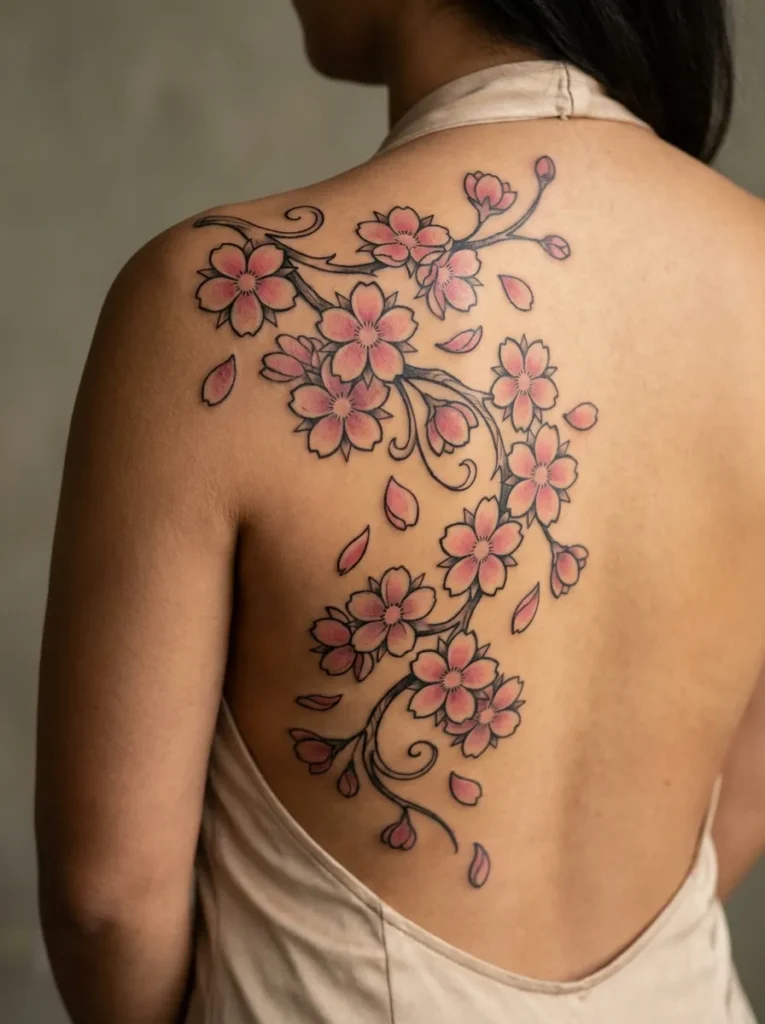
Cherry blossoms in neo-traditional style get to do something the classic approach rarely attempts. Bold outlines around individual petals, pushing the flower from delicate botanical subject into graphic art territory.
The outlines give each petal weight and definition. The interior fills use gradient pink and blush tones with enough saturation to hold against that strong outline. What could feel cold and over-structured instead feels like a stylized painting of something genuinely beautiful.
Falling petals in a neo-traditional composition become graphic shapes rather than soft impressions. Each one outlined, each one carrying its own mini gradient. Scattered across a background they create rhythm and movement that is unmistakably neo-traditional.
The symbolism does not change. Impermanence, the beauty of things that do not last. But the visual language delivering that message is entirely modern.
11. Neo-Traditional Chrysanthemum (Kiku) Detail
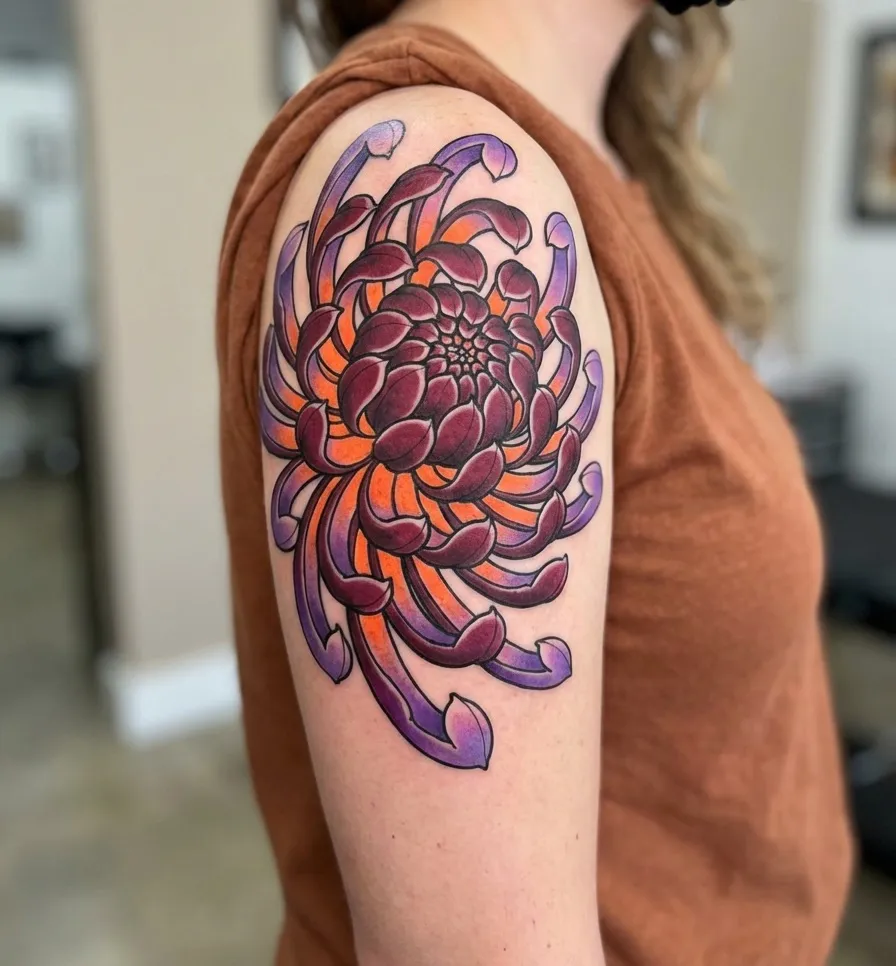
The chrysanthemum is already one of the most geometrically precise flowers in nature. Neo-traditional takes that natural precision and amplifies it into something almost architectural.
Each petal gets an individual outline with variable weight. Heavier at the base where it meets the center, tapering to a fine point at the tip. The internal gradient shading gives depth within each individual petal. The overall effect is a flower that looks three-dimensional and graphic at the same time.
Color choices in neo-traditional kiku push beyond the traditional gold and amber. Deep burgundy petals. Electric orange centers. Purple outer petals fading into violet tips. The chrysanthemum becomes a vehicle for color exploration as much as a botanical subject.
Fine detail at the center of the flower, where dozens of tiny petals cluster tightly together, is where the tattoo proves the artist’s skill. Get that center right and the whole composition earns its reputation.
12. Neo-Traditional Fudō Myōō Deity Tattoo
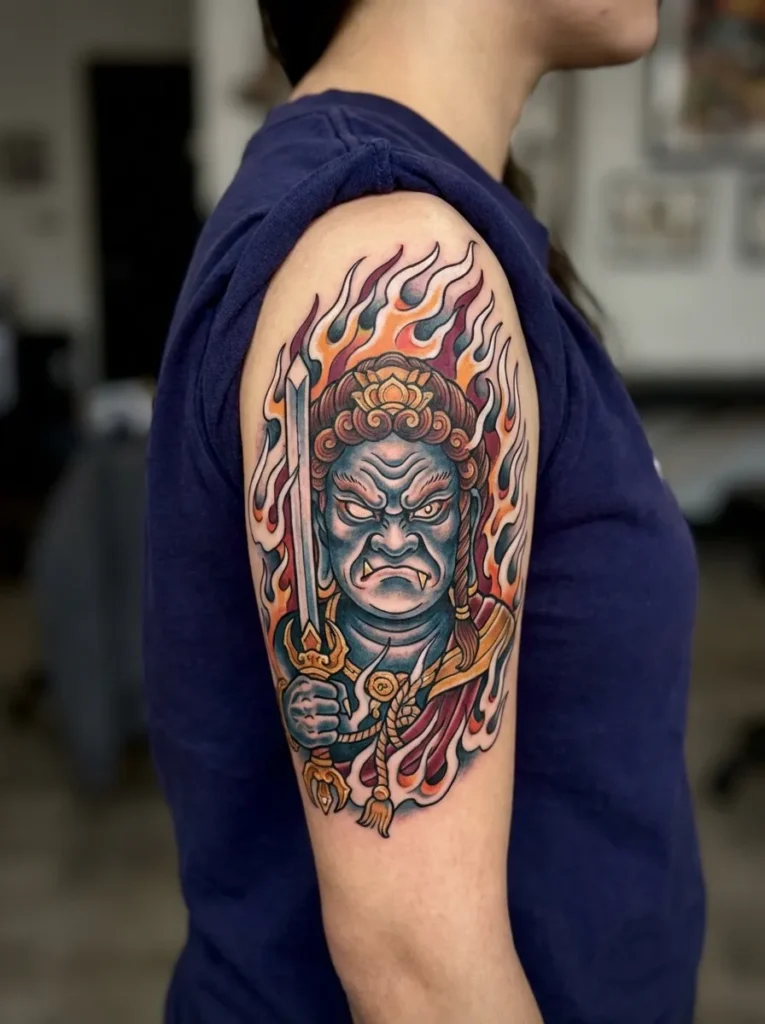
Fudō Myōō in neo-traditional style carries all of his spiritual authority but delivers it with a visual intensity that matches his mythological power more directly than classical depictions.
The face gets the full neo-traditional portrait treatment. Exaggerated features, deep shadow work in rich color tones, and eyes that carry genuine ferocity rather than stylized calm. The fangs catch light. The brow furrows with weight.
His flame halo becomes the defining neo-traditional element of the piece. Each flame is a graphic shape with bold outlines and internal gradient fills. The Karura fire goes from bright white at the core through yellow and into deep orange and crimson, then drops into cool shadow tones at the very edges. It looks like it is radiating heat outward through the skin.
The sword and rope, his signature attributes, get the same graphic treatment as the armor in a samurai tattoo. Precise, deliberate, and more visually commanding than any naturalistic rendering could achieve.
13. Neo-Traditional Karajishi (Foo Dog) Composition
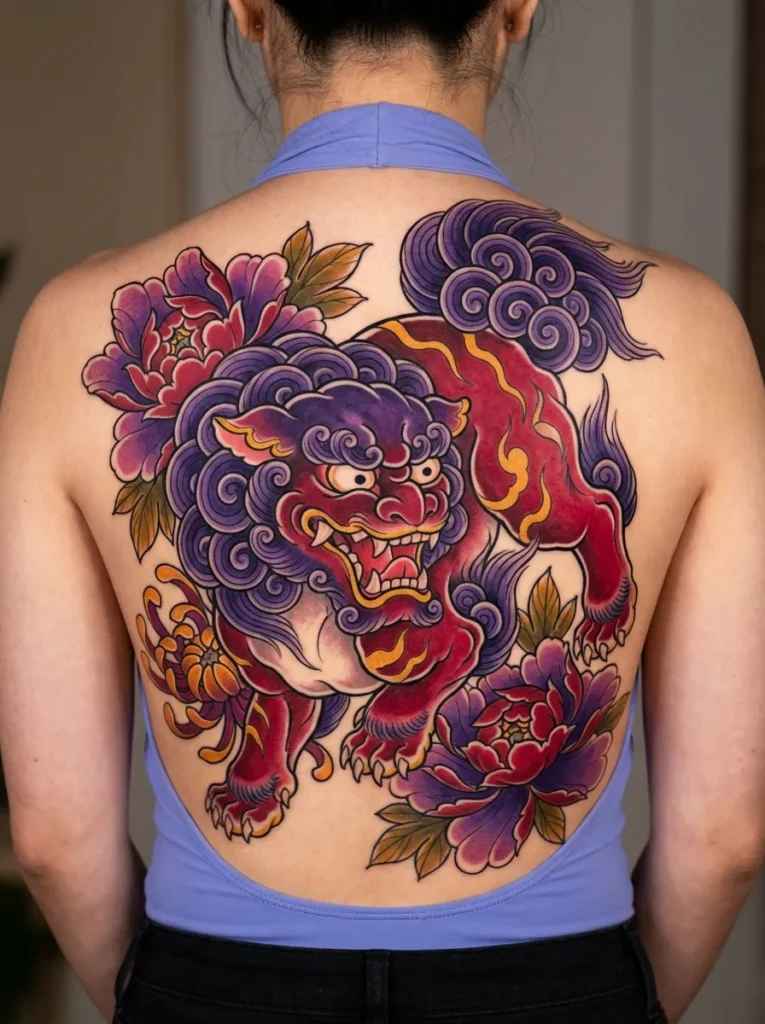
The Karajishi in neo-traditional style gets a visual personality transplant that makes the traditional version look restrained by comparison.
The mane goes from curling Irezumi spirals into something more graphic and explosive. Each curl is bolder in outline and more deliberate in its directional energy. The face pushes into exaggerated territory with eyes rendered large and expressive, a mouth open wider, teeth individually defined.
Color choices for the Karajishi body in neo-traditional often move away from the traditional gold and teal combination into richer, more unexpected territory. Deep violet manes. Crimson body tones. Gold only as an accent rather than a dominant color.
The surrounding floral elements get the full neo-traditional flower treatment. Bold outlined peonies and chrysanthemums with gradient fills creating a background that matches the central figure’s graphic energy rather than softening it.
14. Neo-Traditional Snake (Hebi) Wrapped Design
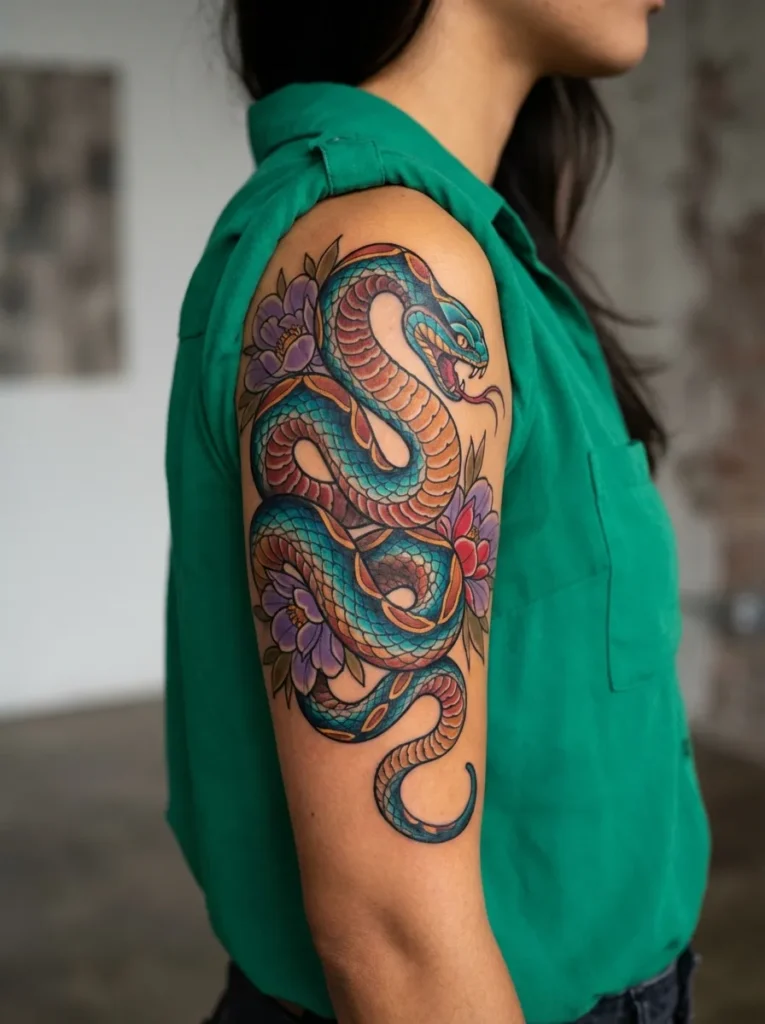
A wrapped snake in neo-traditional style uses the full length of the design to show off everything the style does best. Scale texture, color gradient work, and the interplay between fine detail and bold outline all get equal time across the snake’s body.
Each scale becomes an individual graphic unit. Outlined, shaded with internal gradient color, and reflecting a consistent light source across the whole body. The effect is a snake that looks genuinely dimensional, like it occupies real space rather than sitting flat on skin.
The color choices in neo-traditional Hebi compositions push far beyond the classic green and black. Electric teal scales with deep blue shadows. Burnt orange and gold with crimson belly scales. Each combination creating a different mood while keeping the graphic quality consistent.
Flowers wrapping around or growing through the snake’s coils use the same bold neo-traditional approach. The contrast between the organic floral shapes and the geometric scale pattern creates visual complexity that rewards close looking.
15. Neo-Traditional Lotus (Hasu) in Bold Hues
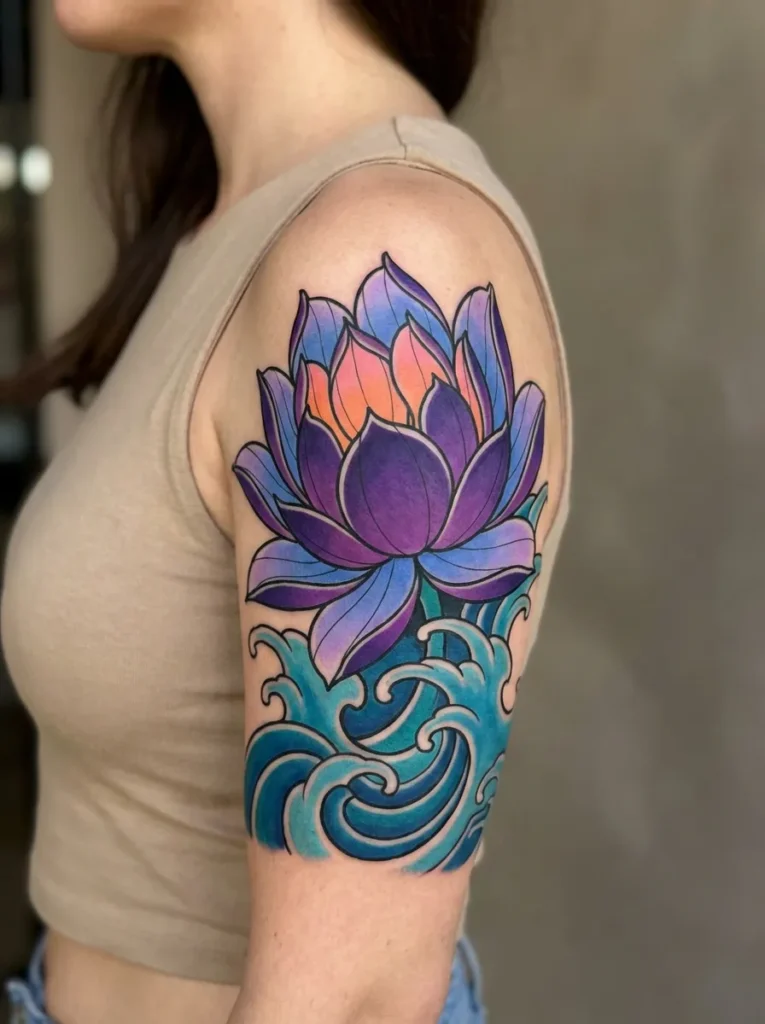
The lotus in neo-traditional style commits to color in a way the classic approach never does. Bold, unexpected hues that would feel wrong in traditional Irezumi feel completely right when the graphic linework holds everything together.
Deep purple petals with bright violet highlights. Blue outer petals shifting to pale lavender at the tips. Pink and orange combinations that feel more like a sunset than a flower. Each color choice transforms the spiritual symbolism of the lotus through a completely contemporary visual lens.
The bold petal outlines give structure to the gradient fills and stop the colors from bleeding into each other in a way that would undermine the neo-traditional quality. The outline is what makes the color work read as design rather than just pigment.
Water beneath the lotus in neo-traditional compositions often goes graphic in the same way neo-traditional waves do. Flat color sections with bold outlines creating a stylized water surface that complements the flower above it rather than competing with it.
16. Neo-Traditional Geisha Portrait with Vibrant Kimono
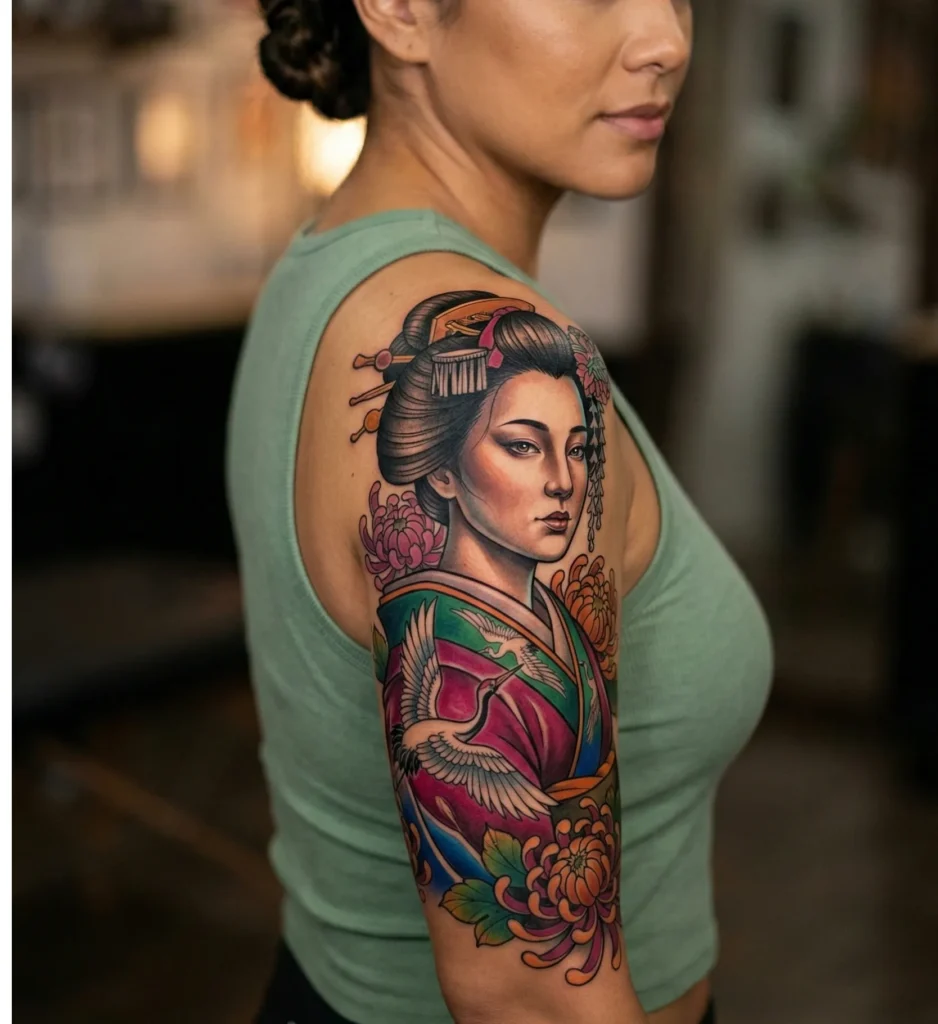
A neo-traditional geisha portrait is the ultimate test of range for an artist working in this style. The face demands portraiture skill. The kimono demands pattern design and color composition. Getting both right in one cohesive piece is genuinely hard to do.
The face in neo-traditional gets more color play than classical Japanese portrait work allows. Warm tones in the skin, cool tones in the shadows, subtle color in the white face makeup that stops it from reading as flat. The eyes hold real depth. The lips catch a bright highlight that makes them feel three-dimensional.
The kimono is where the piece becomes fully neo-traditional. Pattern work in bold graphic shapes. Cranes or chrysanthemums rendered in the same illustrative style as standalone neo-traditional subjects, complete with outlines and gradient fills, woven into the fabric of the garment.
Color choices for the kimono push the palette into territories that feel genuinely contemporary. Deep jewel tones. Unexpected complementary combinations. The kind of color confidence that comes from treating the garment as a gallery wall for pattern work rather than just clothing.
When it all comes together, a neo-traditional geisha portrait is one of those tattoos that makes people forget what they were saying mid-sentence.
Which style of neo-traditional Japanese tattoo has been sitting in the back of your mind the longest, and what has been stopping you from making that call to your artist?
