Few tattoo subjects carry as much weight as the samurai. They represent a code of living that most people spend their whole lives chasing.
Honor, discipline, loyalty, and the acceptance of death. These aren’t just warrior traits. They’re human ideals that still hit hard today.
Japanese samurai tattoos pull from centuries of art, mythology, and cultural history. Every element in the design, from the armor to the background, has meaning. This isn’t just ink. It’s a statement about how you move through the world.
Here are 19 ideas worth considering.
1. Traditional Samurai Portrait
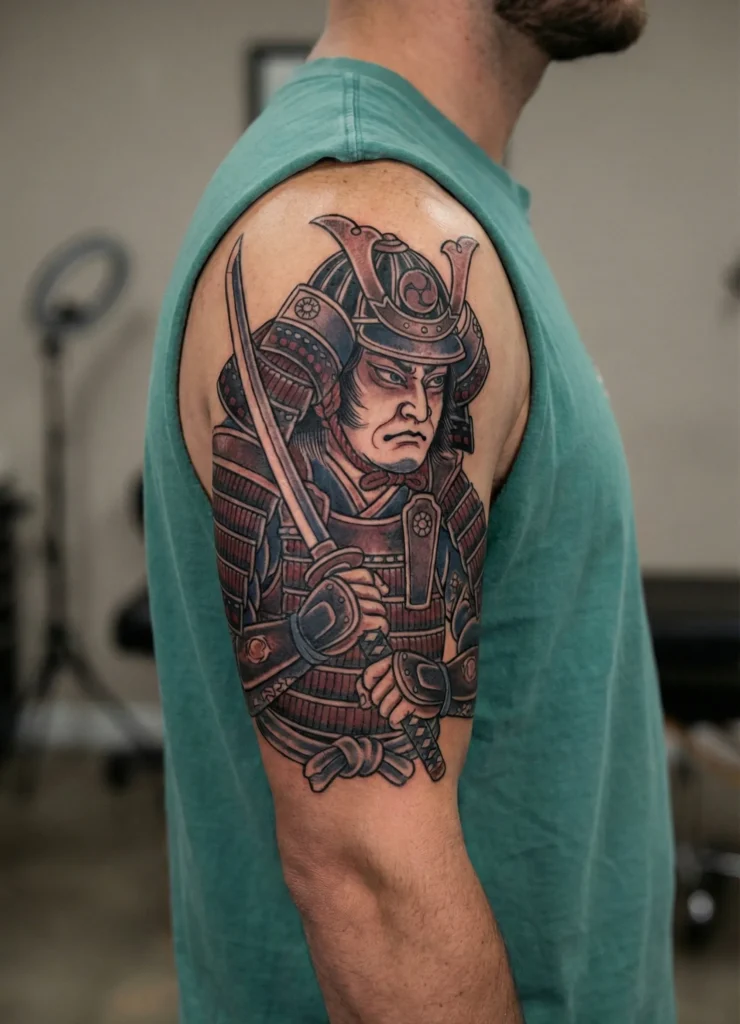
A samurai portrait done in classic irezumi style is one of the most powerful tattoo choices you can make. Bold outlines, rich color, and intense expression. It commands attention.
The face tells the whole story. Calm under pressure. Ready for anything.
This style works best as a larger piece where the artist has room to capture real detail. A sleeve, chest, or thigh gives it the canvas it deserves.
Artists who specialize in Japanese traditional tattooing are the ones to seek out for this. The technique matters as much as the design.
2. Samurai with Katana Drawn
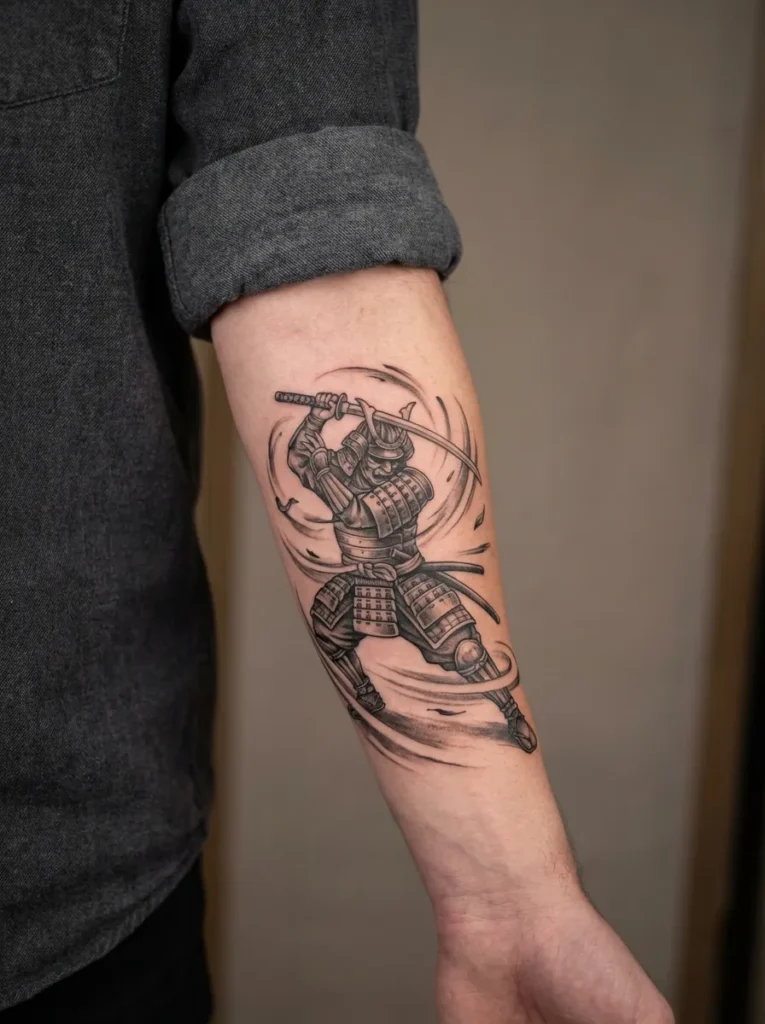
The moment before the strike. That’s what this tattoo captures.
A samurai mid-draw or fully extended with katana raised is a study in focus and intent. There’s no hesitation in the image. No doubt. Just pure commitment to the moment.
It symbolizes decisiveness. The ability to act when action is needed.
- A downward slash composition works well on the forearm or calf
- Upward draw positions suit longer vertical placements like the shin or spine
- Adding motion lines or wind bars enhances the sense of speed and powero
3. Samurai Helmet (Kabuto) Design
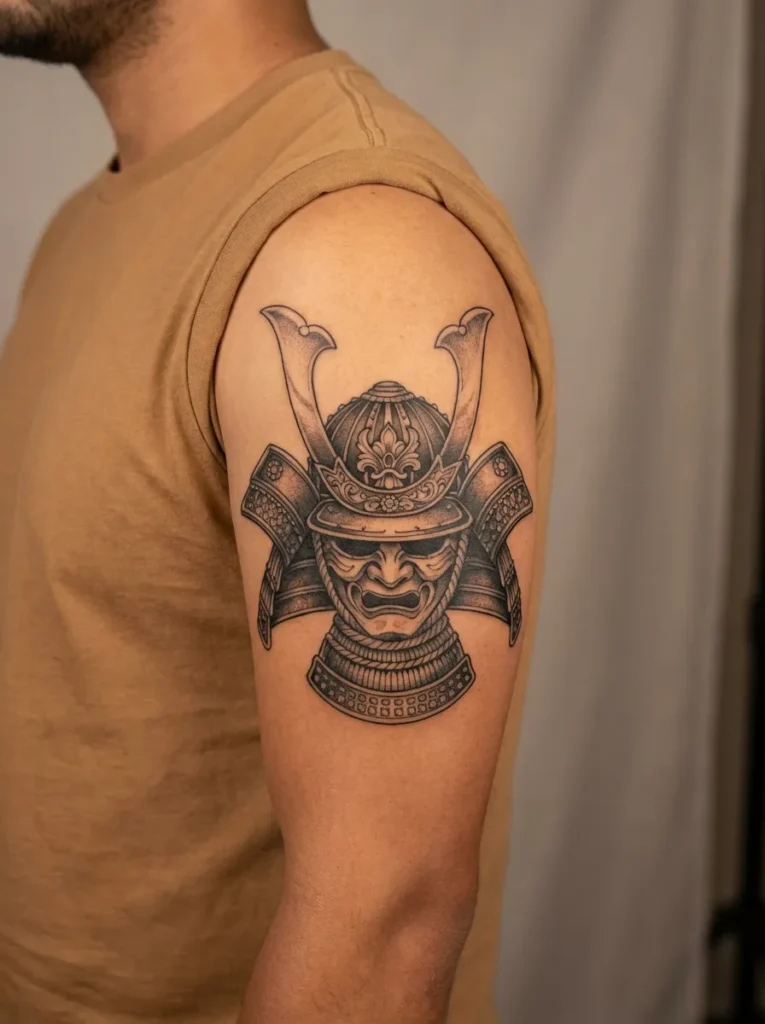
The kabuto is one of the most visually striking pieces of samurai armor ever created. As a tattoo on its own, it hits differently than a full figure.
It’s symbolic without needing a face. The helmet represents the warrior spirit itself, not just one samurai.
Kabuto designs often feature dramatic horns, decorative crests, and intricate lacework. The detail available in this concept is almost endless.
People who want something recognizably samurai but more abstract tend to love this option. It’s bold, cultural, and deeply personal.
4. Samurai with Cherry Blossoms
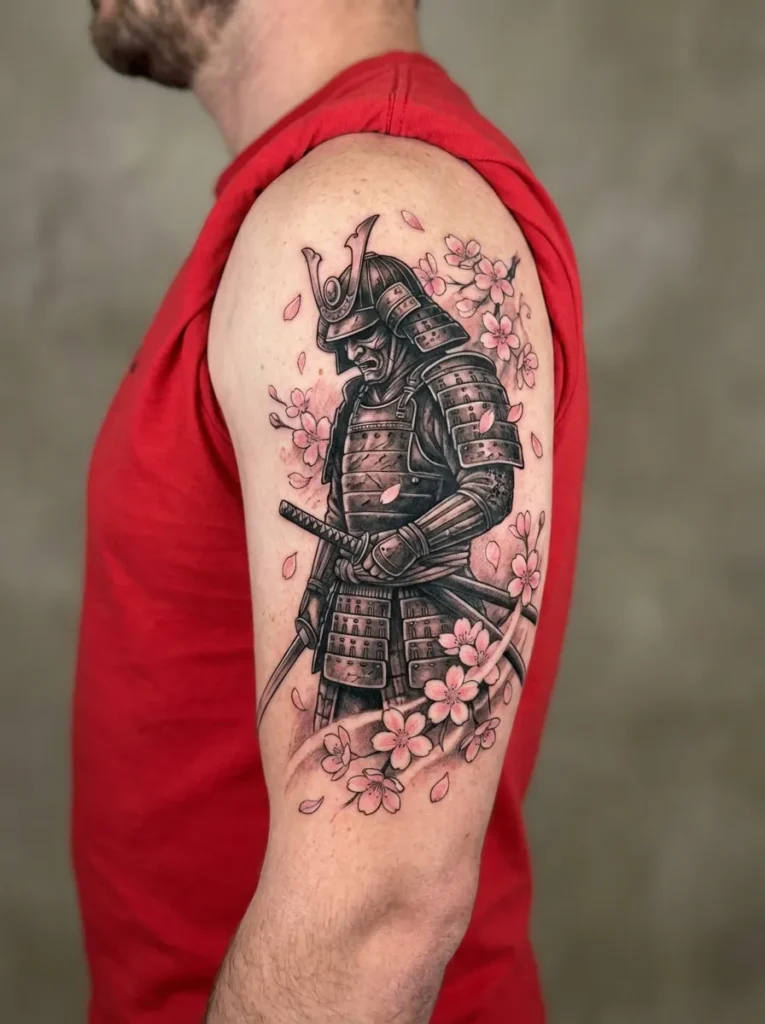
This is one of the most requested Japanese tattoo combinations for good reason. It balances strength with fragility in a way that feels true to life.
The samurai represents power and discipline. The cherry blossoms represent the beauty of things that don’t last. Together they speak to the concept of mono no aware, the bittersweet awareness that everything is temporary.
Warriors in feudal Japan deeply connected with the sakura. Blossoms that peak briefly and fall without clinging. It was their philosophy made visible.
The color contrast between falling pink petals and dark armor creates a composition that’s both dramatic and tender.
5. Samurai and Dragon Scene
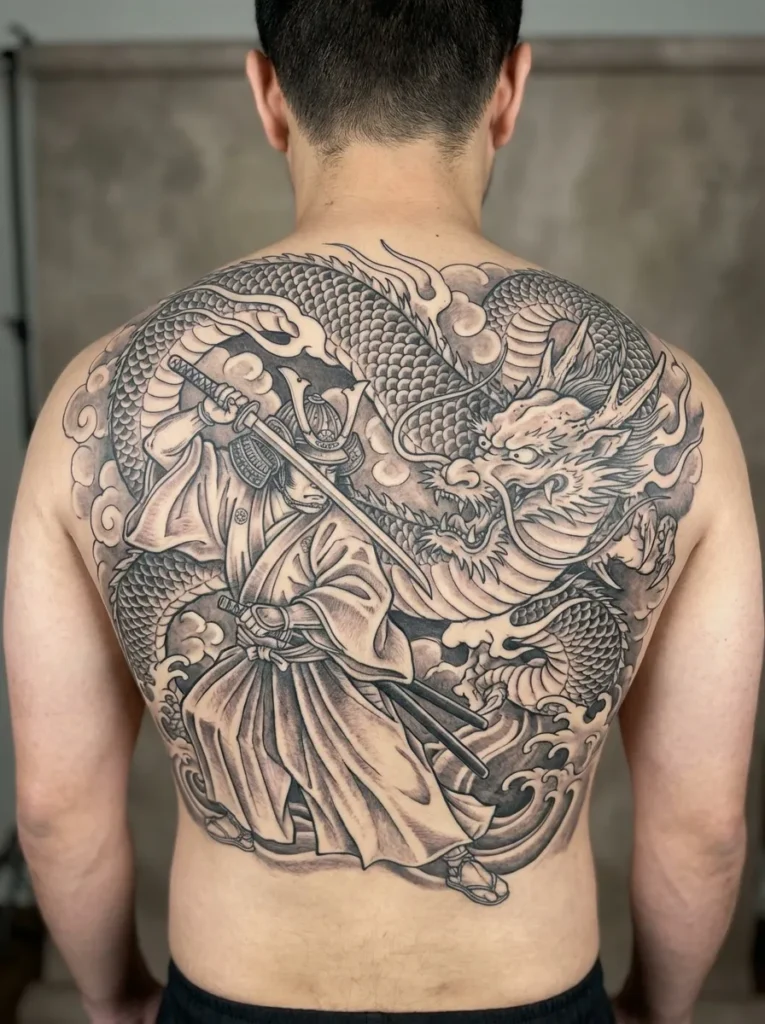
Two of the most iconic symbols in Japanese culture sharing one tattoo. This is a big concept that calls for a big canvas.
The dragon in Japanese mythology isn’t a villain. It’s a force of nature. Wisdom, power, and transformation. Placing a samurai alongside or battling a dragon creates a story about facing something larger than yourself.
Some interpretations show conflict. Others show alliance. The meaning shifts depending on what you’re trying to say.
| Composition | Meaning | Best Placement |
| Samurai battling dragon | Conquering inner chaos | Back or full sleeve |
| Samurai and dragon allied | Unity of mind and power | Chest or thigh |
| Samurai beneath coiling dragon | Guidance and protection | Shoulder to forearm |
6. Samurai Facing Oni
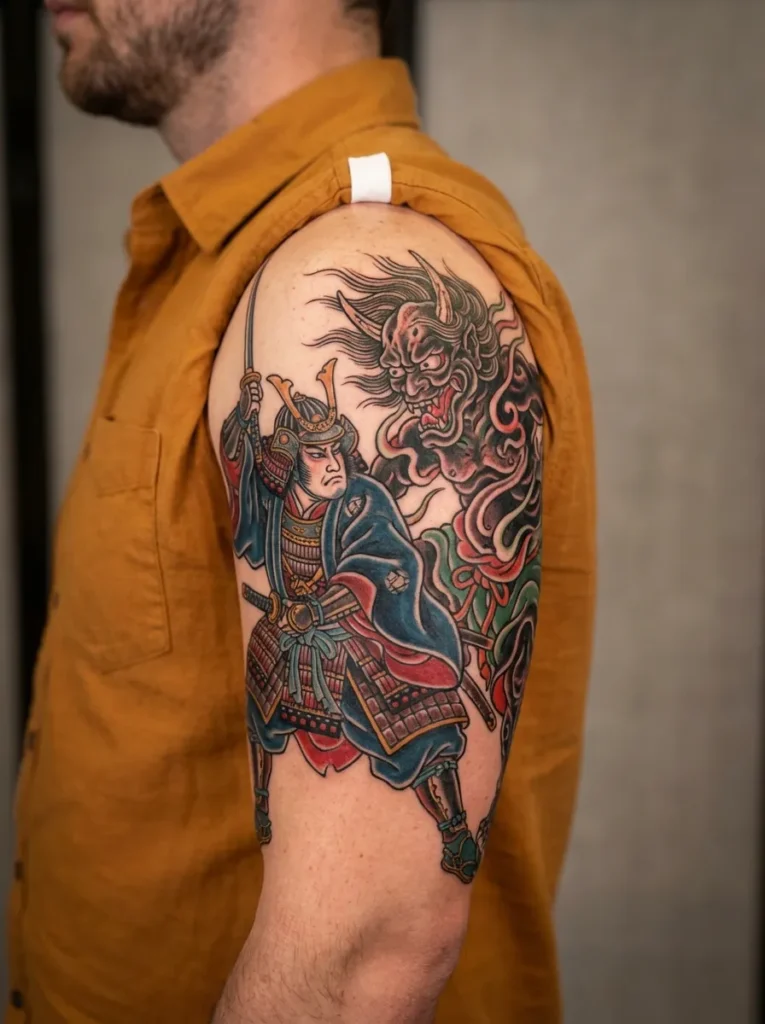
The Oni is a demon from Japanese folklore. Fearsome, powerful, and unpredictable. A samurai standing face to face with one is a tattoo about confronting your darkest fears.
There’s no running in this image. The samurai holds ground.
It resonates with people who’ve been through something hard and made it out the other side. The demon is real, but so is the warrior.
The contrast between the samurai’s disciplined stillness and the Oni’s wild energy makes for incredible visual tension. Great artists turn this into something that almost moves.
7. Fallen Samurai Warrior
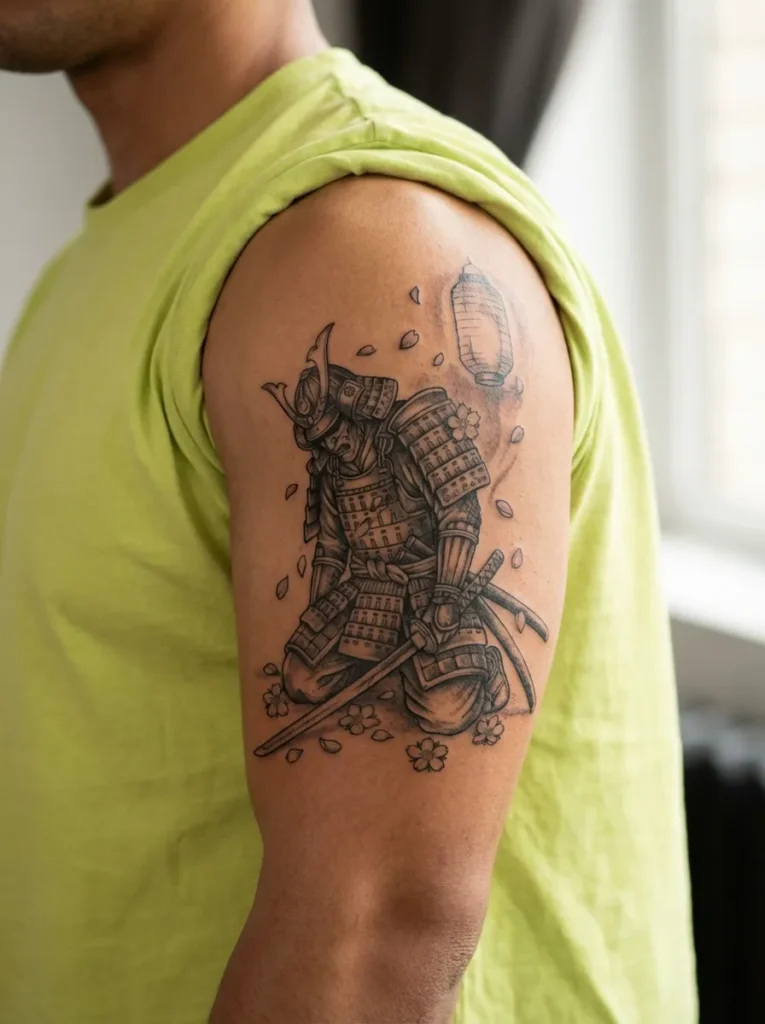
Not every samurai tattoo is about victory. This one is about something deeper.
A fallen samurai, kneeling or lying in final rest, speaks to sacrifice, acceptance, and the dignity of dying with honor. In Bushido, a good death was as important as a good life.
This design tends to attract people who’ve been through loss or who carry grief with them. It’s not morbid. It’s honest.
Surrounding elements like scattered petals, a broken sword, or fading lantern light add layers of emotion to the composition.
8. Samurai with Wind Bars Background
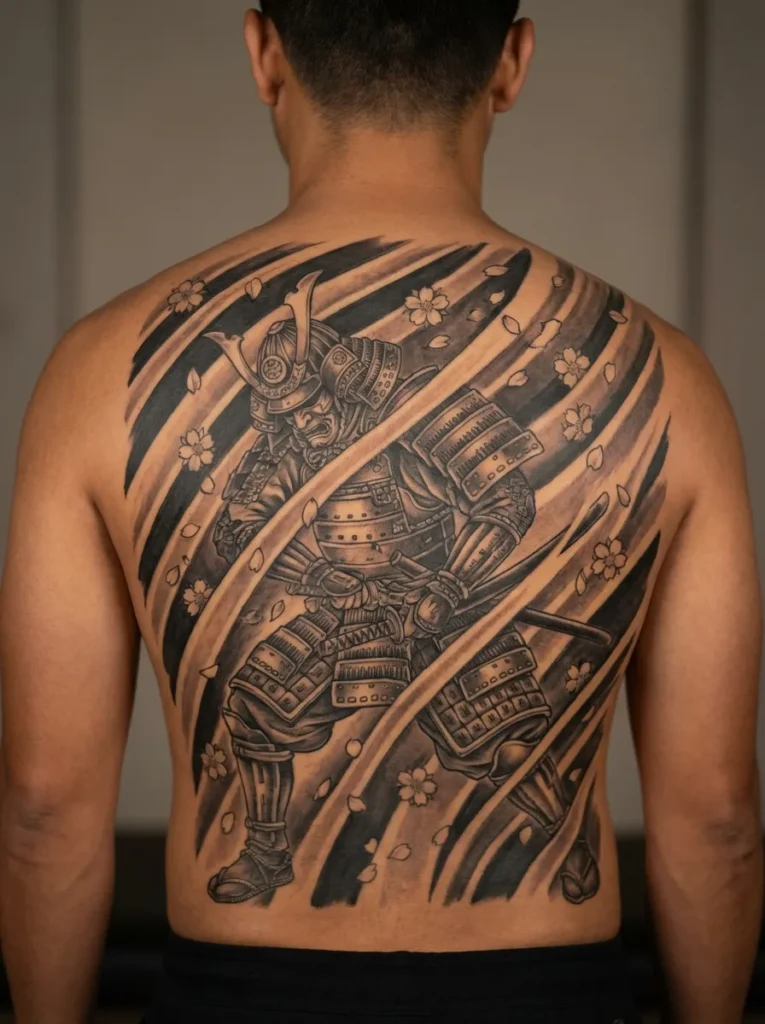
Wind bars (or wind lines) are a classic background element in traditional Japanese tattooing. Behind a samurai figure, they create a sense of movement and atmosphere that static backgrounds simply can’t match.
The lines suggest speed, force, and invisible energy. They make a still image feel like it’s alive.
This is a detail choice that separates a good Japanese tattoo from a great one. The background isn’t filler here. It’s part of the story.
- Wind bars work best in black and grey for a clean, graphic feel
- Diagonal bars give the most dynamic sense of motion
- Pair with falling leaves or blossoms for extra visual storytelling
9. Samurai and Tiger Composition
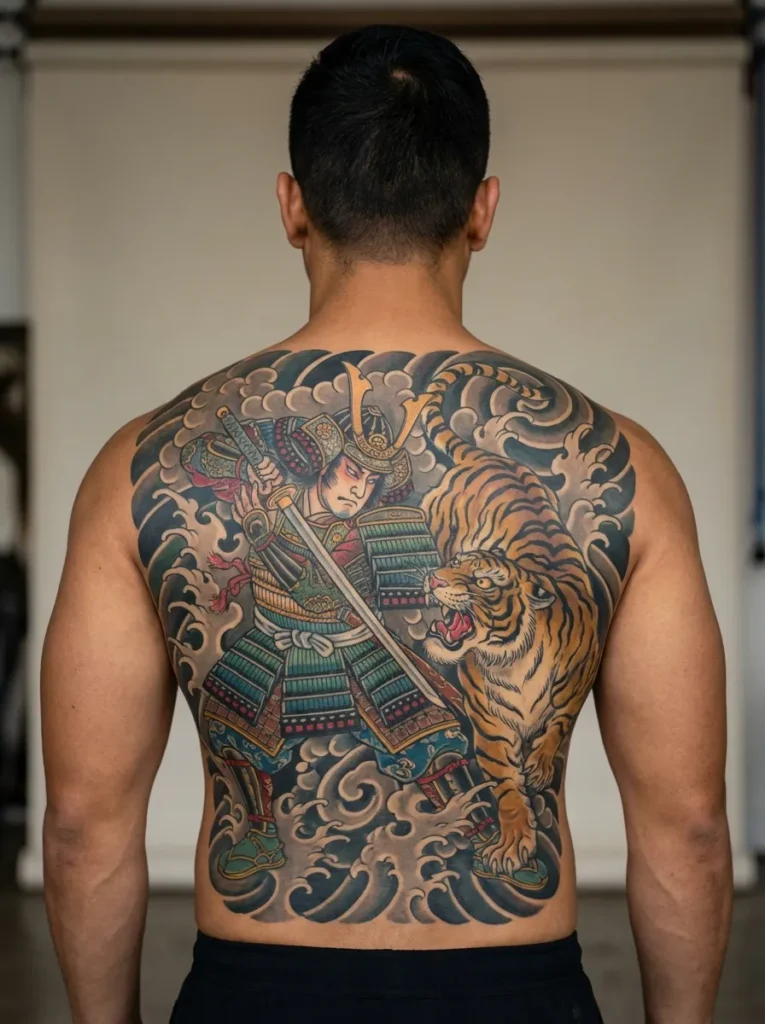
The tiger in Japanese art is a guardian of the north and a symbol of courage, strength, and unpredictability. Pairing it with a samurai creates one of the most visually powerful combinations in Japanese tattooing.
There’s a natural tension in this concept. Two apex figures sharing space. Are they allies or adversaries?
That ambiguity is part of what makes this tattoo so compelling. The viewer fills in the story.
Full back pieces and sleeves are the natural home for this design. It needs room to breathe and the artist needs room to work.
10. Samurai on Horseback
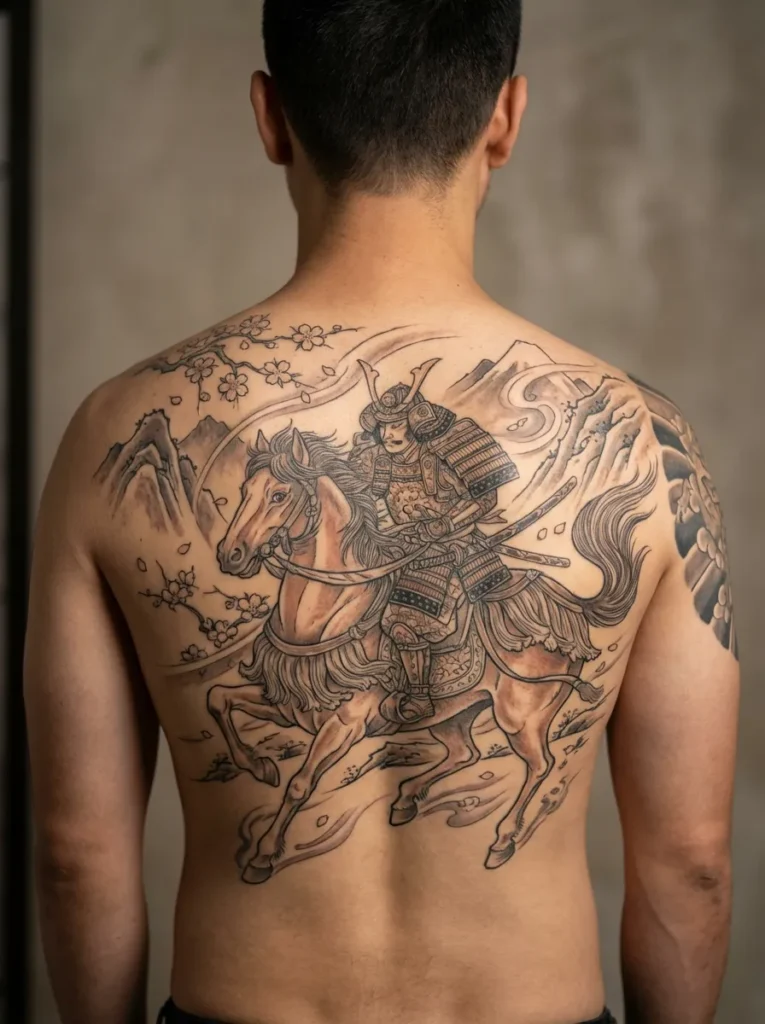
This is a tattoo about authority and presence. A mounted samurai moving through a landscape is cinematic in scale and feeling.
It’s grounded in history too. The mounted samurai class, the cavalry warriors of feudal Japan, were the elite of the elite. Power, skill, and status all in one image.
The horse adds its own symbolism: freedom, endurance, and loyalty. It amplifies everything the samurai already represents.
This design commands a large placement. Back, full thigh, or a wrap-around sleeve does it justice.
11. Female Samurai (Onna-Bugeisha)
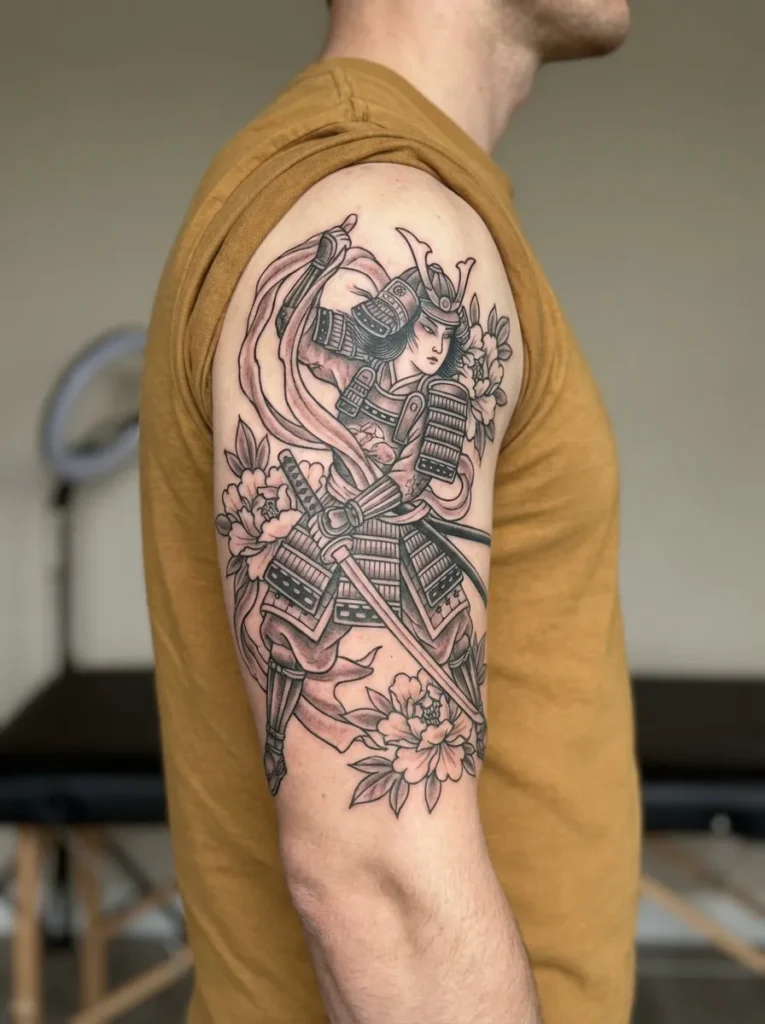
The onna-bugeisha were real. Female warriors who trained in combat, defended their homes, and fought alongside men in feudal Japan. They’ve been underrepresented in Western tattoo culture for too long.
This tattoo is a reclaiming of history. A celebration of a warrior tradition that belongs to women too.
The design can stay fully traditional in irezumi style, or blend with softer elements like peonies or flowing hair to create contrast between strength and grace.
It’s one of the most meaningful choices someone can make if they connect with themes of resilience, overlooked strength, and quiet power.
12. Samurai with Koi Fish
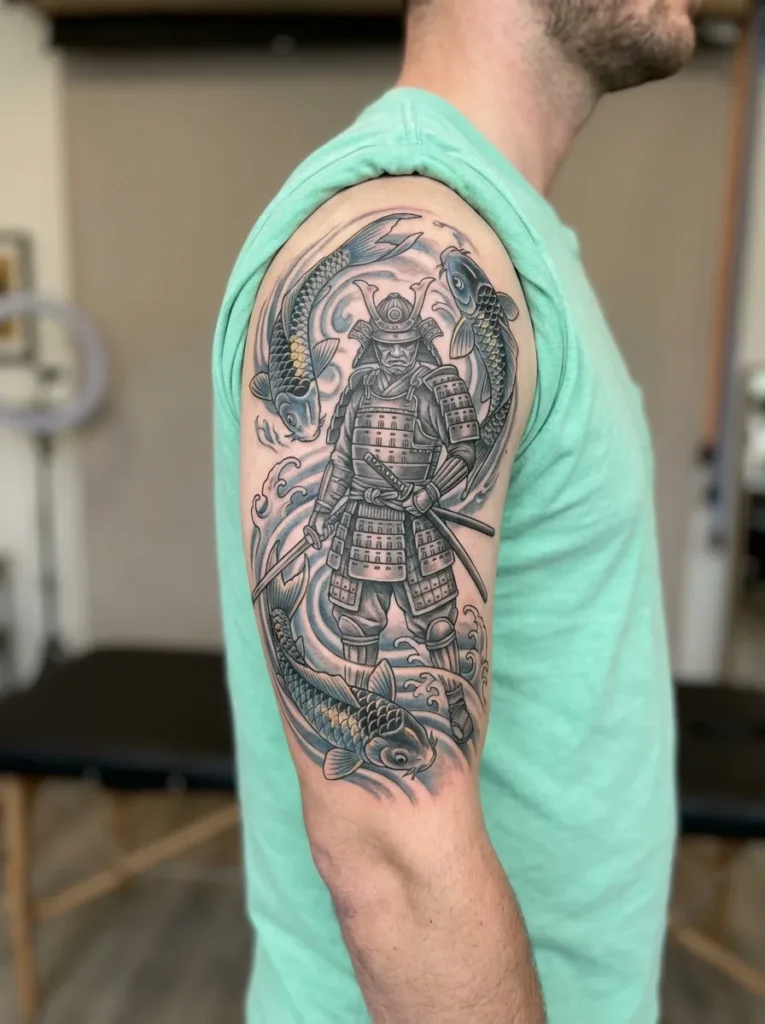
The koi represents perseverance. Swimming upstream against the current, pushing toward something harder to reach. The samurai embodies that same drive in human form.
Together they create a tattoo about the long fight. Not the single moment of glory, but the daily commitment to keep going.
Compositions that show the koi in flowing water beneath or around a samurai figure are particularly striking. The movement of the fish and the stillness of the warrior play off each other beautifully.
- Blue and black koi alongside grey-toned samurai creates a cohesive, dramatic palette
- Gold koi adds warmth and a prosperity element to the meaning
- Water ripples and waves can tie the two subjects together naturally
13. Samurai and Temple Backdrop
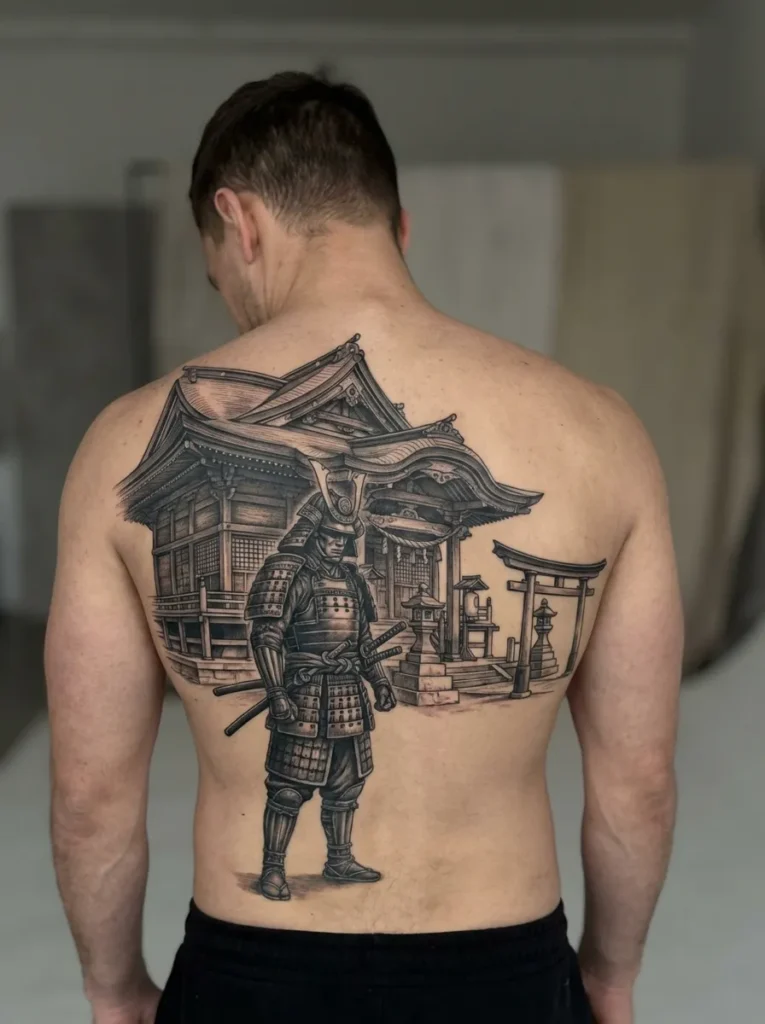
Place a samurai in front of a traditional Japanese temple and you immediately ground the figure in cultural and spiritual context. It stops being just a warrior and becomes a guardian.
Temples in Japan are sacred spaces. A samurai standing before one suggests duty to something greater than personal glory.
The architectural detail of a temple, curved rooflines, stone lanterns, and torii gates, gives the artist incredible material to work with in the background.
This design suits people drawn to themes of devotion, protection, and spiritual loyalty.
14. Samurai Sleeve Concept
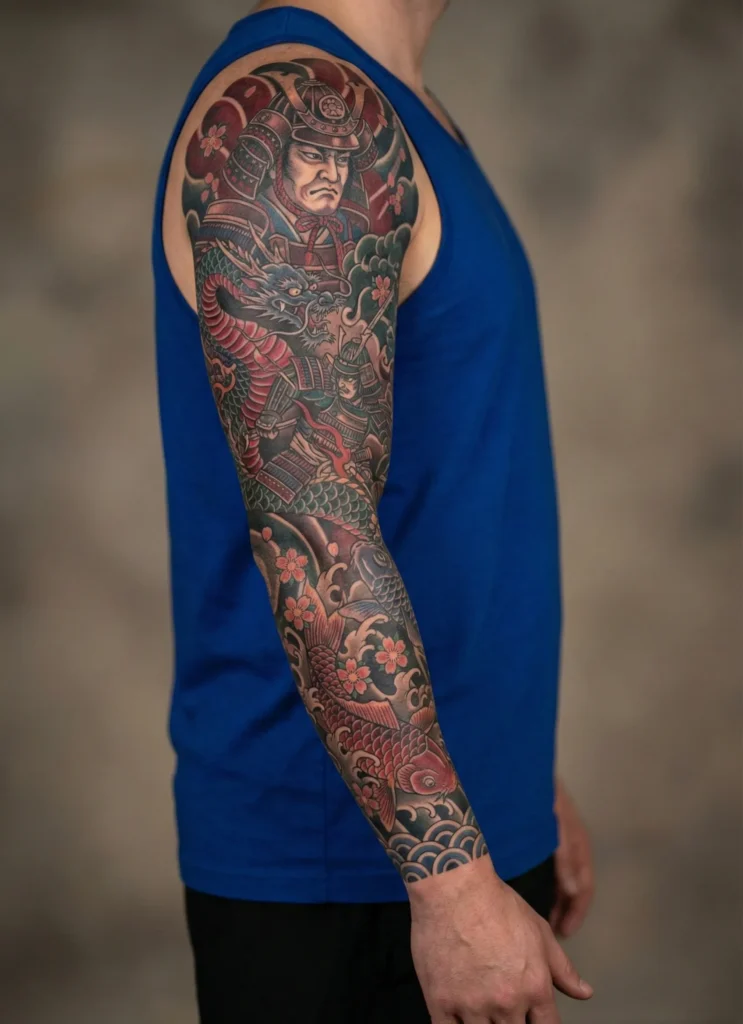
A full sleeve built around a samurai theme is one of the most ambitious and rewarding tattoo projects you can commit to. Done well, it’s a walking piece of art.
The key is cohesion. Every element needs to feel like it belongs in the same world.
A strong sleeve concept might flow from a samurai portrait at the shoulder, down through a battle or nature scene, with background elements like clouds, waves, or wind bars tying everything together at the wrist.
| Sleeve Zone | Suggested Element |
| Shoulder cap | Samurai portrait or kabuto |
| Upper arm | Dragon, tiger, or battle scene |
| Inner forearm | Koi, cherry blossoms, or peonies |
| Wrist band | Wave pattern or geometric border |
Plan this with your artist over multiple sessions. Rush it and you’ll regret it.
15. Samurai and Fudō Myōō Scene
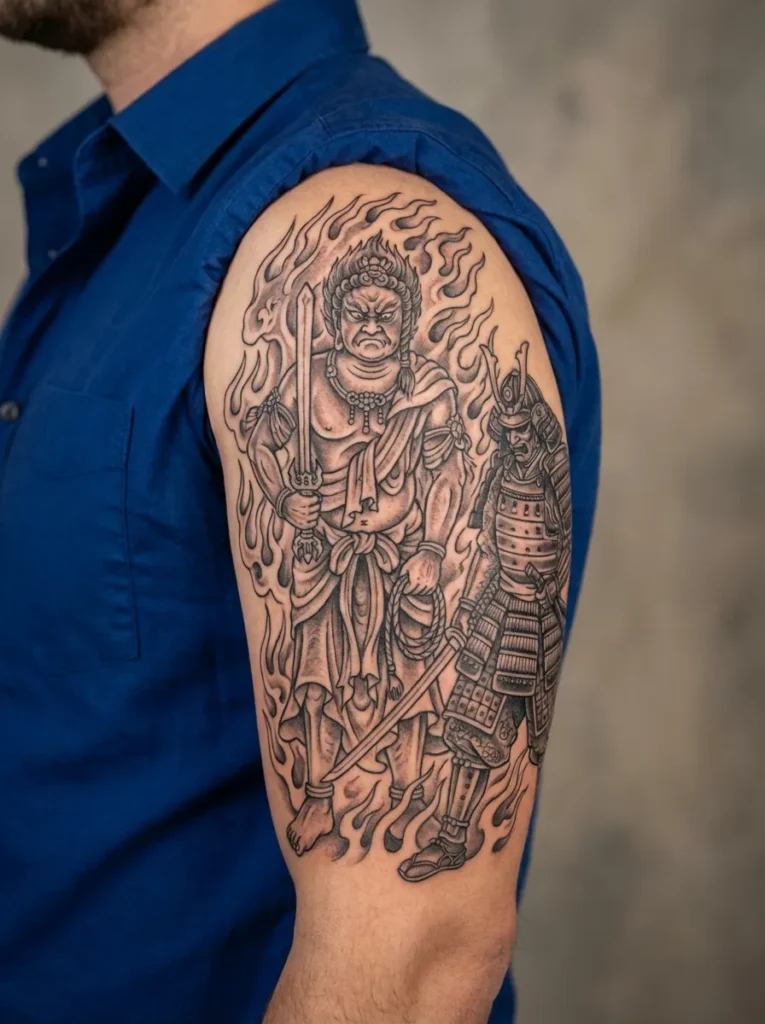
Fudō Myōō is a wrathful Buddhist deity, surrounded by flames, carrying a sword and a rope. He destroys ignorance and protects those who walk the right path.
Pairing him with a samurai is a profound combination. Two figures of righteous power standing together.
This isn’t a casual tattoo concept. It’s deeply rooted in Japanese religious iconography and deserves research before committing to it. Understanding what you’re putting on your body matters.
For those who connect with themes of protection, spiritual warfare, and burning away what no longer serves you, this is one of the most meaningful pieces you can carry.
16. Dual Samurai Battle Composition
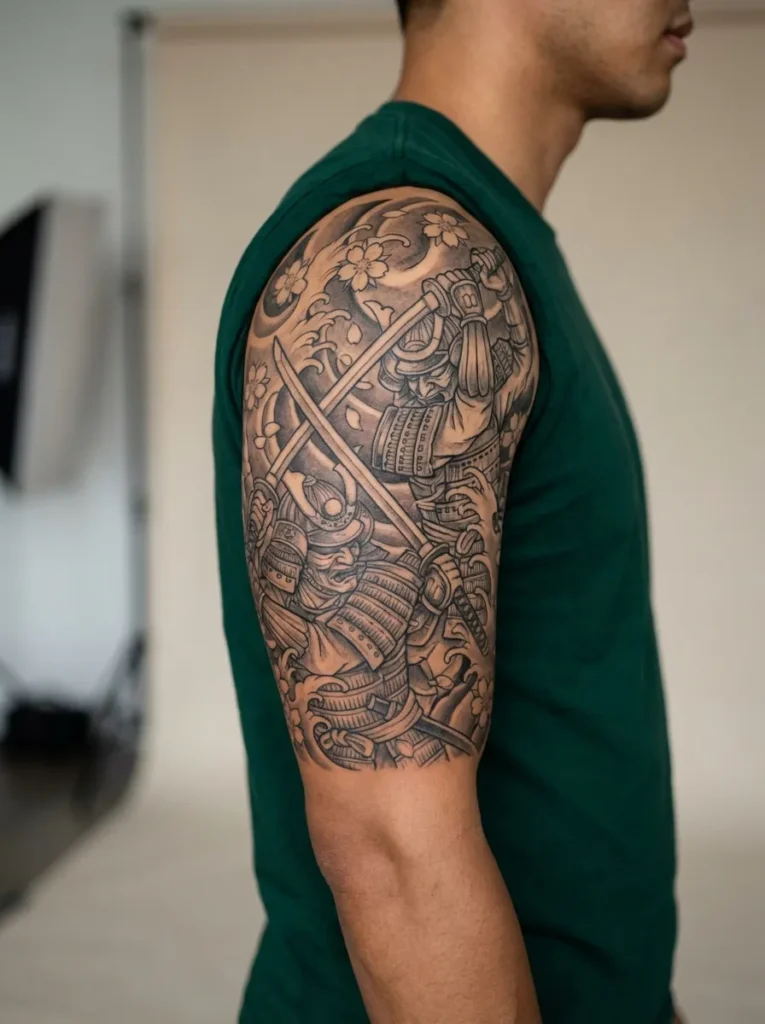
Two samurai mid-fight. Blades crossed. Eyes locked. This is pure kinetic energy captured in still form.
The drama in this concept comes from balance. Two equal forces meeting. Neither side is the villain.
It can represent internal conflict just as easily as external battle. The war within yourself between competing values, desires, or versions of who you are.
Artists who love dynamic composition will thrive with this concept. It’s technically demanding and visually spectacular when done right.
17. Samurai and Raijin Thunder Theme
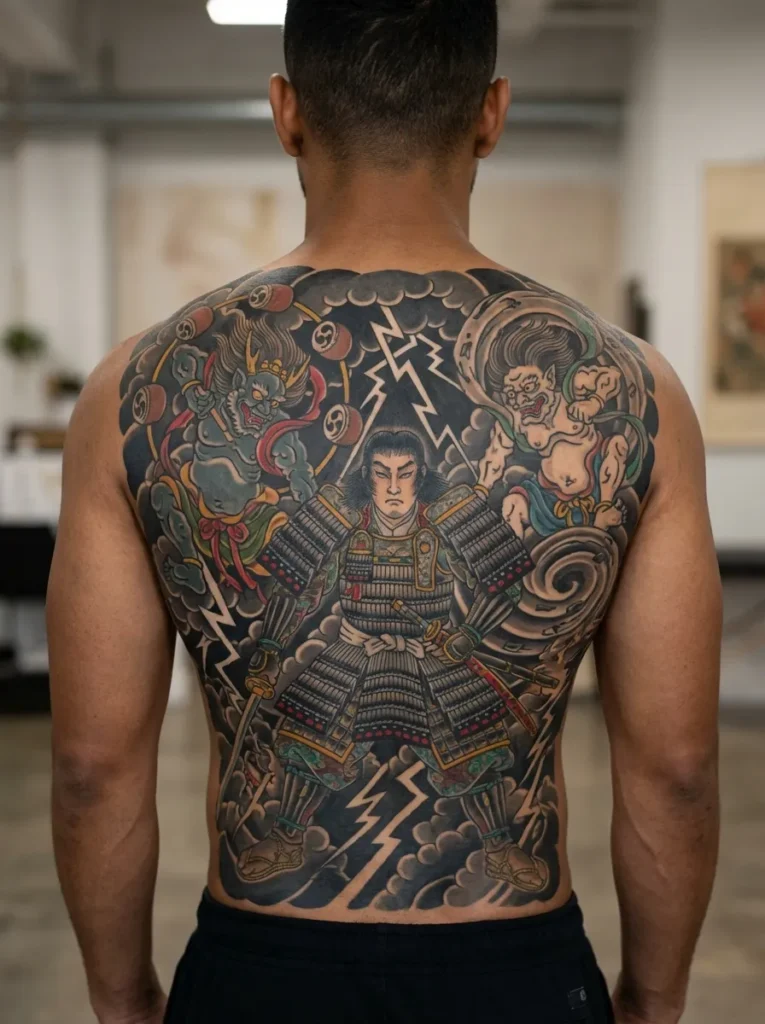
Raijin is the god of thunder and lightning in Japanese mythology. Explosive, wild, and unstoppable. Set a samurai against that kind of backdrop and you get a tattoo that feels electric.
The storm isn’t the enemy here. The samurai stands within it, unbothered. That’s the statement.
Lightning bolts, storm clouds, and taiko drums associated with Raijin all work as supporting elements. The background practically crackles off the skin.
- Dark backgrounds with sharp white lightning lines create maximum visual impact
- This concept suits bold color as much as black and grey
- Adding Fujin, the wind god, alongside Raijin creates an even richer mythological scene
18. Ronin (Masterless Samurai) Design
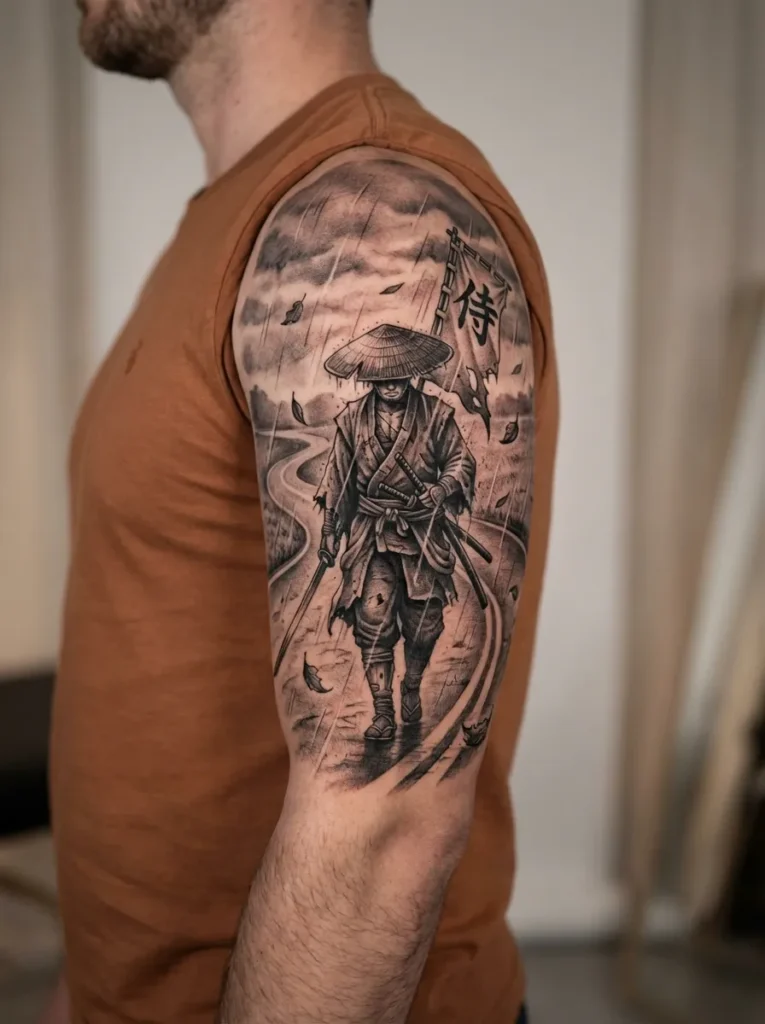
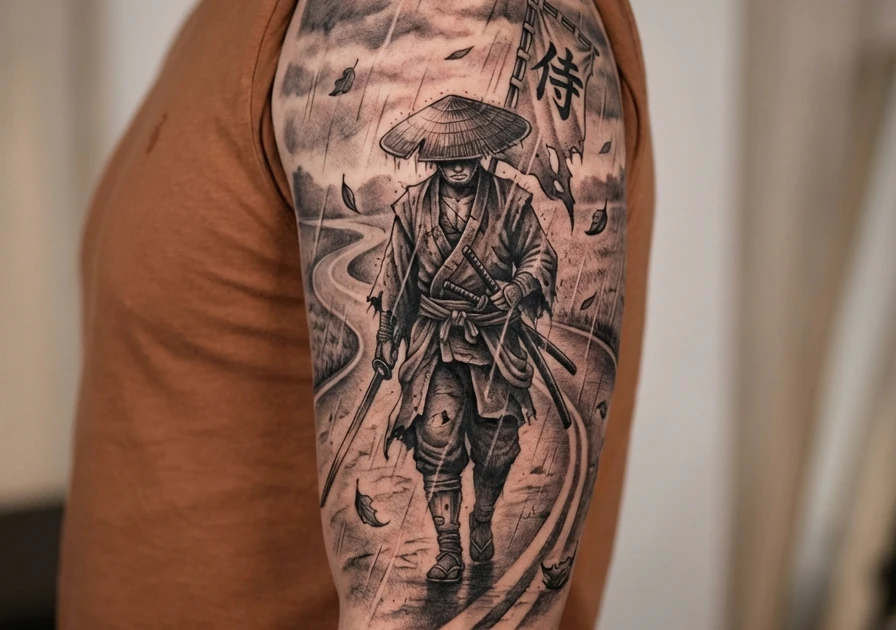
The ronin carries a different weight than the samurai who serves. No lord. No clan. Just a warrior walking alone with their own code.
For many people, this is the most personally resonant samurai concept. The outsider who still lives with honor. The one who answers to themselves.
Ronin imagery often features a lone figure on an empty road, in rain, or at dusk. The solitude is the point. It’s not sad. It’s free.
This tattoo tends to find people going through transitions. Leaving behind old structures and figuring out who they are on their own terms.
19. Samurai Backpiece with War Banner
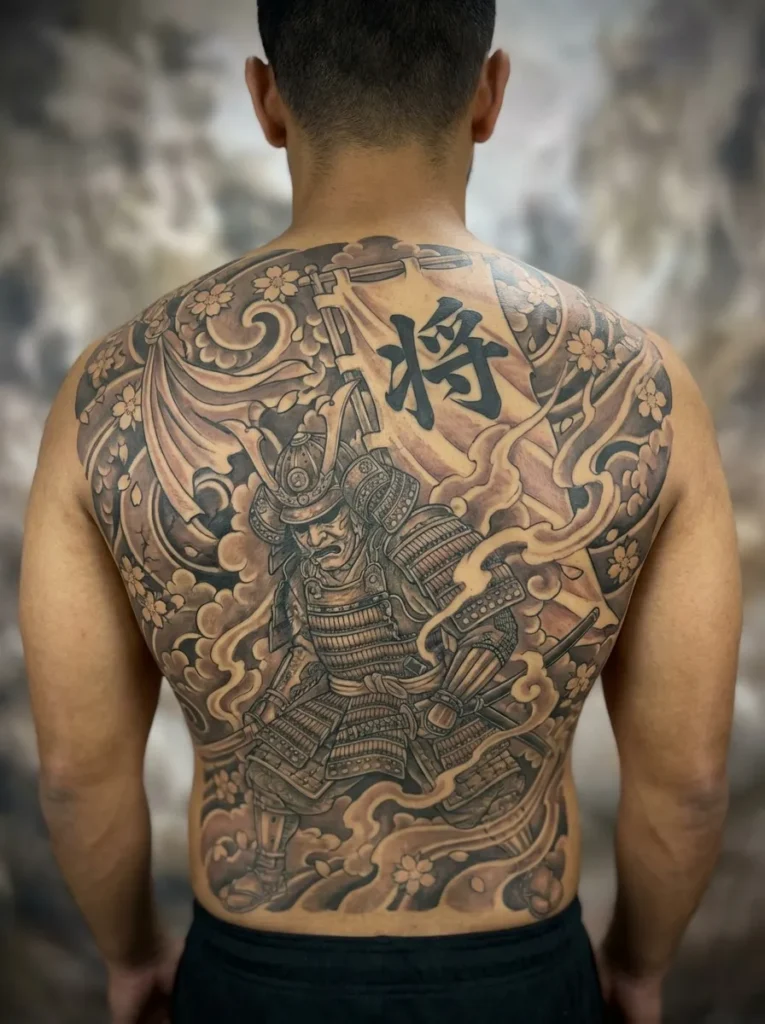
A full backpiece is the ultimate canvas for a samurai concept. And nothing adds drama to that canvas quite like a war banner (uma-jirushi) rising behind the warrior.
These banners were used on the battlefield to identify clans and rally troops. They were symbols of identity, loyalty, and pride. On your back, they become a declaration of what you stand for.
The composition writes itself. Samurai centered, armor detailed, banner rising above in bold kanji or clan imagery, background filled with clouds, battle smoke, or sakura.
This is a multi-session commitment. A piece you build over time with an artist you trust completely. The result is something you carry for life.
Every one of these designs says something different about the person wearing it. So which samurai archetype speaks to something you’re actually living right now? Are you the guardian, the lone ronin, or the warrior still mid-battle with something inside yourself?
