A Japanese full sleeve is not just a tattoo. It’s a commitment to one of the most respected art forms in the world.
The tradition runs deep. Japanese tattooing, known as Irezumi, has centuries of history behind it. Every subject, every element, every color choice carries meaning.
This list covers 17 of the most powerful full sleeve concepts for men. Whether you’re just starting to plan or already talking to an artist, these designs are worth knowing inside and out.
1. Dragon and Clouds Full Sleeve
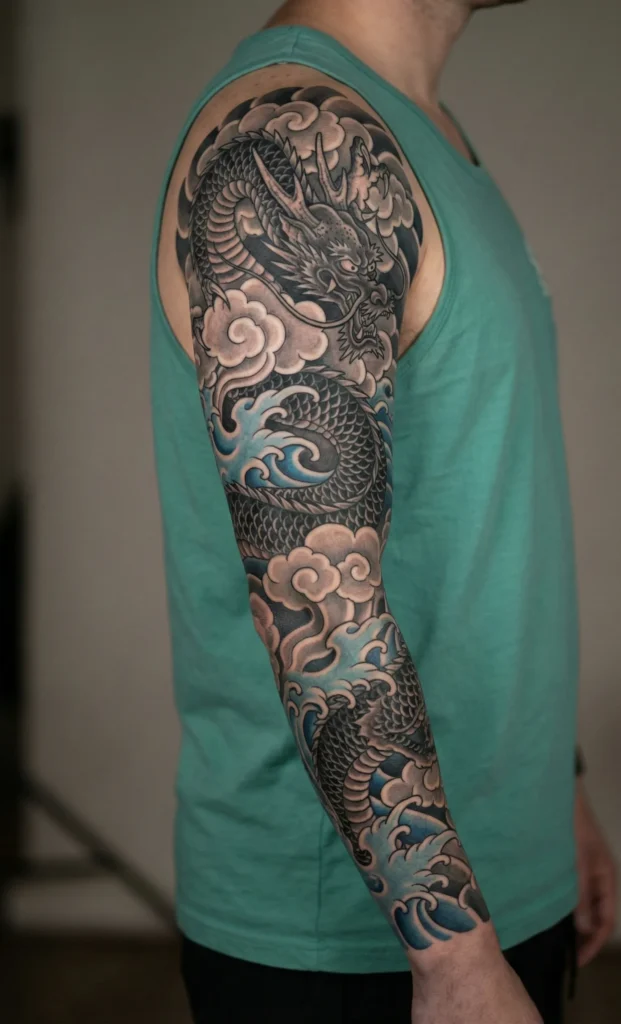
A dragon weaving through clouds is the definitive Japanese sleeve. It’s been done thousands of times and it never gets old because the composition is just that strong.
The clouds give the dragon a world to move through. Without them, the dragon floats. With them, it feels like it belongs somewhere vast and ancient.
The sleeve format lets the dragon coil naturally around the arm, with the head typically landing on the upper arm or shoulder and the tail wrapping toward the wrist.
- Use billowing kumo clouds in grey and white to contrast against a darker dragon
- Let the negative space breathe, not every inch needs to be filled
- This design works in full color or black and grey equally well
2. Koi Fish with Waves Composition
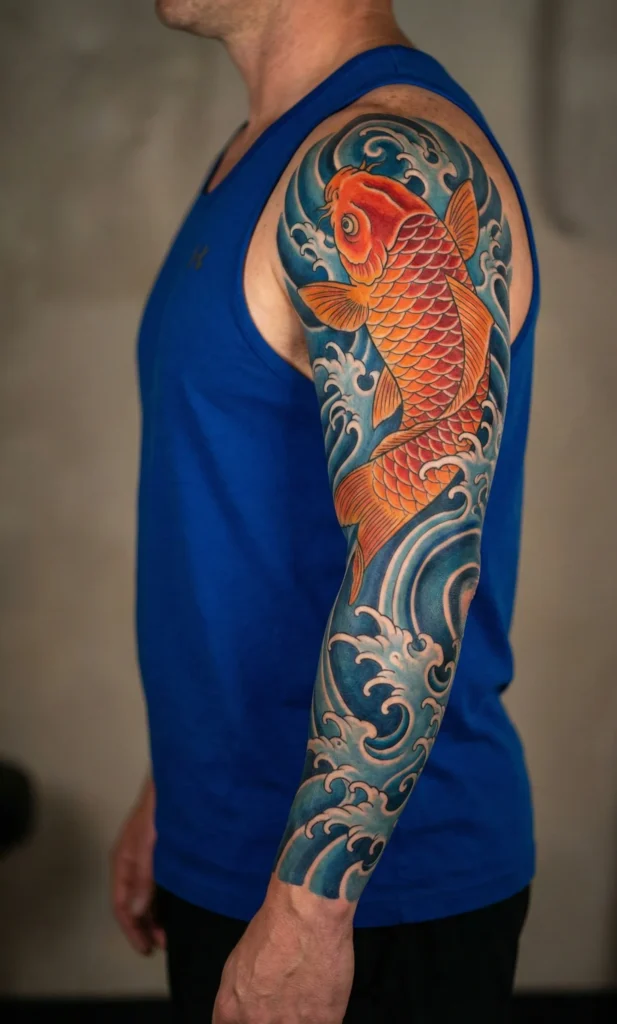
Koi sleeves have a fluid, almost meditative quality. The fish moves with the arm rather than against it, and the waves reinforce that sense of constant motion.
This is one of the most personal sleeve choices out there. The koi swimming upstream is a direct metaphor for pushing through difficulty. A lot of people carry real meaning in this one.
Color plays a huge role here. A red or orange koi against deep blue Nami waves creates the kind of contrast that makes people stop and stare.
3. Tiger with Bamboo Forest
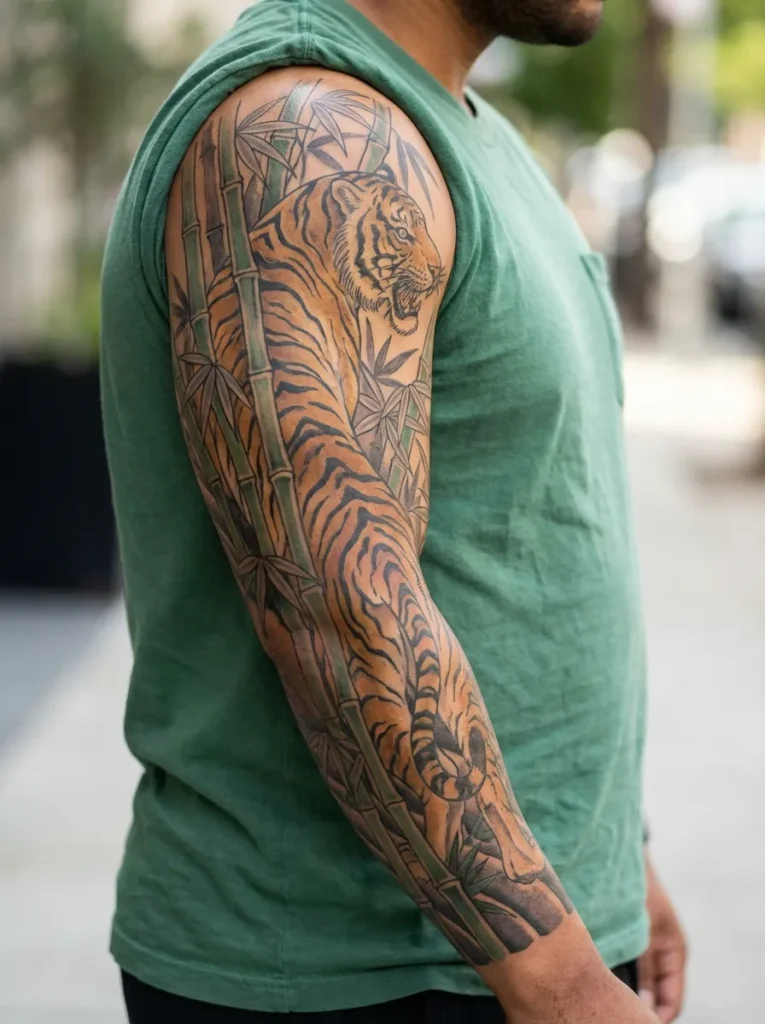
The tiger in Japanese tattooing is a protector. It wards off evil, bad luck, and illness. Pair that energy with a bamboo forest and you’ve got a sleeve that feels grounded and wild at the same time.
Bamboo brings vertical lines into the composition, which works beautifully on a sleeve. It creates depth and gives the tiger a place to exist within rather than just floating on skin.
The color palette here tends toward earthy tones, amber, green, black, and grey, which gives the whole piece a natural, cohesive feel.
4. Samurai Warrior Battle Scene
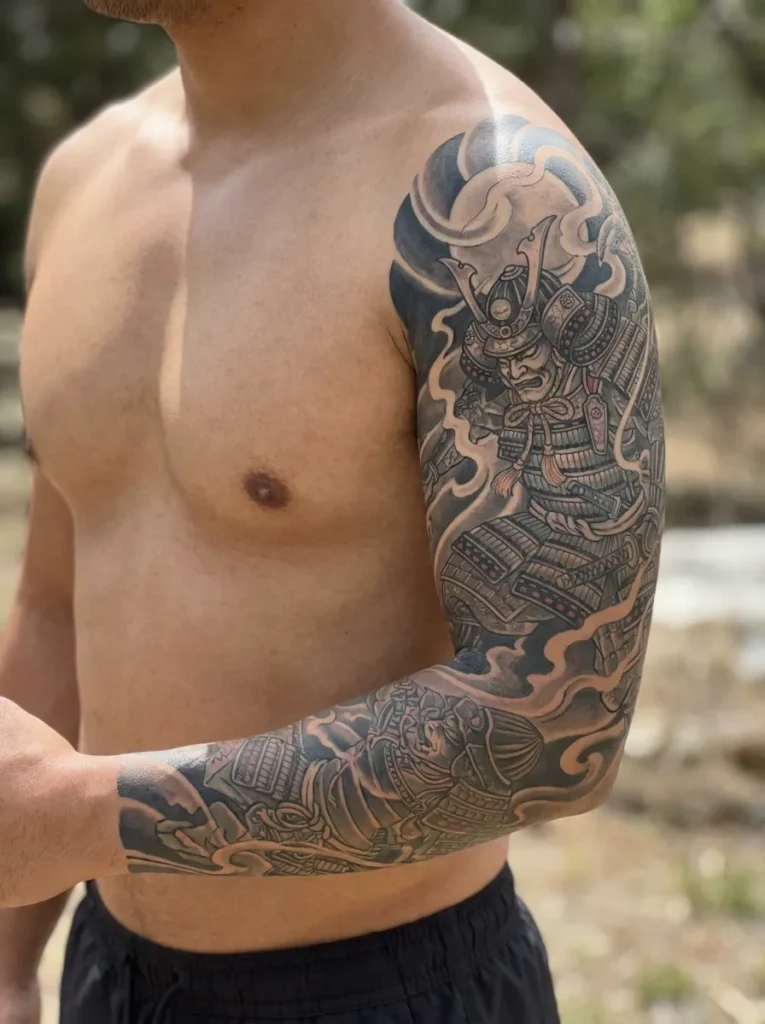
This is storytelling at its finest. A samurai sleeve doesn’t just show a figure, it captures a moment. Armor, movement, determination, and usually some kind of conflict or spiritual tension.
The detail work on traditional samurai armor alone can take hours. The lacquered plates, the silk cords, the kabuto helmet. When done right, it’s breathtaking.
- Reference specific historical periods for armor styles if authenticity matters to you
- Battle scenes work best when wrapped around the arm rather than placed flat
- Adding a backdrop like mist, moonlight, or cherry blossoms adds depth without cluttering the warrior
5. Oni Mask with Peonies
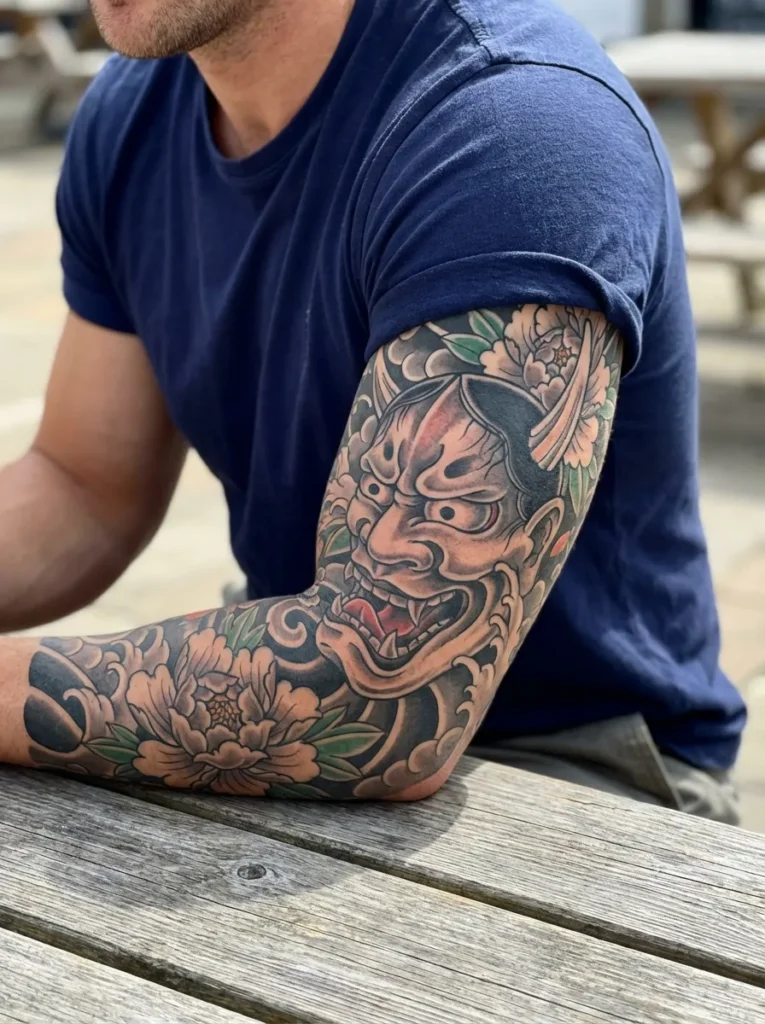
Oni masks are one of the most iconic images in Japanese tattooing. They’re fierce, theatrical, and loaded with meaning. Oni are supernatural demons that punish the wicked. Wearing one is a way of channeling that protective, fearsome energy.
Surround that mask with peonies and something interesting happens. The softness of the flowers makes the mask look even more intense by contrast.
This sleeve concept works especially well when the mask is large and centered, with the peonies filling the space around it organically.
6. Fudō Myōō with Flames
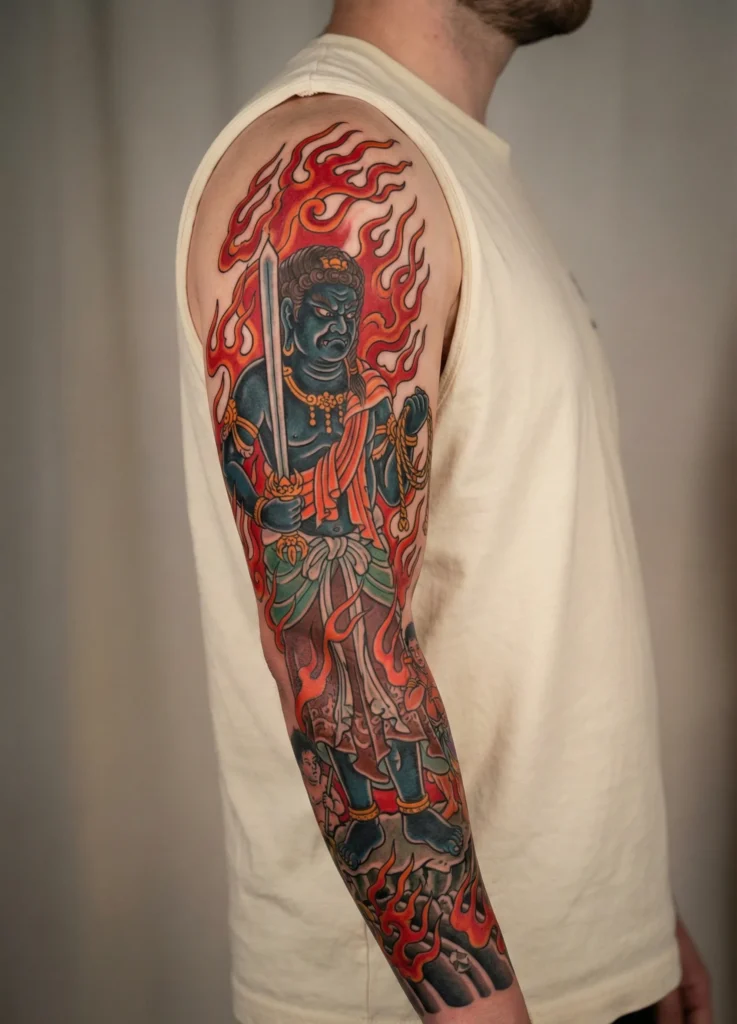
Fudō Myōō is not a casual choice. He is the immovable king, a Buddhist deity of fire and fierce wisdom who protects those who are sincere in their path.
His imagery is unmistakable. Sword in one hand, rope in the other, surrounded by roaring flames, with an expression that says he has seen everything and fears nothing.
A full sleeve dedicated to Fudō Myōō is a serious piece. It suits someone who connects with themes of discipline, protection, and inner strength.
- The flames surrounding him are kaen style, fluid and ribbon-like, not realistic fire
- His skin is typically blue or dark, setting him apart from the warm flame tones
- Including small attendant figures (Seitaka and Kongara) adds traditional accuracy
7. Raijin and Fūjin Dual Gods
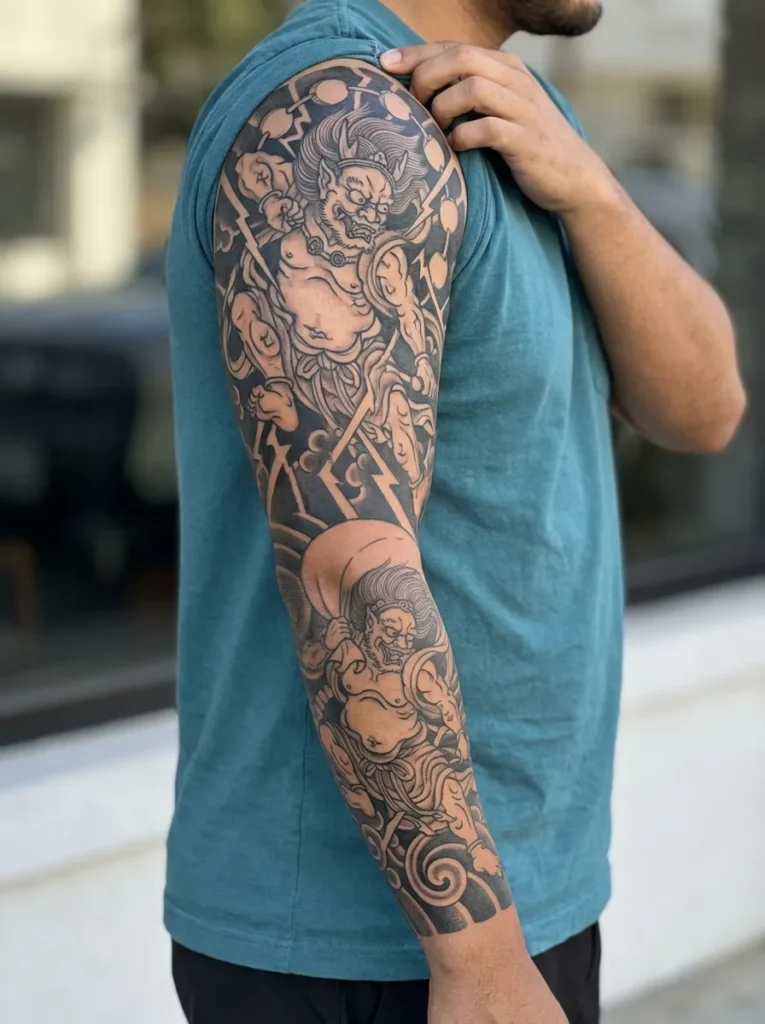
Two gods, one sleeve. Raijin is the god of thunder and lightning. Fūjin is the god of wind. Together they’re one of the most dynamic pairings in all of Japanese art.
They’re usually depicted together, facing each other across a composition. On a sleeve, one can dominate the upper arm while the other wraps toward the forearm.
The energy between them is electric, literally. This sleeve reads as powerful from across the room.
| God | Domain | Visual Elements | Energy |
| Raijin | Thunder and lightning | Drums, lightning bolts, fierce expression | Explosive, chaotic |
| Fūjin | Wind | Wind bag, flowing robes, wild movement | Dynamic, sweeping |
8. Phoenix with Cherry Blossoms
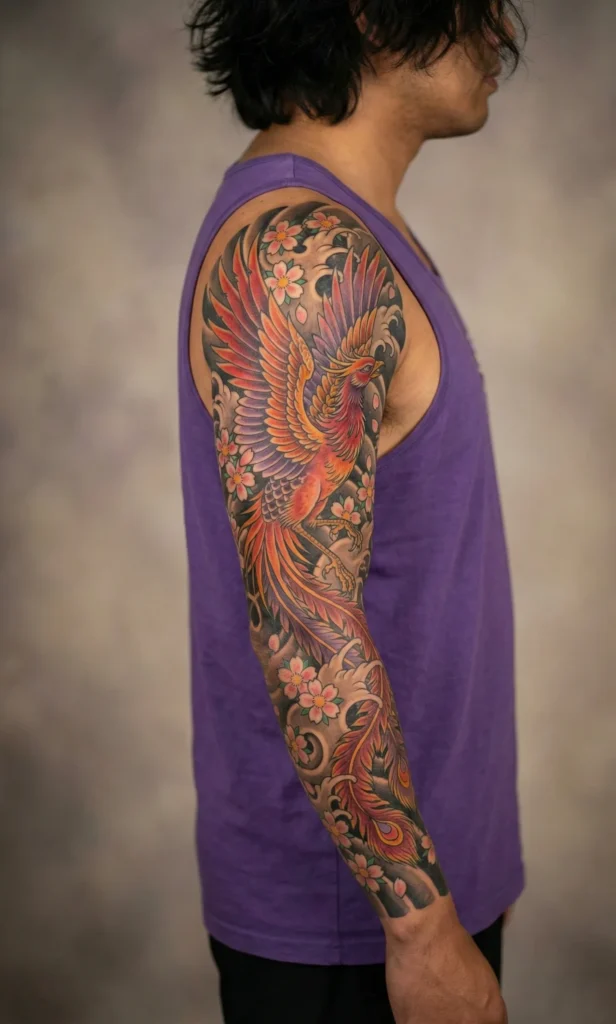
The phoenix in Japanese tradition rises from destruction and is reborn. It represents resilience, renewal, and the beauty that comes after hardship.
Cherry blossoms reinforce that message. They bloom brilliantly and fall fast. Together these two elements create a sleeve about cycles, endings, and new beginnings.
The phoenix’s feathers give an artist incredible freedom with color. Red, orange, gold, and purple all work beautifully within the same composition.
9. Snake and Chrysanthemum Design
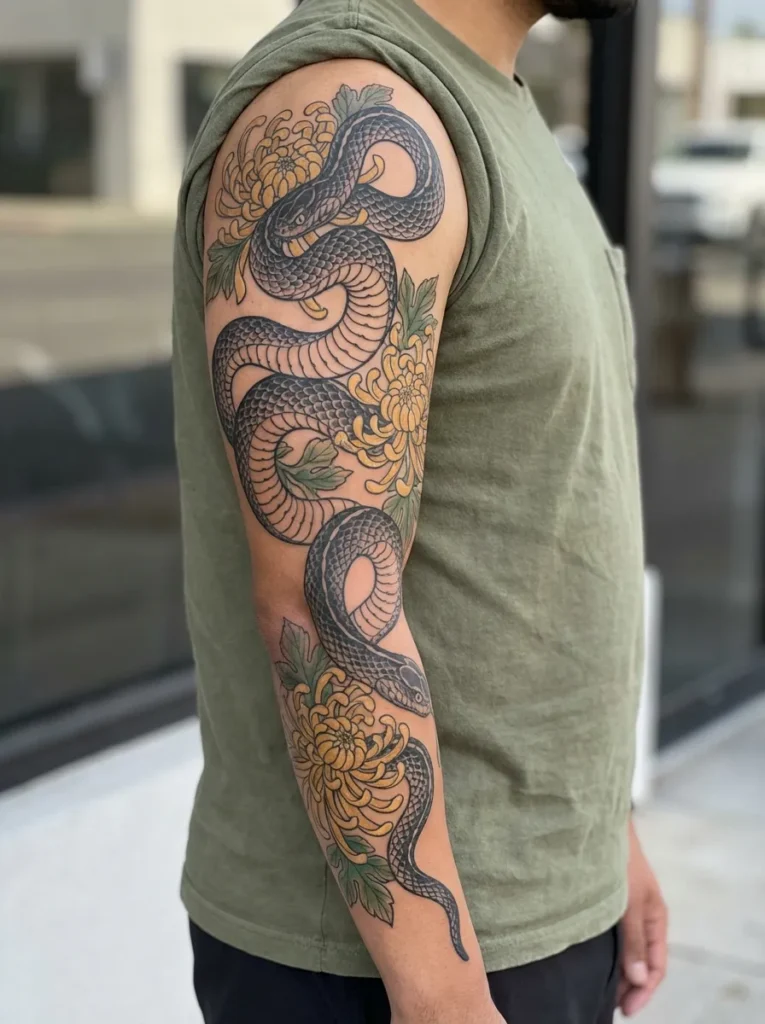
The Japanese snake is misunderstood by people who don’t know the tradition. It’s not sinister. It represents wisdom, protection, good fortune, and the shedding of old versions of yourself.
Pair the snake with chrysanthemums, the imperial flower of Japan, and you get a sleeve that’s elegant, coiling, and deeply traditional.
The snake’s long body is practically designed for sleeve work. It wraps, it winds, it fills space naturally in a way few other subjects can.
- Chrysanthemums come in many varieties, use kiku style for traditional accuracy
- The snake’s scales should have fine, precise linework to contrast against the softer petals
- Gold or yellow chrysanthemums against a dark snake create strong visual contrast
10. Hannya Mask with Maple Leaves
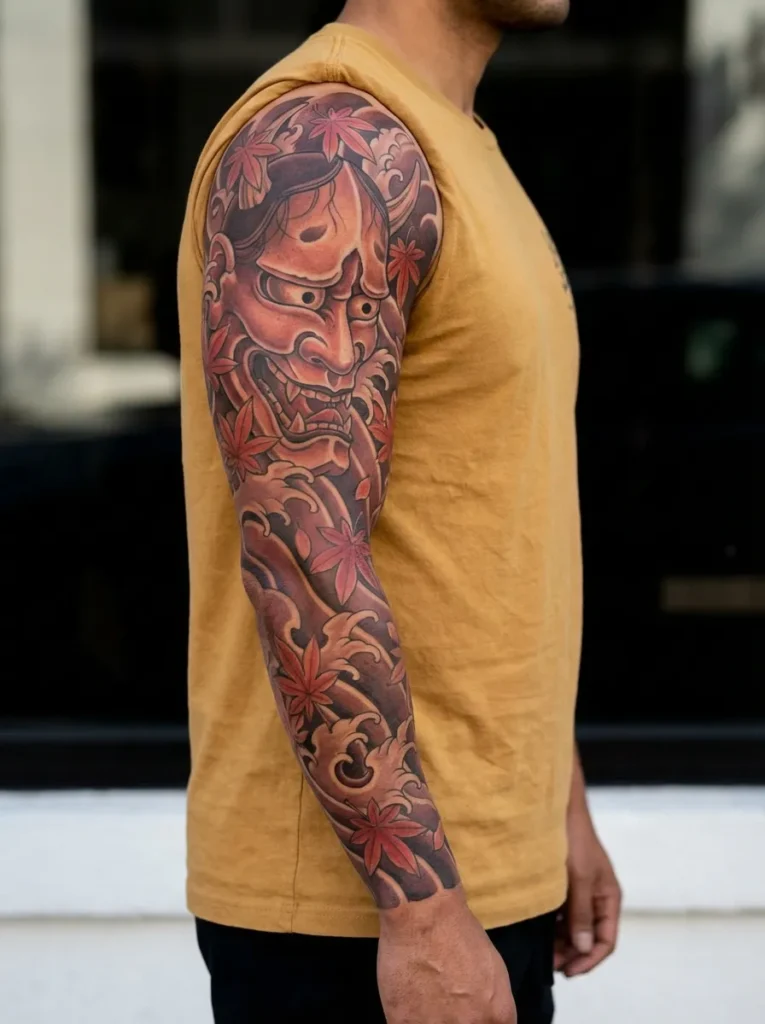
The Hannya is a woman transformed by jealousy and heartbreak into something monstrous. It’s one of the most emotionally complex images in Japanese tattooing.
Maple leaves, or momiji, add a seasonal layer to the piece. They’re associated with autumn, change, and the melancholy beauty of things passing. It fits the Hannya perfectly.
The red tones of both the mask and the autumn leaves create a fiery, passionate sleeve that carries serious emotional weight.
11. Karajishi (Foo Dog) with Botan
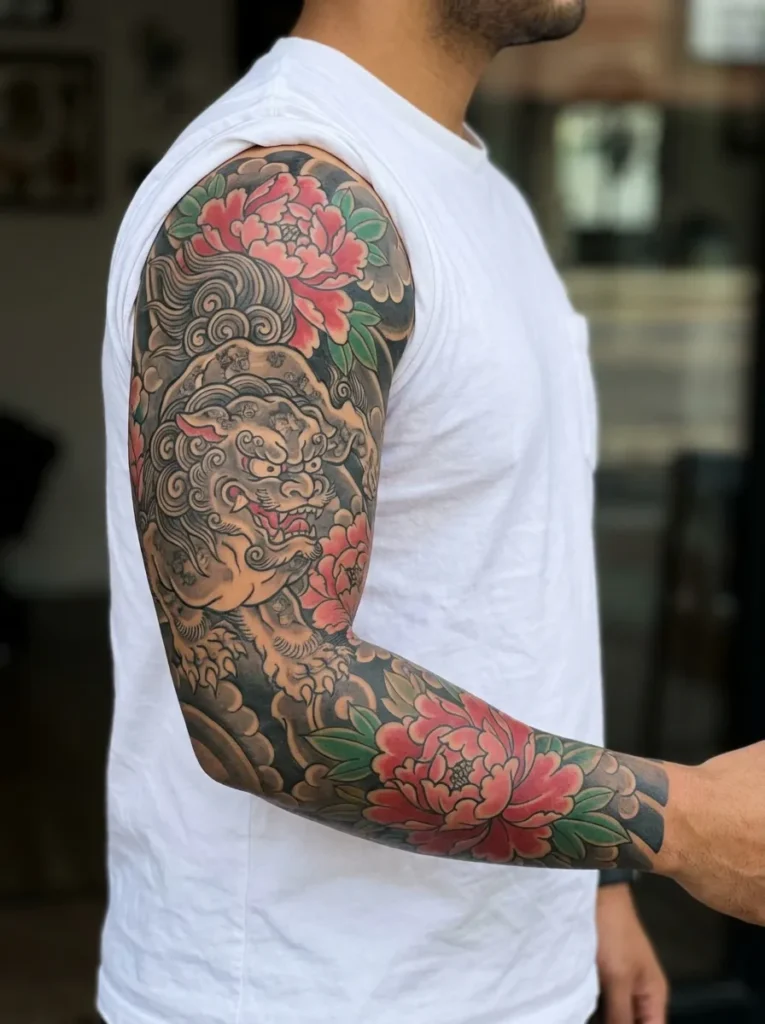
The Karajishi, or traditional foo dog, is a lion-like guardian figure in Japanese tattooing. It’s fearless, powerful, and protective. It doesn’t flinch at anything.
Botan, which is the Japanese peony, is its natural partner. Together they’re one of the most classic pairings in Irezumi, representing the balance between ferocity and beauty.
This combination has appeared in woodblock prints, temple carvings, and tattoos for centuries. There’s a reason it keeps showing up.
| Pairing | Symbolism | Style Fit |
| Karajishi and Botan | Strength and beauty, protection | Traditional, bold |
| Oni and Peony | Ferocity softened by grace | Traditional, dramatic |
| Snake and Chrysanthemum | Wisdom and imperial dignity | Traditional, elegant |
| Dragon and Cherry Blossom | Power and impermanence | Traditional or neo-trad |
12. Dragon and Tiger Contrast Theme
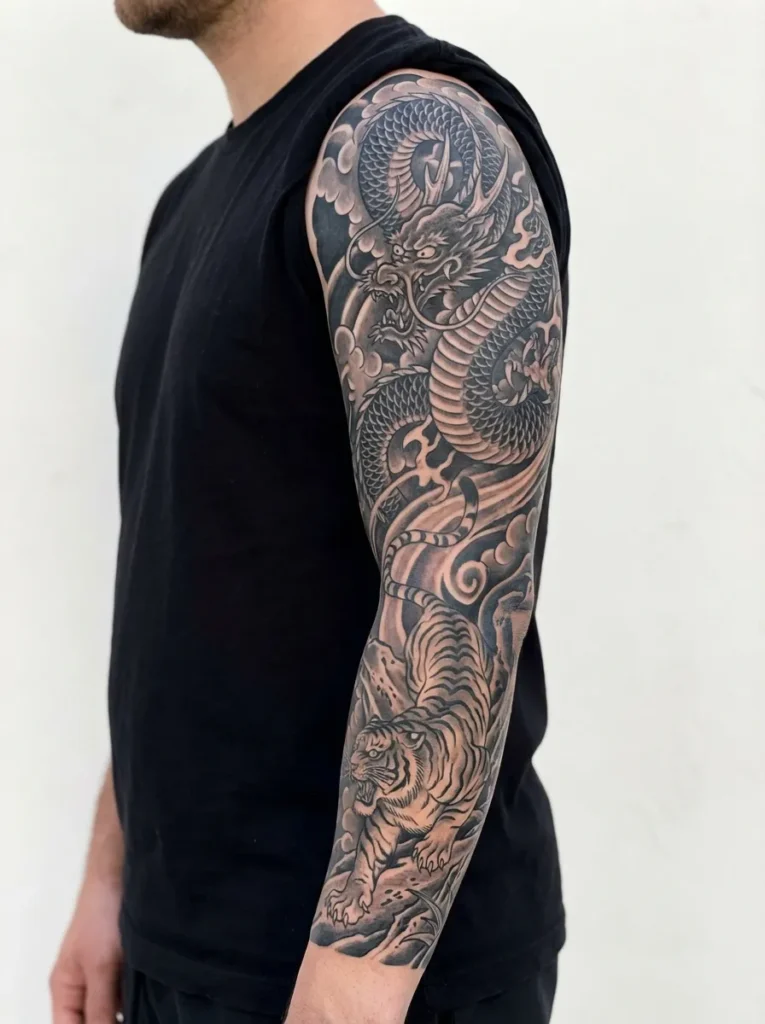
In Japanese tradition, the dragon and tiger are eternal rivals. Neither can defeat the other. They represent the balance of opposing forces, spiritual power versus earthly strength, sky versus earth.
A sleeve built around this contrast is inherently dynamic. There’s built-in tension that gives the composition energy before the artist has even picked up the needle.
The dragon typically dominates the upper arm reaching toward the sky while the tiger grounds the lower arm. The space between them becomes a battlefield of clouds and wind.
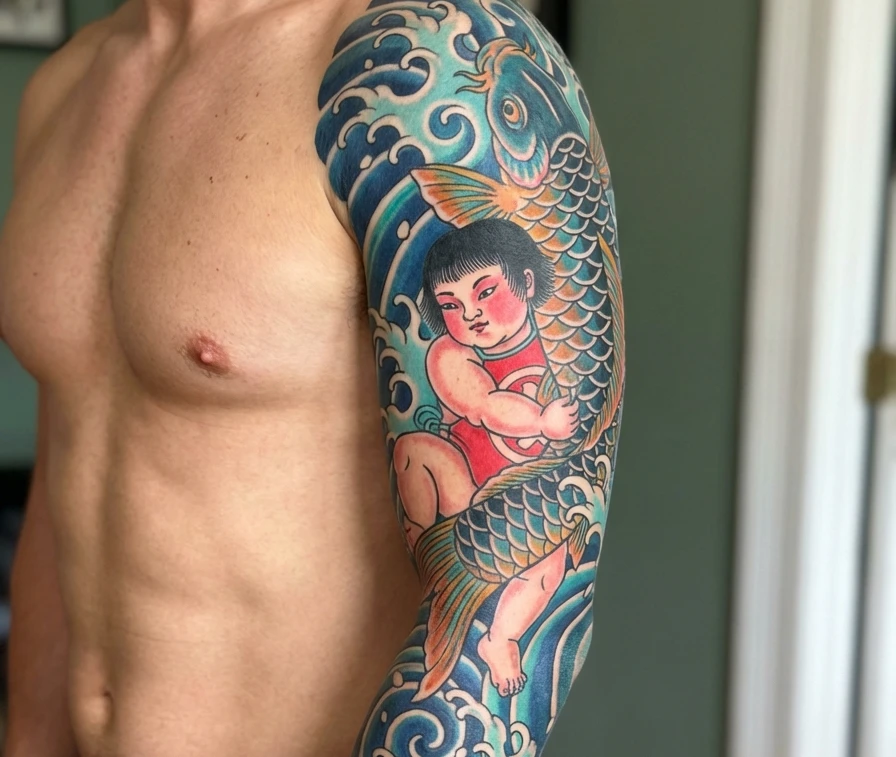
13. Kintarō Wrestling a Carp
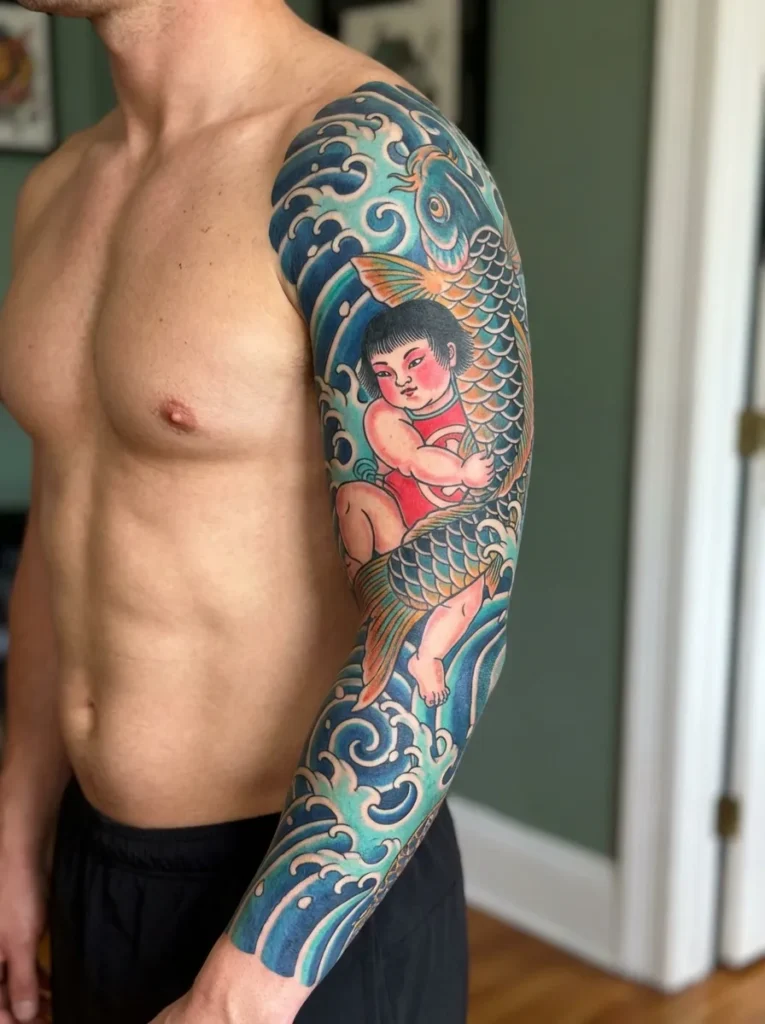
This one is pure energy and joy. Kintarō is the beloved golden boy of Japanese folklore, a wild child raised in the mountains who wrestled bears and befriended animals.
Showing him wrestling a massive carp creates one of the most dynamic, movement-driven compositions in Japanese tattooing. The water, the struggle, the sheer physical force of it all.
It’s a sleeve that makes people smile before they even know the story. Then once you explain it, they love it even more.
- Kintarō is always depicted as a chubby, rosy-cheeked boy with a red bib
- The carp should be large, colorful, and actively fighting back
- Nami waves surrounding the scene tie everything together and add natural movement
14. Namakubi with Floral Background
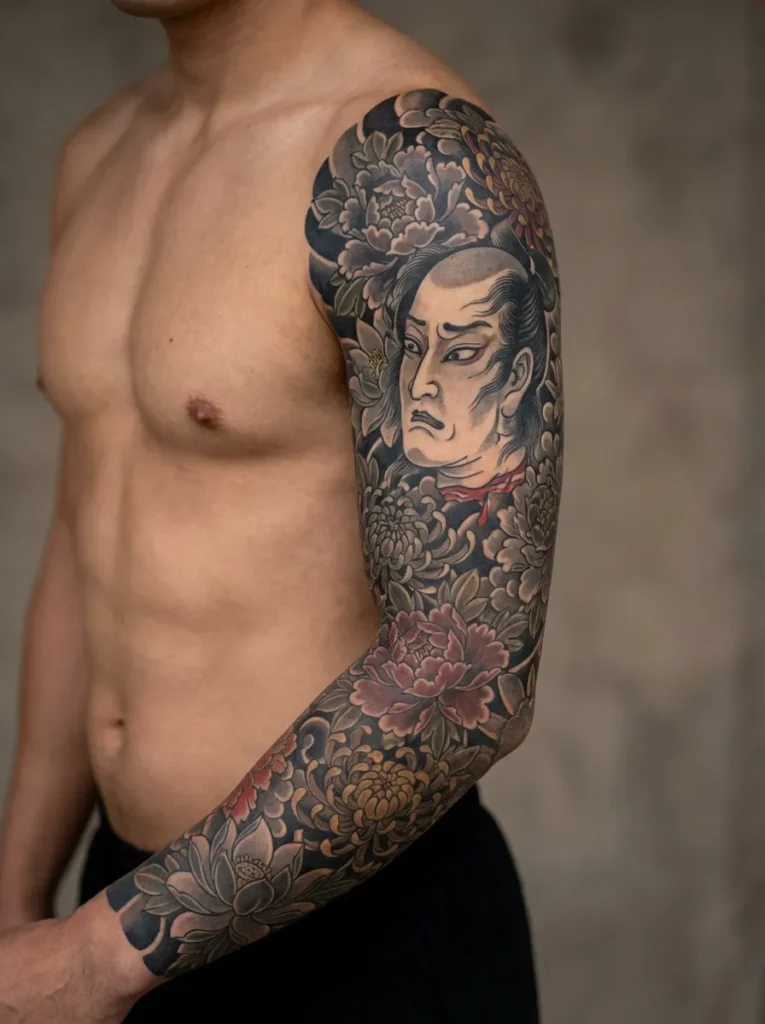
This one isn’t for everyone and that’s fine. A Namakubi, which is a severed head motif, comes from Edo-period tattooing and samurai culture. It represents courage in the face of death and an acceptance of mortality.
Surrounded by lush florals, peonies, chrysanthemums, or lotus flowers, the contrast creates something genuinely arresting. Beauty and mortality existing in the same frame.
If you’re drawn to this, lean into it fully. It’s a bold, meaningful choice with real historical roots.
15. Traditional Irezumi Patchwork Sleeve
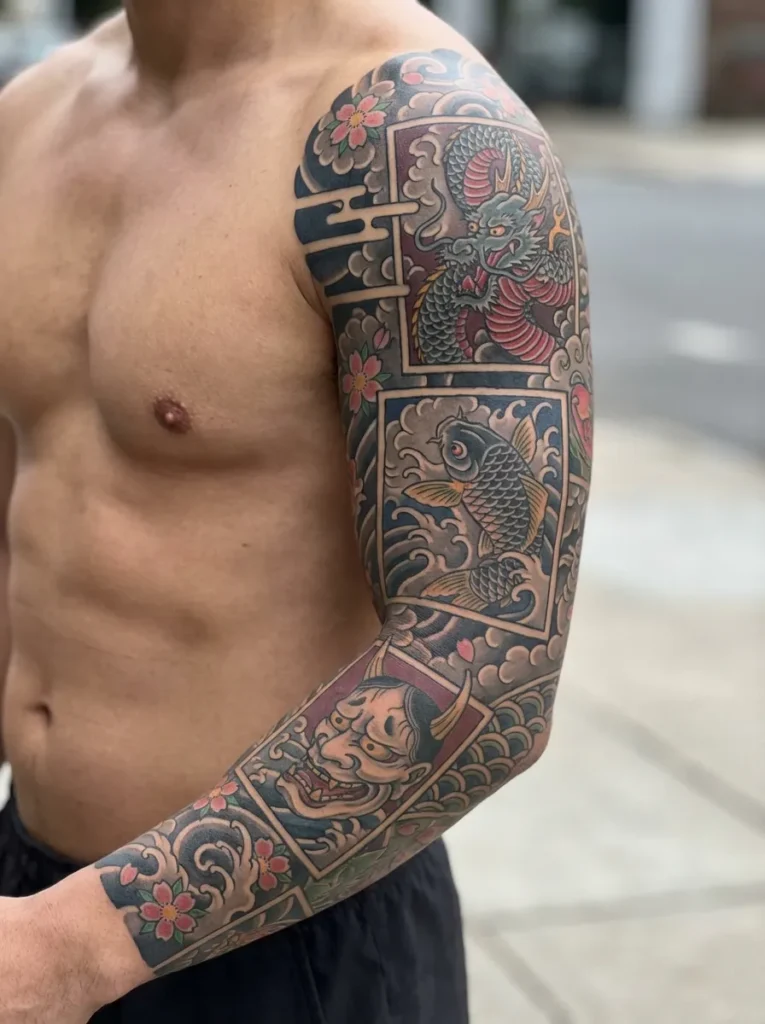
Not every sleeve needs one unified scene. A patchwork sleeve pulls together multiple traditional subjects, each one framed separately, creating a collection of stories on a single arm.
Think of it like a curated gallery. A dragon here, a koi there, a mask in between, all connected by traditional background elements like waves, clouds, or wind bars.
This approach is actually how many traditional Japanese tattoo collections grew historically. Piece by piece, each one meaningful, until they formed something complete.
- Keep a consistent color palette across all panels to unify the patchwork
- Use bold black outlines as a common thread between different subjects
- Work with an artist who plans the full layout before starting any individual piece
16. Monkey King (Saru) with Cloud Swirls
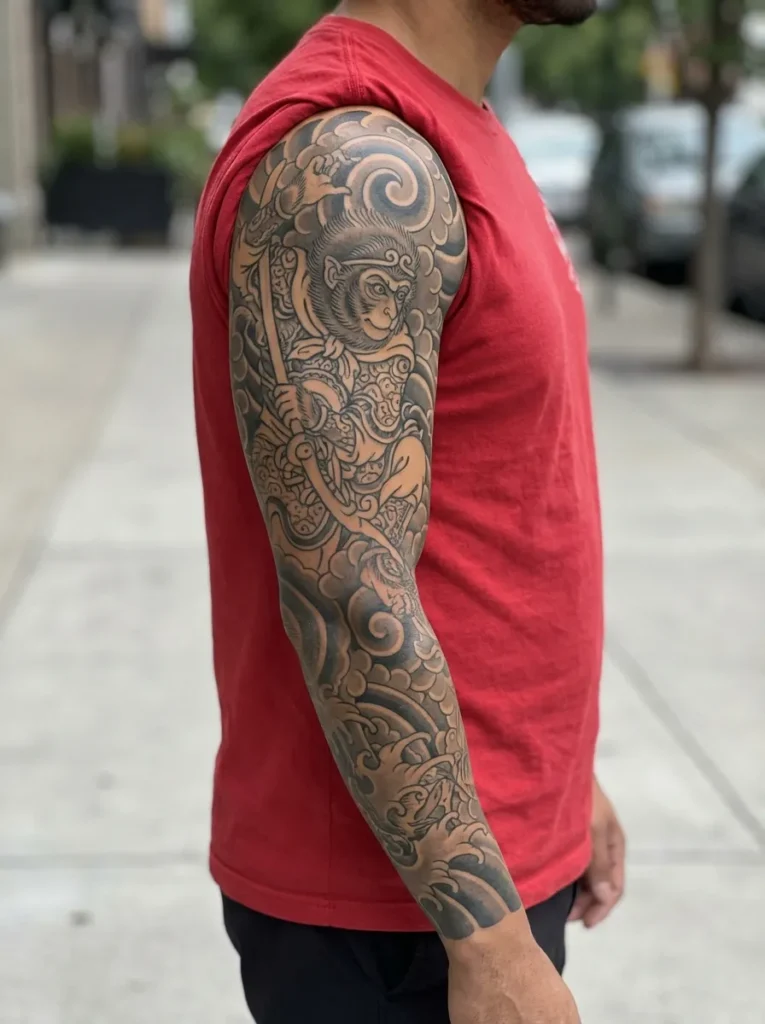
The monkey in Japanese tattooing carries wisdom and a trickster energy. The Saru is clever, adaptable, and quick. It sees through illusions.
Surrounded by cloud swirls, the monkey takes on an almost celestial quality. It feels like a figure moving between worlds, never fully grounded, always one step ahead.
This is an underused subject in Western tattoo culture, which makes it a genuinely fresh choice for a sleeve. You won’t see it on every arm at the gym.
17. Minogame Turtle with Waves
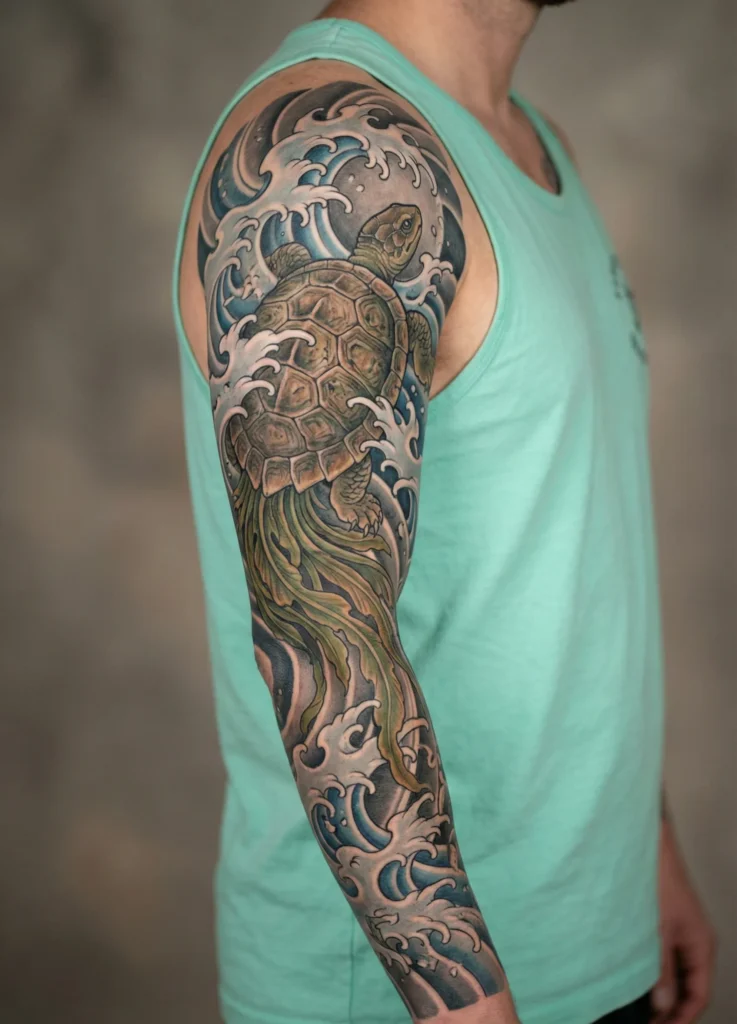
The Minogame is an ancient turtle with a long, flowing tail of seaweed or moss trailing behind it. In Japanese tradition, it represents longevity, wisdom, and endurance that outlasts everything around it.
It’s a slower, quieter energy than a dragon or tiger sleeve, but it carries just as much weight. There’s something deeply calming about a creature that has simply survived everything.
The waves surrounding the turtle create natural movement, and the contrast between the turtle’s textured shell and the flowing water makes for a visually rich composition.
So here’s the question worth thinking about before you book that consultation: out of these 17 concepts, which one made you stop scrolling, and is it because of how it looks, what it means, or both?
