
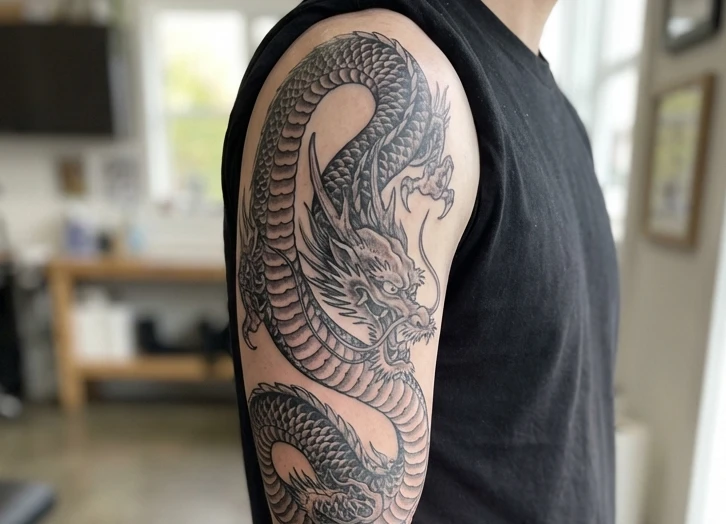
Some tattoos just hit different. Japanese dragon tattoos carry centuries of symbolism, stunning artistry, and raw energy that you can feel just by looking at them.
These aren’t just cool designs. They represent power, wisdom, protection, and transformation. Each one tells a story.
Whether you’re planning your first big piece or adding to a full collection, this list covers 20 of the most powerful Japanese dragon concepts out there. Let’s get into it.
1. Dragon Emerging from Waves
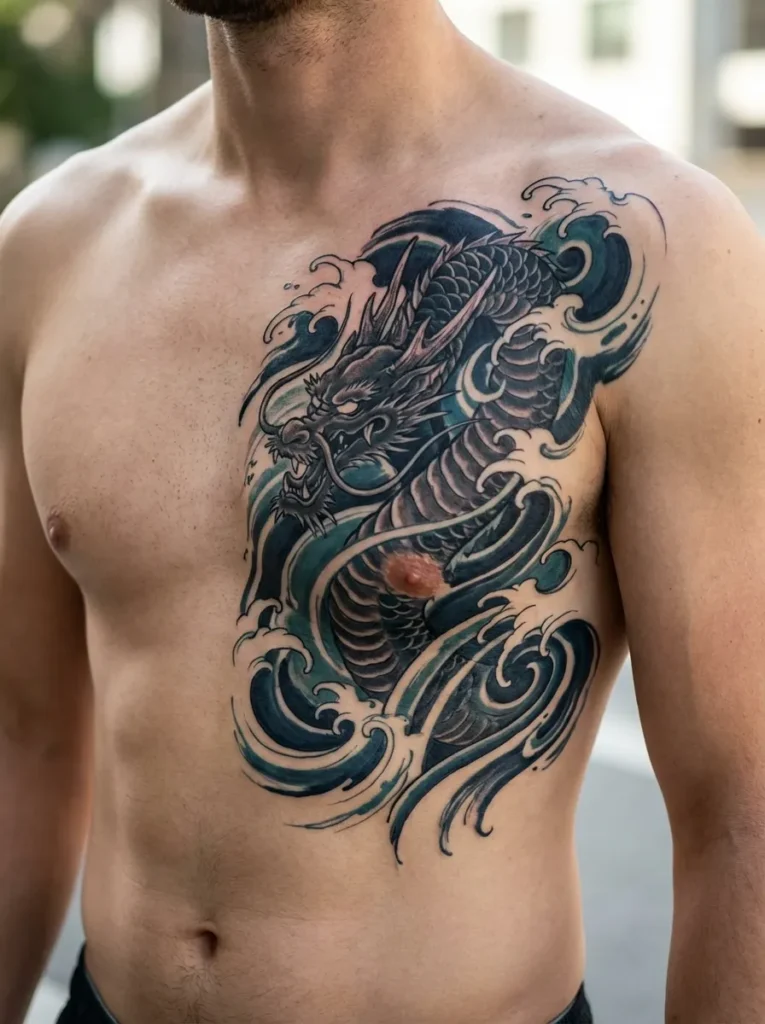
There’s something about a dragon bursting through water that feels alive. The movement, the energy, the chaos of the waves crashing around the scales.
This design pairs beautifully with traditional Nami wave work. The contrast between the water’s flow and the dragon’s raw force creates instant visual tension.
It works great as a chest piece or wrapping around the ribs. The waves naturally follow the body’s curves.
- Go for deep navy and teal in the waves to make the dragon pop
- Ask your artist to keep the wave foam loose and gestural, not too rigid
- This design benefits from a lot of negative space in the water
2. Coiled Dragon Sleeve Design
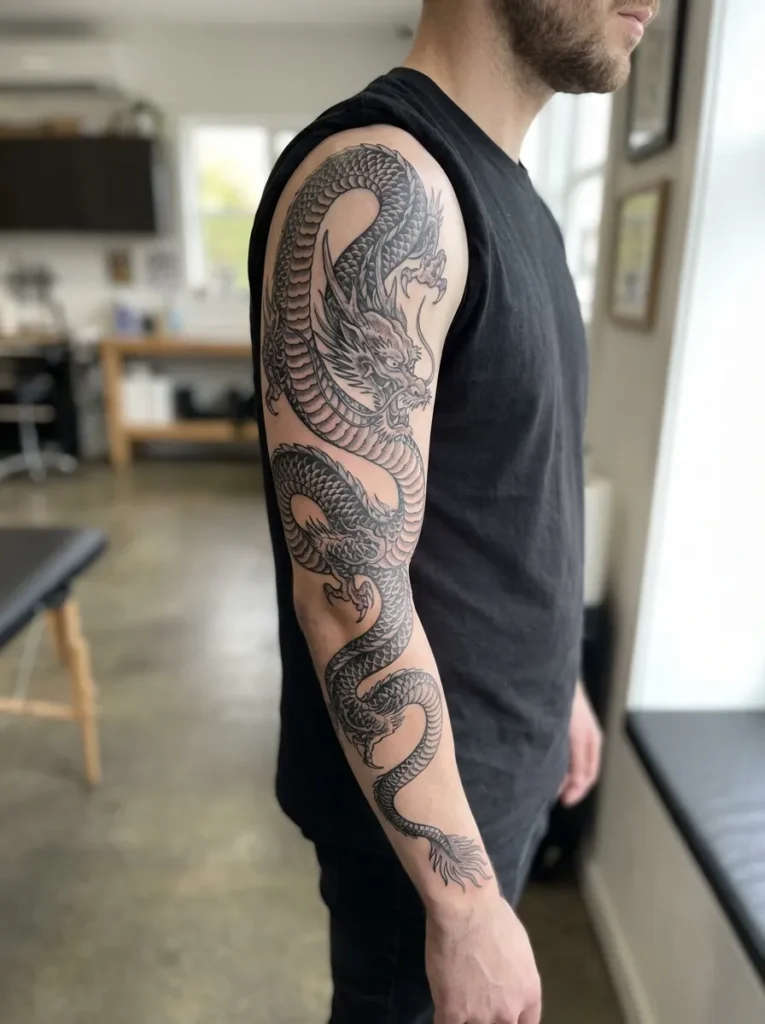
A coiled dragon on a full sleeve is a commitment, and honestly, that’s the point. It wraps around your arm like the dragon chose you.
The coiling shape lets the artist play with the natural muscle structure of your arm. Done right, it looks like the dragon is actually moving when you flex.
This is one of those pieces where the placement IS the design. Trust the process and let your artist map it out before anything gets inked.
3. Dragon and Koi Transformation Scene
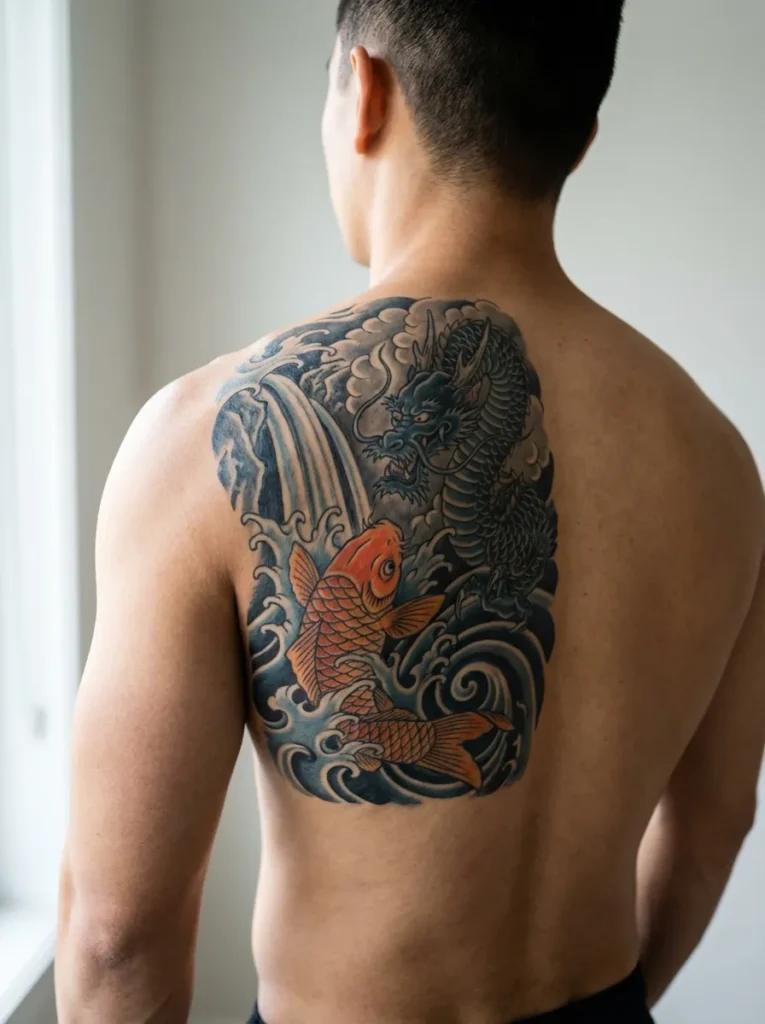
This one is loaded with meaning. In Japanese folklore, a koi that swims upstream and reaches the top of a waterfall transforms into a dragon. It’s a story about perseverance paying off.
Having both the koi and dragon in one piece captures that moment of transformation. It’s personal. A lot of people get this after going through something hard.
The composition usually shows the koi below and the dragon rising above, often connected by swirling water. It flows naturally from thigh to hip or up a full back piece.
- The color contrast between the koi’s orange and the dragon’s blue or black is striking
- Keep the waterfall element if you want the full narrative
- This works especially well as a large-scale back or side piece
4. Dragon with Cherry Blossoms
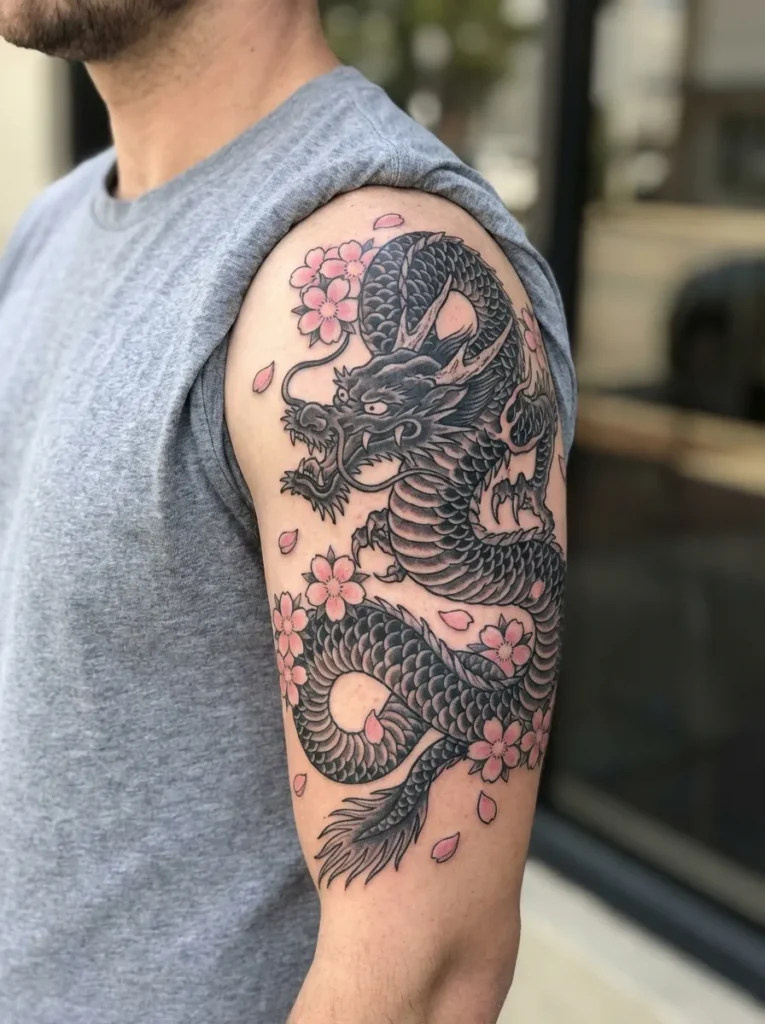
This combination is delicate and fierce at the same time. Cherry blossoms represent the beauty of things that don’t last. The dragon represents something that endures forever. That tension is what makes this pairing so compelling.
Visually, the soft pink petals floating around dark, scaled skin look incredible. It softens the dragon without weakening it.
A lot of people choose this for a sleeve or shoulder cap. The blossoms can scatter down the arm naturally, which fills space without feeling forced.
5. Dragon with Peony Background
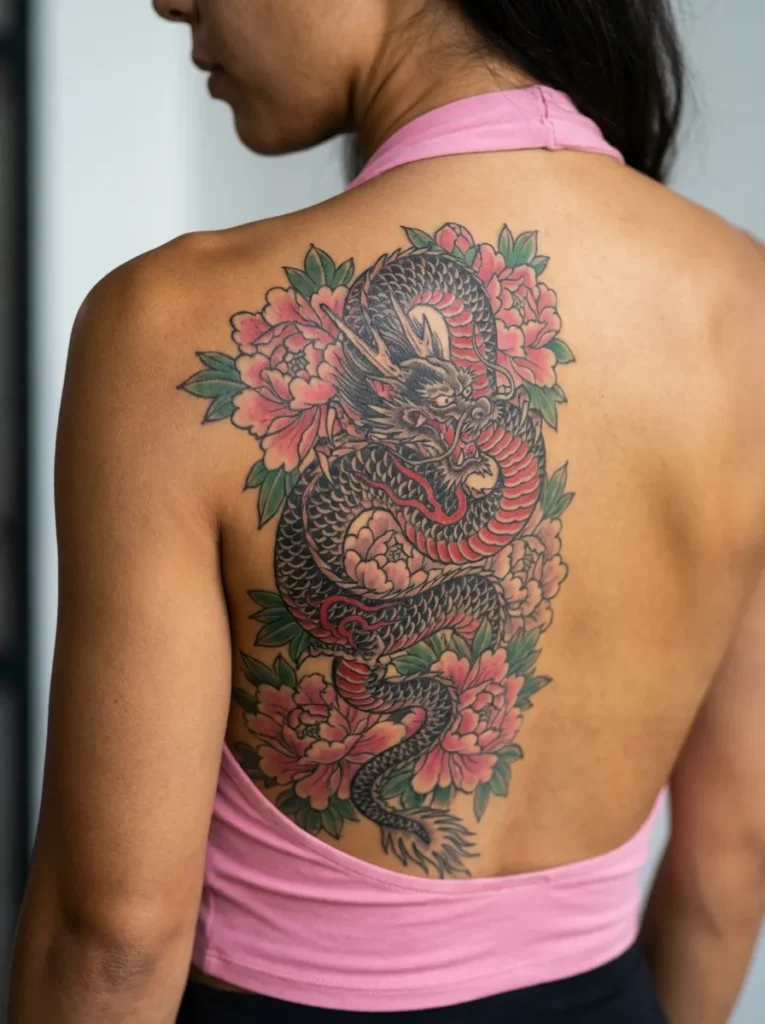
Peonies are royalty in Japanese tattooing. They represent wealth, honor, and beauty. Pair that with a dragon and you’ve got something that commands attention.
The peony’s full, layered petals create a lush backdrop that makes the dragon feel even more powerful by contrast.
This works brilliantly on the back or thigh where there’s enough real estate to let both elements breathe.
| Element | Symbolism | Best Placement |
| Dragon | Power, wisdom, protection | Back, sleeve, chest |
| Peony | Honor, wealth, beauty | Background fill |
| Cherry Blossom | Impermanence, life | Scattered accent |
| Koi | Perseverance, transformation | Lower body, paired scenes |
6. Ascending Dragon Back Piece
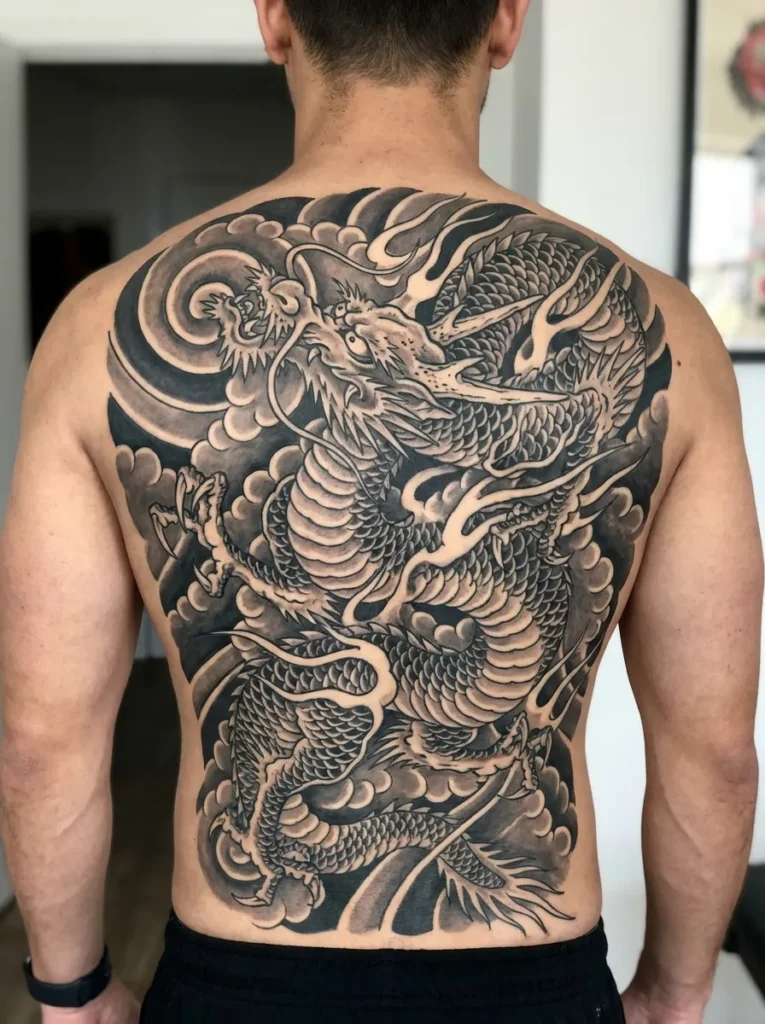
An ascending dragon is all about forward momentum. It’s climbing. Rising. Going somewhere with intention.
The back is the perfect canvas for this because the spine gives you a natural vertical path for the dragon to follow. The composition almost draws itself.
This is one of the most requested large-scale Japanese tattoo designs for a reason. It’s bold, it’s balanced, and it photographs beautifully.
- The dragon’s head typically sits between the shoulder blades or at the nape of the neck
- Clouds and wind bars add movement without cluttering the composition
- Plan for multiple sessions, a good back piece takes time to do right
7. Descending Dragon Composition
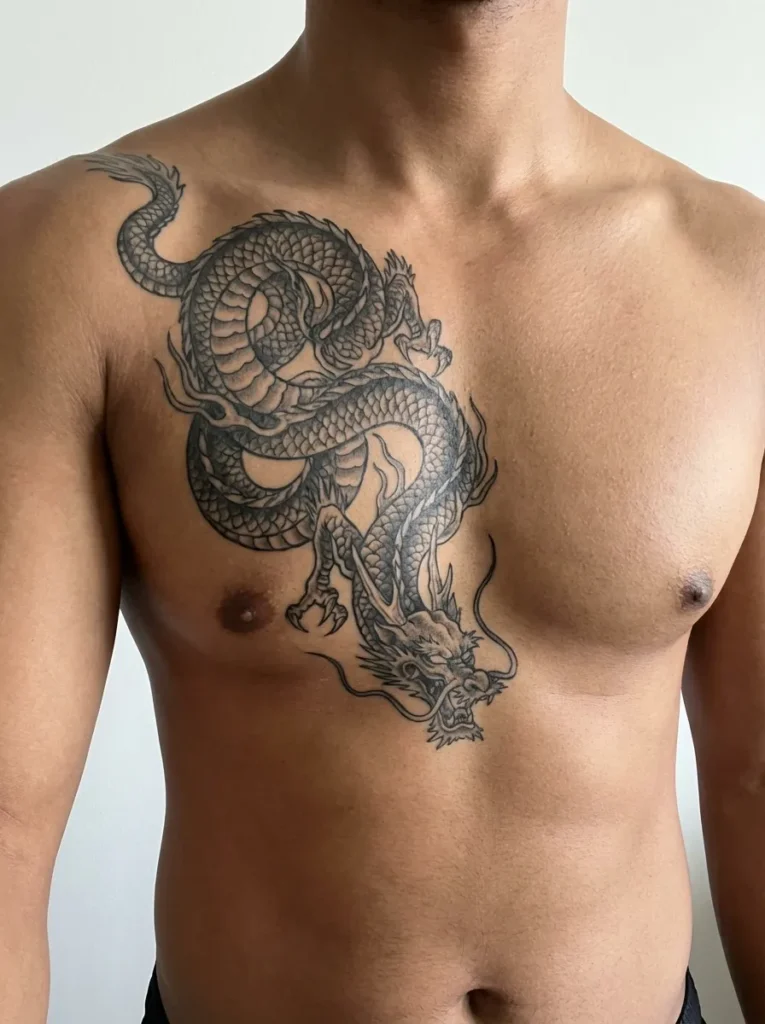
Flip the energy and you get a completely different feeling. A descending dragon reads as protective, watchful, coming down toward you rather than moving away.
It’s a subtler message but just as powerful. Some people choose this to represent a guardian or someone they’ve lost who is still watching over them.
The composition works especially well on the chest, with the dragon’s head facing downward toward the sternum.
8. Dragon Clutching Sacred Pearl
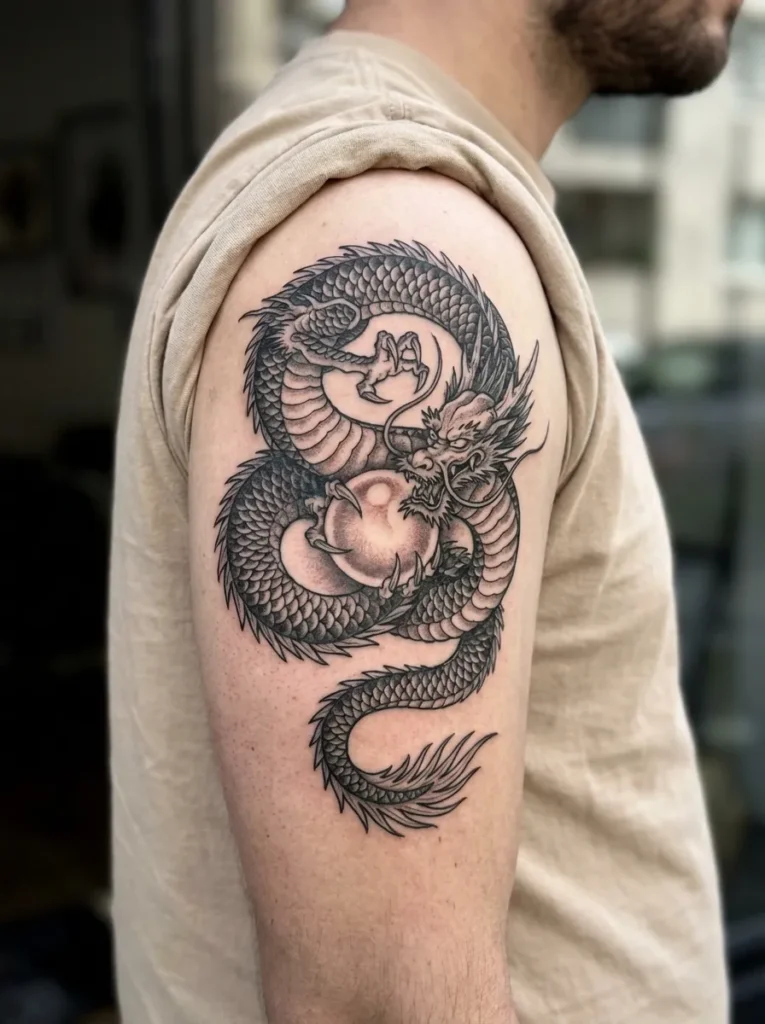
The pearl is everything in Japanese dragon mythology. Dragons are said to carry a sacred pearl that grants wisdom or controls the tides.
A dragon curled around or clutching a glowing pearl is one of the most classic compositions in the entire tradition. It’s timeless for a reason.
The pearl is usually rendered with a soft inner glow using careful shading. That contrast against the dragon’s sharp scales is chef’s kiss.
9. Fire-Breathing Dragon
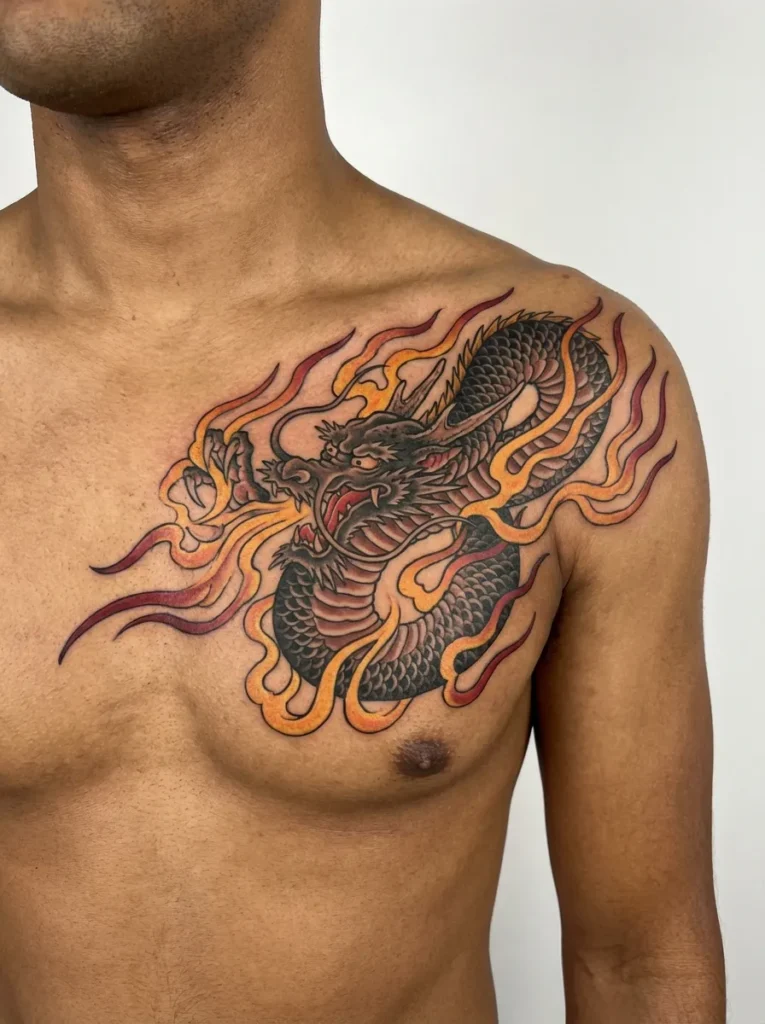
This one doesn’t need much explaining. Fire, dragon, done.
What sets a great fire-breathing piece apart from a generic one is how the flame is handled. Traditional Japanese flame work uses flowing, almost ribbon-like shapes. Not realistic fire, something more stylized and alive.
The flame can wrap around the arm or chest and become its own design element, not just an afterthought attached to the mouth.
- Use yellow and orange closest to the source, fading to red at the tips
- Japanese flame (kaen) has a specific curling style, reference traditional woodblock prints for accuracy
- The flame can double as a background fill element throughout the piece
10. Water Dragon with Nami Waves
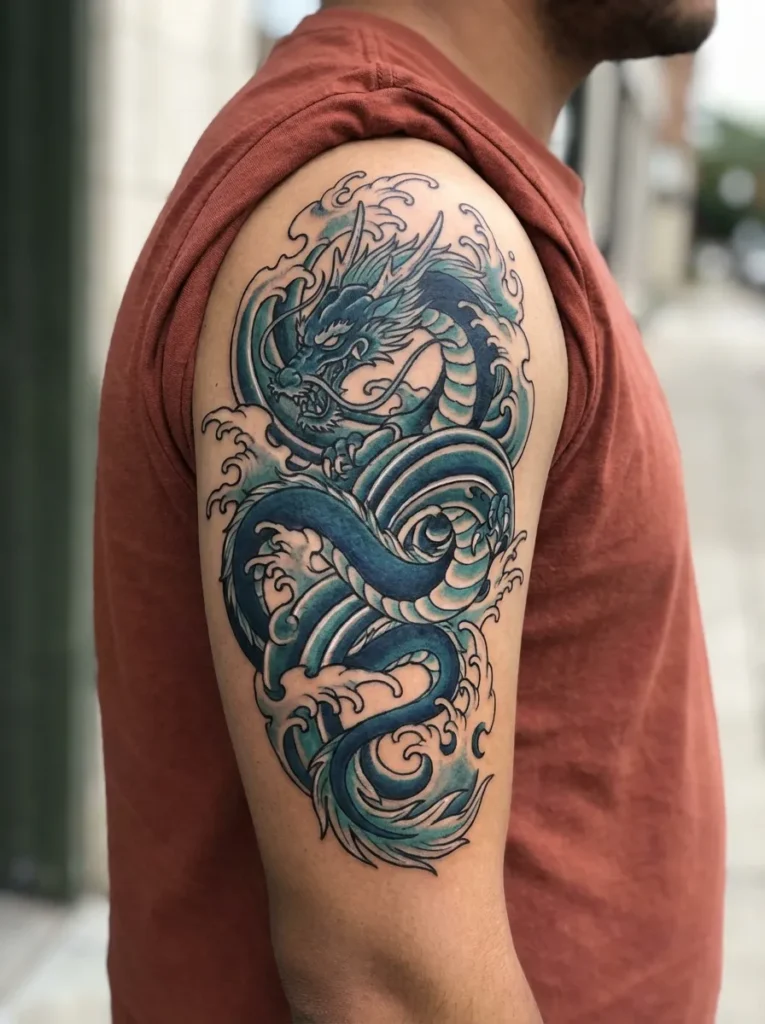
A water dragon lives in the ocean, rivers, and storms. It’s elemental. This design leans fully into the fluid, flowing side of Japanese tattooing.
Nami waves, the classic Hokusai-inspired style, pair perfectly because they carry the same visual energy as the dragon itself. Everything moves together.
Blue, teal, and white with heavy black outlines give this design serious impact. It feels cohesive in a way that’s hard to achieve with other combinations.
11. Black and Grey Dragon
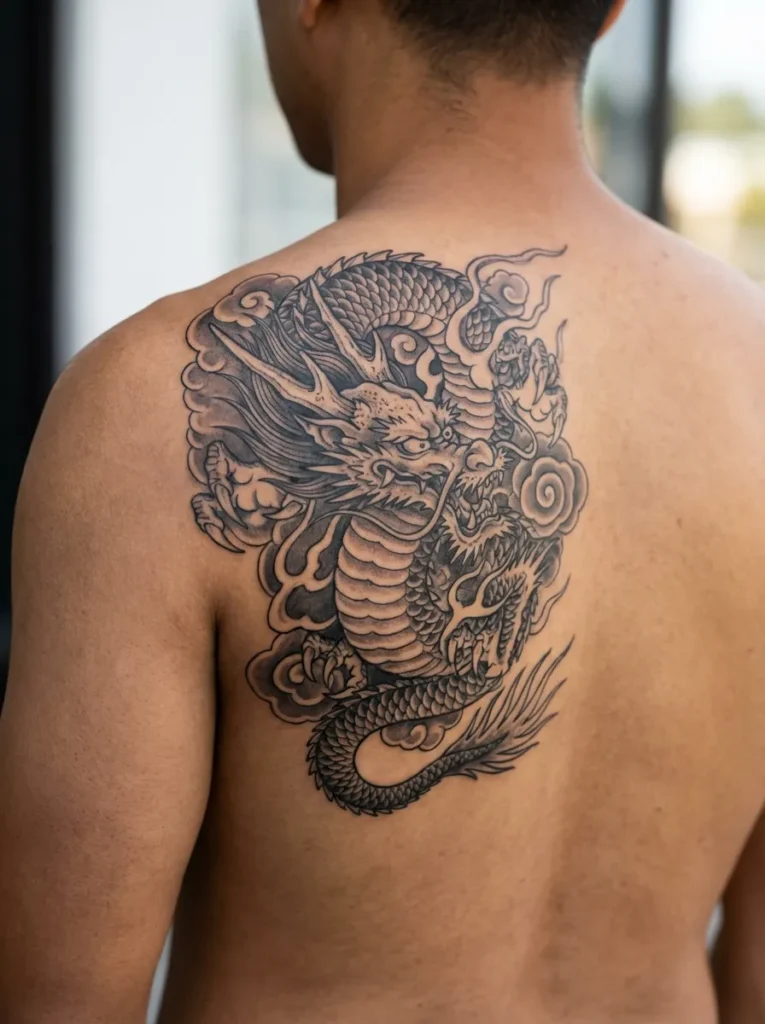
Not every Japanese dragon needs color. A black and grey piece can hit just as hard, sometimes harder, because the focus shifts entirely to the linework and shading.
The detail in the scales, the texture of the skin, the depth in the clouds, all of it becomes the star of the show.
This style also ages incredibly well. Color tattoos fade differently over time. Black and grey tends to hold its integrity longer.
| Style | Color Palette | Aging Over Time | Best For |
| Traditional Japanese | Bold color with black outlines | Fades gradually | Sleeves, back pieces |
| Black and Grey | Black, grey, white | Ages very well | Detail-heavy compositions |
| Blackwork | Solid black only | Very durable | Bold, graphic designs |
12. Red Ink Dragon Design
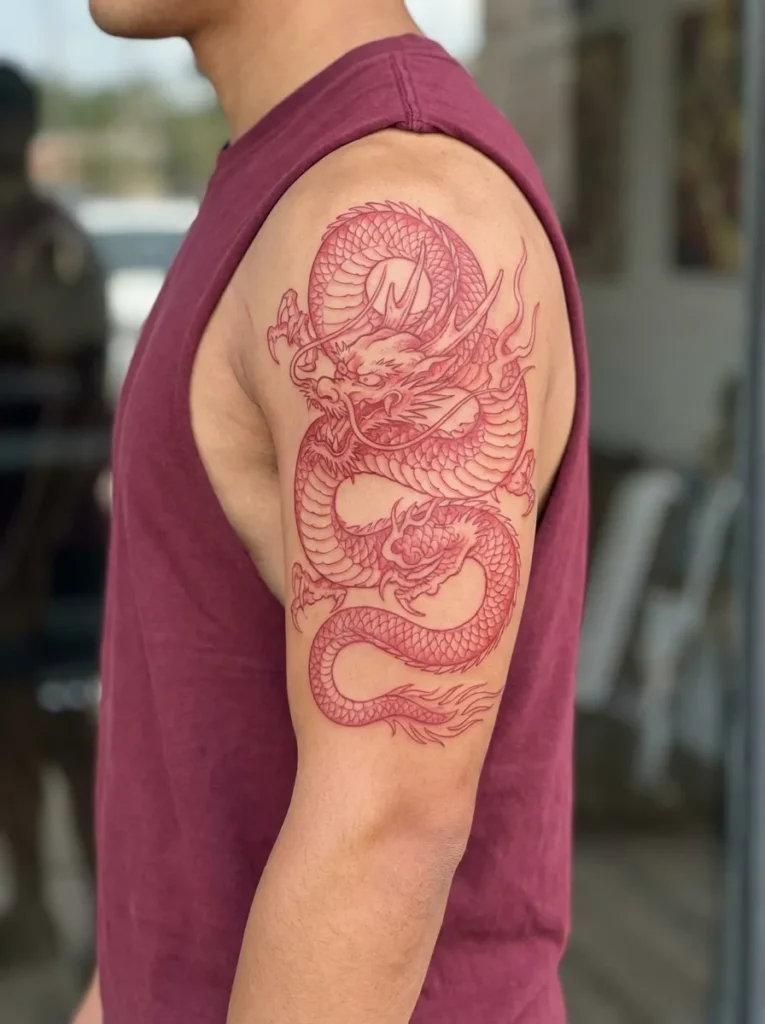
A red dragon is rare and that’s exactly why it stands out. Most Japanese dragon tattoos default to blue, green, or black. Red breaks that pattern immediately.
Red in Japanese culture carries strong associations with power, passion, and protection against evil. A red dragon is a statement piece with deep cultural roots.
This works best as the dominant color, not mixed with too many others. Let the red lead.
13. Blue Dragon with Wind Bars
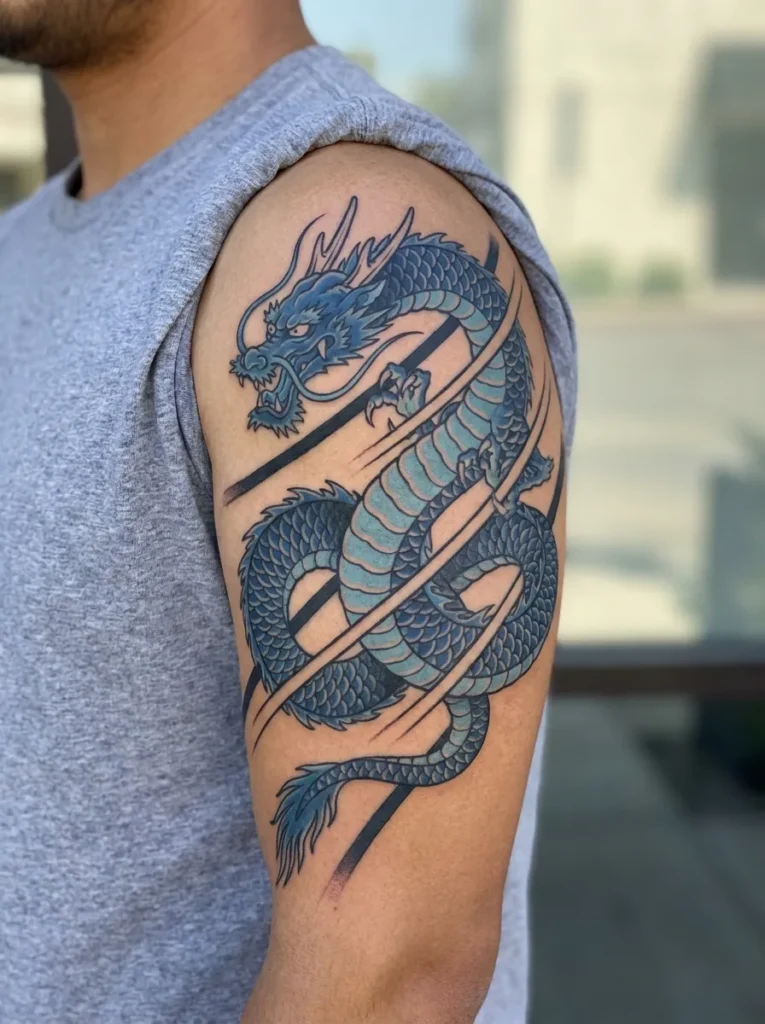
Blue dragons are associated with the east and are considered guardians of spring in Japanese mythology. There’s a calm authority to a blue dragon that feels different from its fiercer counterparts.
Wind bars, those classic diagonal lines that represent wind in traditional Japanese art, add movement and energy without overwhelming the design.
The combination of cool blue tones with crisp black wind bars gives this design a clean, graphic quality that reads clearly even from a distance.
14. Dragon with Fudō Myōō Scene
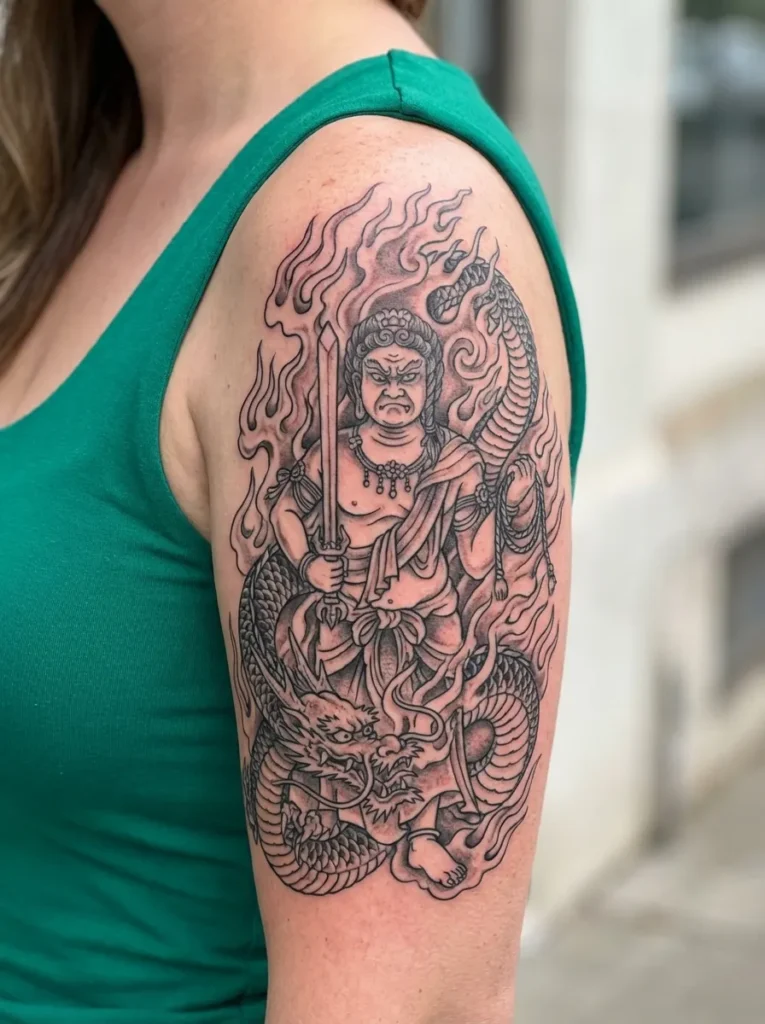
This is a heavy piece. Fudō Myōō is a Buddhist deity of fire, immovable wisdom, and fierce protection. Pairing him with a dragon creates something that feels genuinely sacred.
This combination is deeply rooted in Japanese spiritual tradition and shows up throughout historical tattooing. It’s not a casual choice, and that’s exactly what draws serious collectors to it.
If you’re going this route, research both figures properly. Understanding the symbolism will help you work with your artist to create something meaningful, not just visually impressive.
- Fudō Myōō is typically depicted surrounded by flames with a sword and rope
- The dragon can wrap around the scene or emerge from behind him
- This piece deserves an experienced artist who knows Japanese traditional conventions
15. Twin Dragons Facing Each Other
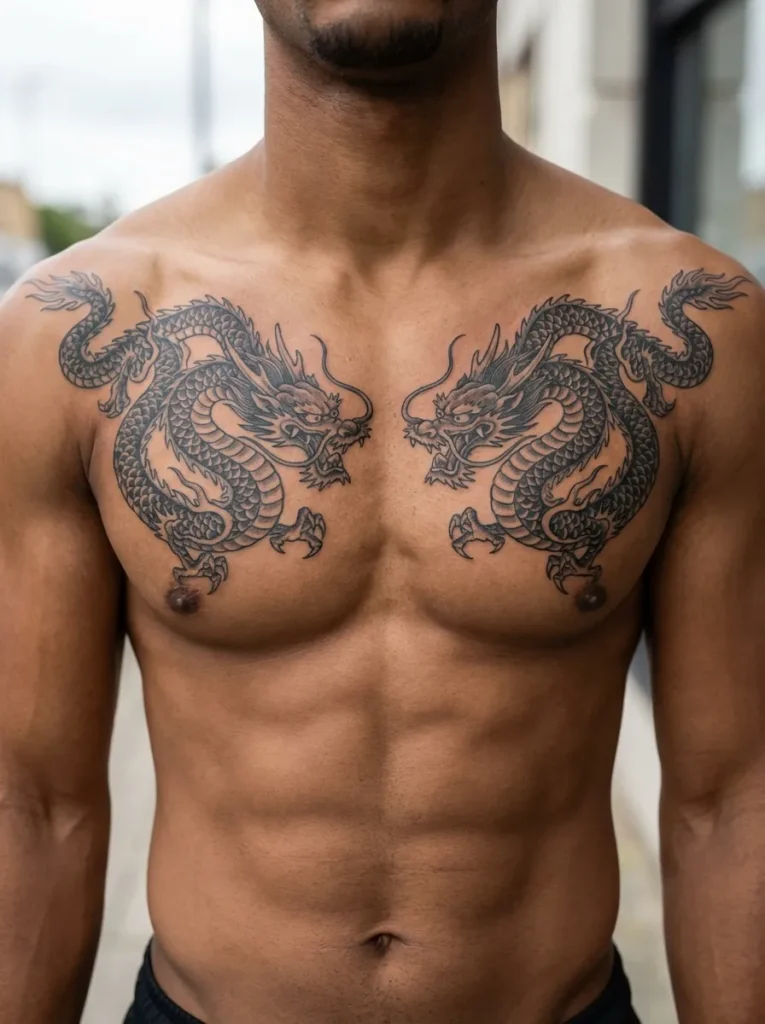
Two dragons facing each other creates instant symmetry and visual dialogue. Are they fighting? Protecting? That ambiguity is part of the appeal.
This design is made for the chest or back where bilateral symmetry naturally works with the body. Each side mirrors the other, and the space between them becomes part of the composition.
It’s bold, balanced, and carries a sense of duality that resonates with a lot of people on a personal level.
16. Golden Dragon with Cloud Swirls
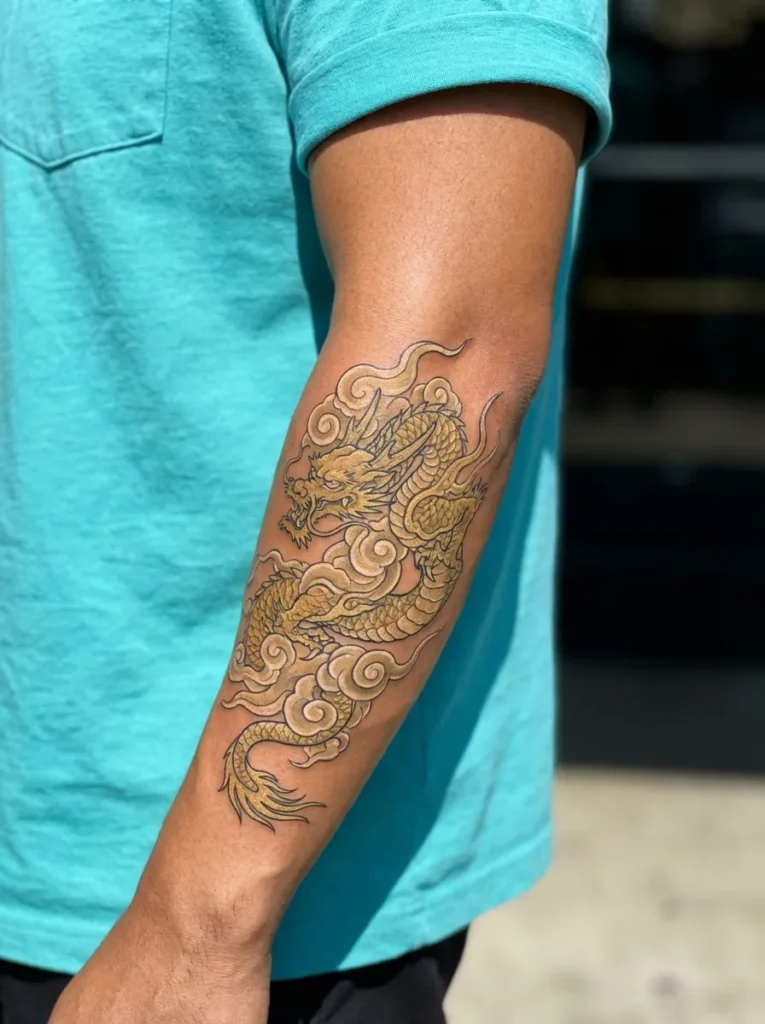
Gold isn’t just a color choice here, it’s a statement. Golden dragons in Japanese tradition are associated with wisdom, longevity, and celestial power.
The cloud swirls, done in that classic billowing Japanese style, give the dragon a heavenly quality. It looks like something descending from another realm.
This design photographs brilliantly. The gold tones catch light in a way that makes the piece feel alive in photos and in person.
17. Dragon Guarding a Temple
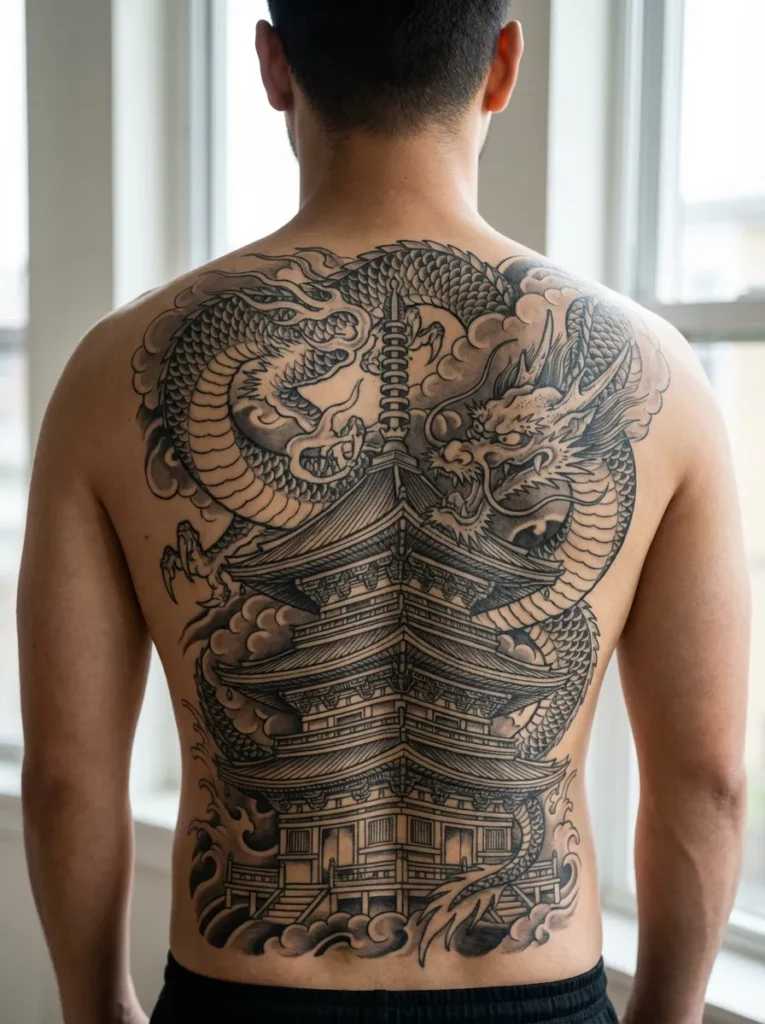
This concept adds narrative depth that a standalone dragon can’t quite match. The temple gives the dragon a purpose. It’s protecting something.
The architecture of a Japanese temple creates incredible geometric contrast against the organic, flowing forms of the dragon. That contrast is visually powerful.
This works beautifully as a back piece where the temple can anchor the lower half and the dragon rises dramatically above it.
- Research specific temple styles, Torii gates, pagodas, or mountain shrines each carry different meanings
- The dragon can be wrapped around the structure or looming behind it
- This piece tells a full story, give it the space it deserves
18. Dragon and Phoenix Pairing
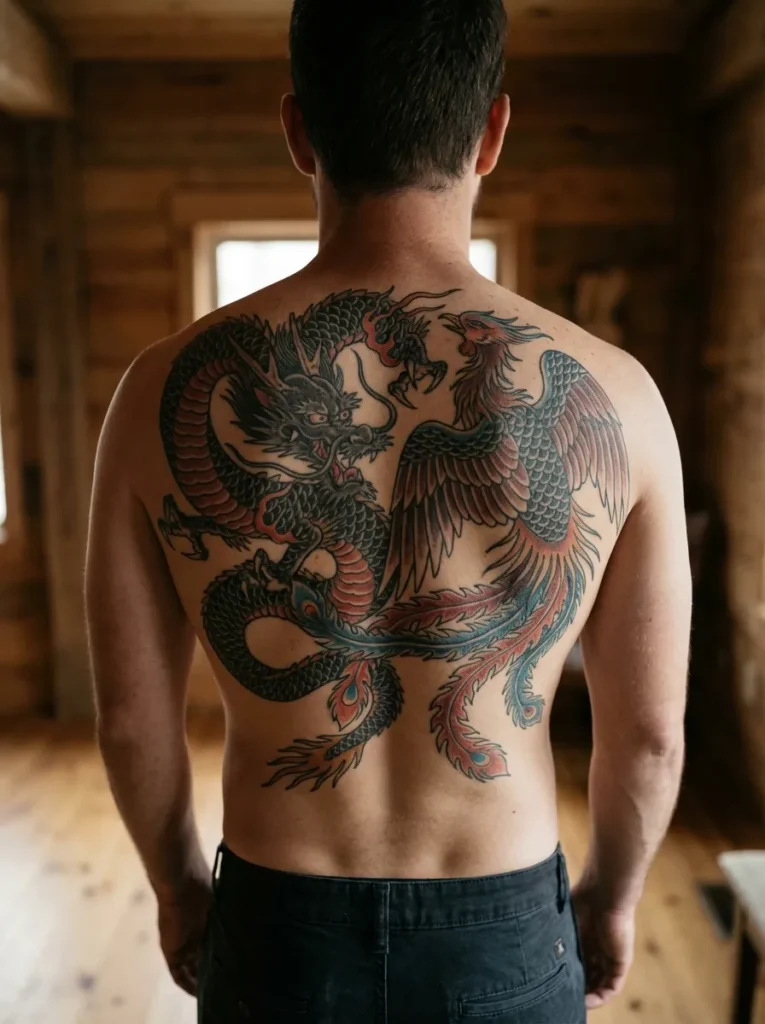
This is one of the most iconic pairings in all of Japanese tattooing. Dragon and phoenix together represent the ultimate balance, earth and sky, power and grace, yin and yang.
Traditionally, this pairing also symbolizes a strong partnership or marriage. Many couples get versions of this together, one each.
The visual contrast between the dragon’s angular, scaled body and the phoenix’s flowing feathers makes for a stunning composition on a back or chest piece.
19. Dragon Rising from Mountain Peaks
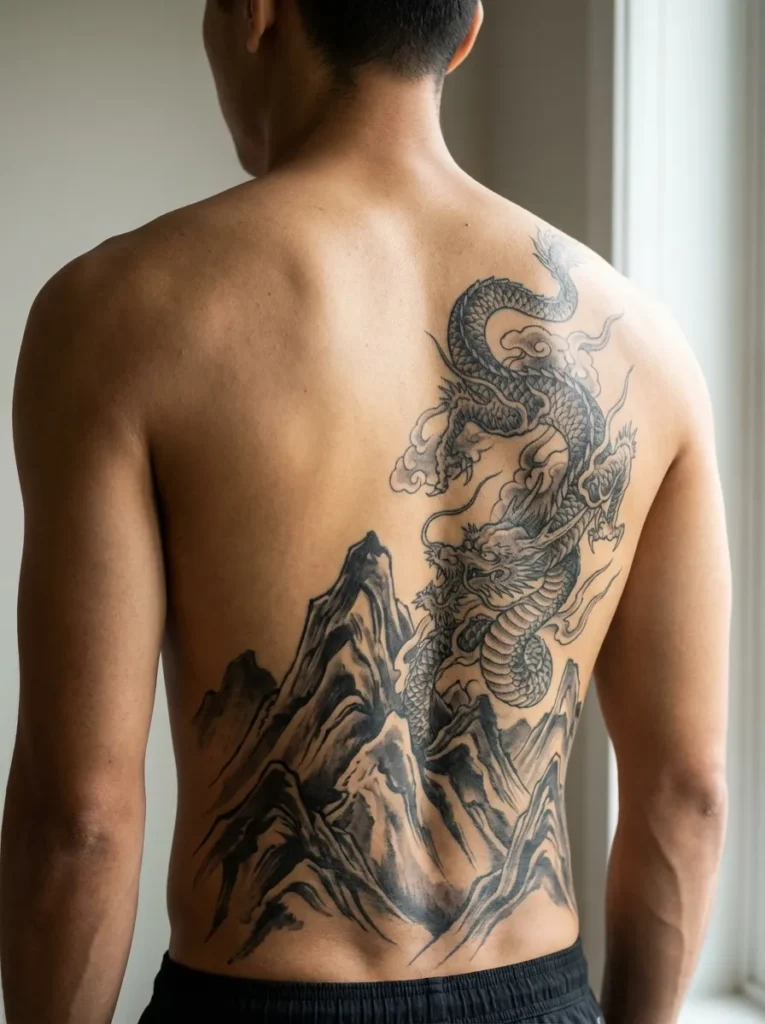
Mountains in Japanese art represent endurance and permanence. A dragon rising from peaks carries that same weight, something ancient and unstoppable breaking free.
The triangular shapes of the mountains create a natural base for the composition, and the dragon spiraling upward above them builds dramatic height.
This is a strong concept for a back piece or an upper arm wrap that extends to the shoulder.
20. Dragon Half Sleeve with Wind Bars
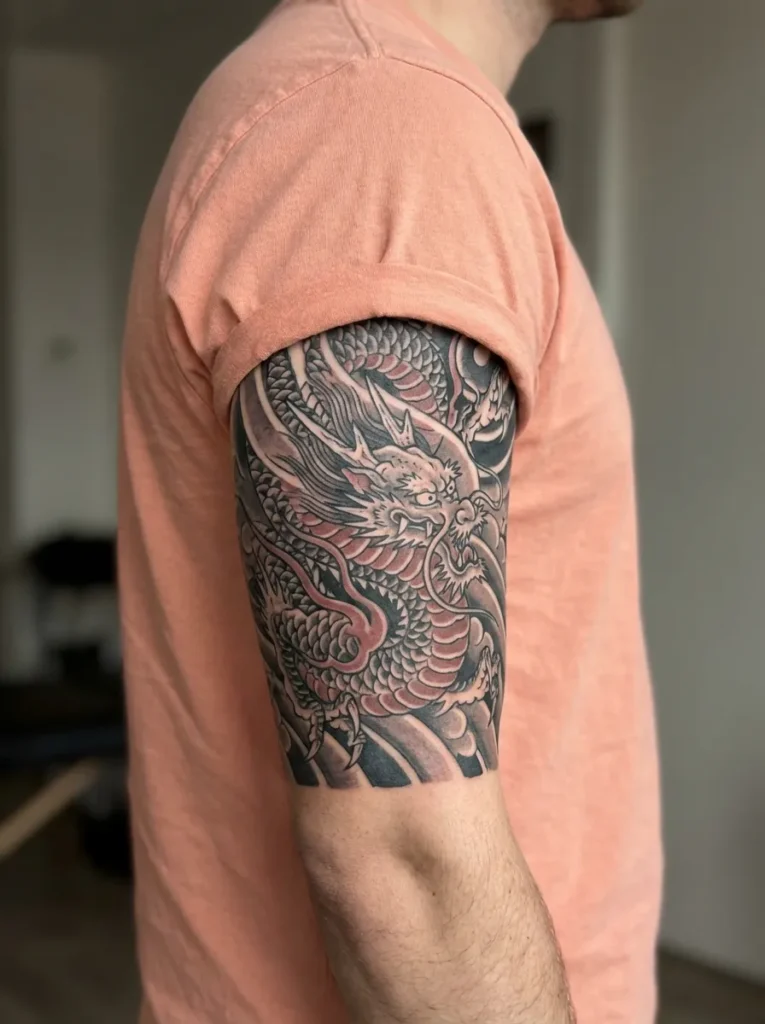
A half sleeve is a great entry point into large-scale Japanese work. You get significant visual impact without the full commitment of a complete sleeve.
Wind bars are the perfect supporting element here. They add movement, fill space intentionally, and are deeply rooted in traditional Japanese tattoo composition.
The key is letting the dragon drive the design and using the wind bars to enhance its energy, not compete with it.
- Wind bars work best when they follow the dragon’s direction of movement
- Keep the color palette tight, two or three colors max works better than going overboard
- A good artist will map out the negative space first before adding any fill
So here’s the question worth sitting with before your next appointment: when you look at these 20 designs, which one feels like it was made for you, and what does that say about the story you want to carry on your skin for the rest of your life?
