
Realistic butterfly tattoos push the boundaries of what’s possible with ink and skin. When done right, they look like actual butterflies have landed on you.
These aren’t quick tattoos. Realism demands time, multiple sessions for larger pieces, and artists who truly understand light, shadow, and dimension.
The goal is making people do a double-take. That moment when someone thinks there’s a real butterfly on you before realizing it’s ink. That’s the power of skilled realism.
Ready to explore realistic butterfly tattoos that blur the line between art and actual nature? Let’s look at 18 ideas that create genuinely lifelike results.
1. Hyper-Realistic Butterfly Tattoo
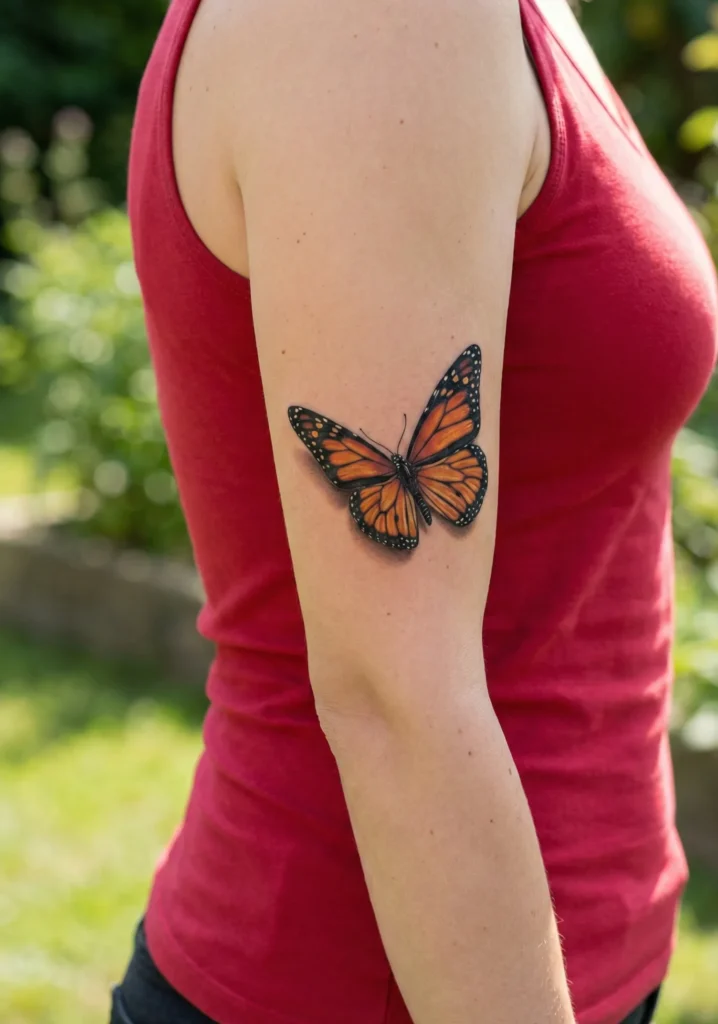
Pushing realism to its absolute limits. Every microscopic detail captured. The goal is fooling the eye completely.
Hyper-realism requires exceptional artists who specialize in this specific style. Not every good tattoo artist can pull off true hyper-realism.
The result when done right is breathtaking. People genuinely can’t tell if it’s real or tattooed until they look very closely.
2. 3D Butterfly Tattoo Design
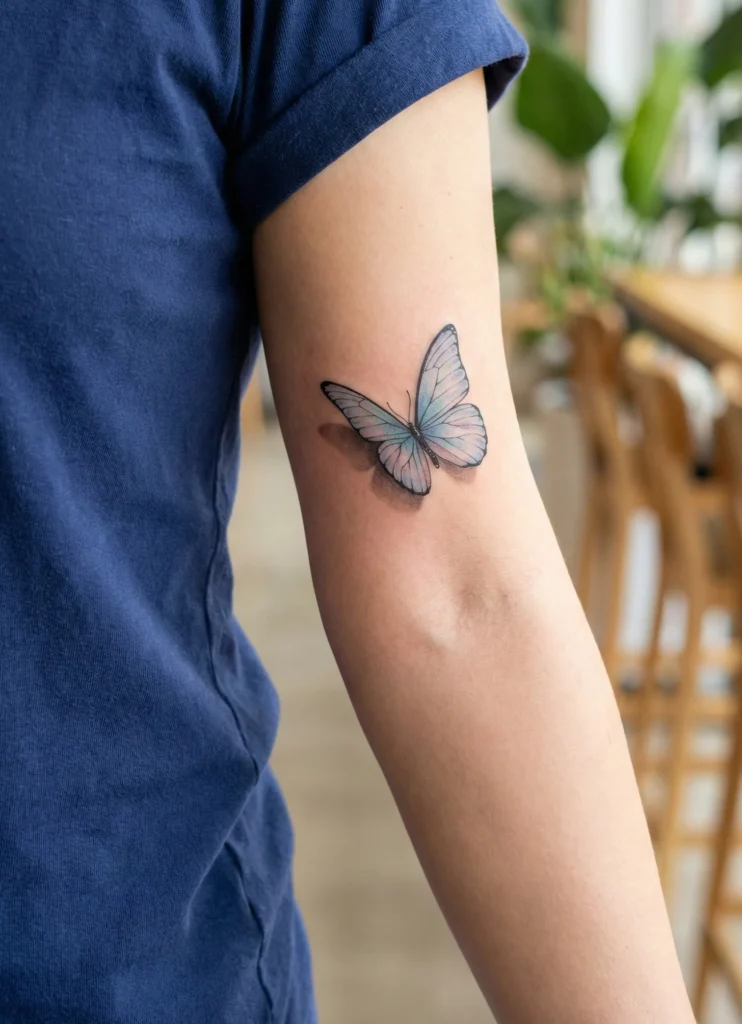
Creating illusion of the butterfly actually hovering above your skin. Shadow work and perspective make it appear three-dimensional.
The 3D effect requires masterful understanding of light and shadow. Poor execution looks flat despite attempts at dimension.
3D effect techniques:
- Realistic shadow beneath butterfly
- Highlighting on wing edges for lift
- Strategic shading creating depth
- Perspective angles suggesting hovering
- Background elements enhancing foreground
3. Photorealistic Butterfly Tattoo
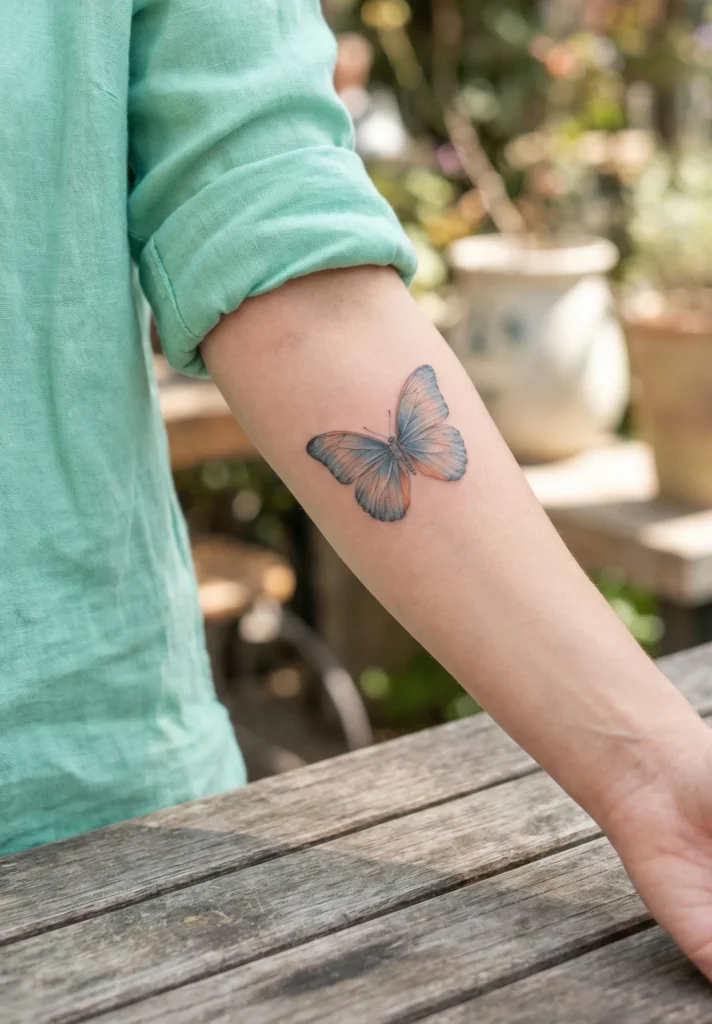
Tattoo that looks like a high-quality photograph printed on skin. Every detail captured exactly as a camera would see it.
Photorealism means reference photos are crucial. Your artist needs excellent source material showing the exact butterfly and lighting you want.
These tattoos age uniquely. Like photos, they may soften over time but maintain that photographic quality if well-executed initially.
4. Butterfly Tattoo with Natural Wing Texture
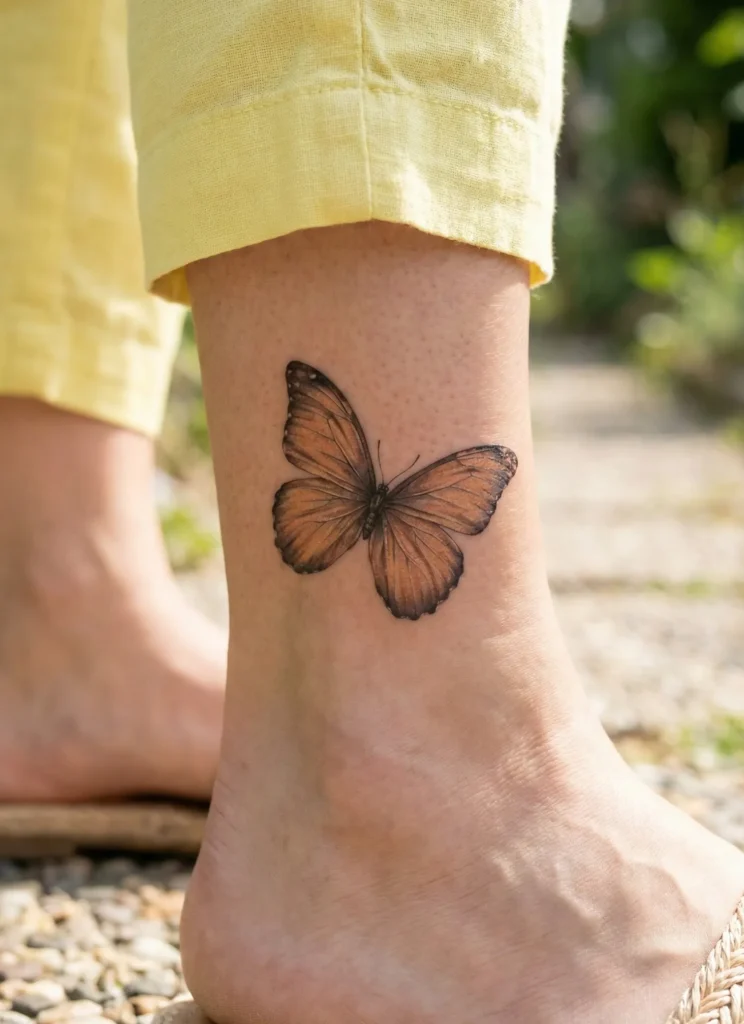
Capturing the actual texture of butterfly wings. The delicate scales, the way light catches them, the subtle variations across the surface.
Wing texture separates good realistic butterflies from great ones. This level of detail makes the difference between “nice” and “wow.”
Close-up reference photos showing wing texture detail help artists capture this accurately. Generic butterfly pictures won’t provide enough information.
5. Butterfly Tattoo with Detailed Vein Patterns
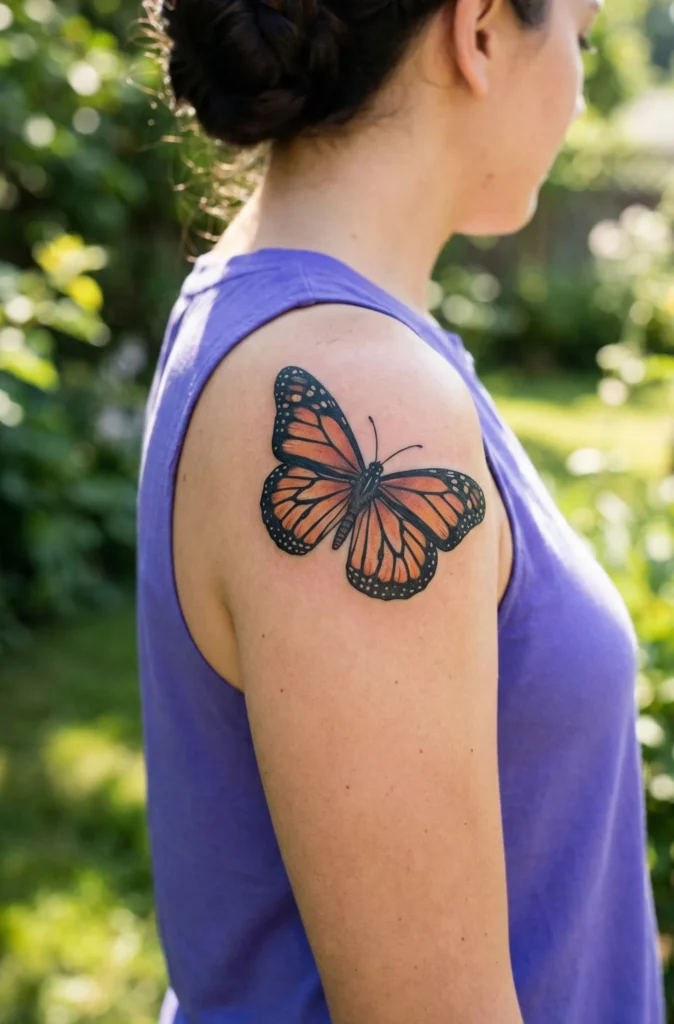
Individual wing veins rendered precisely. The delicate structure that supports the wings shown in accurate detail.
Wing veins are like fingerprints. Each species has distinctive patterns. Accurate veins make the specific species recognizable to butterfly enthusiasts.
| Butterfly Species | Distinctive Vein Pattern | Difficulty Level |
| Monarch | Bold, clear veins | Moderate |
| Blue Morpho | Fine, intricate veining | High |
| Swallowtail | Dramatic, flowing veins | Moderate-High |
| Painted Lady | Complex, delicate pattern | High |
6. Butterfly Tattoo with Soft Shadow Effect
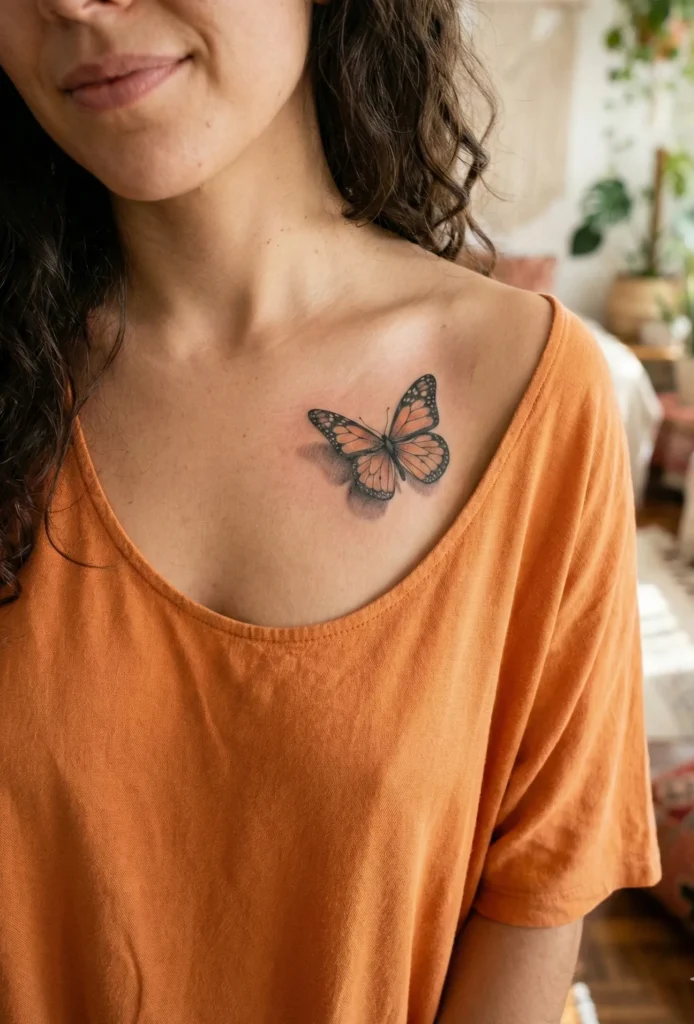
Realistic shadow beneath the butterfly creating depth and hovering illusion. The shadow suggests the butterfly is real and three-dimensional.
Shadows must match the lighting direction and intensity for believability. Inconsistent shadows destroy the realistic illusion immediately.
The shadow can be soft and subtle or more defined depending on the “lighting” in your piece and desired effect.
7. Butterfly Tattoo with Light Reflection Detail
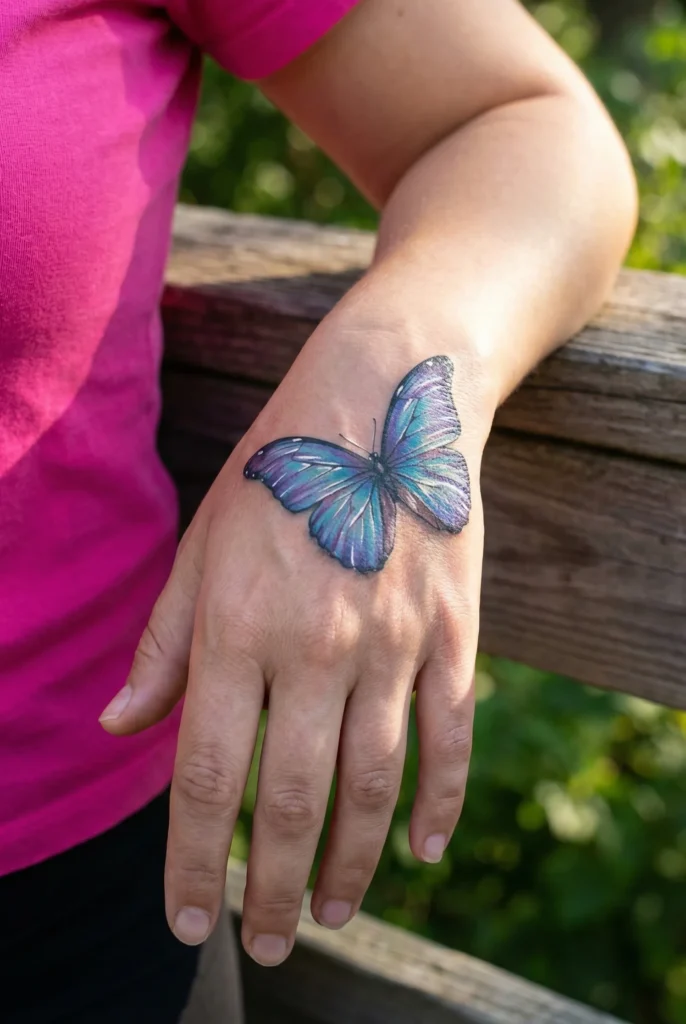
Capturing how light reflects off butterfly wings. The iridescence, the shine, the way certain angles catch light differently.
Light reflection is what makes butterfly wings magical in nature. Capturing this in tattoo form requires exceptional skill.
This often involves white highlights strategically placed to suggest light catching the wings at specific angles.
8. Butterfly Tattoo with True-to-Life Colors
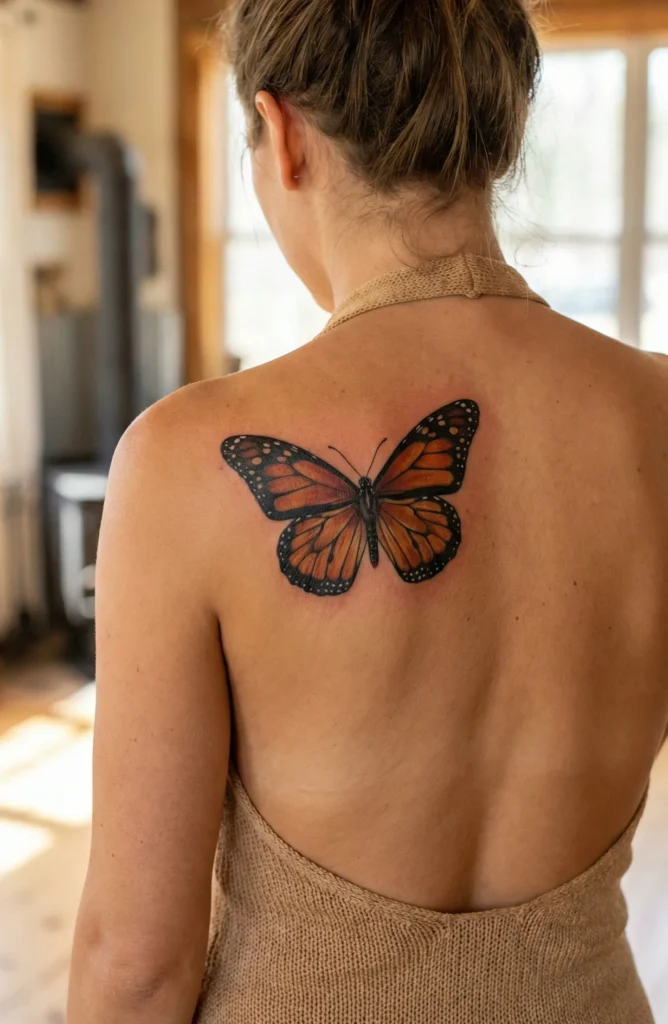
Accurate color matching to the actual butterfly species. Not artistic interpretation but scientifically accurate coloring.
True-to-life colors require understanding of how ink colors appear in skin versus on paper. Artists must adjust pigment choices for final in-skin appearance.
Some butterfly colors are impossible to perfectly replicate with tattoo ink. Discuss limitations and expectations with your artist beforehand.
9. Butterfly Tattoo with Transparent Wing Effect
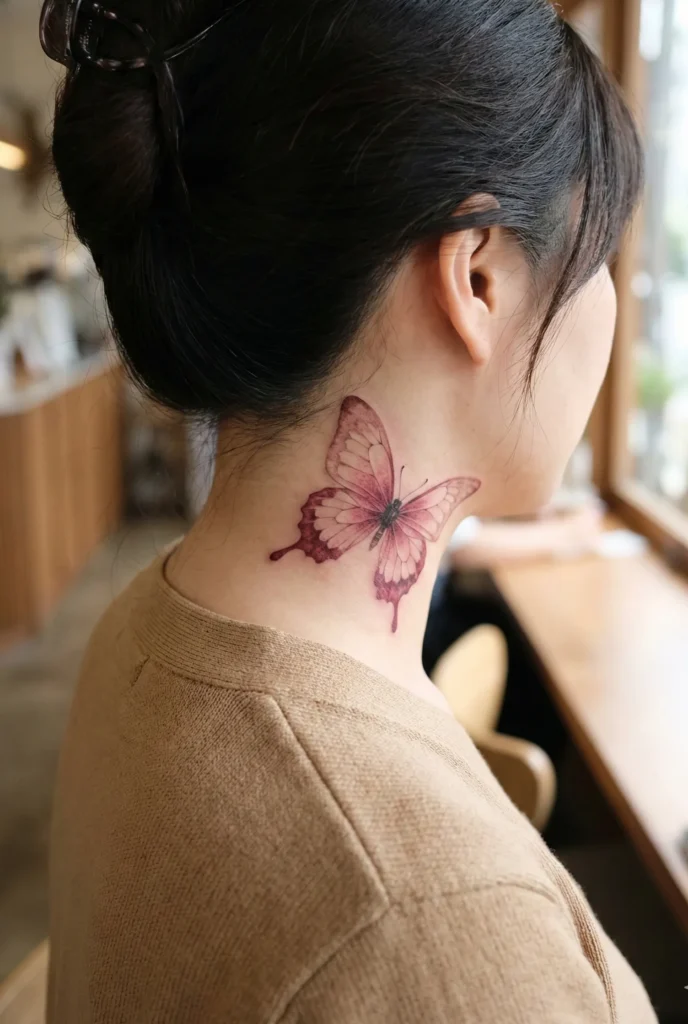
Creating illusion of wing transparency where you can “see through” portions of the wings. This happens naturally with many butterfly species.
The transparency effect requires showing your skin tone through the wing areas appropriately. It’s strategic use of negative space and shading.
This technique demands understanding of how real butterfly wings appear translucent and what details show through from behind.
10. Butterfly Tattoo with Natural Wing Wear Detail
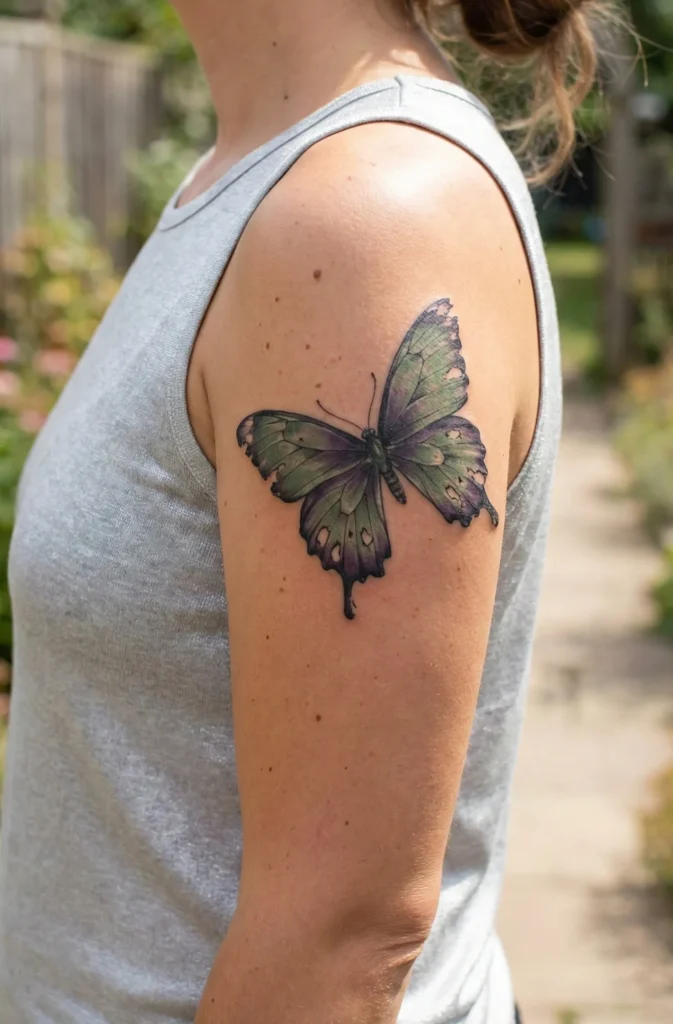
Including realistic imperfections. Slight tears, worn edges, missing scales. Details that show this butterfly has lived and flown.
Perfect, pristine wings can look less realistic than slightly imperfect ones. Natural wear adds authenticity and character.
The imperfections tell story. This butterfly survived storms, escaped predators, lived a full butterfly life before landing on you.
11. Butterfly Tattoo with Depth and Dimension
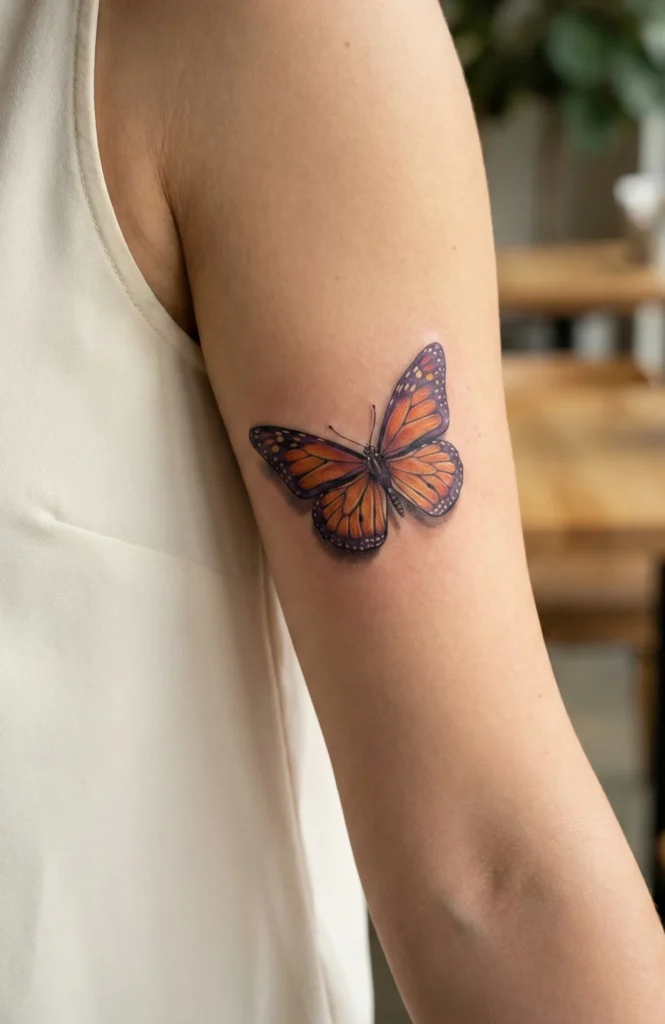
Using shading and highlighting to create convincing three-dimensional form on two-dimensional skin surface.
Depth makes the difference between flat image and something that appears to exist in actual space occupying your skin.
Creating depth techniques:
- Darkest shadows in deepest recesses
- Brightest highlights on most prominent points
- Mid-tones for transitional areas
- Color saturation varying with dimension
- Sharp focus for foreground elements
12. Butterfly Tattoo with Fine Hairline Details
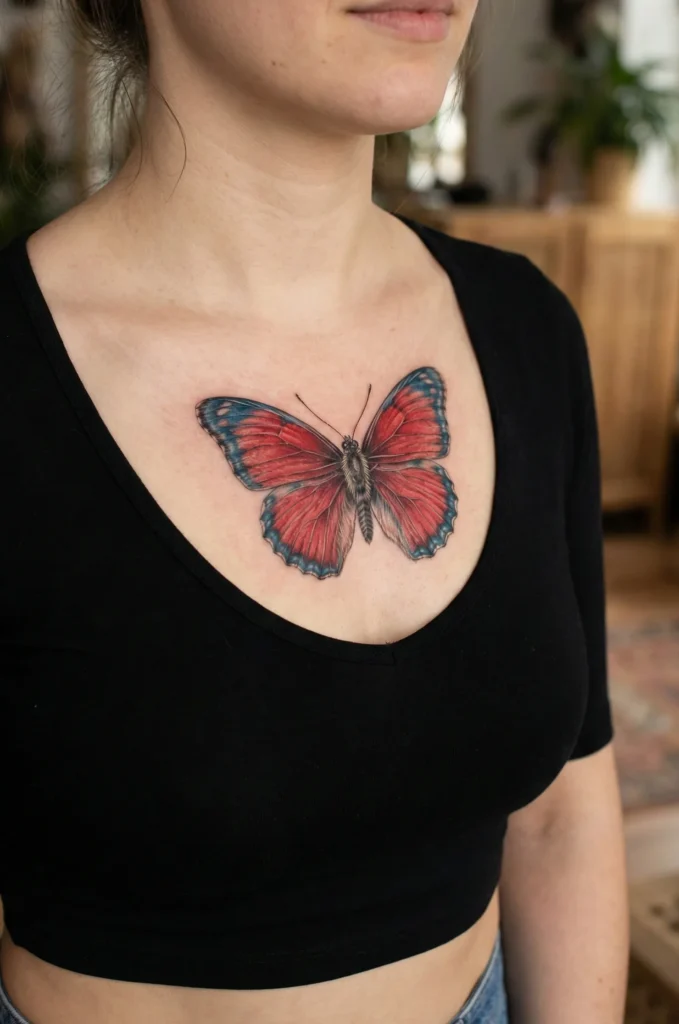
Capturing the tiny hairs on butterfly bodies, antennae texture, leg details. The microscopic elements most people overlook.
These ultra-fine details separate adequate realism from exceptional realism. They’re what you notice on close inspection that makes it truly lifelike.
Not every artist can execute hairline details successfully. This requires specialized needles, exceptional control, and extensive realism experience.
13. Butterfly Tattoo with Realistic Motion Pose
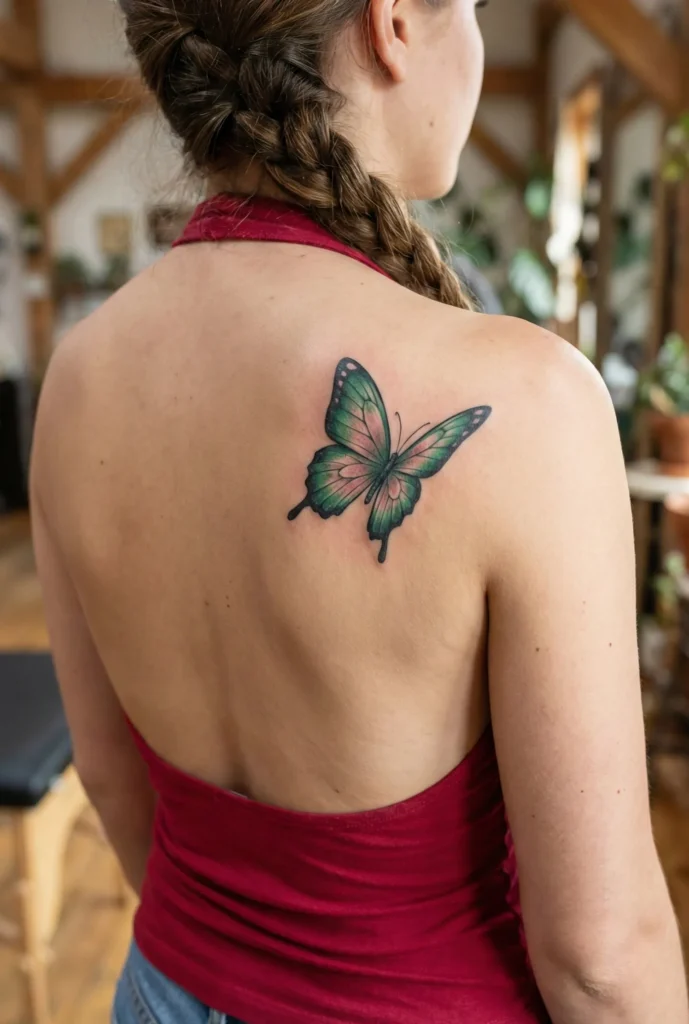
Positioning the butterfly in natural flight position or landing pose. The wings angled as they would be during actual movement.
Static, perfectly symmetrical positions can look less realistic than natural asymmetrical poses butterflies actually assume.
Study reference photos of butterflies in motion. The way wings angle differently, how body positions shift with movement.
14. Butterfly Tattoo with Skin-Shadow Illusion
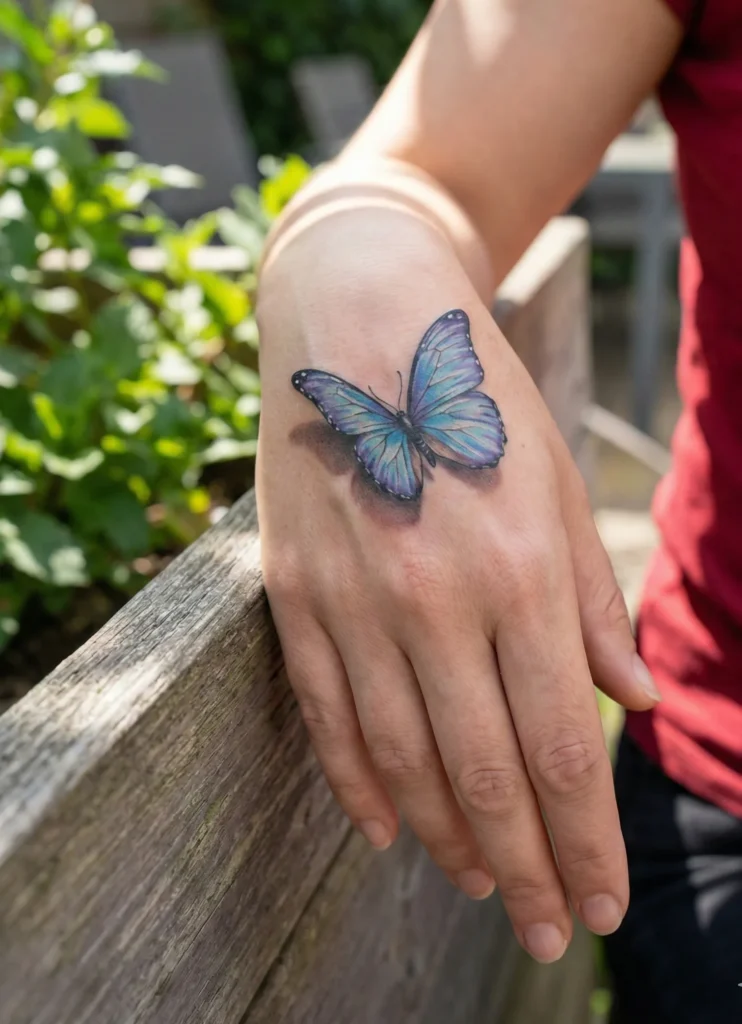
Advanced technique where the butterfly appears to cast shadow on your actual skin beneath it, not just underneath the tattoo.
This creates extreme realism by making the butterfly seem separate from your skin rather than part of it.
The technique requires exceptional understanding of light, shadow, and how to create illusion of space between tattoo subject and skin surface.
15. Butterfly Tattoo with Natural Color Gradients
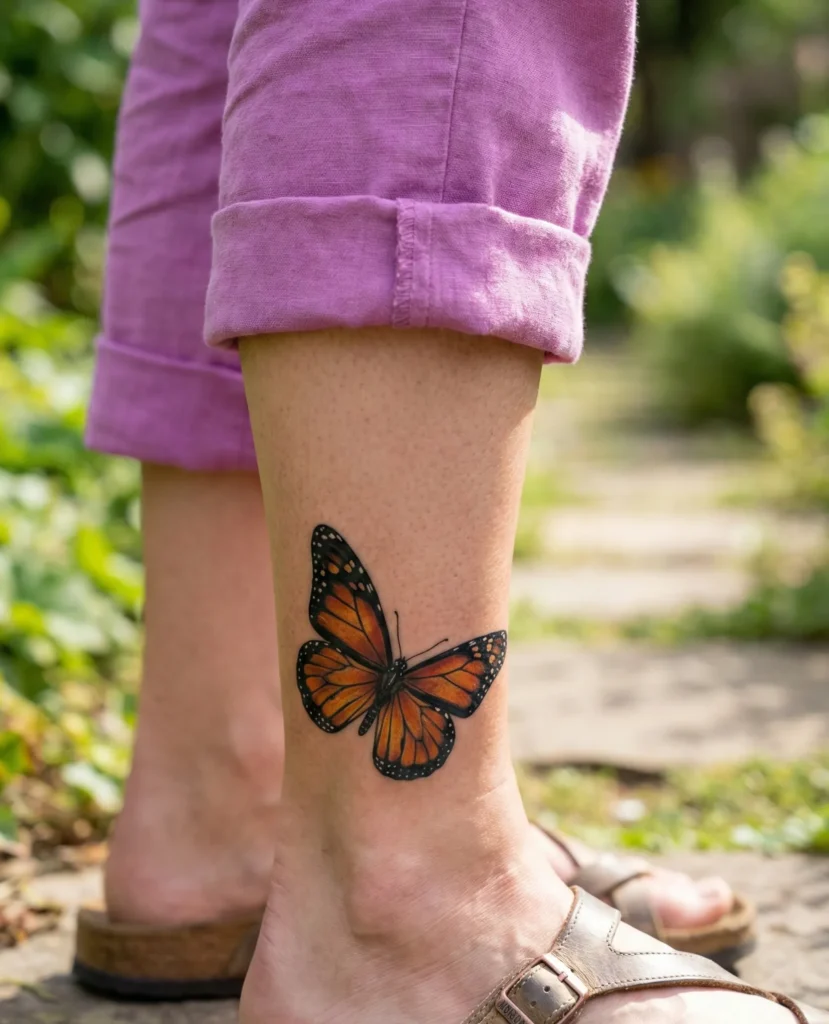
Colors transitioning exactly as they do on real butterflies. Not artistic gradients but scientifically accurate color progressions.
Natural gradients often differ from what seems aesthetically pleasing. Trust the biology over artistic intuition for maximum realism.
Study actual butterfly specimens or high-quality photos to understand exactly how colors naturally transition across wings.
16. Butterfly Tattoo with Lifelike Wing Symmetry
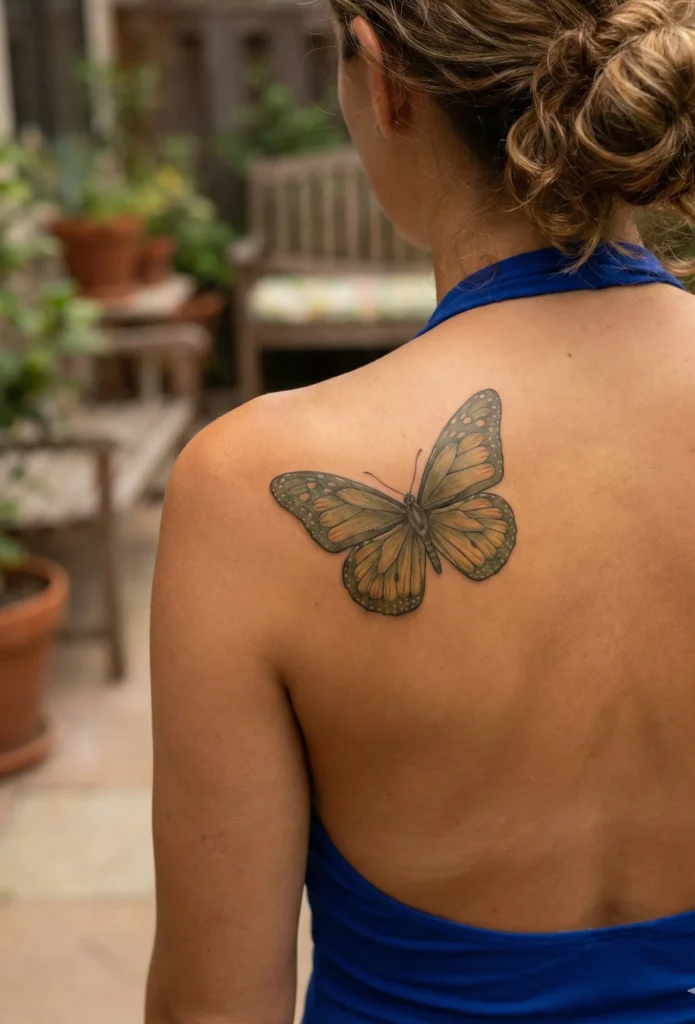
While real butterflies aren’t perfectly symmetrical, they follow natural symmetry patterns. Capturing that natural-but-not-perfect balance.
Perfect mathematical symmetry can look artificial. Natural symmetry with minor variations looks more realistic.
This requires understanding butterfly anatomy and how nature creates near-symmetry through biological processes.
17. Butterfly Tattoo with Micro Detail Shading
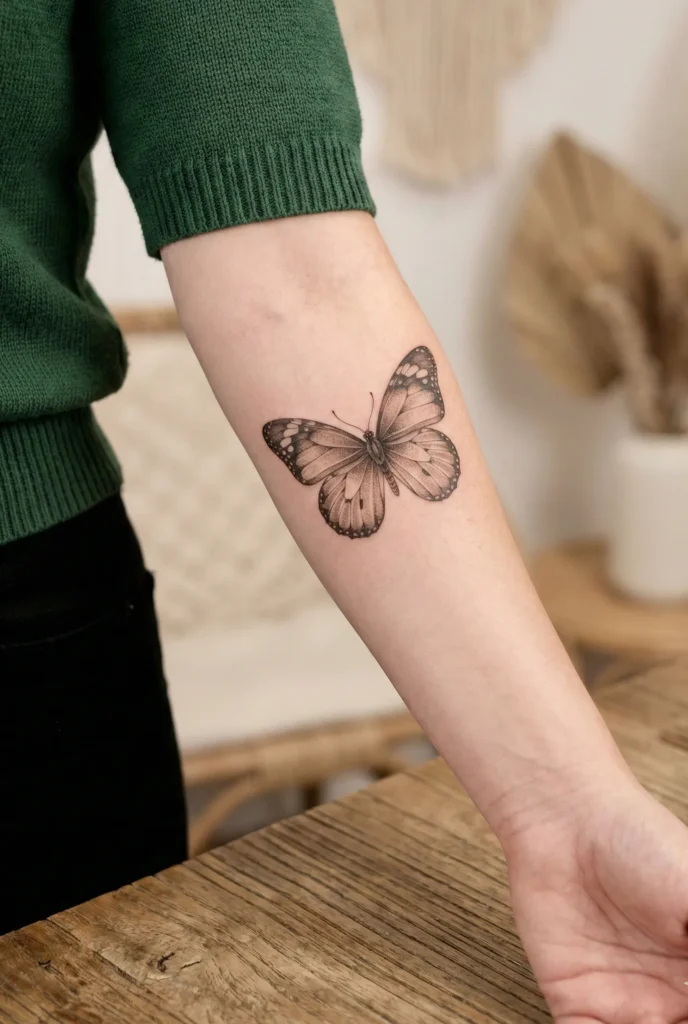
Extremely fine shading work creating subtle tonal variations. The kind of detail you only notice when examining closely.
Micro detail shading is what makes realism truly sing. From distance it looks perfect. Up close, there’s even more to discover.
This level of detail requires artists who work slowly and meticulously. You can’t rush micro detail work without destroying the effect.
18. Butterfly Tattoo with Realistic Landing Pose
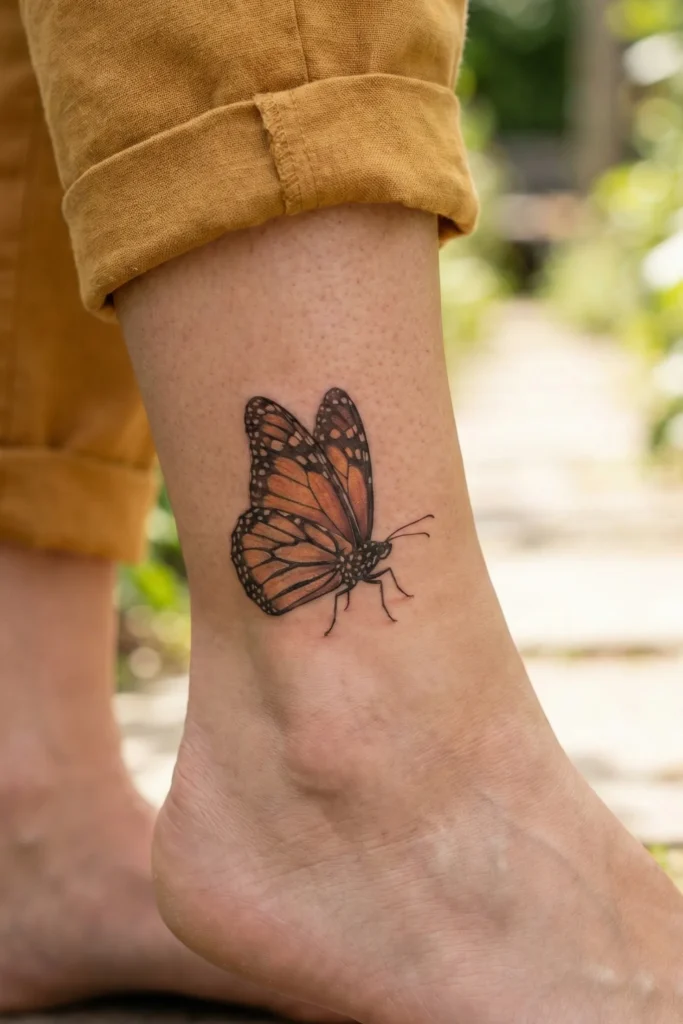
Butterfly positioned as if it just landed on your skin. Wings in natural landing configuration, body angled appropriately.
The landing pose creates narrative. This butterfly chose your skin to rest on. That story adds emotional layer to the technical realism.
Study photos of butterflies landing to understand the specific wing and body positioning that occurs during this action.
Ready To Pick One
Realistic butterfly tattoos demand more than regular tattoos. More time, more sessions, more money, more skilled artists.
Find artists who specialize specifically in realism and preferably nature/wildlife realism. Portfolio research is absolutely critical here.
Look at healed work, not just fresh tattoos. Realism ages differently than other styles. You need to see how their work holds up over time.
Bring excellent reference photos. Multiple angles, good lighting, high resolution. Your artist can only recreate what they can see in references.
Discuss size honestly. Tiny realistic tattoos are nearly impossible. Realism needs adequate size to show all the detail that makes it work.
Consider placement carefully. Areas that stretch significantly may distort realism over time. Stable placement preserves the effect better.
Budget appropriately. Quality realism costs more because it takes longer and requires specialized expertise. Don’t cheap out on realism work.
Accept that touch-ups may be needed. Even well-executed realism may need refreshing years later to maintain that lifelike quality.
Which butterfly species deserves realistic rendering on your skin, and are you ready for the time, investment, and commitment required to make it genuinely lifelike?