
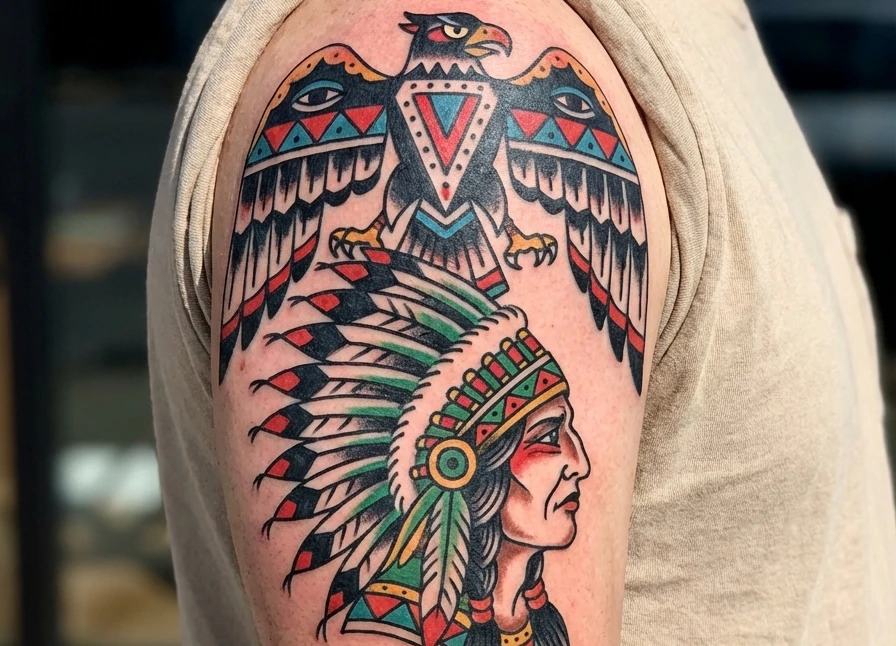
Native American chief tattoos have complex history in traditional tattooing. These designs appear in vintage flash from tattooing’s golden age, representing strength, wisdom, and connection to nature.
It’s important to approach these tattoos with respect and awareness. For some, they honor heritage.
For others, they celebrate the imagery’s place in tattoo history. Either way, understanding the weight these designs carry matters.
Bold profiles with elaborate headdresses define the traditional chief aesthetic.
Strong features, dignified expressions, and connection to nature create powerful imagery. Let’s explore these designs with both appreciation and respect.
1. Native Chief Portrait Tattoo

The classic profile. Strong features, dignified expression, wisdom in the eyes.
Traditional rendering emphasizes noble features and character lines. The profile view is most common in vintage flash. Bold outlines define the face with minimal shading. Earthy tones or black and grey both work.
This represents wisdom, leadership, and connection to ancestral strength.
2. War Bonnet Chief Tattoo

The full feathered headdress creates the most iconic imagery. Each feather detailed and meaningful.
The war bonnet extends beyond the head creating dramatic composition. Eagle feathers in traditional rendering flow naturally. This is the image most associated with Native chief tattoos in American traditional style.
War Bonnet Considerations:
- Historically earned through brave deeds, not fashion
- Sacred to many tribes and traditions
- Carries cultural weight beyond aesthetic
- Research and respect essential before getting this imagery
The headdress represents honor earned, not decoration chosen lightly.
3. Chief with Feather Headdress Tattoo

Simpler headdress variations. Less elaborate than full war bonnet but still meaningful.
Few feathers or partial headdress creates cleaner composition. This can be more respectful while maintaining the traditional aesthetic. Bold feather details in traditional style.
Honor the imagery without appropriating the most sacred elements.
4. Stoic Native Chief Tattoo

The expression matters. Stoic dignity and quiet strength in the face.
No smile, no aggression, just calm presence and wisdom. The expression shows experience and endurance. Traditional rendering captures character through minimal facial details.
Strength doesn’t always announce itself. The stoic face shows quiet power.
5. Native Chief and Eagle Tattoo

The eagle represents freedom, vision, and spiritual connection. Natural pairing with chief imagery.
The eagle can soar above, perch beside, or merge with the chief’s headdress. Both are powerful symbols in Native culture. Traditional rendering gives both elements equal respect.
- Eagle above chief: spiritual guidance
- Eagle beside chief: companionship and shared vision
- Eagle features merged: unity with nature
Wisdom and vision united. Chief and eagle see what others miss.
6. Native Chief with Peace Pipe Tattoo

The ceremonial pipe represents peace, prayer, and sacred ritual. Deeply spiritual object.
The chief can hold the pipe or have it appear near the portrait. Traditional pipe details with ornate carvings. This emphasizes the spiritual and peaceful aspects over warrior imagery.
Sacred objects deserve sacred respect. The pipe represents connection to the divine.
7. Chief with Shield Tattoo

Traditional shields carried symbols and protection. The shield adds tribal identity elements.
Geometric patterns or animal totems on the shield. The chief can hold it or appear behind it. Traditional bold rendering of both shield designs and chief portrait.
Shield Symbol Options:
| Symbol | Meaning | Tribal Associations |
| Eagle | Vision and freedom | Many Plains tribes |
| Bear | Strength and healing | Widespread reverence |
| Geometric patterns | Specific tribal identity | Varies by nation |
| Buffalo | Abundance and sacred life | Plains tribes especially |
The shield tells which nation and what values. Symbols matter deeply.
8. Native Chief Forearm Tattoo

Bold placement for powerful imagery. The chief visible and prominent.
The forearm provides excellent canvas for profile portraits with headdresses. Vertical composition works naturally. This placement shows respect by displaying the imagery prominently.
If you wear this imagery, wear it proudly and respectfully. The placement shows intention.
9. Native Chief Back Tattoo

Maximum canvas for elaborate chief imagery. Full headdress and detailed backgrounds.
The back allows for complete chief figures or large portraits with environmental elements. Mountains, eagles, or tribal patterns fill the space. This is commitment-level appreciation.
Go big with respect. The back piece shows this imagery matters to you.
10. Native Chief with Dreamcatcher Tattoo

The dreamcatcher represents protection and filtering negative energy. Ojibwe origin with widespread adoption.
The dreamcatcher can frame the chief, appear behind, or be held. Traditional web pattern with feathers hanging. Both elements carry spiritual weight.
Protection and wisdom united. The dreamcatcher filters while the chief guides.
11. Native Chief and Wolf Tattoo

The wolf represents loyalty, family, and hunting wisdom. Powerful animal companion.
The wolf can appear beside the chief, below the portrait, or merge symbolically. Both represent leadership and pack loyalty. Traditional rendering gives both subjects equal detail.
Leaders protect their pack. Chief and wolf share that truth.
12. Native Chief with Banner Tattoo

Personalization through traditional ribbons. Names, dates, or respectful phrases.
Banners can carry tribal names, dates honoring heritage, or phrases about strength and wisdom. Avoid appropriating actual Native language unless it’s your heritage. Traditional ribbon styling frames the chief.
Words matter. Make sure yours show respect and understanding.
13. Native Chief with Horse Tattoo

Horses transformed Plains tribes’ lives. The partnership between chief and horse represents freedom and power.
The horse can appear in profile with the chief or as background element. Traditional horse rendering with flowing mane. This honors the relationship between Native peoples and horses.
The horse brought freedom and power. The partnership changed everything.
14. Native Chief and Thunderbird Tattoo

The thunderbird is powerful spiritual being in many tribal traditions. Storm and power personified.
The mythical bird can appear above, behind, or merged with the chief imagery. Traditional bold rendering of spread wings and fierce expression. This is deeply spiritual symbolism.
Divine power and earthly wisdom. The thunderbird represents forces beyond human control.
15. Native Chief and Mountain Scene Tattoo

The land is sacred. Mountains represent ancestral lands and spiritual significance.
Mountain silhouettes frame or support the chief portrait. This grounds the imagery in the land itself. Traditional rendering of both portrait and landscape elements.
The land and the people are inseparable. Mountains represent that connection.
16. Native Chief and Buffalo Tattoo

The buffalo represents sacred life, abundance, and spiritual sustenance. Central to Plains culture.
The buffalo can appear in full form or as skull. Both carry deep meaning in traditional and spiritual contexts. The chief and buffalo together represent living in balance with nature.
The buffalo gave everything. The relationship shows respect and reciprocity.
17. Native Chief with Spirit Animal Tattoo

Various animals serve as spirit guides and totems. The specific animal adds personal or cultural meaning.
Bear, wolf, eagle, or other significant animals appear with the chief. This represents the spiritual connection between person and nature. Traditional rendering honors both the chief and the animal.
Your spirit guide walks beside you. The animal shows what teaches you.
A Note on Cultural Respect:
Native American imagery in tattooing carries complex history. These designs appear in vintage flash and traditional tattoo culture, but they represent living cultures with sacred symbols and ongoing struggles.
If you’re considering these tattoos:
- Research the specific imagery and its cultural significance
- Consider if you have personal/family connection to Native heritage
- Understand that some view these as cultural appreciation while others see appropriation
- Recognize that tribal members’ opinions on this vary widely
- Be prepared to discuss your choice respectfully if asked
- Consider supporting Native artists and communities
Traditional tattooing preserves these images as part of its history. Wearing them comes with responsibility to understand what they represent beyond aesthetics. Which design speaks to you, and do you understand what it’s saying?