
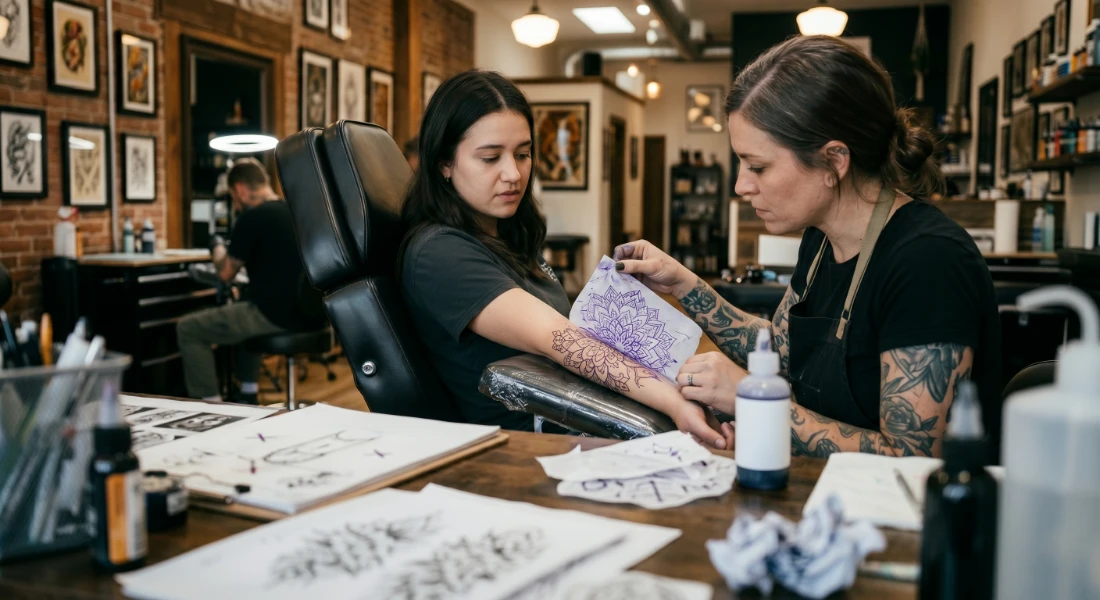
You’ve made the decision. You know what you want. You’ve even picked a shop. But here’s what nobody tells you before your first appointment: the difference between a tattoo you love for 30 years and one you regret in 30 days almost always comes down to decisions you make before the needle touches your skin.
Mistake 01: Choosing an Artist Based on Price Instead of Style
This is the single most expensive mistake you can make. Tattoos are permanent. Laser removal costs hundreds per session and takes multiple sessions to complete.
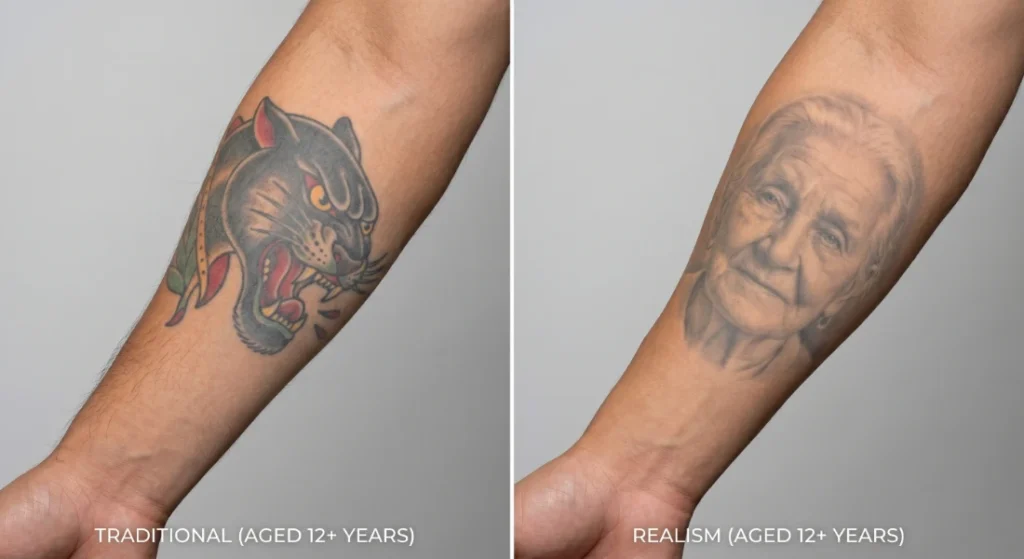
Every artist has a specialty. A realism artist who does jaw-dropping portraits may produce mediocre geometric work. A traditional artist who creates bold, clean lines may struggle with delicate fine-line pieces. Book an artist based on their portfolio in the exact style you want — not their hourly rate.
Go to their Instagram. Look at healed tattoo photos, not just fresh ones. Healed work tells you the real story about how an artist’s work holds up over time.
Mistake 02: Walking Into a Random Shop on Impulse
Reputable shops are booked out for a reason. Walk-in availability at a quality studio exists for small, simple pieces. It does not exist for complex custom work.
When you book with the first available artist at the first shop you find, you’re gambling with something permanent. Look at Google reviews. Check health inspection records if your city makes them public. Verify the studio is licensed by your state’s health department.
A good shop will never rush you into committing. If you feel pressured to decide on the spot, leave.
Mistake 03: Sending a Photo and Saying “Tattoo This Exactly”
That image you found online belongs to someone else. Copying another artist’s tattoo design outright is both an ethical issue and a sign that your chosen artist isn’t creating original work.
Beyond that, a flat digital image rarely translates directly to skin. Skin curves. It moves. What looks perfect on a flat screen can look warped on a wrist or distorted around a bicep.
Share reference images as inspiration, not blueprints. Tell your artist what you love about the reference, and let them create something that actually works on your body.
Mistake 04: Skipping the Consultation
A consultation is where your artist tells you what will and won’t work, how the design should be sized and placed, and how long the session will run. Skipping it and booking directly based on your own assumptions often means you show up with an idea that needs redesigning on the spot, a placement that won’t suit the design, or a budget that doesn’t cover the actual scope of the piece.
Many artists offer free consultations. Use them.
Mistake 05: Going Too Small
“Smaller means simpler and less painful” is one of the most persistent myths in tattooing. Tiny tattoos are often the hardest to execute well. Fine lines that are too close together blur into each other as skin ages. Micro-detail becomes an unreadable smudge within a few years.
A skilled artist will tell you honestly when a design is too small for the level of detail you’re asking for. Trust that feedback. It’s not an upsell, it’s experience.
Mistake 06: Cramming Too Many Concepts Into One Tattoo
You want a compass, a mountain range, your grandmother’s birth year, a wolf, and a meaningful quote. All in a space the size of your hand. The result will be visual noise. When everything is a focal point, nothing is.
Great tattoos have a clear hierarchy: one main subject, a few supporting elements, and space to breathe. If you have multiple meaningful ideas, they work far better as separate pieces that grow into a cohesive collection over time.
Mistake 07: Choosing a Trend Over Something Personal
Every era has its tattoo trends. Tribal armbands. Lower back pieces. Barbed wire. Today’s equivalents include ultra-fine line constellations, abstract watercolor splashes, and tiny minimalist words on the collarbone. Most trends don’t age well because they were chosen for the moment, not for the person wearing them.
Ask yourself honestly: why do I want this specific image? If the answer is “I keep seeing it everywhere,” pause. If the answer involves something specific to your own story, you’re on solid ground.
Mistake 08: Placing Intricate Designs on High-Movement Areas
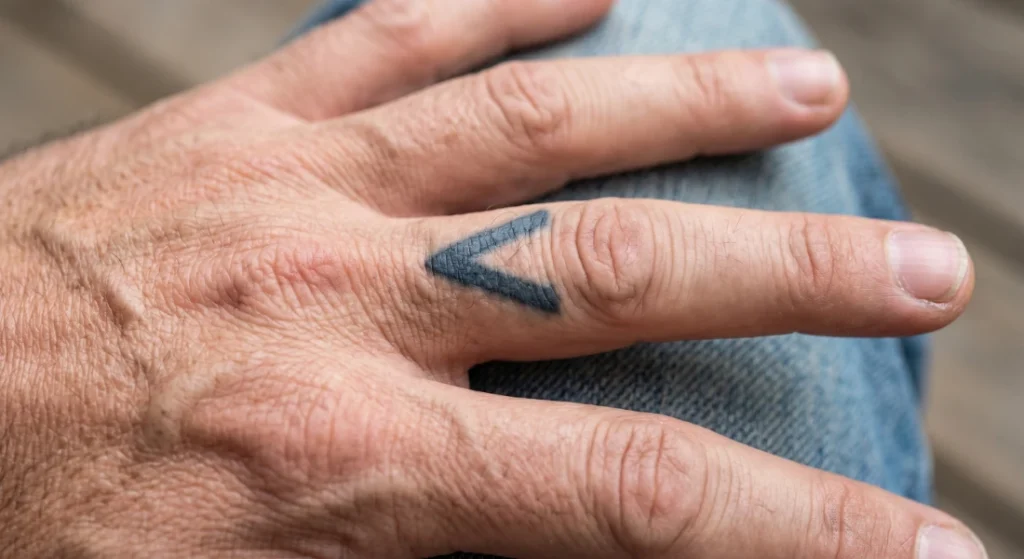
Fingers, hands, feet, elbows, and the inner wrist crease are high-movement areas where skin behaves very differently from the forearm or upper back. Ink migrates. Fine lines blur. Tattoos in these spots fade faster because the skin regenerates more aggressively.
This doesn’t mean avoid those spots entirely. It means the design has to account for that reality. Bold, simple lines hold up in those locations. Intricate micro-detail does not.
Mistake 09: Picking a Placement Without Thinking Long-Term
Some placements are visible in professional settings. Some placements stretch significantly with body changes over time. A neck tattoo is a commitment to a certain level of visibility in job interviews. A stomach tattoo will shift with weight changes or pregnancy. A rib tattoo sits among the most painful placements on the body, which matters a lot if this is your first piece.
Go in with eyes open about every one of these factors. None of them are dealbreakers. All of them deserve honest consideration before you commit.
Mistake 10: Getting a Sunburn on the Area
Tattooing over sunburned skin is significantly more painful, harder for the artist to work on, and leads to uneven ink saturation and difficult healing. If you spent the weekend outside and the area you’re getting tattooed is fried, reschedule. Your skin needs to fully recover first. Use SPF on the planned tattoo area in the weeks leading up to your appointment.
Mistake 11: Drinking Alcohol the Night Before (or the Day Of)
Alcohol thins your blood. Thinner blood means you bleed more during the session. More bleeding makes it harder for the artist to get clean ink saturation, which directly affects the quality of the finished tattoo. It also prolongs your recovery period.
Some people think a drink calms pre-appointment nerves. It does not help your tattoo. Skip alcohol for at least 24 hours before your session.
Mistake 12: Pulling an All-Nighter Before Your Appointment
Sleep deprivation lowers your pain tolerance significantly. A session that might feel manageable on a rested body becomes genuinely difficult when you’re exhausted. It also slows your body’s healing response, which starts the moment the session ends. Get a proper night of sleep.
Mistake 13: Skipping Food Before You Go
Going into a tattoo session on an empty stomach is genuinely risky. Blood sugar drops during a session, which causes dizziness, nausea, and in some cases fainting. This is more common than people realize, even with small tattoos.
Eat a real meal one to two hours before your appointment. Not a coffee and a granola bar. An actual meal with protein and slow-burning carbohydrates. Bring a snack for sessions running longer than two hours.
Mistake 14: Neglecting Your Skin in the Week Before
Dry, rough, or irritated skin is harder to tattoo. The ink doesn’t sit as cleanly, and the healing process is often more difficult. In the week leading up to your appointment, moisturize the area daily with an unscented lotion. Hydrated skin gives your artist the best possible canvas to work on.
Mistake 15: Wearing the Wrong Clothes
Think about where your tattoo is going, then wear something that gives your artist easy access to that area without a complicated wardrobe situation. Getting a back tattoo while wearing a complex bodysuit creates friction for everyone. A loose tank top for a shoulder piece. Loose shorts for a thigh tattoo. A dress for a hip piece.
Also think ahead to what will rub against the fresh tattoo on your way home and for the next few days. Tight waistbands over a hip tattoo. Socks over a fresh ankle piece. Plan around those friction points.
Mistake 16: Bringing a Crowd
One support person is fine and often helpful for first-timers. Three to five friends crowding a small studio room is not. It creates noise and distraction for the artist, makes it harder for you to stay still, and most reputable shops have explicit policies limiting guests per client. Respect them.
Mistake 17: Staying Silent When Something Feels Wrong
If you need a break, say so. If you’re feeling dizzy, nauseous, or overheated, tell your artist immediately. Artists expect and welcome this. They would rather pause and let you recover than have you push through and end up in distress.
Also: if the stencil placement is even slightly off, speak up before the session starts. Once the needle has been running for 20 minutes, nothing can be adjusted. A good artist will re-apply the stencil as many times as needed until you’re satisfied with the placement. That is completely normal to ask for.
Mistake 18: Ignoring Your Artist’s Aftercare Instructions
Your artist will give you specific aftercare instructions. Follow them exactly, not approximately.
Here are the aftercare mistakes that do the most damage:
- Picking at the peeling skin. When a tattoo heals it peels similarly to a sunburn. Picking that skin pulls ink out before it’s fully set, causing patchy spots that need touch-ups. Let it fall off on its own.
- Soaking the tattoo. No swimming, hot tubs, or long baths for at least two weeks. Brief showers are fine. Standing water introduces bacteria and causes ink to leach out before it’s healed.
- Direct sun exposure. UV light is the single biggest cause of tattoo fading over time. A fresh tattoo should never be in direct sunlight. Once healed, always apply SPF before any sun exposure.
- Using the wrong products. Thick petroleum-based products like Vaseline seal off the skin and can trap bacteria underneath. Use what your artist recommends, typically a thin, fragrance-free moisturizer or a dedicated tattoo aftercare product.
- Over-moisturizing. More lotion is not better. A thin layer applied a few times a day is sufficient. Suffocating a healing tattoo under constant product causes problems just as easily as neglecting it.
Video Credits: JustINKD
One Final Thought Before You Book
Read this list again, and ask yourself honestly if you’ve done the preparation work. The right artist for your style. The right design for the placement. The mental and physical preparation your body deserves. A tattoo done well by the right artist on a prepared client is a remarkable thing. It lasts a lifetime and improves with age. You have complete control over which outcome you get.
Have questions before your first appointment? Drop them in the comments. If this was helpful, share it with someone planning their first tattoo.
