
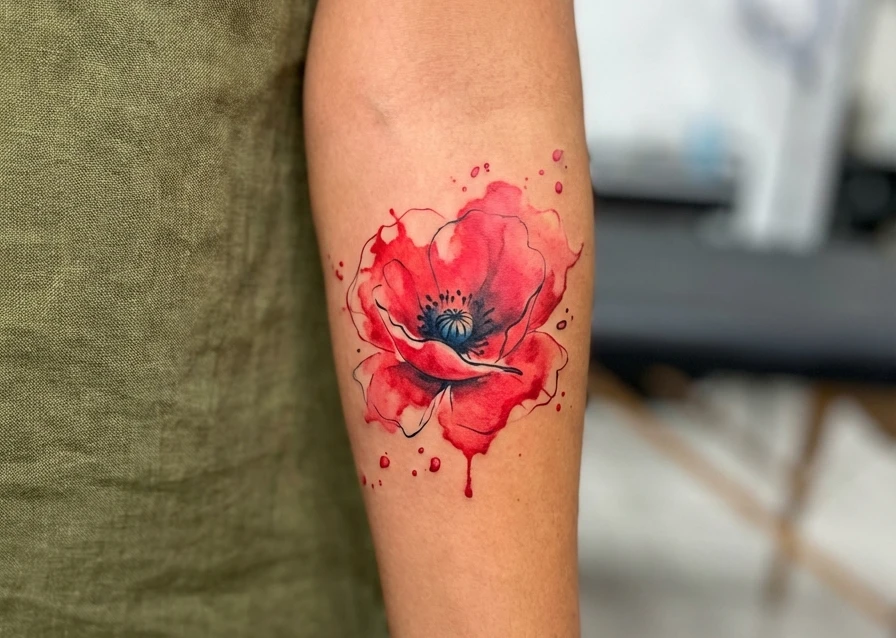
Watercolor tattoos look like someone took a brush, dipped it in the most beautiful colors imaginable, and painted directly onto skin.
No hard outlines. No rigid borders. Just color bleeding into color in the most natural, painterly way possible.
Floral subjects and watercolor technique were made for each other. Flowers already exist in soft gradients, translucent petals, and bleeding color. The style simply mirrors what nature already does.
This list covers 12 watercolor flower tattoo ideas that treat skin like a canvas and ink like pigment. Each one a small wearable painting that belongs to you permanently.
1. Watercolor Rose Flower Splash
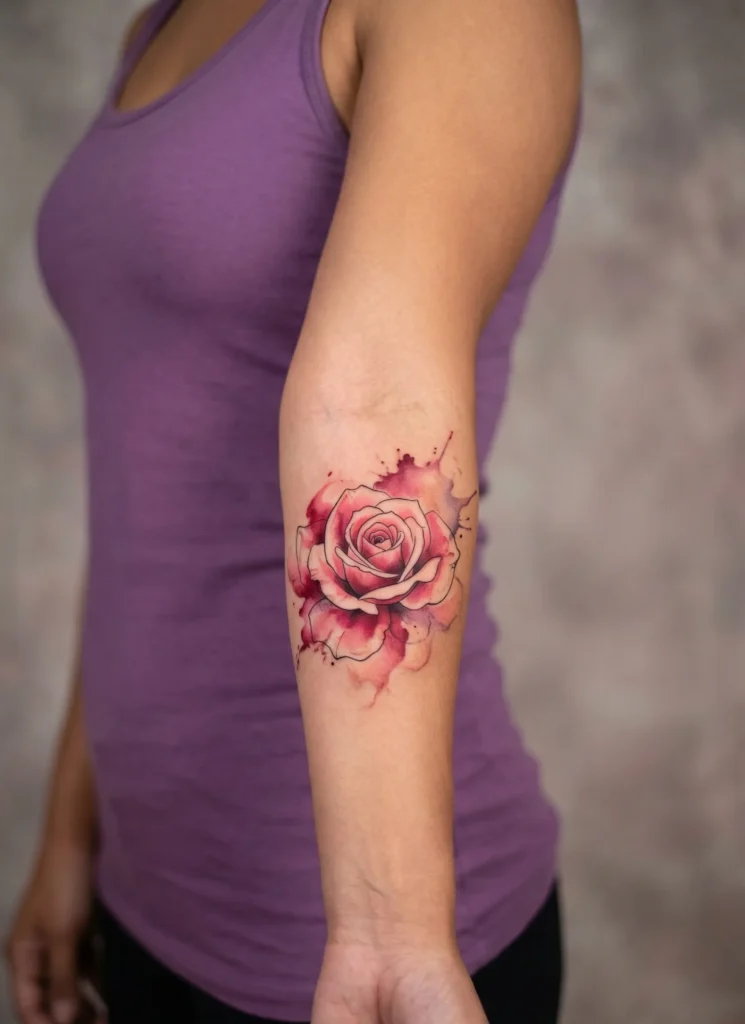
A watercolor rose with color splashing beyond the petal edges is one of the most immediately recognizable expressions of this tattoo style. Deep reds and pinks bleeding outward into soft blush, then fading to nothing at the edges.
The rose itself can retain a light outline for definition while the color around it behaves with complete freedom. That contrast between structured bloom and loose surrounding color is what makes this concept so visually compelling.
It looks simultaneously controlled and spontaneous. Like the flower couldn’t quite contain all that color within itself.
- A loose ink splash behind the bloom adds drama without needing more flowers
- Deep crimson bleeding into pale pink creates the most striking tonal range
- Ask your artist about mixing warm and cool tones within the same splash for depth
2. Watercolor Lotus Flower Bloom
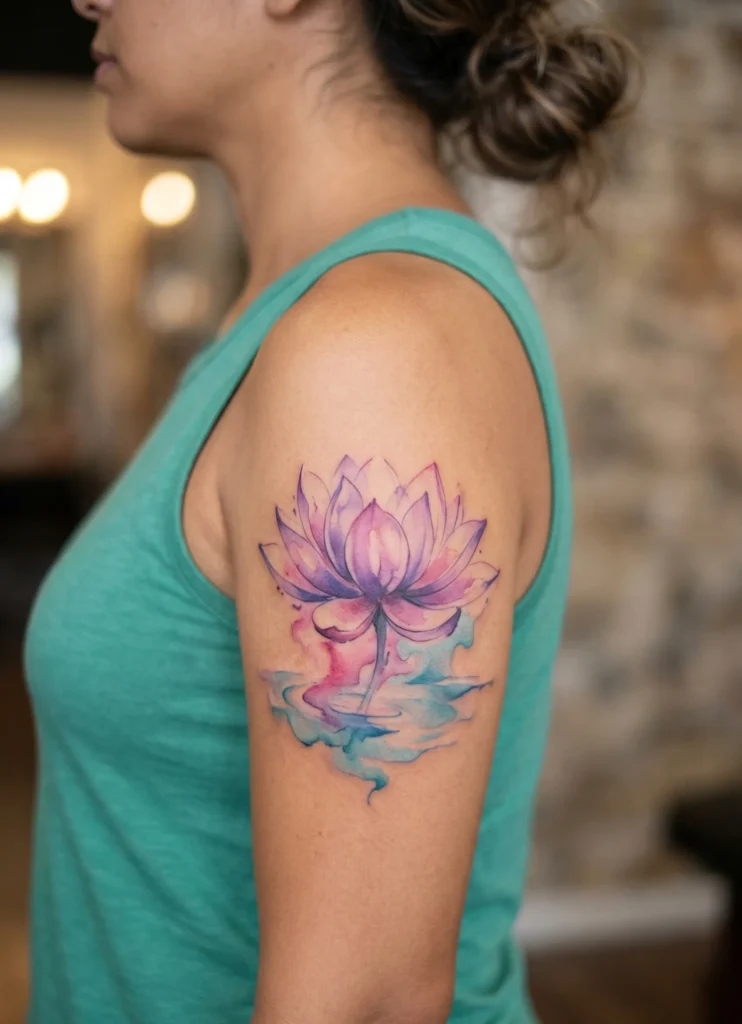
The lotus in watercolor feels spiritually resonant in a way that other styles of the same flower don’t quite reach. Soft purples and pinks washing through each petal, the colors shifting from deep at the base to near-transparent at the tips.
The lotus rising from water rendered in watercolor creates a design where the boundary between flower and water blurs in the most beautiful way. Both elements painted in the same loose, flowing language.
That dissolution of hard edges between subjects feels philosophically appropriate for a flower whose whole meaning is about rising above the murky and finding clarity.
3. Watercolor Sunflower Flower Glow
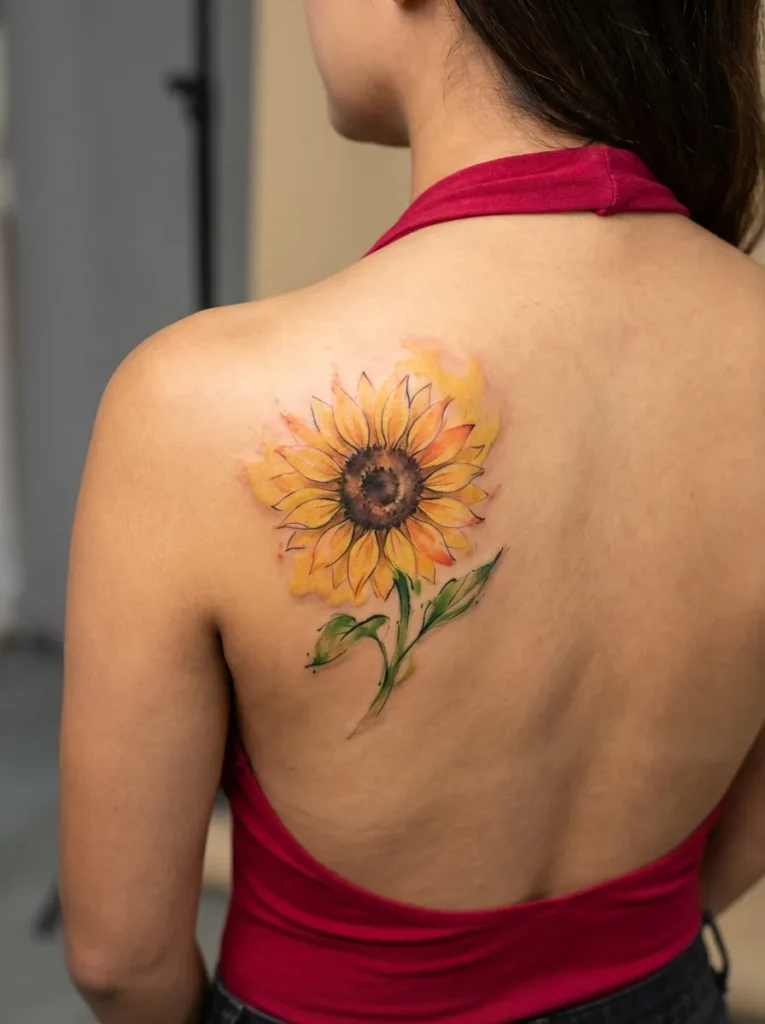
A watercolor sunflower radiates warmth in a way that no other rendering style achieves. Golden yellows bleeding into warm oranges at the petal tips, a deep brown center with soft texture, green stem and leaves painted in loose confident strokes.
The glow effect comes from allowing the yellow to bleed beyond the petal outlines into the surrounding skin. Like the flower is actually emitting light rather than simply reflecting it.
| Color Element | Watercolor Technique | Visual Effect |
| Petal yellow to orange | Wet-on-wet bleed | Warm natural gradient |
| Center dark brown | Concentrated pigment | Bold focal anchor |
| Background color wash | Loose diluted spread | Atmospheric glow |
| Leaf green | Single confident stroke | Organic spontaneity |
4. Watercolor Tulip Flower Blend
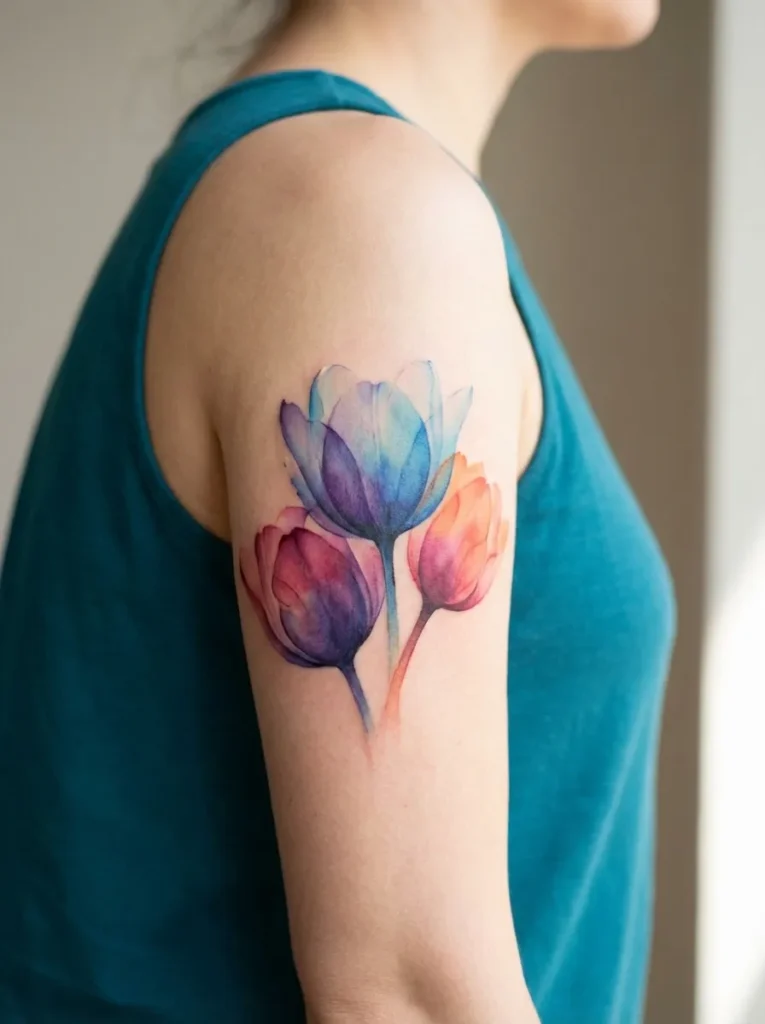
The tulip’s smooth cupped petals are a perfect surface for watercolor blending technique. Color moving from deep saturated at the base of each petal to nearly transparent at the edges.
Two or three tulips together with their colors bleeding into each other where the blooms overlap creates a design that looks like it was painted in a single continuous session. No hard stops between one flower and the next.
Unexpected color combinations work particularly well here. A tulip that moves from deep violet at its base through cerulean blue toward its tips is something that couldn’t exist in nature but feels completely right in watercolor.
5. Watercolor Lavender Flower Spray
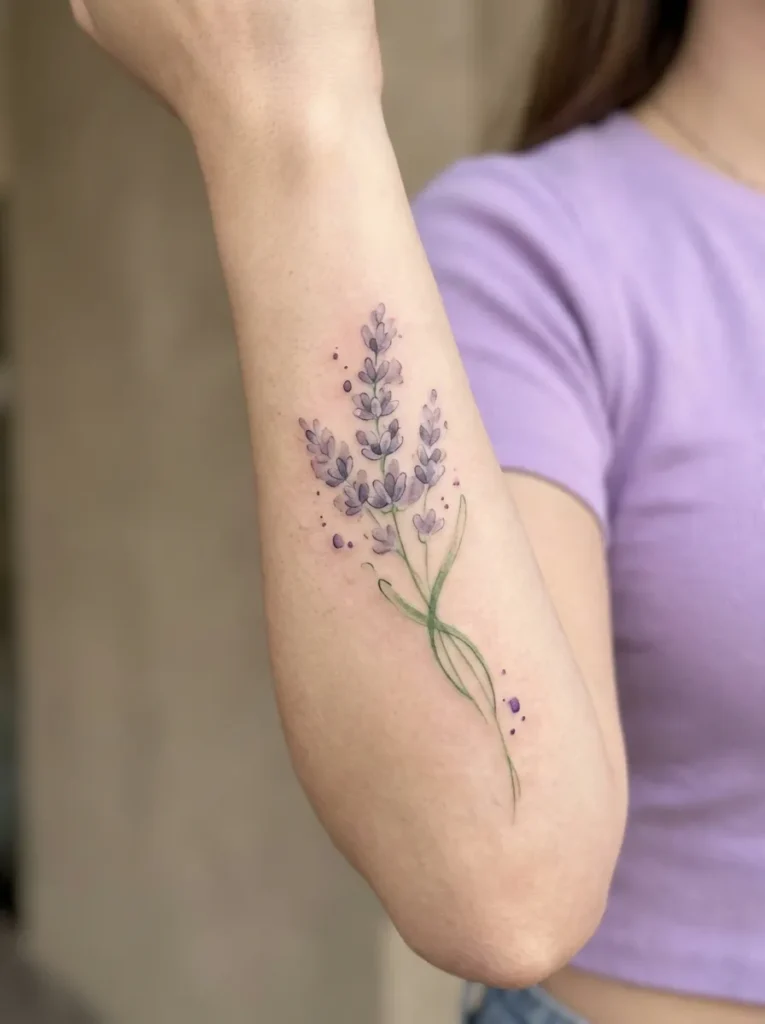
Lavender in watercolor is a study in restraint and atmosphere. Soft purple-grey washes indicating the clustered buds, a green stem line loose enough to suggest movement in a breeze.
The watercolor technique suits lavender perfectly because the actual color of lavender in real life already looks like a watercolor wash. The style isn’t interpreting the flower so much as faithfully recording how it actually appears in soft light.
A watercolor lavender spray on the forearm or collarbone has a dreamy, atmospheric quality that feels genuinely painterly rather than tattooed.
- Keep the color diluted and soft rather than saturated for the most authentic lavender feel
- A few loose drops of purple pigment scattered around the spray adds watercolor authenticity
- Pair with a thin fine line stem for structural contrast against the loose color work
6. Watercolor Wildflower Flower Mix
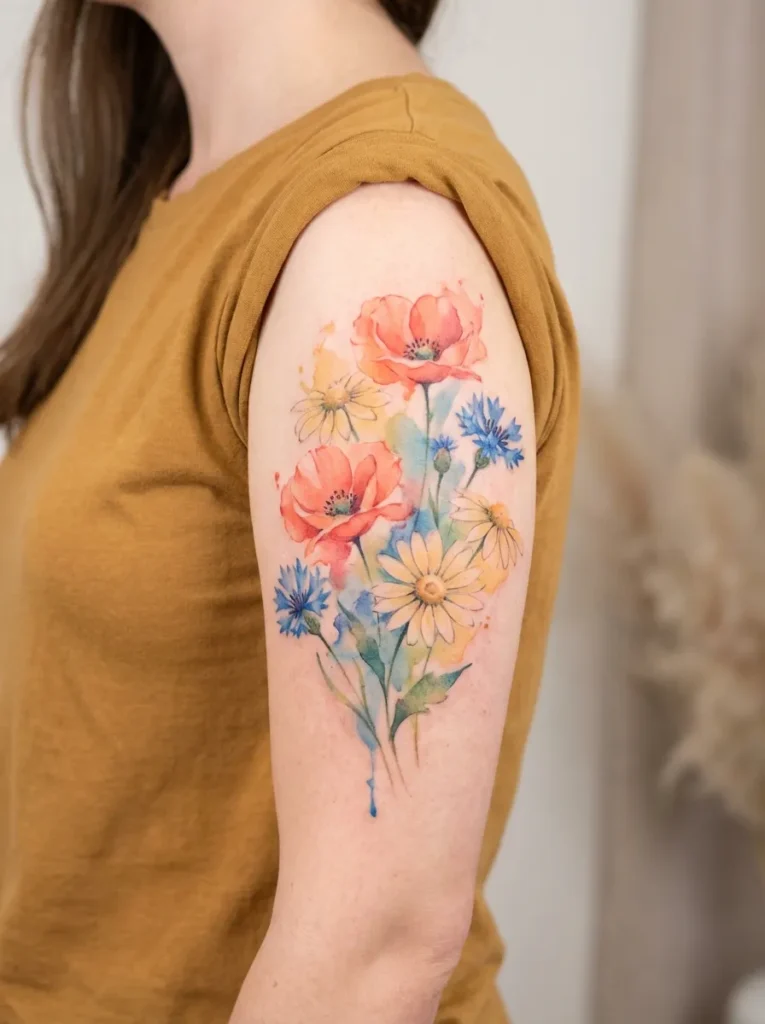
A watercolor wildflower mix lets color run riot in the best possible way. Multiple flower species in multiple colors, each one bleeding slightly into the next, the whole composition held together by the unified language of the watercolor technique.
Poppies in coral bleeding into daisies in soft yellow bleeding into cornflowers in blue. The colors mix at their edges like they would if you painted them wet on wet on real paper.
That color interaction between species is what makes this concept so alive. The flowers don’t just sit beside each other. They actually touch and influence each other the way real pigments do.
7. Watercolor Daisy Flower Splash
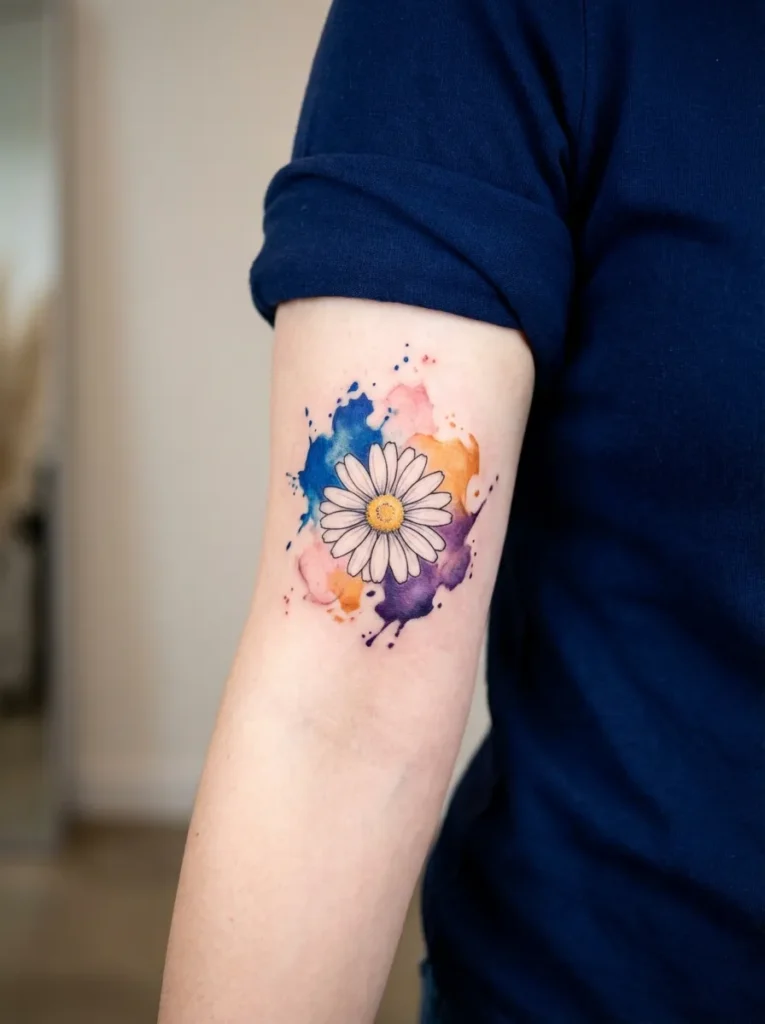
A watercolor daisy with a bold color splash behind it creates a design where the simplest flower becomes the subject of something genuinely dynamic.
The daisy itself is uncomplicated. White petals, yellow center, clean form. The splash of color behind it, deep blue, bright magenta, warm amber, provides contrast and energy that the daisy alone couldn’t generate.
The graphic simplicity of the daisy outline against the loose expressiveness of the color splash is a pairing that works because of how different the two elements are from each other.
| Splash Color | Contrast with Daisy | Overall Mood |
| Deep cobalt blue | High contrast, dramatic | Bold and graphic |
| Soft blush pink | Low contrast, romantic | Gentle and feminine |
| Warm amber orange | Medium contrast, warm | Energetic and sunny |
| Deep violet purple | High contrast, rich | Mysterious and artistic |
8. Watercolor Magnolia Flower Bloom
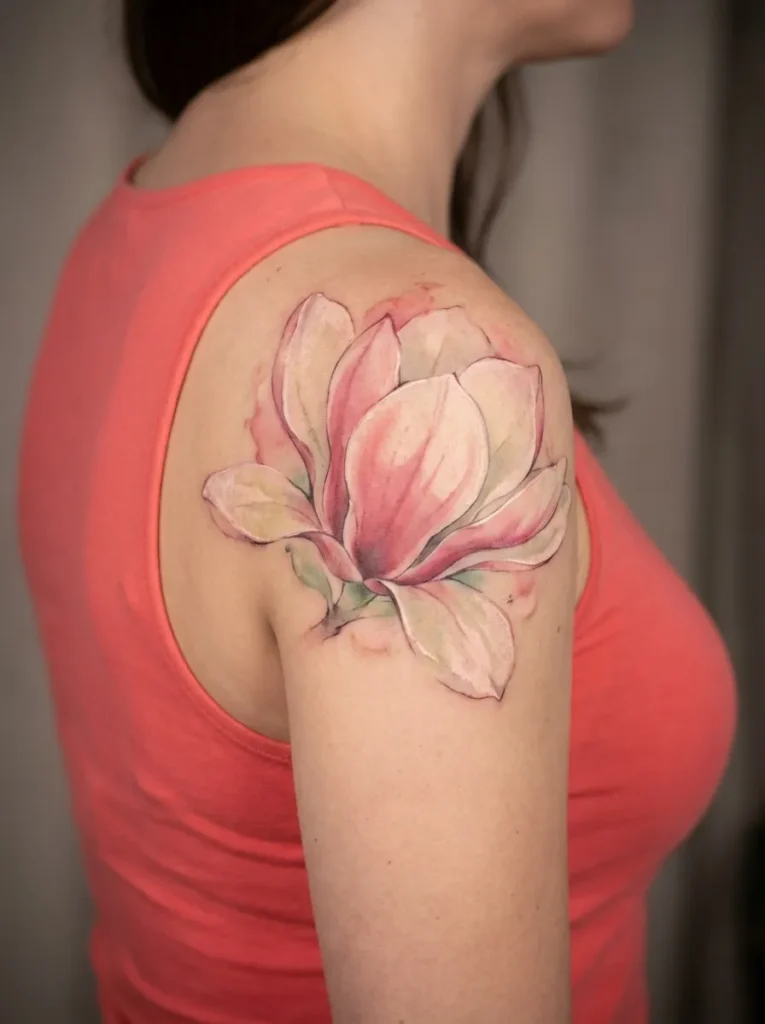
The magnolia’s large smooth petals are essentially made for watercolor technique. Those broad surfaces allow color to move freely across them, pooling slightly at the petal curves and fading toward the edges in exactly the way watercolor behaves on paper.
Blush pink washing into creamy white washing into the faintest suggestion of green at the base. The magnolia’s real color story translated faithfully into ink on skin.
A large watercolor magnolia on the shoulder blade or upper arm has a quiet grandeur that feels more like fine art than body decoration. That distinction is worth something.
9. Watercolor Poppy Flower Splash
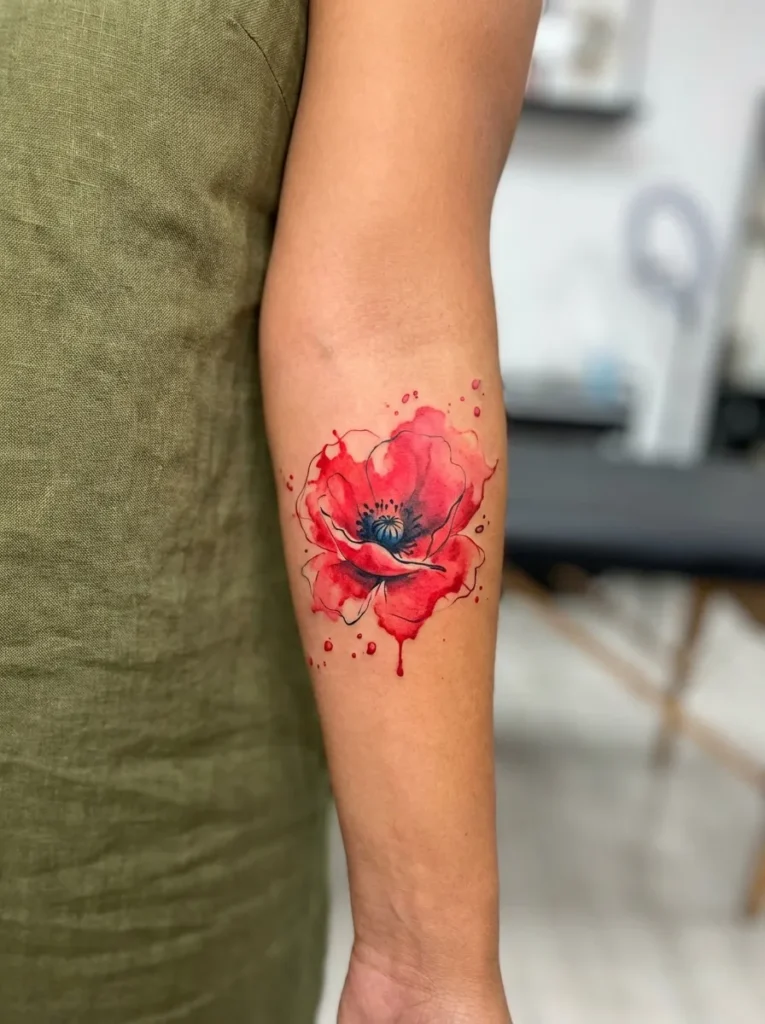
The poppy in watercolor is all about that intense, saturated red. A red that bleeds and pools and spreads with the urgency of a flower that blooms briefly and brilliantly before it’s gone.
The color splash technique suits the poppy emotionally as much as visually. The red spreading beyond the petals feels like the flower overflowing with its own intensity.
Black ink detailing on the seed pod center grounds the loose color work with something precise and dark. That anchor point makes the surrounding watercolor feel even freer by contrast.
- Let the red bleed significantly beyond the petal outline for maximum impact
- A deep blue-black seed pod center creates the strongest contrast against the red
- Small scattered red droplets around the main bloom extend the splash effect naturally
10. Watercolor Cosmos Flower Wash
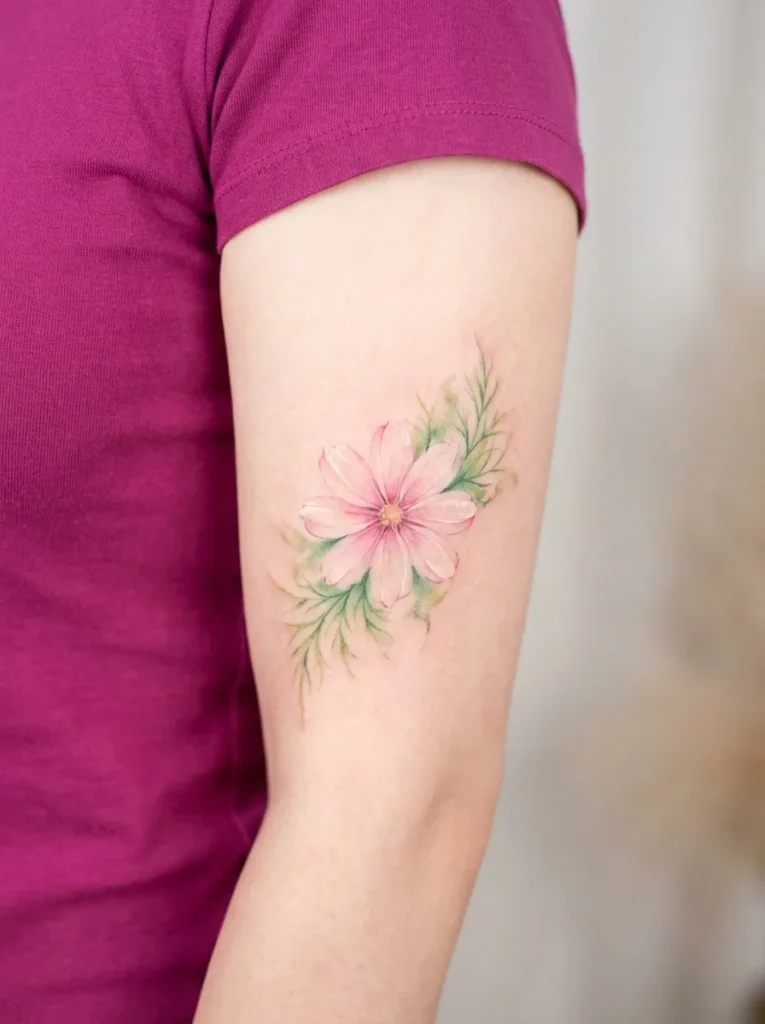
The cosmos in watercolor becomes something genuinely ethereal. Those delicate eight petals in soft pink or white rendered with the lightest possible color wash, barely there but completely present.
The feathery foliage surrounding the bloom suits loose watercolor strokes in a way that more structured leaves never could. Green that suggests rather than defines. Color that implies rather than states.
This is a watercolor tattoo for someone who wants something that looks like it might dissolve into skin if you look too long. Delicate to the point of being dreamlike.
11. Watercolor Bluebell Flower Blend
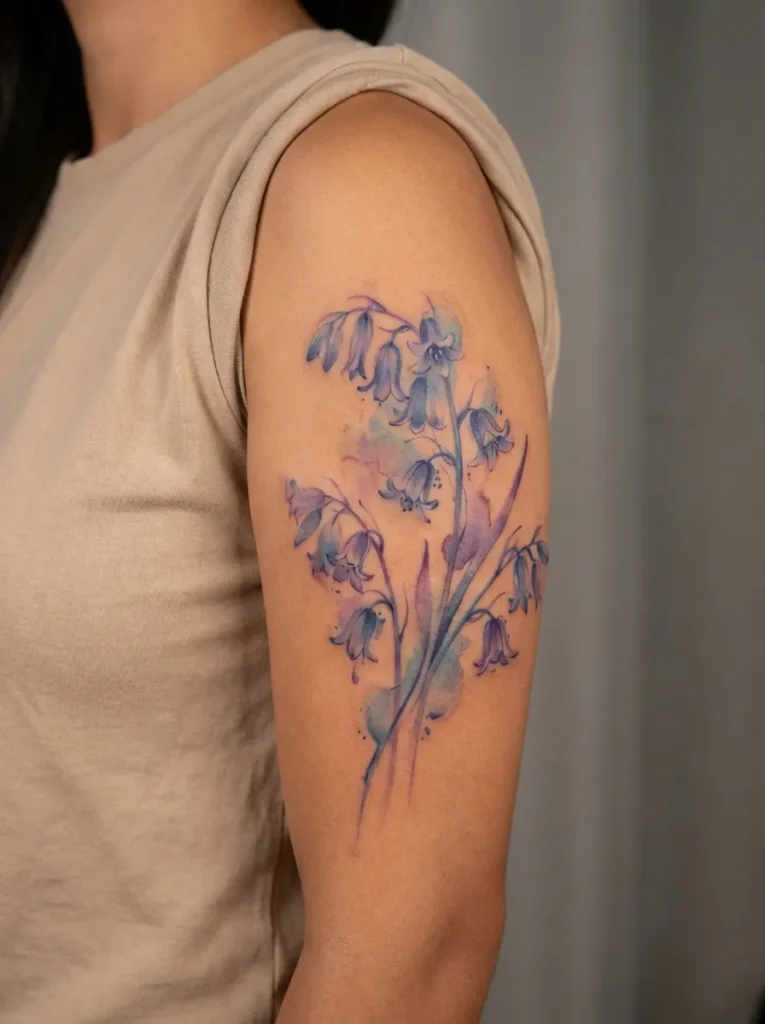
Watercolor bluebells carry an atmospheric quality that feels like a woodland memory. Cool blue-violets bleeding softly through each hanging bell, the colors deepening at the curve of each bloom and fading at the open mouth.
Multiple bluebell stems with their colors bleeding into each other creates a design that feels like looking through soft morning light in a spring forest. Hazy, beautiful, slightly unreal.
The downward droop of the bluebell blooms works particularly well in watercolor because the pigment naturally wants to follow gravity too.
The technique and the subject share the same directional instinct.
12. Watercolor Clematis Flower Splash
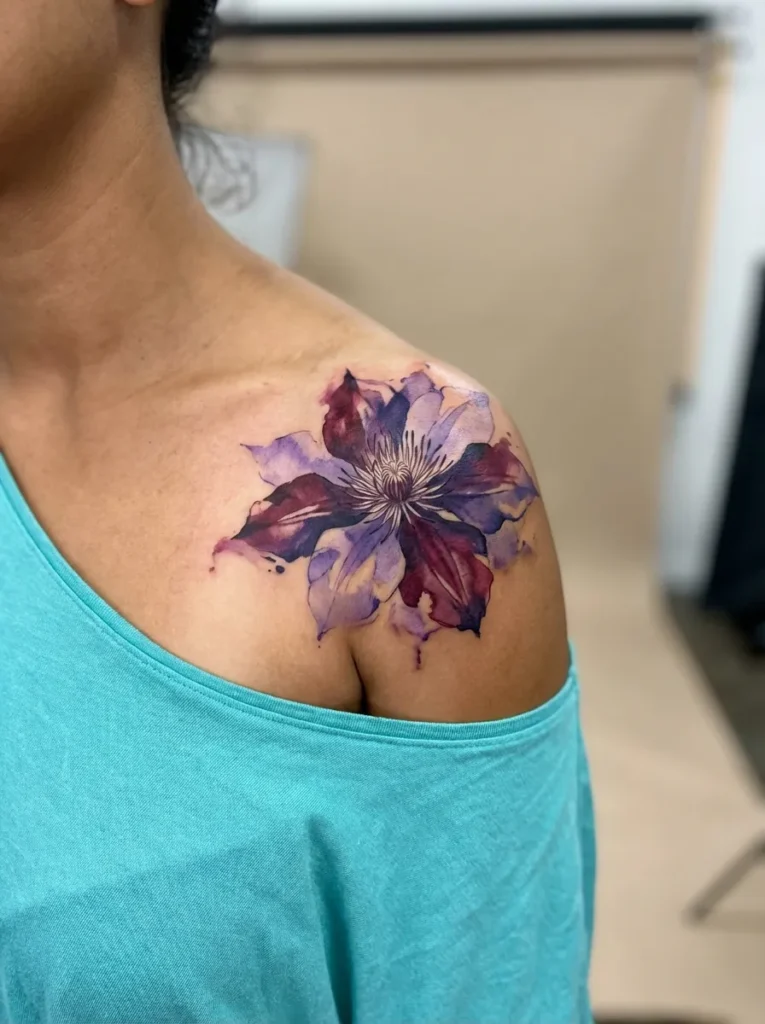
The clematis is one of the most underused flowers in tattoo design and in watercolor it becomes something extraordinary.
Those broad flat petals, sometimes four, sometimes six or eight depending on the variety, in deep purple, rich burgundy, or soft lavender.
The clematis center with its prominent stamen cluster provides a fine detail focal point that anchors all the loose watercolor movement happening in the petals around it.
A watercolor clematis splash on the shoulder, upper arm, or thigh has a richness of color and a complexity of form that most watercolor floral tattoos simply don’t achieve.
It’s a distinctive choice that rewards exactly the kind of person who looked past all the obvious options and kept searching for something that felt entirely their own.
Because that’s really what watercolor flower tattoos are about, aren’t they? Not just wearing a flower. Wearing a painting. Wearing color that moves and bleeds and lives on your skin the way emotion moves through a person. Which of these twelve painted blooms feels most like yours?